VS

VW T-Roc vs VW T-Cross comparison

Compare performance (150 HP vs 150 HP), boot space and price (26,400 £ vs 21,400 £ ) at a glance. Find out which car is the better choice for you – VW T-Roc or VW T-Cross?

VW T-Roc vs VW T-Cross: Key differences

VW T-Roc

4.8 (6 Reviews)
rate
  • barely more trunk space
details

VW T-Cross

4 (5 Reviews)
rate
  • markedly cheaper
  • only slightly more efficient
  • barely quicker 0–100 km/h
  • a bit lighter
details

All details on performance, efficiency, range and trunk space can be found in the technical comparison below – including user reviews for both models.

By Achim Sedelmaier

T-Roc

VW T-Cross vs VW T-Roc: the real-world crossover choice

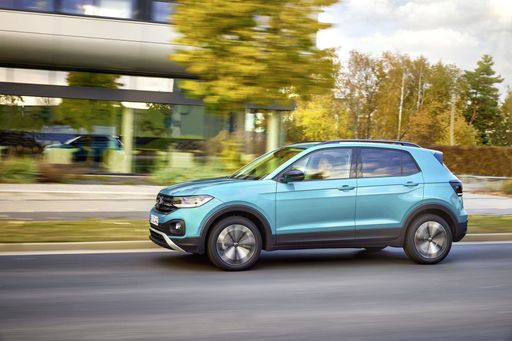
The VW T-Cross and VW T-Roc are closely related SUVs that solve everyday needs in different ways. In this VW T-Cross VS VW T-Roc matchup, the smaller car leans into versatility and city-friendly ease, while the larger one feels more grown-up and long‑legged. Both deliver the familiar VW straightforwardness, but they set different priorities once you start living with them. Think of the T-Cross as the clever tool for tight streets and changing cargo, and the T-Roc as the calmer, more premium companion for family and motorway miles. Which fits better depends less on horsepower and more on how you actually use your car.
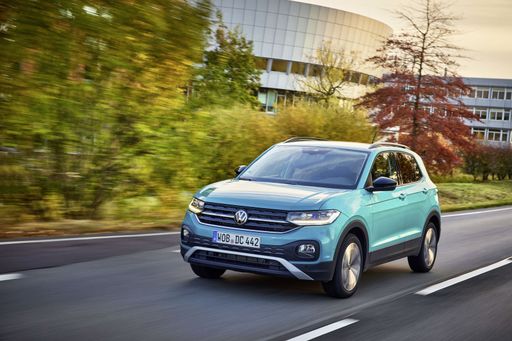
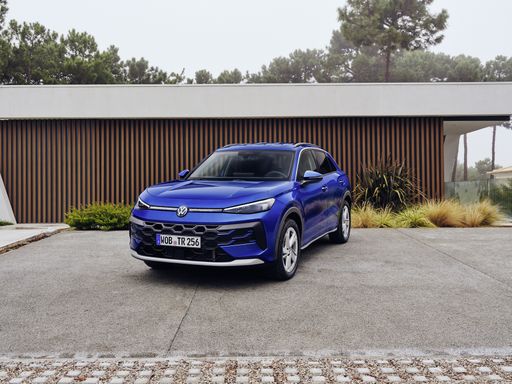
T-Cross

Space and flexibility: clever tricks vs outright room

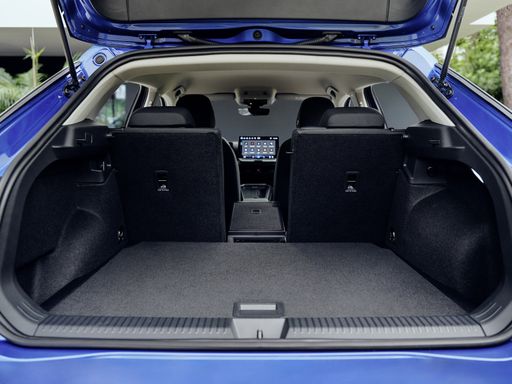
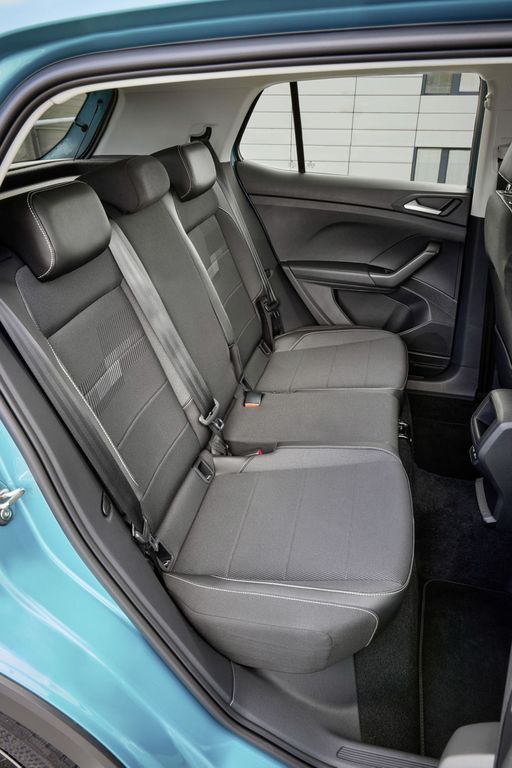
The VW T-Cross majors on flexibility: a sliding rear bench and a fold‑flat front passenger seat let you juggle kids, bikes or flat‑packs with minimal drama. Its square opening and low sill make quick work of prams and weekly shops, and two adults fit comfortably in the back when the bench is set for legroom. The VW T-Roc counters with more rear-seat space and a larger, more estate‑like boot, plus a 40:20:40 split that swallows skis without evicting passengers. It doesn’t offer a sliding bench, and there’s a small inner step when the floor is in its lowest position, but overall capacity is stronger. If you value modular tricks and maximum load length, the T-Cross feels smarter; if you simply need more room all the time, the T-Roc is the easier choice.

T-Roc

Ride, refinement and long-distance ease

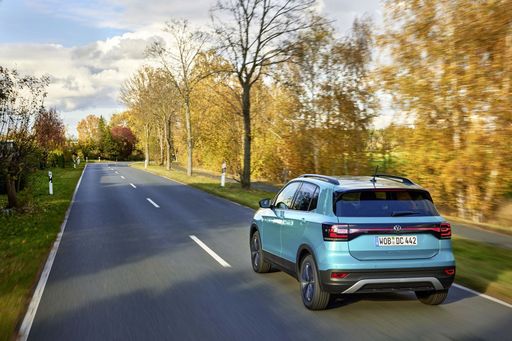
The VW T-Roc is the quieter, more settled traveller, with a hushed cabin at speed and an optional adaptive suspension that smooths out mixed roads. Its steering is calm and precise, helping it feel planted on long motorway runs and in crosswinds. The VW T-Cross is stable and comfortable too, but you’ll notice a bit more wind and road noise on faster stretches, and its simpler suspension tuning prioritizes ease over plushness. Around town the T-Cross can feel a touch lighter and more eager, while the T-Roc trades that for a more composed gait at 70 mph and beyond. Frequent commuters and holiday haulers will appreciate the T-Roc’s serenity; urban‑biased drivers won’t miss it in the T-Cross.

T-Cross

City manners and everyday drivability

The VW T-Cross is the one that shrinks around you: great visibility, a high perch and a tight turning circle make it effortless to thread through traffic and into snug bays. It’s easygoing and confidence‑building, ideal for new drivers or downsizers who want stress‑free mobility. The VW T-Roc is still compact and easy to place, but it feels broader‑shouldered, and big wheels can add a firmer edge over potholes. In both, the automatic can hesitate if you jab the throttle in stop‑and‑go, so a smooth right foot pays off. If your week is mostly multi‑storey car parks and school runs, the T-Cross is the simpler tool; if weekends include longer A‑roads, the T-Roc’s calmer temperament shows its worth.

T-Roc

Cabin feel, tech and usability

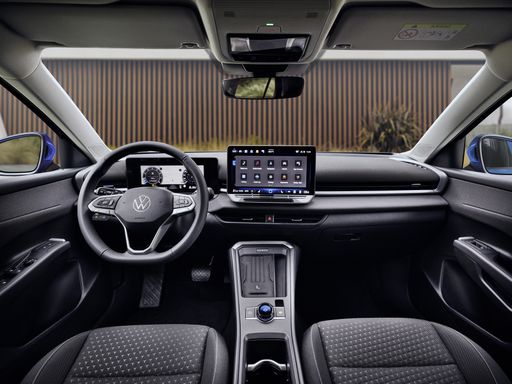
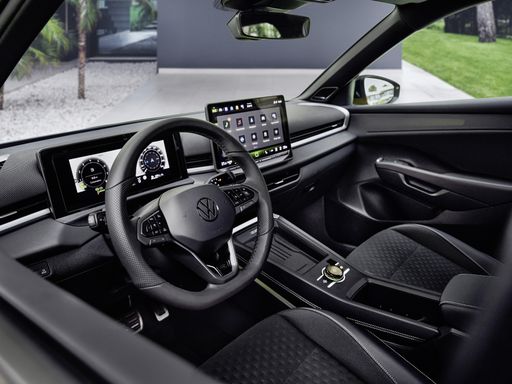
The VW T-Roc sends a stronger quality signal: softer materials, neatly integrated screens and proper steering‑wheel buttons make it feel a step up. Its latest driver aids are comprehensive, and the 40:20:40 rear backrest is a family win. The VW T-Cross has been usefully upgraded and feels solid, but remains more functional than plush, with materials that are hard‑wearing rather than indulgent. Both cars have modern infotainment with seamless phone integration, yet the touch sliders for climate and volume can still annoy on a bumpy road. If perceived quality and a quieter ambience top your list, lean T-Roc; if you prefer airy simplicity and practical touches like the T-Cross’s folding front seat, that clarity wins day to day.

T-Cross

Costs, efficiency and who each one suits

The VW T-Cross typically gets you into a VW SUV for less and can be a touch thriftier in mixed driving, though its lack of hybrid options keeps it squarely average for ultimate fuel saving. The VW T-Roc asks more up front, but returns the favor with extra space, stronger refinement and hybridized petrol options that may help future resale. Option packs and large wheels can inflate the price of either, so spec with care if value matters. For city‑centric small families, seniors who want an easy step‑in height, or anyone who prizes flexibility over flourish, the T-Cross is an excellent fit. For frequent motorway users, buyers chasing a more premium cabin and a roomier back seat, the T-Roc aligns better—now let’s see how their specs underpin those differences in the detailed comparison.

Here’s where it gets real: The technical differences in detail

T-Roc

Costs and Efficiency:

Price and efficiency are often the first things buyers look at. Here it becomes clear which model has the long-term edge – whether at the pump, the plug, or in purchase price.

VW T-Cross is markedly cheaper – starting at 21,400 £ , while the VW T-Roc costs 26,400 £ . That’s a price difference of around 5,044 £.

Fuel consumption also shows a difference: the VW T-Cross uses 5.4 L/100km and is only slightly more efficient than the VW T-Roc with 5.5 L/100km. The difference is about 0.1 L/100km.

T-Cross

Engine and Performance:

Power, torque and acceleration are the classic benchmarks for car enthusiasts – and here, some clear differences start to show.

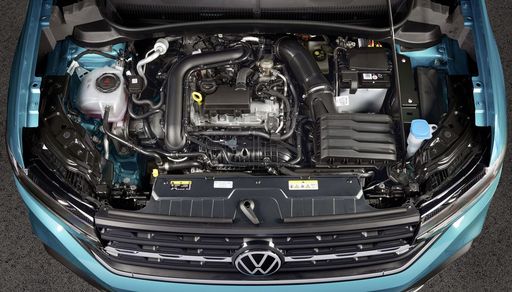
Both models deliver identical power – 150 HP each.

When accelerating from 0 to 100 km/h, the VW T-Cross is barely quicker – completing the sprint in 8.4 s, while the VW T-Roc takes 8.9 s. That’s about 0.5 s quicker.

Both models offer the same torque – 250 Nm.

T-Roc

Space and Everyday Use:

Cabin size, boot volume and payload all play a role in everyday practicality. Here, comfort and flexibility make the difference.

Both vehicles offer seating for 5 people.

In terms of curb weight, VW T-Cross is a bit lighter – 1,267 kg compared to 1,465 kg. The difference is around 198 kg.

Looking at boot space, the VW T-Roc offers barely more boot space – 475 L compared to 455 L. That’s a difference of about 20 L.

When it comes to payload, the VW T-Roc carries very slightly more – 515 kg compared to 480 kg. That’s a difference of about 35 kg.

Who wins the race in the data check?

The VW T-Cross holds a narrow overall lead in the objective data comparison.
This result only shows which model scores more points on paper – not which of the two cars feels right for you.

from £21,400
T-Cross

VW T-Cross

  • Engine Type : Petrol
  • Transmission : Manuel, Automatic
  • Drive Type : Front-Wheel Drive
  • Power HP : 95 - 150 HP
  • Consumption L/100km : 5.4 - 6 L/100km
VW T-Roc
VW T-Cross

Costs and Consumption

View detailed analysis

Engine and Performance

View detailed analysis

Dimensions and Body

View detailed analysis

VW T-Roc

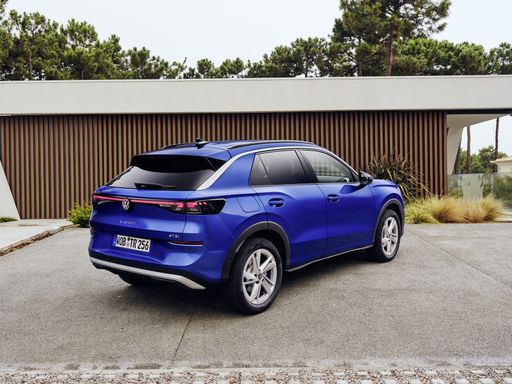
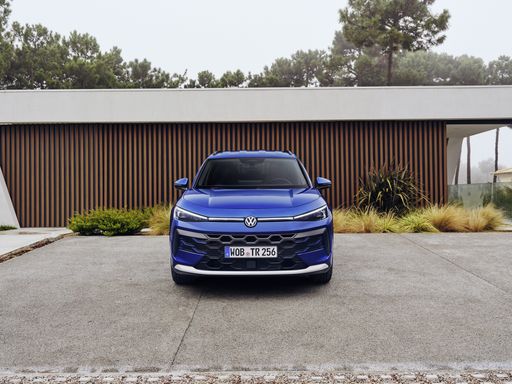
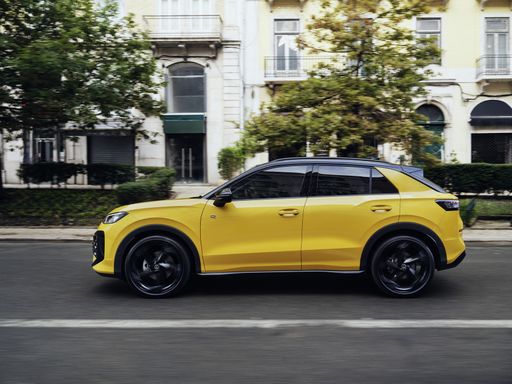
The Volkswagen T‑Roc is a stylish, well-proportioned crossover that blends hatchback agility with SUV presence. It delivers a comfortable cabin, user-friendly tech and a composed ride, making it a sensible choice for buyers who want practicality with a bit of character.

details

VW T-Cross

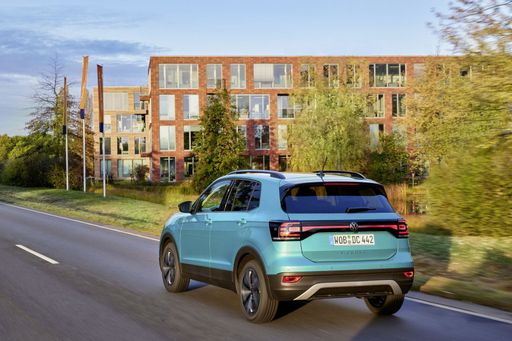
The VW T-Cross is a small, city-friendly crossover that blends practical packaging with easygoing driving manners and a high seating position for good visibility. It’s a sensible, comfortable choice for buyers who want the convenience and style of an SUV without big compromises.

details
VW T-Roc
VW T-Cross

Costs and Consumption

Price
26,400 - 38,600 £
Price
21,400 - 32,000 £
Consumption L/100km
5.5 - 6.3 L/100km
Consumption L/100km
5.4 - 6 L/100km
Consumption kWh/100km
-
Consumption kWh/100km
-
Electric Range
-
Electric Range
-
Battery Capacity
-
Battery Capacity
-
co2
126 - 143 g/km
co2
124 - 136 g/km
Fuel tank capacity
-
Fuel tank capacity
-

Dimensions and Body

Body Type
SUV
Body Type
SUV
Seats
4 - 5
Seats
5
Doors
-
Doors
-
Curb weight
1,465 - 1,539 kg
Curb weight
1,267 - 1,338 kg
Trunk capacity
284 - 475 L
Trunk capacity
455 L
Length
-
Length
-
Width
1,811 - 1,828 mm
Width
1,784 mm
Height
-
Height
-
Max trunk capacity
-
Max trunk capacity
-
Payload
368 - 515 kg
Payload
463 - 480 kg

Engine and Performance

Engine Type
Petrol, Petrol MHEV
Engine Type
Petrol
Transmission
Manuel, Automatic
Transmission
Manuel, Automatic
Transmission Detail
Manual Gearbox, Dual-Clutch Automatic
Transmission Detail
Manual Gearbox, Dual-Clutch Automatic
Drive Type
Front-Wheel Drive
Drive Type
Front-Wheel Drive
Power HP
115 - 150 HP
Power HP
95 - 150 HP
Acceleration 0-100km/h
8.9 - 12.3 s
Acceleration 0-100km/h
8.4 - 11.3 s
Max Speed
-
Max Speed
-
Torque
200 - 250 Nm
Torque
175 - 250 Nm
Number of Cylinders
3 - 4
Number of Cylinders
3 - 4
Power kW
85 - 110 kW
Power kW
70 - 110 kW
Engine capacity
999 - 1,498 cm3
Engine capacity
999 - 1,498 cm3

General

Model Year
2,024 - 2,025
Model Year
2,024 - 2,025
CO2 Efficiency Class
E, D
CO2 Efficiency Class
D, E
Brand
VW
Brand
VW
DriveDuel uses data analysis and artificial intelligence to evaluate vehicle data and create content. Content is regularly reviewed and improved. The displayed prices are estimates based on German list prices, adjusted to the respective country’s VAT. Country-specific registration taxes are not included. This information is not legally binding.