VS

VW Taigo vs Ford Puma comparison

Compare performance (150 HP vs 168 HP), boot space and price (19,900 £ vs 23,900 £ ) at a glance. Find out which car is the better choice for you – VW Taigo or Ford Puma?

VW Taigo vs Ford Puma: Key differences

VW Taigo

4.9 (3 Reviews)
rate
  • noticeably cheaper
  • marginally more efficient
  • marginally lighter
details

Ford Puma

3 (11 Reviews)
rate
  • slightly more power
  • slightly quicker 0–100 km/h
details

All details on performance, efficiency, range and trunk space can be found in the technical comparison below – including user reviews for both models.

By Achim Sedelmaier

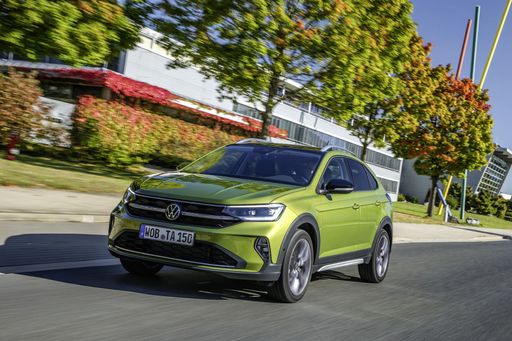
Taigo

Battle of the Compact SUVs: Ford Puma vs. VW Taigo

In the bustling world of compact SUVs, the Ford Puma and VW Taigo are vying for the attention of car enthusiasts and practical buyers alike. Both models bring their distinctive flair and cutting-edge innovations to the table, making the choice between them a fascinating pursuit. Let's dive into the technical details and innovations that set these vehicles apart.

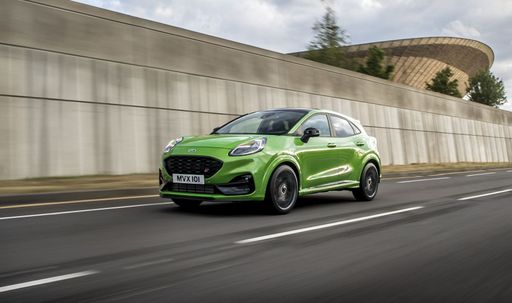
Puma

Under the Hood: Power and Performance

The Ford Puma offers an impressive range of powertrains, featuring both petrol mild-hybrid electric vehicles (MHEV) and all-electric options. With power outputs ranging from 125 HP to 168 HP, the Puma provides a compelling blend of efficiency and performance. The mild-hybrid option stands out with a consumption rate as low as 5.4 L/100km, and the all-electric variant boasts a range of up to 376 km on a single charge.

Meanwhile, the VW Taigo focuses solely on petrol engines with power outputs from 95 HP to 150 HP. Although it lacks electric variants, the Taigo compensates with a smooth driving experience, and a combined efficiency of around 5.4 L/100km, making it an economically viable choice for stretch-long journeys.

Taigo

Drivability: Speed and Agility

Speed enthusiasts will appreciate the Puma's top speed offerings, maxing out at an impressive 210 km/h for the more powerful variant, while its acceleration capabilities can push it from 0 to 100 km/h in just 7.4 seconds. On the other hand, the Taigo maintains a respectable performance, reaching top speeds of up to 212 km/h and moderate accelerations of 8.2 seconds from 0 to 100 km/h.

Both models share a front-wheel-drive system, ensuring adept handling and maneuverability in urban environments. The Puma aligns with a higher curb weight due to its hybrid and electric configurations, whereas the Taigo offers lighter alternatives for enhanced agility.

Puma

Design and Dimensions

When it comes to size, the Ford Puma measures slightly smaller with a width of 1805 mm and an overall length starting at 4186 mm, providing it with a more compact footprint ideal for city driving. The height of 1550 mm complements its SUV stance, while a trunk capacity of up to 523 L ensures enough space for convenience.

The VW Taigo stretches out to a length of 4266 mm, granting it a sleek silhouette, coupled with a narrower width of 1757 mm, which may aid in squeezing through tighter urban lanes. Its trunk space is ample at 440 L, sufficient for day-to-day cargo needs.

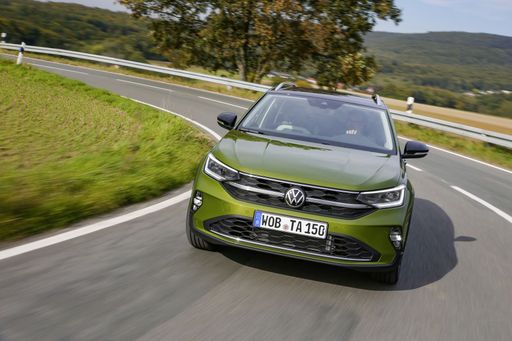
Taigo

Innovations and Sustainability

In terms of innovations, the Ford Puma leverages its mild-hybrid technology to increase fuel efficiency and reduce emissions, attaining a CO2 rating as low as 0 g/km in its electric variant, aligning with modern eco-conscious automotive trends.

Conversely, the Taigo emphasizes solid engineering with a steadfast focus on traditional petrol efficiency, achieving moderate CO2 outputs around 124-132 g/km. While it doesn't break ground in hybrid technology, its dedication to performance consistency makes it a reliable option for many drivers.

Puma

The Final Choice

Choosing between the Ford Puma and the VW Taigo boils down to your driving priorities. The Puma excels with a multifaceted powertrain offering including electric variants for the eco-conscious driver. Meanwhile, the Taigo's sturdy petrol engine lineup appeals to those seeking straightforward reliability and efficiency.

Both models stand as excellent choices in the compact SUV category, each presenting unique strengths that cater to a diverse set of preferences among automotive enthusiasts. Consider your driving needs and aspirations when selecting your ideal companion for the road ahead.

Here’s where it gets real: The technical differences in detail

Taigo

Costs and Efficiency:

When it comes to price and running costs, the biggest differences usually appear. This is often where you see which car fits your budget better in the long run.

VW Taigo is noticeably cheaper – starting at 19,900 £ , while the Ford Puma costs 23,900 £ . That’s a price difference of around 3,994 £.

Fuel consumption also shows a difference: the VW Taigo uses 5.3 L/100km and is marginally more efficient than the Ford Puma with 5.4 L/100km. The difference is about 0.1 L/100km.

Puma

Engine and Performance:

Power, torque and acceleration say a lot about how a car feels on the road. This is where you see which model delivers more driving dynamics.

When it comes to engine power, the Ford Puma offers slightly more power – delivering 168 HP compared to 150 HP. That’s roughly 18 HP more horsepower.

When accelerating from 0 to 100 km/h, the Ford Puma is slightly quicker – completing the sprint in 7.4 s, while the VW Taigo takes 8.2 s. That’s about 0.8 s quicker.

There’s also a difference in torque: the Ford Puma delivers somewhat more torque with 290 Nm compared to 250 Nm. That’s about 40 Nm more.

Taigo

Space and Everyday Use:

Whether family car or daily driver – which one offers more room, flexibility and comfort?

Both vehicles offer seating for 5 people.

In terms of curb weight, VW Taigo is marginally lighter – 1,229 kg compared to 1,316 kg. The difference is around 87 kg.

When it comes to payload, the Ford Puma carries barely more – 469 kg compared to 457 kg. That’s a difference of about 12 kg.

Who wins the race in the data check?

The Ford Puma is decisively ahead in the objective data comparison.
This result only shows which model scores more points on paper – not which of the two cars feels right for you.

from £23,900
Puma

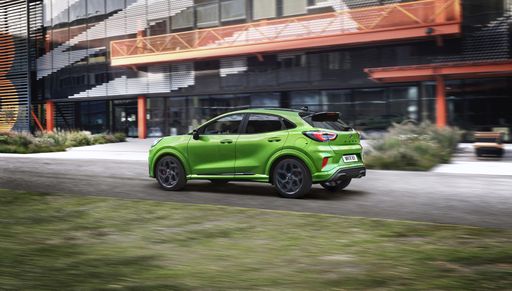
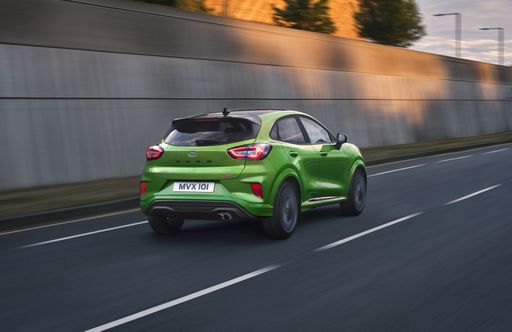
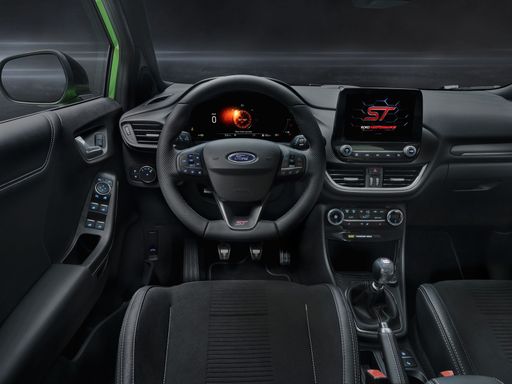
Ford Puma

  • Engine Type : Petrol MHEV, Electric
  • Transmission : Manuel, Automatic
  • Drive Type : Front-Wheel Drive
  • Power HP : 125 - 168 HP
  • Consumption L/100km : 5.4 - 5.9 L/100km
  • Consumption kWh/100km : 13 - 13.7 kWh/100km
  • Electric Range : 404 - 417 km
VW Taigo
Ford Puma

Costs and Consumption

View detailed analysis

Engine and Performance

View detailed analysis

Dimensions and Body

View detailed analysis

VW Taigo

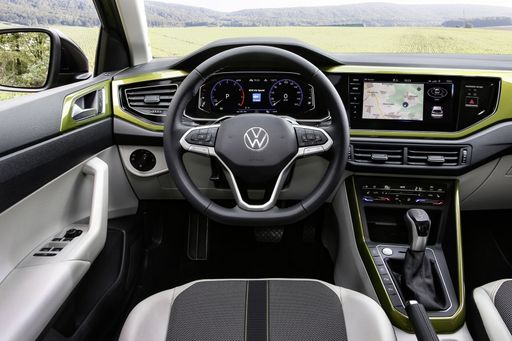
The VW Taigo brings coupe-like flair to the compact crossover scene with sharp styling and an interior that punches above its price, feeling smarter than you’d expect. It’s an easygoing daily companion that balances comfort and practicality with a playful wink, perfect for city drivers who want something livelier than a regular hatchback.

details

Ford Puma

The Ford Puma is a cheeky compact crossover that blends sporty styling with city-friendly practicality, giving drivers a surprisingly fun and composed ride. With clever storage tricks and a lively personality, it’s a smart pick for buyers who want enjoyment without fuss.

details
VW Taigo
Ford Puma

Costs and Consumption

Price
19,900 - 31,800 £
Price
23,900 - 36,300 £
Consumption L/100km
5.3 - 5.8 L/100km
Consumption L/100km
5.4 - 5.9 L/100km
Consumption kWh/100km
-
Consumption kWh/100km
13 - 13.7 kWh/100km
Electric Range
-
Electric Range
404 - 417 km
Battery Capacity
-
Battery Capacity
-
co2
120 - 132 g/km
co2
0 - 135 g/km
Fuel tank capacity
-
Fuel tank capacity
-

Dimensions and Body

Body Type
SUV
Body Type
SUV
Seats
5
Seats
5
Doors
-
Doors
-
Curb weight
1,229 - 1,302 kg
Curb weight
1,316 - 1,563 kg
Trunk capacity
440 L
Trunk capacity
-
Length
-
Length
-
Width
1,757 mm
Width
1,805 mm
Height
-
Height
-
Max trunk capacity
-
Max trunk capacity
-
Payload
448 - 457 kg
Payload
367 - 469 kg

Engine and Performance

Engine Type
Petrol
Engine Type
Petrol MHEV, Electric
Transmission
Manuel, Automatic
Transmission
Manuel, Automatic
Transmission Detail
Manual Gearbox, Dual-Clutch Automatic
Transmission Detail
Manual Gearbox, Dual-Clutch Automatic, Reduction Gearbox
Drive Type
Front-Wheel Drive
Drive Type
Front-Wheel Drive
Power HP
95 - 150 HP
Power HP
125 - 168 HP
Acceleration 0-100km/h
8.2 - 11.1 s
Acceleration 0-100km/h
7.4 - 9.8 s
Max Speed
-
Max Speed
-
Torque
175 - 250 Nm
Torque
170 - 290 Nm
Number of Cylinders
3 - 4
Number of Cylinders
3
Power kW
70 - 110 kW
Power kW
92 - 124 kW
Engine capacity
999 - 1,498 cm3
Engine capacity
999 cm3

General

Model Year
2,024 - 2,025
Model Year
2,025 - 2,026
CO2 Efficiency Class
D
CO2 Efficiency Class
D, A
Brand
VW
Brand
Ford
DriveDuel uses data analysis and artificial intelligence to evaluate vehicle data and create content. Content is regularly reviewed and improved. The displayed prices are estimates based on German list prices, adjusted to the respective country’s VAT. Country-specific registration taxes are not included. This information is not legally binding.