VS

VW Tiguan vs Audi Q4 e-tron comparison

Compare performance (272 HP vs 340 HP), boot space and price (33,600 £ vs 39,600 £ ) at a glance. Find out which car is the better choice for you – VW Tiguan or Audi Q4 e-tron?

VW Tiguan vs Audi Q4 e-tron: Key differences

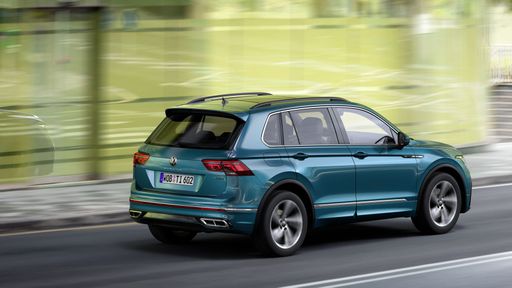
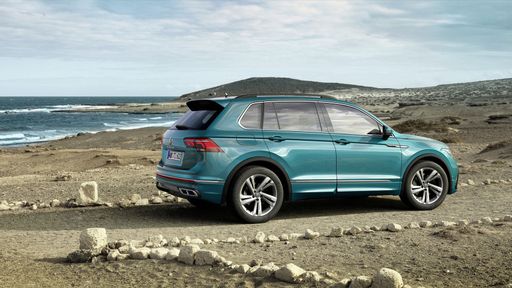
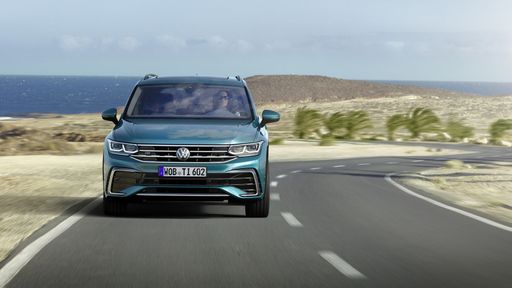
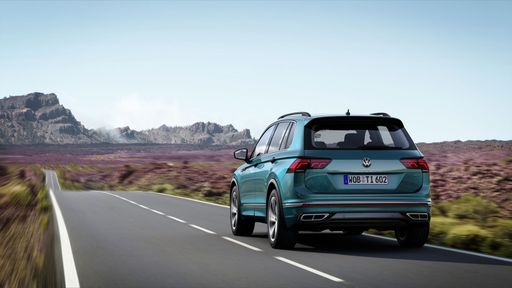
VW Tiguan

3.9 (7 Reviews)
rate
  • slightly cheaper
  • markedly lighter
  • somewhat more trunk space

Audi Q4 e-tron

4.9 (2 Reviews)
rate
  • slightly more power
  • substantially more electric range
  • very slightly quicker 0–100 km/h

All details on performance, efficiency, range and trunk space can be found in the technical comparison below – including user reviews for both models.

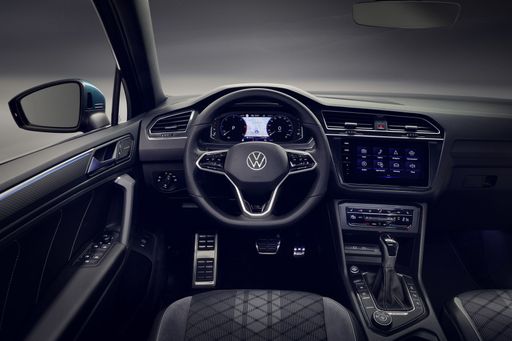
Tiguan

Introduction: A Clash of Two Giants

When it comes to the ever-evolving automotive market, the demand for electric vehicles and versatile SUVs has surged. Among the front runners in this arena, the Audi Q4 e-tron and VW Tiguan stand out. Although both vehicles belong to prominent automotive brands, they cater to different segments of drivers. In this article, we will dive into a comprehensive comparison of these two models, focusing on their technical aspects, innovations, and overall driving experience.
Q4 e-tron

Design and Build: Aesthetic Versus Practicality

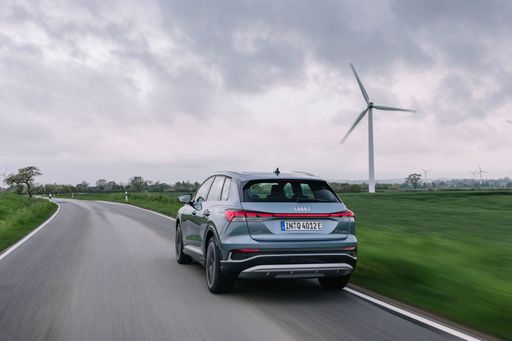
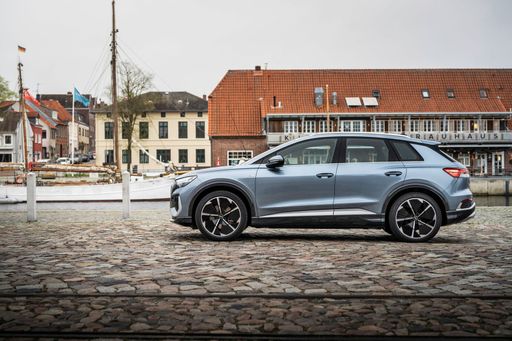
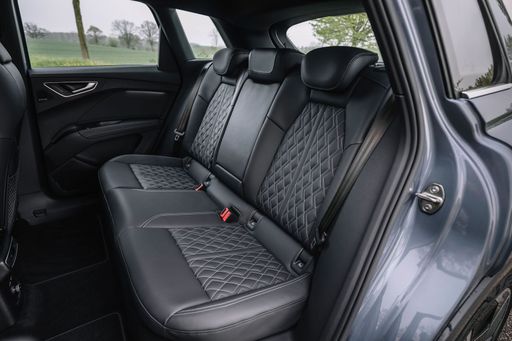
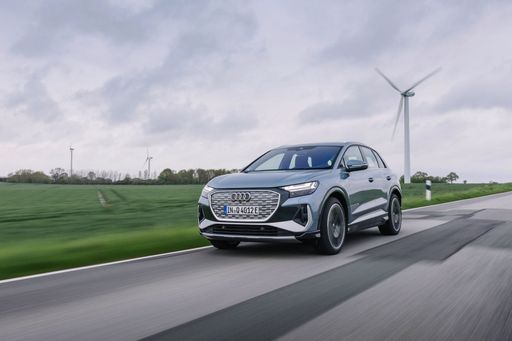
The Audi Q4 e-tron showcases a sleek, modern aesthetic synonymous with the brand's luxury reputation. With a length of 4,588 mm and a width of 1,865 mm, the Q4 e-tron has a commanding presence on the road. Its bold lines and aerodynamic curves not only enhance its visual appeal but also contribute to its energy efficiency.

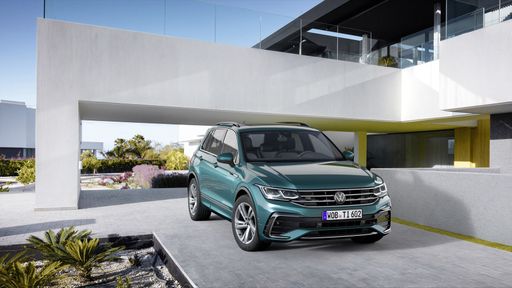
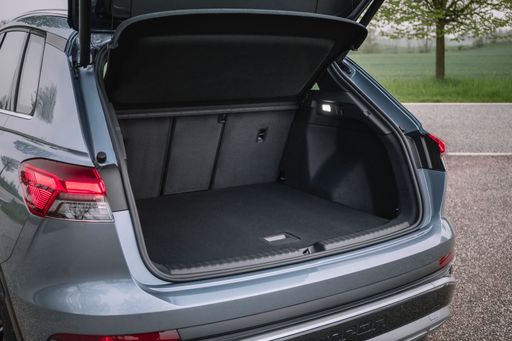
On the other hand, the VW Tiguan exudes a more practical approach with its robust dimensions measuring 4,539 mm in length and 1,842 mm in width. Its utilitarian design is particularly appealing for families or individuals requiring ample cargo space, offering a trunk capacity of 652 liters compared to the Q4 e-tron’s 520 liters.

Tiguan

Powertrain Options: Electric Versus Hybrid

The Audi Q4 e-tron is an all-electric SUV available in various configurations, boasting power outputs from 170 hp to a staggering 340 hp. With options for both rear-wheel drive and all-wheel drive, drivers can choose the setup that best suits their needs. Impressive acceleration figures, such as 0-100 km/h in just 5.4 seconds, make the Q4 e-tron a thrilling ride.

In contrast, the VW Tiguan offers a broader range of powertrains, including petrol, diesel, and hybrid options. With power outputs ranging from 130 hp to an impressive 272 hp, it caters to diverse driving preferences. While its hybrid variants can provide electric range up to 113 km, the Q4 e-tron either meets or exceeds that with its electric-only range, reaching up to 554 km, depending on the battery configuration.

Q4 e-tron

Efficiency: The Green Advantage

From an efficiency standpoint, the Q4 e-tron shines in the electric vehicle category, with an energy consumption as low as 15.9 kWh/100 km. It’s an eco-conscious alternative for those keen on reducing their carbon footprint, producing zero CO2 emissions. Its battery pack capacities range from 52 kWh to 77 kWh, providing a versatile and efficient driving range.

The Tiguan, while not entirely electric, offers competitive fuel consumption rates. Its most efficient petrol variant allows for consumption as low as 5.3 L/100 km. The hybrid models present excellent convenience for drivers seeking to optimize fuel consumption without fully committing to electric driving.

Tiguan

Innovative Features: Connectivity and Safety

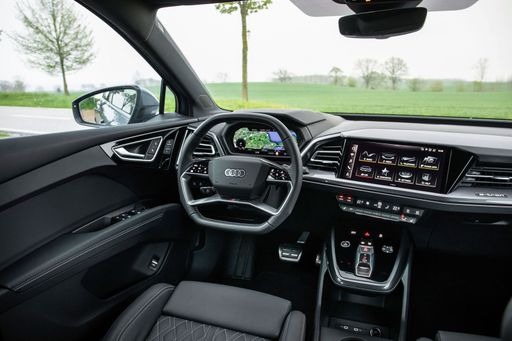
Both vehicles excel in technology and innovative features, enhancing the overall driving experience. The Audi Q4 e-tron comes equipped with the latest MMI infotainment system, offering a range of connectivity options, driver-assistance features, and a customizable digital cockpit. Wireless charging and smartphone integration streamline the user experience, making technology accessible and straightforward.
The VW Tiguan also incorporates advanced technological features such as a digital cockpit, adaptive cruise control, and App-Connect for seamless smartphone functionality. Its modular infotainment system allows for impressive adaptability, making it user-friendly and intuitive.

Q4 e-tron

Driving Experience: Comfort Meets Dynamics

Behind the wheel, the Audi Q4 e-tron provides a premium driving experience. With a focus on comfort, its suspension setup ensures a smooth ride, while the precise steering offers agility that will satisfy enthusiasts. It features multiple driving modes to cater to both relaxed cruising and spirited driving.

The VW Tiguan, known for its versatility, also presents a comfortable ride with commendable handling. Its spacious interior provides ample legroom and headspace, making it an excellent option for family trips or long journeys.

Tiguan

Conclusion: Which One to Choose?

Choosing between the Audi Q4 e-tron and VW Tiguan ultimately depends on personal preferences and priorities. For drivers leaning towards eco-friendly and innovative technology, the Q4 e-tron sets a high bar with its electric capabilities and luxurious touch. On the other hand, those seeking a versatile family SUV with a range of powertrains may find the Tiguan a better fit.

Both vehicles offer unique advantages, making them worthy contenders in the competitive SUV market. Whether you're drawn to the futuristic appeal of the Audi Q4 e-tron or the practical adaptability of the VW Tiguan, either choice will ensure a rewarding driving experience.

Here’s where it gets real: The technical differences in detail

Tiguan

Costs and Efficiency:

When it comes to price and running costs, the biggest differences usually appear. This is often where you see which car fits your budget better in the long run.

VW Tiguan is slightly cheaper – starting at 33,600 £ , while the Audi Q4 e-tron costs 39,600 £ . That’s a price difference of around 5,979 £.

As for electric range, the Audi Q4 e-tron offers substantially more range – reaching up to 554 km, about 428 km more than the VW Tiguan.

Q4 e-tron

Engine and Performance:

Under the bonnet, it becomes clear which model is tuned for sportiness and which one takes the lead when you hit the accelerator.

When it comes to engine power, the Audi Q4 e-tron offers slightly more power – delivering 340 HP compared to 272 HP. That’s roughly 68 HP more horsepower.

When accelerating from 0 to 100 km/h, the Audi Q4 e-tron is very slightly quicker – completing the sprint in 5.4 s, while the VW Tiguan takes 5.9 s. That’s about 0.5 s quicker.

Looking at top speed, the VW Tiguan is a bit faster – reaching 215 km/h, while the Audi Q4 e-tron tops out at 180 km/h. The difference is around 35 km/h.

There’s also a difference in torque: the Audi Q4 e-tron delivers considerably more torque with 679 Nm compared to 400 Nm. That’s about 279 Nm more.

Tiguan

Space and Everyday Use:

Beyond pure performance, interior space and usability matter most in daily life. This is where you see which car is more practical and versatile.

Both vehicles offer seating for 5 people.

In terms of curb weight, VW Tiguan is markedly lighter – 1,599 kg compared to 2,035 kg. The difference is around 436 kg.

Looking at boot space, the VW Tiguan offers somewhat more boot space – 652 L compared to 535 L. That’s a difference of about 117 L.

For maximum load capacity, the Audi Q4 e-tron offers only slightly more capacity – up to 1,490 L, about 4 L more than the VW Tiguan.

When it comes to payload, the VW Tiguan carries only slightly more – 533 kg compared to 515 kg. That’s a difference of about 18 kg.

Who wins the race in the data check?

The Audi Q4 e-tron holds a decisive overall lead in the objective data comparison.
This result only shows which model scores more points on paper – not which of the two cars feels right for you.

from £39,600
Q4 e-tron

Audi Q4 e-tron

  • Engine Type : Electric
  • Transmission : Automatic
  • Drive Type : Rear-Wheel Drive, All-Wheel Drive
  • Power HP : 204 - 340 HP
  • Consumption kWh/100km : 15.9 - 17.4 kWh/100km
  • Electric Range : 406 - 554 km
VW Tiguan
Audi Q4 e-tron

Costs and Consumption

View detailed analysis

Engine and Performance

View detailed analysis

Dimensions and Body

View detailed analysis

VW Tiguan

The VW Tiguan blends sensible family practicality with a dash of German polish, delivering a calm, reassuring ride and a cabin that never feels like an afterthought. For buyers who want an SUV that’s easy to live with yet still nicely dressed, the Tiguan is the grown‑up choice that keeps a cheeky wink in reserve.

details

Audi Q4 e-tron

The Audi Q4 e-tron brings Audi polish into the electric crossover scene, pairing a sleek exterior with a refined, airy interior that makes everyday driving feel distinctly premium. It’s an easy-to-live-with EV that balances comfort and real-world usability with intuitive tech, making it a smart choice for buyers who want electric mobility without giving up Audi character — and yes, it still looks good in the driveway.

details
VW Tiguan
Audi Q4 e-tron

Costs and Consumption

Price
33,600 - 54,600 £
Price
39,600 - 58,800 £
Consumption L/100km
1.4 - 8.4 L/100km
Consumption L/100km
-
Consumption kWh/100km
-
Consumption kWh/100km
15.9 - 17.4 kWh/100km
Electric Range
118 - 126 km
Electric Range
406 - 554 km
Battery Capacity
19.7 kWh
Battery Capacity
77 kWh
co2
32 - 190 g/km
co2
0 g/km
Fuel tank capacity
45 L
Fuel tank capacity
-

Dimensions and Body

Body Type
SUV
Body Type
SUV
Seats
5
Seats
5
Doors
5
Doors
5
Curb weight
1,599 - 1,879 kg
Curb weight
2,035 - 2,235 kg
Trunk capacity
490 - 652 L
Trunk capacity
520 - 535 L
Length
4,539 mm
Length
4,588 mm
Width
1,842 - 1,859 mm
Width
1,865 mm
Height
1,658 mm
Height
1,614 - 1,632 mm
Max trunk capacity
1,486 L
Max trunk capacity
1,460 - 1,490 L
Payload
460 - 533 kg
Payload
505 - 515 kg

Engine and Performance

Engine Type
Petrol MHEV, Petrol, Diesel, Plugin Hybrid
Engine Type
Electric
Transmission
Automatic
Transmission
Automatic
Transmission Detail
Dual-Clutch Automatic
Transmission Detail
Reduction Gearbox
Drive Type
Front-Wheel Drive, All-Wheel Drive
Drive Type
Rear-Wheel Drive, All-Wheel Drive
Power HP
130 - 272 HP
Power HP
204 - 340 HP
Acceleration 0-100km/h
5.9 - 10.6 s
Acceleration 0-100km/h
5.4 - 8.1 s
Max Speed
210 - 215 km/h
Max Speed
180 km/h
Torque
220 - 400 Nm
Torque
310 - 679 Nm
Number of Cylinders
4
Number of Cylinders
-
Power kW
96 - 200 kW
Power kW
150 - 250 kW
Engine capacity
1,498 - 1,984 cm3
Engine capacity
-

General

Model Year
2,024 - 2,026
Model Year
2,023 - 2,025
CO2 Efficiency Class
D, E, F, B, G
CO2 Efficiency Class
A
Brand
VW
Brand
Audi
DriveDuel uses data analysis and artificial intelligence to evaluate vehicle data and create content. Content is regularly reviewed and improved. The displayed prices are estimates based on German list prices, adjusted to the respective country’s VAT. Country-specific registration taxes are not included. This information is not legally binding.