VS

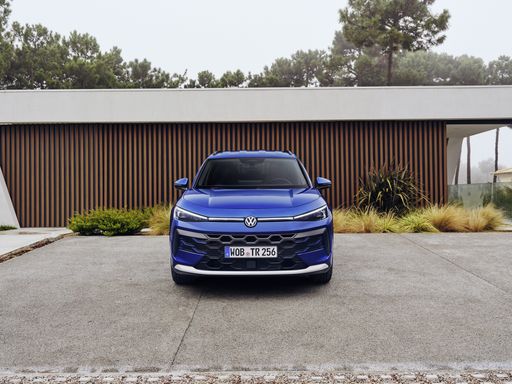
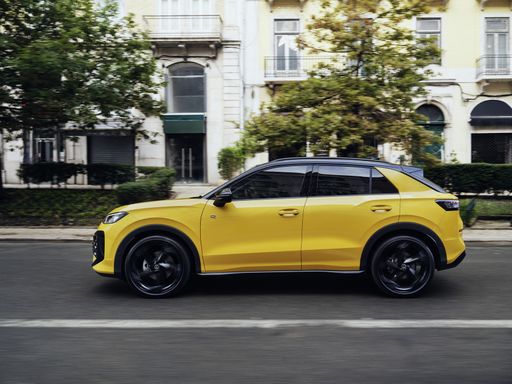
VW Tiguan vs VW T-Roc comparison

Compare performance (272 HP vs 150 HP), boot space and price (33,600 £ vs 26,400 £ ) at a glance. Find out which car is the better choice for you – VW Tiguan or VW T-Roc?

VW Tiguan vs VW T-Roc: Key differences

VW Tiguan

3.9 (7 Reviews)
rate
  • considerably more power
  • substantially more efficient
  • clearly quicker 0–100 km/h
  • significantly more trunk space

VW T-Roc

4.7 (4 Reviews)
rate
  • clearly cheaper
  • very slightly lighter

All details on performance, efficiency, range and trunk space can be found in the technical comparison below – including user reviews for both models.

Tiguan

When it comes to compact SUVs, the Volkswagen T-Roc and Tiguan are two standout models that cater to different needs while sharing VW's renowned engineering. This article delves into a comprehensive comparison of both cars across various technical aspects, innovations, and the driving experience they offer.

T-Roc

Design and Dimensions

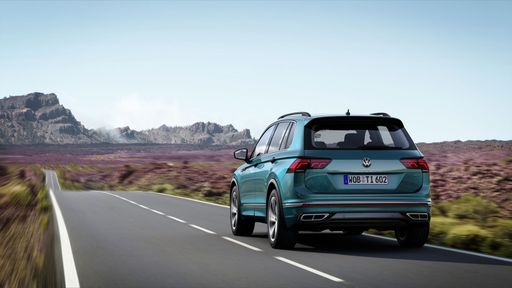
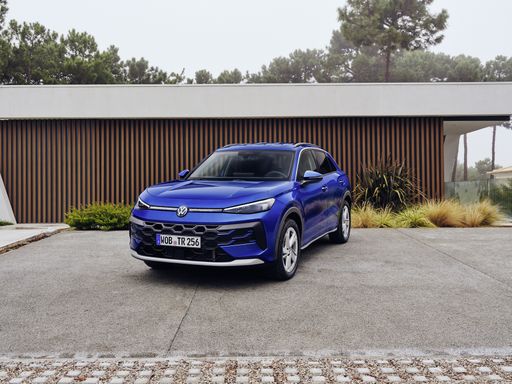
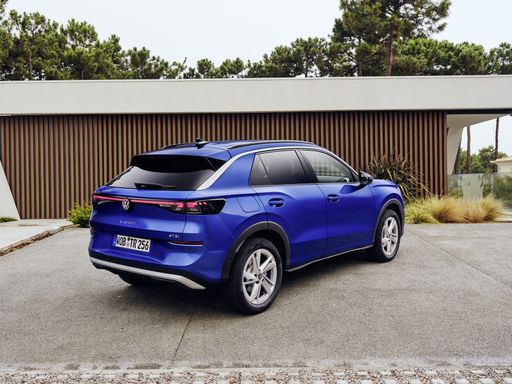
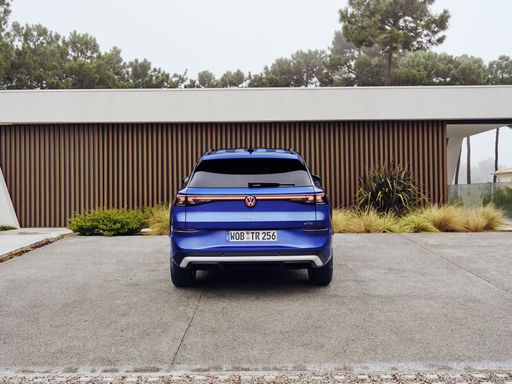
The T-Roc is compact and sporty, measuring 4,236 mm in length and 1,819 mm in width. Its design emphasizes agility, with a height of 1,584 mm that contributes to an athletic stance. On the other hand, the Tiguan is a larger vehicle, stretching to 4,539 mm in length and 1,842 mm in width, which translates to extra interior space. The Tiguan stands a bit taller at 1,658 mm, providing a commanding view of the road.

Tiguan

Powertrain Options and Performance

The T-Roc comes equipped with a range of engines, including turbocharged petrol and diesel options, delivering power outputs from 115 HP to a potent 300 HP. Depending on the variant, it offers both front-wheel and all-wheel drive configurations. The T-Roc accelerates from 0-100 km/h in as little as 4.9 seconds for the high-performance model.

In contrast, the Tiguan's engine lineup includes petrol mild-hybrid, plug-in hybrid, and diesel engines, ranging from 130 HP to 272 HP. With its larger engines, the Tiguan achieves 0-100 km/h in as quickly as 5.9 seconds. Both vehicles feature dual-clutch automatic transmissions, ensuring quick gear changes and a smooth driving experience.

T-Roc

Fuel Efficiency and Emissions

The T-Roc boasts an impressive fuel consumption rate, with figures as low as 4.7 L/100 km for its most efficient variants. Its CO2 emissions vary from 125 to 194 g/km, depending on the engine choice. The SUV's lighter curb weight is also advantageous for fuel efficiency.

The Tiguan, while slightly heavier, offers competitive fuel consumption, particularly with its plug-in hybrid option that can run solely on electric for up to 112 km on a full charge. Its trusty petrol and diesel variants deliver efficiency figures starting from 5.3 L/100 km to 6.4 L/100 km, with CO2 emissions ranging from 139 to 193 g/km.

Tiguan

Technology and Innovations

Both the T-Roc and Tiguan feature a suite of advanced technologies aimed at enhancing convenience and safety. The T-Roc offers an intuitive infotainment system with a responsive touchscreen, smartphone integration via Apple CarPlay and Android Auto, as well as a range of driver assistance features such as adaptive cruise control and lane keeping assist.

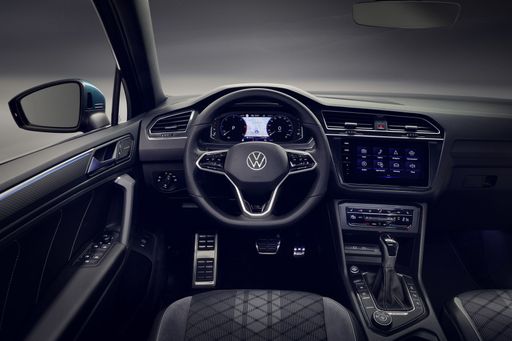
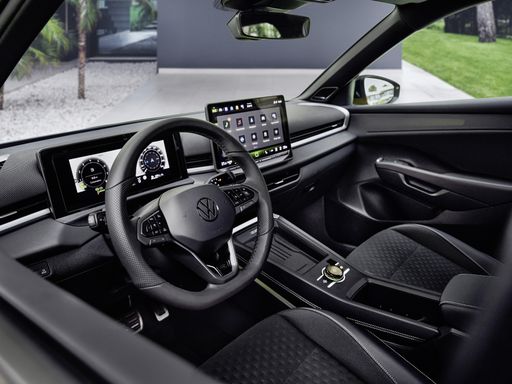
The Tiguan, however, steps it up a notch with its larger infotainment display and an available digital cockpit. This high-definition instrument panel provides customizable displays for better driver engagement. Additionally, it boasts a wider array of driver assistance technologies, including a more sophisticated adaptive cruise control system that can navigate traffic conditions, making road trips a breeze.

T-Roc

Interior Space and Comfort

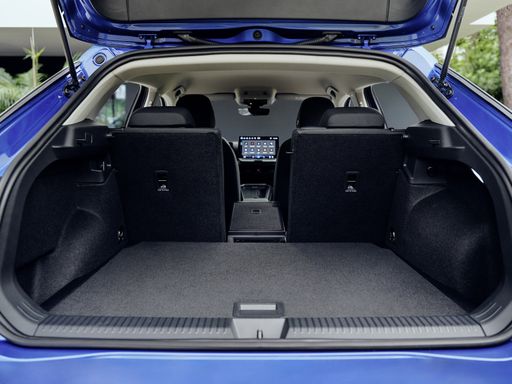
In terms of seating capacity, both models accommodate five passengers comfortably. The T-Roc offers a trunk capacity of 445 liters, which is practical for urban living. In contrast, the Tiguan excels in space with a trunk capacity of up to 652 liters, making it ideal for families or those needing extra cargo space.

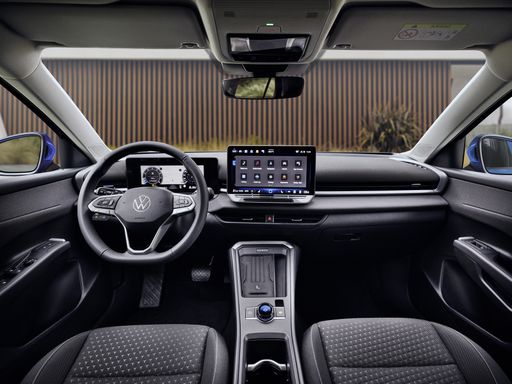
The interior quality in both vehicles aligns with VW's high standards, but the Tiguan’s larger dimensions allow for more legroom and headroom, enhancing passenger comfort during long journeys.

Tiguan

Conclusion: Which One Should You Choose?

Ultimately, the choice between the VW T-Roc and Tiguan revolves around your preferences and needs. If you desire a sporty, agile SUV with impressive fuel efficiency and modern technology, the T-Roc stands out as a thrilling option. However, if you require more space, advanced hybrid technology, and enhanced driver assistance features, the Tiguan is likely the better fit.

Regardless of your choice, both vehicles offer Volkswagen’s commitment to quality, safety, and performance, ensuring a satisfying driving experience in their own unique ways.

Here’s where it gets real: The technical differences in detail

Tiguan

Costs and Efficiency:

Price and efficiency are key factors when choosing a car – and this is often where the real differences emerge.

VW T-Roc is clearly cheaper – starting at 26,400 £ , while the VW Tiguan costs 33,600 £ . That’s a price difference of around 7,140 £.

Fuel consumption also shows a difference: the VW Tiguan uses 1.4 L/100km and is substantially more efficient than the VW T-Roc with 5.5 L/100km. The difference is about 4.1 L/100km.

T-Roc

Engine and Performance:

Power, torque and acceleration say a lot about how a car feels on the road. This is where you see which model delivers more driving dynamics.

When it comes to engine power, the VW Tiguan offers considerably more power – delivering 272 HP compared to 150 HP. That’s roughly 122 HP more horsepower.

When accelerating from 0 to 100 km/h, the VW Tiguan is clearly quicker – completing the sprint in 5.9 s, while the VW T-Roc takes 8.9 s. That’s about 3 s quicker.

There’s also a difference in torque: the VW Tiguan delivers markedly more torque with 400 Nm compared to 250 Nm. That’s about 150 Nm more.

Tiguan

Space and Everyday Use:

Beyond pure performance, interior space and usability matter most in daily life. This is where you see which car is more practical and versatile.

Both vehicles offer seating for 5 people.

In terms of curb weight, VW T-Roc is very slightly lighter – 1,465 kg compared to 1,599 kg. The difference is around 134 kg.

Looking at boot space, the VW Tiguan offers significantly more boot space – 652 L compared to 284 L. That’s a difference of about 368 L.

When it comes to payload, the VW Tiguan carries barely more – 533 kg compared to 515 kg. That’s a difference of about 18 kg.

Who wins the race in the data check?

The VW Tiguan is decisively ahead in the objective data comparison.
This result only shows which model scores more points on paper – not which of the two cars feels right for you.

from £33,600
Tiguan

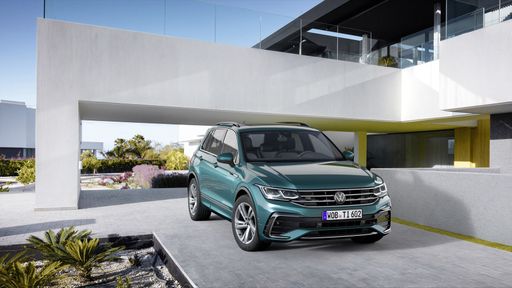
VW Tiguan

  • Engine Type : Petrol MHEV, Petrol, Diesel, Plugin Hybrid
  • Transmission : Automatic
  • Drive Type : Front-Wheel Drive, All-Wheel Drive
  • Power HP : 130 - 272 HP
  • Consumption L/100km : 1.4 - 8.4 L/100km
  • Electric Range : 118 - 126 km
VW Tiguan
VW T-Roc

Costs and Consumption

View detailed analysis

Engine and Performance

View detailed analysis

Dimensions and Body

View detailed analysis

VW Tiguan

The VW Tiguan blends sensible family practicality with a dash of German polish, delivering a calm, reassuring ride and a cabin that never feels like an afterthought. For buyers who want an SUV that’s easy to live with yet still nicely dressed, the Tiguan is the grown‑up choice that keeps a cheeky wink in reserve.

details

VW T-Roc

The VW T-Roc mixes cheeky, coupe-like styling with the everyday sense and space of an SUV, so it looks fun without sacrificing family sense. It’s a likeable all-rounder with tidy road manners and plenty of personality, ideal if you want a car that’s practical enough for chores but entertaining enough to enjoy.

details
VW Tiguan
VW T-Roc

Costs and Consumption

Price
33,600 - 54,600 £
Price
26,400 - 38,600 £
Consumption L/100km
1.4 - 8.4 L/100km
Consumption L/100km
5.5 - 6.3 L/100km
Consumption kWh/100km
-
Consumption kWh/100km
-
Electric Range
118 - 126 km
Electric Range
-
Battery Capacity
19.7 kWh
Battery Capacity
-
co2
32 - 190 g/km
co2
126 - 143 g/km
Fuel tank capacity
45 L
Fuel tank capacity
-

Dimensions and Body

Body Type
SUV
Body Type
SUV
Seats
5
Seats
4 - 5
Doors
5
Doors
-
Curb weight
1,599 - 1,879 kg
Curb weight
1,465 - 1,539 kg
Trunk capacity
490 - 652 L
Trunk capacity
284 L
Length
4,539 mm
Length
-
Width
1,842 - 1,859 mm
Width
1,811 - 1,828 mm
Height
1,658 mm
Height
-
Max trunk capacity
1,486 L
Max trunk capacity
-
Payload
460 - 533 kg
Payload
368 - 515 kg

Engine and Performance

Engine Type
Petrol MHEV, Petrol, Diesel, Plugin Hybrid
Engine Type
Petrol, Petrol MHEV
Transmission
Automatic
Transmission
Manuel, Automatic
Transmission Detail
Dual-Clutch Automatic
Transmission Detail
Manual Gearbox, Dual-Clutch Automatic
Drive Type
Front-Wheel Drive, All-Wheel Drive
Drive Type
Front-Wheel Drive
Power HP
130 - 272 HP
Power HP
115 - 150 HP
Acceleration 0-100km/h
5.9 - 10.6 s
Acceleration 0-100km/h
8.9 - 12.3 s
Max Speed
210 - 215 km/h
Max Speed
-
Torque
220 - 400 Nm
Torque
200 - 250 Nm
Number of Cylinders
4
Number of Cylinders
3 - 4
Power kW
96 - 200 kW
Power kW
85 - 110 kW
Engine capacity
1,498 - 1,984 cm3
Engine capacity
999 - 1,498 cm3

General

Model Year
2,024 - 2,026
Model Year
2,024 - 2,025
CO2 Efficiency Class
D, E, F, B, G
CO2 Efficiency Class
E, D
Brand
VW
Brand
VW
DriveDuel uses data analysis and artificial intelligence to evaluate vehicle data and create content. Content is regularly reviewed and improved. The displayed prices are estimates based on German list prices, adjusted to the respective country’s VAT. Country-specific registration taxes are not included. This information is not legally binding.