VS

Audi A3 Sportback vs Dacia Sandero comparison

Compare performance (400 HP vs 122 HP), boot space and price (27,000 £ vs 11,000 £ ) at a glance. Find out which car is the better choice for you – Audi A3 Sportback or Dacia Sandero?

Audi A3 Sportback vs Dacia Sandero: Key differences

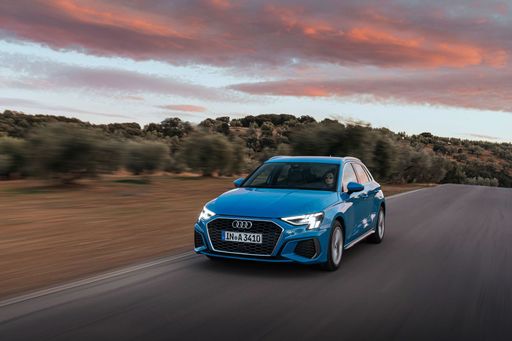
Audi A3 Sportback

3.9 (1 Reviews)
rate
  • significantly more power
  • considerably more efficient
  • clearly quicker 0–100 km/h
  • very slightly more trunk space
details

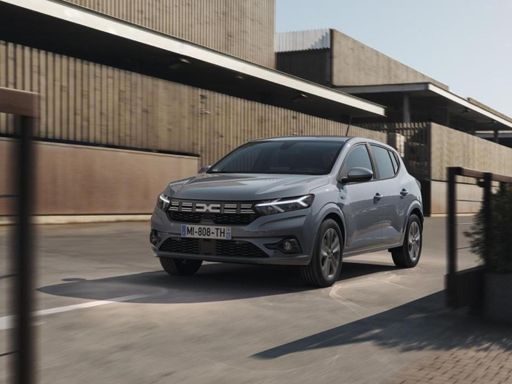
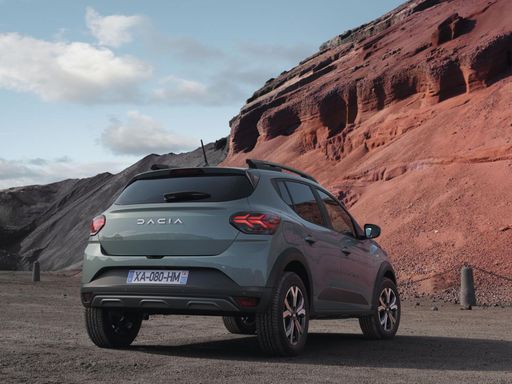
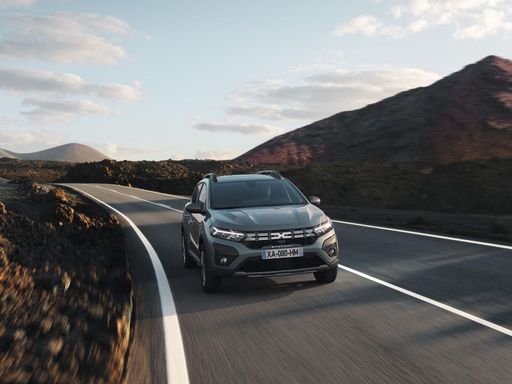
Dacia Sandero

3.1 (5 Reviews)
rate
  • clearly cheaper
  • visibly lighter
details

All details on performance, efficiency, range and trunk space can be found in the technical comparison below – including user reviews for both models.

By Achim Sedelmaier

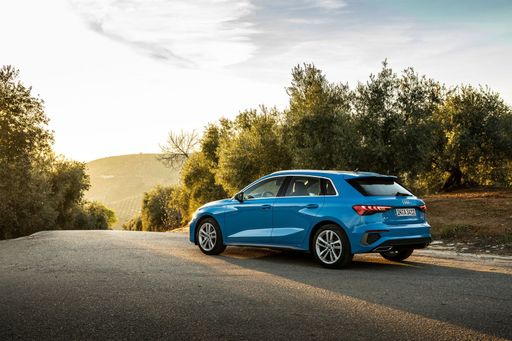
A3 Sportback

Engaging Dynamics: Audi A3 Sportback vs. Dacia Sandero

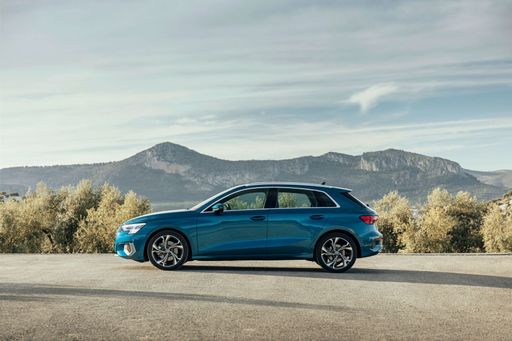
In the ever-expanding automotive marketplace, two hatchbacks stand out for different reasons: the refined and technologically advanced Audi A3 Sportback and the economically savvy Dacia Sandero. While both cater to a different clientele, they reveal how varied the hatchback segment has become. In this comprehensive comparison, we delve into their technical aspects, innovations, and what makes each model special.
Sandero

Engine Options and Fuel Efficiency

The Audi A3 Sportback shines with a diverse range of engine configurations, offering everything from petrol and diesel to hybrid options. Its entry-level petrol engine churns out a respectable 150 HP with a consumption rate of around 5.4 L/100km. Alternatively, the plug-in hybrid variant showcases an impressive electric range of up to 143 km, making it an appealing option for those prioritizing eco-friendliness without compromising performance.

On the flip side, the Dacia Sandero opts for simplicity, providing a modest 1.0-liter engine available in both petrol and LPG options. Power outputs range from 67 HP to a max of 110 HP, offering fuel consumption as low as 5.3 L/100km. For those on a budget, this signifies reliability and cost-effectiveness.

A3 Sportback

Performance and Driving Dynamics

When it comes to performance, the Audi A3 Sportback offers diverse driving experiences with its front-wheel and all-wheel drive configurations. Its acceleration capabilities range from a relaxed 10.1 seconds to a thrilling 3.8 seconds from 0-100 km/h for the high-performance variant. With advanced suspension systems and responsive steering, the A3 provides a dynamic and engaging drive.

Conversely, the Dacia Sandero doesn't aim to compete in the high-performance realm. Its acceleration times are more leisurely, with the 110 HP variant reaching 100 km/h in a reasonable 10 seconds. Though not designed for speed, the Sandero offers a comfortable and practical urban driving experience.

Sandero

Dimensions and Interior Space

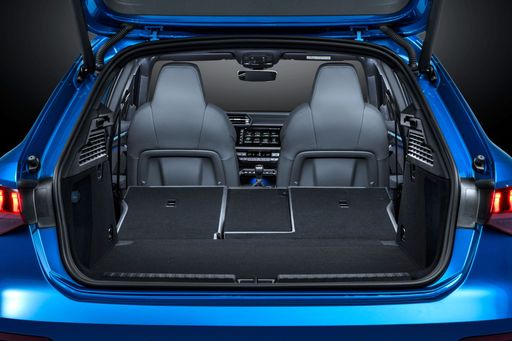
The Audi A3 Sportback measures up to 4,381 mm in length, offering ample interior space with a luxurious finish. With a trunk capacity of up to 380 liters, it makes for an excellent companion for both city adventures and longer journeys.

The Dacia Sandero, meanwhile, is slightly shorter at 4,099 mm but compensates with a practical design that includes a trunk capacity of 328 liters. Its interior is straightforward and user-friendly, ideal for those prioritizing functionality over high-end finishes.

A3 Sportback

Innovations and Features

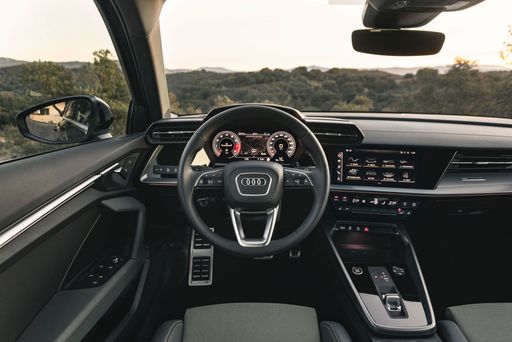
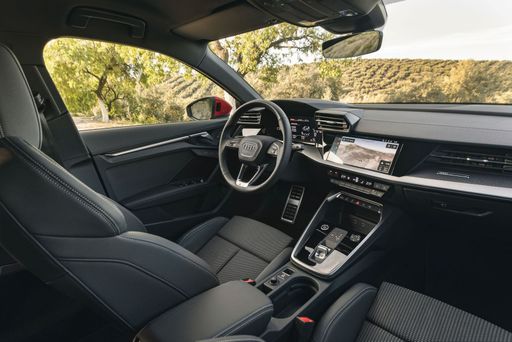
Audi has packed the A3 Sportback with a plethora of technological features, including an advanced infotainment system, virtual cockpit, and a suite of driver-assistance systems that elevate the driving experience to a new level of comfort and safety.

The Dacia Sandero focuses on simplicity and reliability. While it may not boast the high-tech features of the A3, it offers essential comfort and safety features, ensuring a reliable drive without unnecessary complexity.

Sandero

Pricing and Value Proposition

The Audi A3 Sportback caters to those willing to invest in luxury, technology, and performance, justifying its premium pricing. Its advanced features and power options provide a compelling argument for those who seek a refined driving experience.

Alternatively, the Dacia Sandero is a champion of affordability. Its lower price point makes it an attractive choice for budget-conscious consumers who need a practical, no-frills vehicle that gets the job done efficiently.

A3 Sportback

Conclusion

Ultimately, the Audi A3 Sportback and Dacia Sandero define two distinct approaches within the hatchback category. The A3 Sportback excels in luxury, performance, and technological innovation, while the Sandero embodies simplicity, affordability, and practicality. Both models illustrate the diverse options available to consumers today, catering to a wide range of driving needs and preferences. Whether you prioritize high-end features or straightforward practicality, there's a hatchback for everyone in this dynamic segment.

Here’s where it gets real: The technical differences in detail

A3 Sportback

Costs and Efficiency:

Looking at overall running costs, both models reveal some interesting differences in everyday economy.

Dacia Sandero is clearly cheaper – starting at 11,000 £ , while the Audi A3 Sportback costs 27,000 £ . That’s a price difference of around 16,038 £.

Fuel consumption also shows a difference: the Audi A3 Sportback uses 1.1 L/100km and is considerably more efficient than the Dacia Sandero with 5.3 L/100km. The difference is about 4.2 L/100km.

Sandero

Engine and Performance:

Under the bonnet, it becomes clear which model is tuned for sportiness and which one takes the lead when you hit the accelerator.

When it comes to engine power, the Audi A3 Sportback offers significantly more power – delivering 400 HP compared to 122 HP. That’s roughly 278 HP more horsepower.

When accelerating from 0 to 100 km/h, the Audi A3 Sportback is clearly quicker – completing the sprint in 3.8 s, while the Dacia Sandero takes 9.7 s. That’s about 5.9 s quicker.

There’s also a difference in torque: the Audi A3 Sportback delivers considerably more torque with 500 Nm compared to 200 Nm. That’s about 300 Nm more.

A3 Sportback

Space and Everyday Use:

Cabin size, boot volume and payload all play a role in everyday practicality. Here, comfort and flexibility make the difference.

Both vehicles offer seating for 5 people.

In terms of curb weight, Dacia Sandero is visibly lighter – 1,100 kg compared to 1,360 kg. The difference is around 260 kg.

Looking at boot space, the Audi A3 Sportback offers very slightly more boot space – 380 L compared to 372 L. That’s a difference of about 8 L.

When it comes to payload, the Audi A3 Sportback carries marginally more – 480 kg compared to 436 kg. That’s a difference of about 44 kg.

Who wins the race in the data check?

The Audi A3 Sportback holds a decisive overall lead in the objective data comparison.
This result only shows which model scores more points on paper – not which of the two cars feels right for you.

from £27,000
A3 Sportback

Audi A3 Sportback

  • Engine Type : Petrol, Petrol MHEV, Diesel, Plugin Hybrid
  • Transmission : Manuel, Automatic
  • Drive Type : Front-Wheel Drive, All-Wheel Drive
  • Power HP : 116 - 400 HP
  • Consumption L/100km : 1.1 - 9.3 L/100km
  • Electric Range : 134 - 141 km
Audi A3 Sportback
Dacia Sandero

Costs and Consumption

View detailed analysis

Engine and Performance

View detailed analysis

Dimensions and Body

View detailed analysis

Audi A3 Sportback

The Audi A3 Sportback wraps premium materials and crisp German design into a practical hatchback package that makes daily driving feel smart rather than showy. It’s nimble in the city, composed on longer trips, and carries just enough swagger to satisfy buyers who want quality without shouting about it.

details

Dacia Sandero

The Sandero is a no-nonsense hatchback that prioritises practicality and low running costs, making it a smart choice for budget-minded buyers. It delivers a surprisingly roomy interior and straightforward, useful equipment so you get everyday usability without paying for unnecessary frills.

details
Audi A3 Sportback
Dacia Sandero

Costs and Consumption

Price
27,000 - 92,900 £
Price
11,000 - 16,300 £
Consumption L/100km
1.1 - 9.3 L/100km
Consumption L/100km
5.3 - 7.2 L/100km
Consumption kWh/100km
-
Consumption kWh/100km
-
Electric Range
134 - 141 km
Electric Range
-
Battery Capacity
-
Battery Capacity
-
co2
25 - 211 g/km
co2
111 - 131 g/km
Fuel tank capacity
-
Fuel tank capacity
-

Dimensions and Body

Body Type
Hatchback
Body Type
Hatchback
Seats
5
Seats
5
Doors
-
Doors
-
Curb weight
1,360 - 1,685 kg
Curb weight
1,100 - 1,297 kg
Trunk capacity
280 - 380 L
Trunk capacity
372 L
Length
-
Length
-
Width
1,816 - 1,851 mm
Width
1,853 mm
Height
-
Height
-
Max trunk capacity
-
Max trunk capacity
-
Payload
410 - 480 kg
Payload
385 - 436 kg

Engine and Performance

Engine Type
Petrol, Petrol MHEV, Diesel, Plugin Hybrid
Engine Type
Petrol, LPG
Transmission
Manuel, Automatic
Transmission
Manuel, Automatic
Transmission Detail
Manual Gearbox, Dual-Clutch Automatic
Transmission Detail
Manual Gearbox, Dual-Clutch Automatic
Drive Type
Front-Wheel Drive, All-Wheel Drive
Drive Type
Front-Wheel Drive
Power HP
116 - 400 HP
Power HP
67 - 122 HP
Acceleration 0-100km/h
3.8 - 10.1 s
Acceleration 0-100km/h
9.7 - 16.7 s
Max Speed
-
Max Speed
-
Torque
220 - 500 Nm
Torque
95 - 200 Nm
Number of Cylinders
4 - 5
Number of Cylinders
3
Power kW
85 - 294 kW
Power kW
49 - 90 kW
Engine capacity
1,498 - 2,480 cm3
Engine capacity
999 - 1,199 cm3

General

Model Year
2,025 - 2,026
Model Year
2025
CO2 Efficiency Class
D, F, E, G, B
CO2 Efficiency Class
D, C
Brand
Audi
Brand
Dacia
DriveDuel uses data analysis and artificial intelligence to evaluate vehicle data and create content. Content is regularly reviewed and improved. The displayed prices are estimates based on German list prices, adjusted to the respective country’s VAT. Country-specific registration taxes are not included. This information is not legally binding.