
 Deutschland
 France
 Nederland
 Great Britain
 Sverige
 Danmark
 Suomi
Suomi Italia
 Polska
 España
VS
Audi Q4 e-tron vs Renault Symbioz comparison
Compare performance (340 HP vs 158 HP), boot space and price (39,600 £ vs 24,400 £ ) at a glance. Find out which car is the better choice for you – Audi Q4 e-tron or Renault Symbioz?
Q4 e-tron
Costs and Efficiency:
Price and efficiency are key factors when choosing a car – and this is often where the real differences emerge.
Renault Symbioz is significantly cheaper – starting at 24,400 £ , while the Audi Q4 e-tron costs 39,600 £ . That’s a price difference of around 15,129 £.
Symbioz
Engine and Performance:
Power, torque and acceleration say a lot about how a car feels on the road. This is where you see which model delivers more driving dynamics.
When it comes to engine power, the Audi Q4 e-tron offers considerably more power – delivering 340 HP compared to 158 HP. That’s roughly 182 HP more horsepower.
When accelerating from 0 to 100 km/h, the Audi Q4 e-tron is significantly quicker – completing the sprint in 5.4 s, while the Renault Symbioz takes 9.1 s. That’s about 3.7 s quicker.
There’s no difference in top speed – both reach 180 km/h.
There’s also a difference in torque: the Audi Q4 e-tron delivers substantially more torque with 679 Nm compared to 265 Nm. That’s about 414 Nm more.
Q4 e-tron
Space and Everyday Use:
Whether family car or daily driver – which one offers more room, flexibility and comfort?
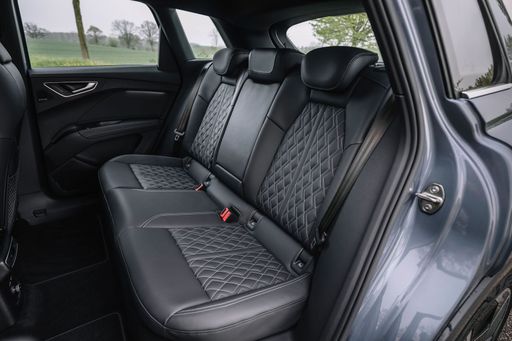
Both vehicles offer seating for 5 people.
In terms of curb weight, Renault Symbioz is significantly lighter – 1,359 kg compared to 2,035 kg. The difference is around 676 kg.
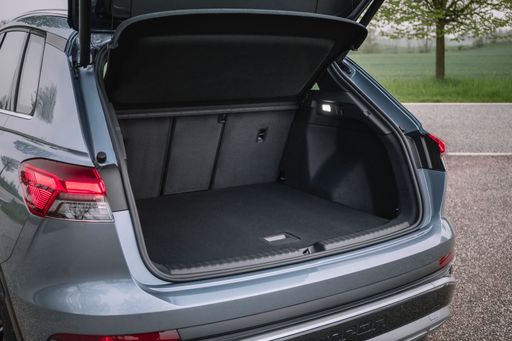
Looking at boot space, the Renault Symbioz offers only slightly more boot space – 576 L compared to 535 L. That’s a difference of about 41 L.
For maximum load capacity, the Renault Symbioz offers moderately more capacity – up to 1,682 L, about 192 L more than the Audi Q4 e-tron.
When it comes to payload, the Audi Q4 e-tron carries somewhat more – 515 kg compared to 459 kg. That’s a difference of about 56 kg.
Who wins the race in the data check?
The Audi Q4 e-tron is far ahead overall in the objective data comparison.
This result only shows which model scores more points on paper – not which of the two cars feels right for you.
from £39,600
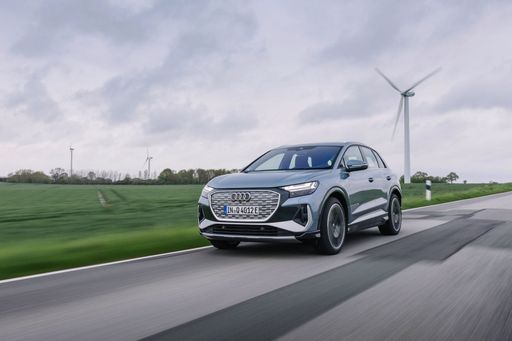
Audi Q4 e-tron
Audi Q4 e-tron
Renault Symbioz
Costs and Consumption
View detailed analysis
View detailed analysis
Engine and Performance
View detailed analysis
View detailed analysis
Dimensions and Body
View detailed analysis
View detailed analysis
Audi Q4 e-tron
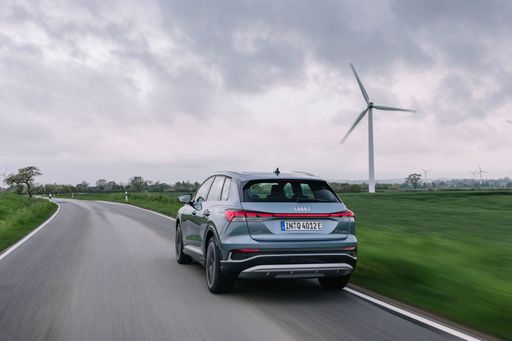
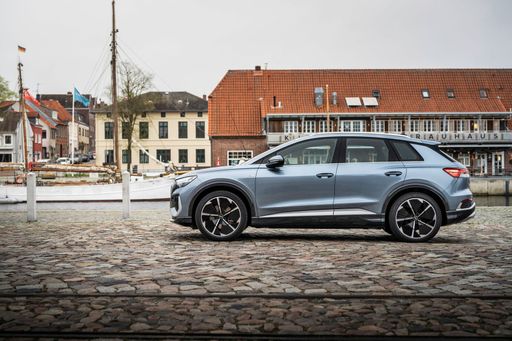
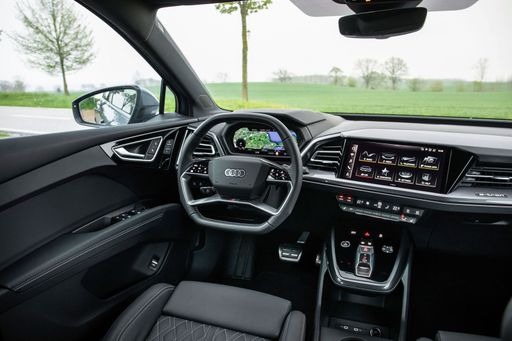
The Audi Q4 e-tron brings Audi polish into the electric crossover scene, pairing a sleek exterior with a refined, airy interior that makes everyday driving feel distinctly premium. It’s an easy-to-live-with EV that balances comfort and real-world usability with intuitive tech, making it a smart choice for buyers who want electric mobility without giving up Audi character — and yes, it still looks good in the driveway.
details
Renault Symbioz
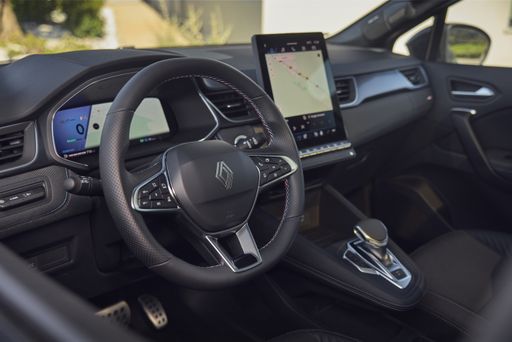
The Renault Symbioz feels less like a traditional car and more like a rolling living room that's been told it's allowed to drive — its flowing lines and minimalist cabin are pure concept-car theatre that teases the future of everyday transport. For buyers with an eye for design and a taste for tech-forward ideas, the Symbioz is an alluring vision of what Renault could offer tomorrow, even if it's not yet a model you can park in your driveway.
details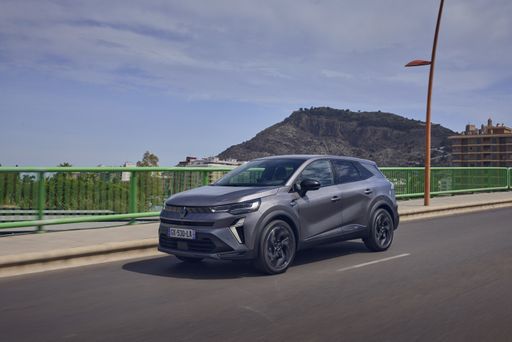
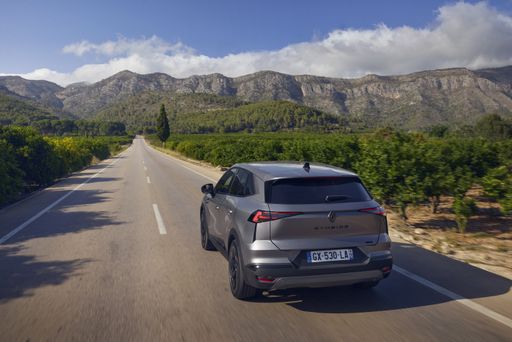
Audi Q4 e-tron
Renault Symbioz
Costs and Consumption |
|
|---|---|
|
Price
39,600 - 58,800 £
|
Price
24,400 - 30,700 £
|
|
Consumption L/100km
-
|
Consumption L/100km
4.5 - 6 L/100km
|
|
Consumption kWh/100km
15.9 - 17.4 kWh/100km
|
Consumption kWh/100km
-
|
|
Electric Range
406 - 554 km
|
Electric Range
-
|
|
Battery Capacity
77 kWh
|
Battery Capacity
-
|
|
co2
0 g/km
|
co2
102 - 136 g/km
|
|
Fuel tank capacity
-
|
Fuel tank capacity
48 L
|
Dimensions and Body |
|
|---|---|
|
Body Type
SUV
|
Body Type
SUV
|
|
Seats
5
|
Seats
5
|
|
Doors
5
|
Doors
5
|
|
Curb weight
2,035 - 2,235 kg
|
Curb weight
1,359 - 1,465 kg
|
|
Trunk capacity
520 - 535 L
|
Trunk capacity
492 - 576 L
|
|
Length
4,588 mm
|
Length
4,413 mm
|
|
Width
1,865 mm
|
Width
1,797 mm
|
|
Height
1,614 - 1,632 mm
|
Height
1,575 mm
|
|
Max trunk capacity
1,460 - 1,490 L
|
Max trunk capacity
1,682 L
|
|
Payload
505 - 515 kg
|
Payload
455 - 459 kg
|
Engine and Performance |
|
|---|---|
|
Engine Type
Electric
|
Engine Type
Full Hybrid, Petrol MHEV
|
|
Transmission
Automatic
|
Transmission
Automatic, Manuel
|
|
Transmission Detail
Reduction Gearbox
|
Transmission Detail
Automatic Gearbox, Manual Gearbox, Dual-Clutch Automatic
|
|
Drive Type
Rear-Wheel Drive, All-Wheel Drive
|
Drive Type
Front-Wheel Drive
|
|
Power HP
204 - 340 HP
|
Power HP
140 - 158 HP
|
|
Acceleration 0-100km/h
5.4 - 8.1 s
|
Acceleration 0-100km/h
9.1 - 11 s
|
|
Max Speed
180 km/h
|
Max Speed
180 km/h
|
|
Torque
310 - 679 Nm
|
Torque
250 - 265 Nm
|
|
Number of Cylinders
-
|
Number of Cylinders
4
|
|
Power kW
150 - 250 kW
|
Power kW
103 - 116 kW
|
|
Engine capacity
-
|
Engine capacity
1,332 - 1,789 cm3
|
General |
|
|---|---|
|
Model Year
2,023 - 2,025
|
Model Year
2,025
|
|
CO2 Efficiency Class
A
|
CO2 Efficiency Class
C, D, E
|
|
Brand
Audi
|
Brand
Renault
|
DriveDuel uses data analysis and artificial intelligence to evaluate vehicle data and create content. Content is regularly reviewed and improved.
The displayed prices are estimates based on German list prices, adjusted to the respective country’s VAT. Country-specific registration taxes are not included. This information is not legally binding.