@ Audi AG
@ BMW Group Press
VS

Audi Q6 e-tron vs BMW i4 – Performance, range & efficiency compared

Both models have their strengths – but which one suits you more?
Compare performance, efficiency, price and space directly: Audi Q6 e-tron or BMW i4?

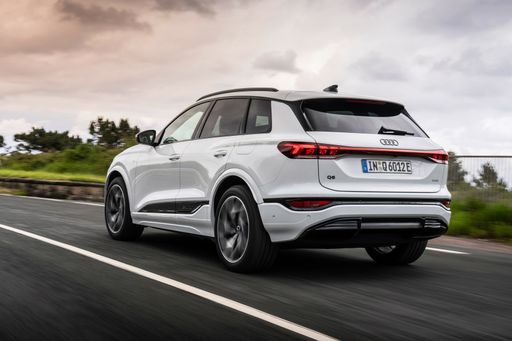
Q6 e-tron @ Audi AG

The automotive landscape is undergoing a seismic shift as electric vehicles (EVs) climb to the forefront of the market. Among the most anticipated entries is the Audi Q6 e-tron, set to compete directly with the BMW i4. While they belong to disparate segments—an SUV versus a hatchback—their electric drive trains and advanced technologies make for a compelling comparison.
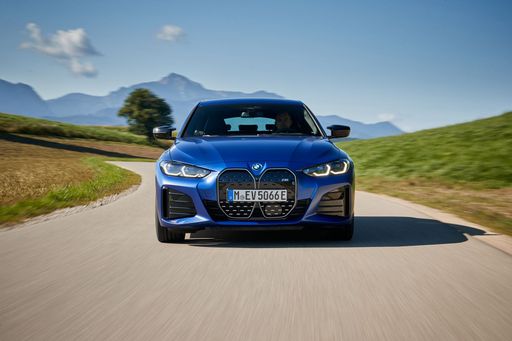
i4 @ BMW Group Press

Design and Dimensions

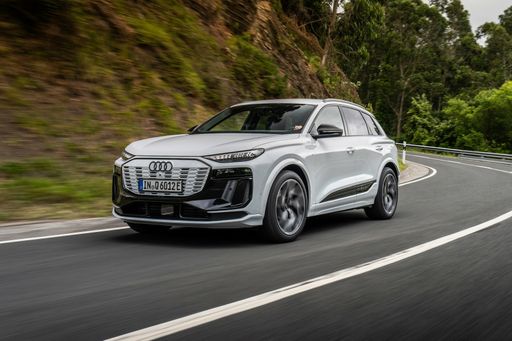
The Audi Q6 e-tron presents itself as a robust SUV with a commanding presence, measuring 4771 mm in length, 1939 mm in width, and 1685 mm in height. Its bold design elements reflect Audi's ongoing commitment to luxury while maintaining a sporty aesthetic.

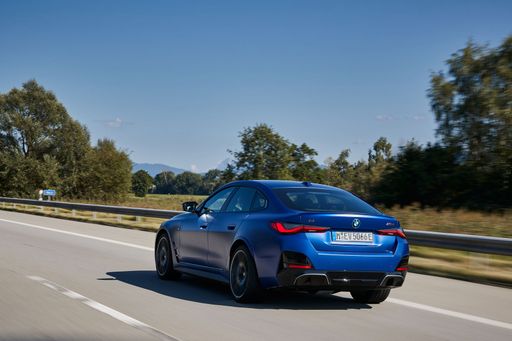
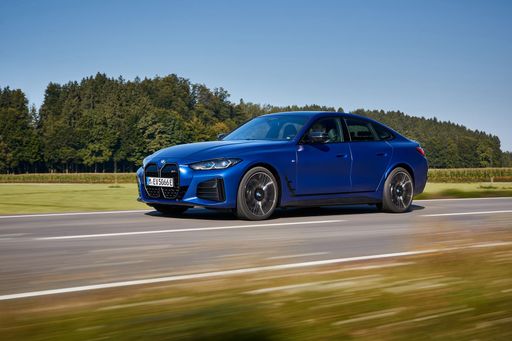
In contrast, the BMW i4 is designed as a sleek hatchback, slightly longer at 4783 mm but narrower at 1852 mm and significantly lower in height at 1448 mm. The i4’s design encapsulates BMW's dedication to dynamic driving experiences while conveying modern electric efficiency.

Q6 e-tron @ Audi AG

Powertrain Performance

When it comes to powertrains, both models offer impressive specs. The Audi Q6 e-tron is available in various configurations, with power outputs ranging from 292 to 516 HP. The dual-motor setup allows for all-wheel drive options and an acceleration time of just 4.3 seconds from 0-100 km/h. Torque options vary, reaching up to a substantial 855 Nm in the higher-end versions.

The BMW i4, on the other hand, provides power outputs between 286 and 544 HP, with the top-tier variant matching 0-100 km/h sprint times in a blistering 3.9 seconds. Torque also impressively peaks at 795 Nm in the more powerful configurations, making it clear that BMW has designed the i4 as a performance-oriented EV.

i4 @ BMW Group Press

Range and Efficiency

Electric range and efficiency are critical factors for EV buyers. The Audi Q6 e-tron boasts an impressive range, with options reaching up to 656 km, depending on the battery capacity of 75.8 or 94.9 kWh. Efficiency ratios vary but stay competitive, with consumption figures averaging around 16.2 to 18.9 kWh/100 km.

Meanwhile, the BMW i4’s electric range peaks at 582 km with a battery capacity of up to 81.3 kWh, maintaining an equally efficient consumption rate of approximately 15.6 to 18 kWh/100 km. The lower consumption figures suggest a slight edge in efficiency for the BMW i4.

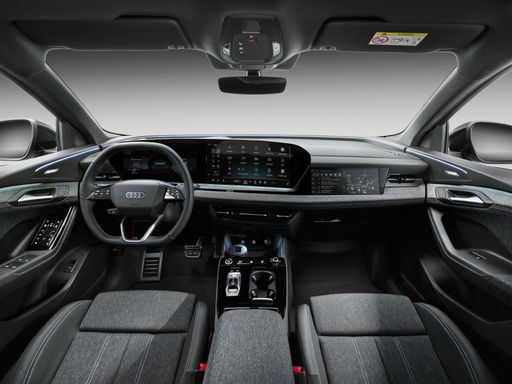
Q6 e-tron @ Audi AG

Interior and Technology

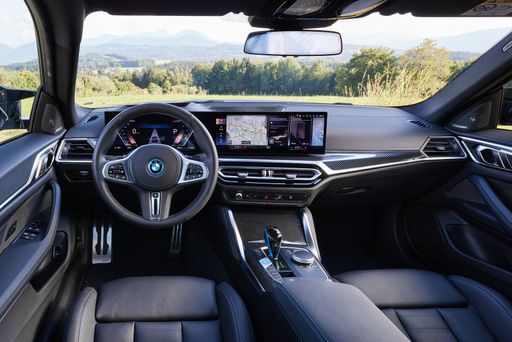
Stepping inside, both vehicles continue to shine. The Audi Q6 e-tron is designed for five passengers, emphasizing luxury with quality materials and cutting-edge infotainment systems, including a large touchscreen control interface and a digital cockpit. The spacious interior, amplified by significant trunk capacity, makes it practical for families or adventure seekers.

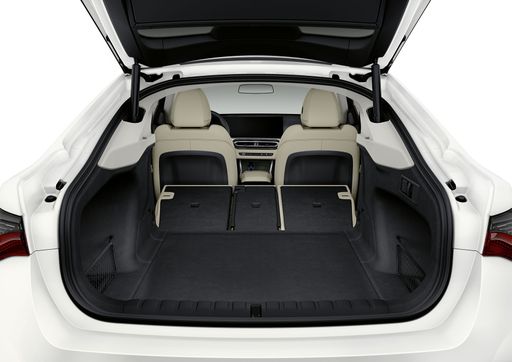
The BMW i4 also accommodates five and puts a focus on sporty ergonomics without sacrificing technological sophistication. The layout features a dual-screen setup, heavily promoting driver engagement along with BMW's latest iDrive system. Although the trunk capacity is less, at 470 liters, the i4’s distinctly driver-focused design excels in user experience.

i4 @ BMW Group Press

Safety and Driver Assistance

Both models come equipped with an array of safety features and driver assistance systems aimed at enhancing user protection. The Q6 e-tron includes several advanced driver-assistance technologies, characteristic of the Audi brand. These features help ensure that passengers benefit from both comfort and safety.

The BMW i4 matches this with its own suite of safety technologies, showcasing adaptive cruise control, lane-keeping assist, and various collision prevention systems, elevating the overall driving experience even further.

Final Thoughts

In the ever-evolving EV market, the Audi Q6 e-tron and BMW i4 stand out as compelling choices, each tailored to different preferences and needs. The Q6 e-tron presents a blend of space and luxury, while the i4 boldly emphasizes sporty performance and efficiency. Whether you opt for Audi's robust SUV or BMW's dynamic hatchback, you’re assured of a thrilling electric driving experience that doesn’t compromise on style or technology.

Here’s where it gets real: The technical differences in detail

Costs and Efficiency:

Price and efficiency are often the first things buyers look at. Here it becomes clear which model has the long-term edge – whether at the pump, the plug, or in purchase price.

BMW i4 has a a bit advantage in terms of price – it starts at 49400 £, while the Audi Q6 e-tron costs 54400 £. That’s a price difference of around 5057 £.

In terms of energy consumption, the advantage goes to the BMW i4: with 14.70 kWh per 100 km, it’s slight more efficient than the Audi Q6 e-tron with 15.60 kWh. That’s a difference of about 0.90 kWh.

As for range, the Audi Q6 e-tron performs barely noticeable better – achieving up to 656 km, about 43 km more than the BMW i4.

Engine and Performance:

Under the bonnet, it becomes clear which model is tuned for sportiness and which one takes the lead when you hit the accelerator.

When it comes to engine power, the BMW i4 has a somewhat edge – offering 601 HP compared to 490 HP. That’s roughly 111 HP more horsepower.

In acceleration from 0 to 100 km/h, the BMW i4 is a bit quicker – completing the sprint in 3.70 s, while the Audi Q6 e-tron takes 4.40 s. That’s about 0.70 s faster.

In terms of top speed, the Audi Q6 e-tron performs hardly perceptible better – reaching 230 km/h, while the BMW i4 tops out at 225 km/h. The difference is around 5 km/h.

There’s also a difference in torque: Audi Q6 e-tron pulls barely noticeable stronger with 855 Nm compared to 795 Nm. That’s about 60 Nm difference.

Space and Everyday Use:

Whether family car or daily driver – which one offers more room, flexibility and comfort?

Both vehicles offer seating for 5 people.

In curb weight, BMW i4 is barely noticeable lighter – 2070 kg compared to 2200 kg. The difference is around 130 kg.

In terms of boot space, the Audi Q6 e-tron offers a bit more room – 526 L compared to 470 L. That’s a difference of about 56 L.

In maximum load capacity, the Audi Q6 e-tron performs slightly better – up to 1529 L, which is about 239 L more than the BMW i4.

When it comes to payload, Audi Q6 e-tron a bit takes the win – 540 kg compared to 480 kg. That’s a difference of about 60 kg.

Who wins the race?

The BMW i4 proves to be barely ahead and therefore becomes our DriveDuel Champion!
BMW i4 is the better all-rounder in this comparison.

from about £49,400
i4 @ BMW Group Press

BMW i4

  • Engine Type : Electric
  • Transmission : Automatic
  • Drive Type : Rear-Wheel Drive, All-Wheel Drive
  • Power HP : 286 - 601 HP
  • Consumption kWh/100km : 14.7 - 16.7 kWh
  • Electric Range : 514 - 613 km

Audi Q6 e-tron

5 (2)
rate

The Audi Q6 e-tron balances sleek, coupe-like styling with a roomy, upscale interior that feels modern without being showy. It delivers refined electric performance and smart tech that make daily driving effortless — the sort of EV that might make petrolheads grudgingly admit they fancy the future.

details

BMW i4

5 (1)
rate

The BMW i4 arrives with the poise of a classic Gran Coupé, marrying BMW's playful handling with a sleek, modern interior that makes switching to electric feel like an upgrade rather than a compromise. For buyers who want a practical daily driver that still enjoys a spirited back-road run, the i4 quietly delivers smiles and a surprising dose of driver engagement.

details
Audi Q6 e-tron
BMW i4
Q6 e-tron @ Audi AG
i4 @ BMW Group Press

Costs and Consumption

Price
54400 - 91900 £
Price
49400 - 62500 £
Consumption L/100km
-
Consumption L/100km
-
Consumption kWh/100km
15.6 - 18.9 kWh
Consumption kWh/100km
14.7 - 16.7 kWh
Electric Range
482 - 656 km
Electric Range
514 - 613 km
Battery Capacity
75.8 - 94.9 kWh
Battery Capacity
67.1 - 81.3 kWh
co2
0 g/km
co2
0 g/km
Fuel tank capacity
-
Fuel tank capacity
-

Dimensions and Body

Body Type
SUV
Body Type
Hatchback
Seats
5
Seats
5
Doors
5
Doors
5
Curb weight
2200 - 2425 kg
Curb weight
2070 - 2285 kg
Trunk capacity
499 - 526 L
Trunk capacity
470 L
Length
4771 mm
Length
4783 mm
Width
1939 - 1965 mm
Width
1852 mm
Height
1665 - 1685 mm
Height
1448 mm
Max trunk capacity
1361 - 1529 L
Max trunk capacity
1290 L
Payload
540 kg
Payload
445 - 480 kg

Engine and Performance

Engine Type
Electric
Engine Type
Electric
Transmission
Automatic
Transmission
Automatic
Transmission Detail
Reduction Gearbox
Transmission Detail
Reduction Gearbox
Drive Type
Rear-Wheel Drive, All-Wheel Drive
Drive Type
Rear-Wheel Drive, All-Wheel Drive
Power HP
252 - 490 HP
Power HP
286 - 601 HP
Acceleration 0-100km/h
4.4 - 7.6 s
Acceleration 0-100km/h
3.7 - 6 s
Max Speed
210 - 230 km/h
Max Speed
190 - 225 km/h
Torque
450 - 855 Nm
Torque
400 - 795 Nm
Number of Cylinders
-
Number of Cylinders
-
Power kW
185 - 360 kW
Power kW
210 - 442 kW
Engine capacity
-
Engine capacity
-

General

Model Year
2024 - 2025
Model Year
2025
CO2 Efficiency Class
A
CO2 Efficiency Class
A
Brand
Audi
Brand
BMW
What drivetrain options does the Audi Q6 e-tron have?

Available configurations include Rear-Wheel Drive or All-Wheel Drive.

The prices and data displayed are estimates based on German list prices and may vary by country. This information is not legally binding.