@ Citroën / Stellantis Media
@ Dacia / Renault Group Media
VS

Citroen C5 Aircross vs Dacia Bigster – Which car suits you better?

Two cars, one duel: Citroen C5 Aircross meets Dacia Bigster.
Which one wins in performance, efficiency and value for money? Find out now!

C5 Aircross @ Citroën / Stellantis Media

Introduction to the Clash of SUVs

In the bustling world of SUVs, two contenders stand out with their distinctive charms and capabilities: the Citroen C5 Aircross and the upcoming Dacia Bigster. Both vehicles cater to different facets of the SUV market, boasting innovations and technical prowess that appeal to a broad audience. Let’s delve deeper into the nuances of these SUV titans and uncover what makes each a compelling choice.
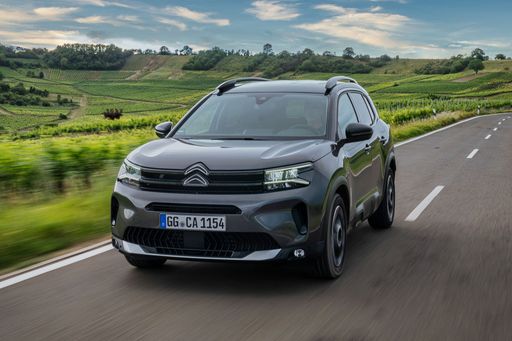
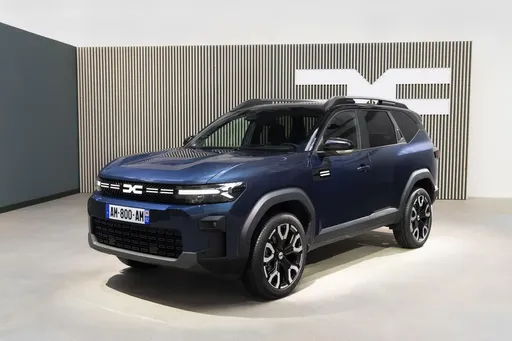
Bigster @ Dacia / Renault Group Media

Engine and Performance

The Citroen C5 Aircross offers a versatile range of engine options including diesel, petrol MHEV, and a plug-in hybrid. With power output ranging from 131 HP to 224 HP, it provides a broad spectrum to suit varying performance needs. The highlight is its plug-in hybrid variant, which can achieve 224 HP with a combined torque of 360 Nm, while boasting an electric range of 58 km.

On the other hand, the Dacia Bigster is set to make waves with its petrol MHEV, full hybrid, and LPG options. With power outputs of 130 HP to 155 HP and a top speed of 180 km/h, it’s tuned for both performance and efficiency. The quintessential Dacia trait of providing robust all-wheel-drive is sure to appeal to those seeking adventure off the beaten path.

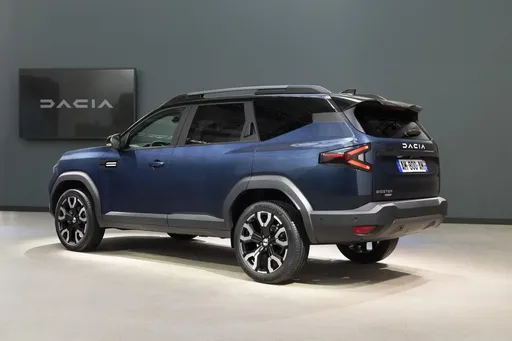
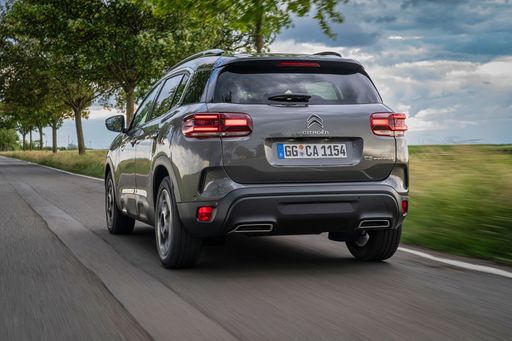
C5 Aircross @ Citroën / Stellantis Media

Transmission and Drive Systems

Citroen C5 Aircross provides a more modern approach with automatic and dual-clutch options, emphasizing seamless urban driving and long-distance comfort. Its front-wheel-drive system aligns with its ethos of delivering a smooth and efficient driving experience.

Meanwhile, the Dacia Bigster splits its focus with manual and automatic transmission options. More impressively, it offers an all-wheel-drive option, providing superior traction and stability across rugged terrains and harsh weather conditions.

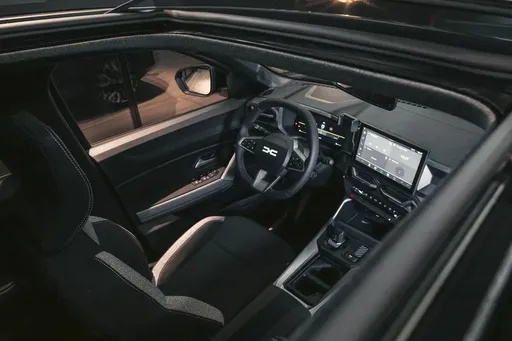
Bigster @ Dacia / Renault Group Media

Fuel Efficiency and Environmental Considerations

The Citroen C5 Aircross plug-in hybrid takes the lead in fuel efficiency with a remarkably low consumption of 1.4 L/100km and CO2 emissions as low as 32 g/km, making it an environmentally friendly choice. Its modestly sized but efficient 12.9 kWh battery stands as a testament to Citroen’s commitment to sustainability.

With the Bigster, Dacia steps up with respectable fuel consumption figures, delivering efficient performance with its LPG variant clocking in at just 4.7 L/100km. Though not as low in CO2 emissions as the Citroen, it still offers a competitive Environmental Efficiency Class, ranging from C to E.

C5 Aircross @ Citroën / Stellantis Media

Dimension and Storage

With a length of 4500 mm and a width of 1859 mm, the Citroen C5 Aircross offers a generous trunk capacity of up to 580 liters, prioritizing passenger comfort and storage capacity. While relatively compact, it doesn’t compromise on delivering a spacious interior.

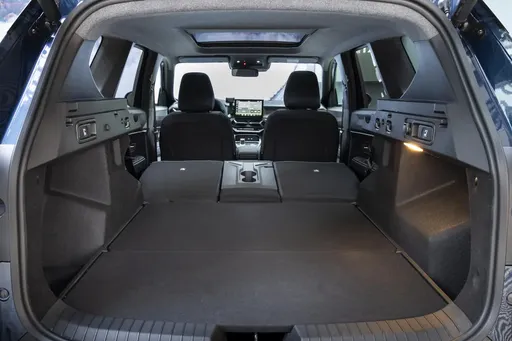
The Dacia Bigster, in contrast, extends to 4570 mm in length and offers an impressive trunk capacity of up to 667 liters, making it ideal for those requiring extra luggage space. This spaciousness, coupled with its rugged dimensions, positions it as a versatile choice for family adventures and outdoor trips.

Bigster @ Dacia / Renault Group Media

Conclusion: A Tale of Two Dynamic SUVs

The Citroen C5 Aircross and Dacia Bigster each offer unique strengths, catering to distinct tastes and needs within the SUV segment. The C5 Aircross champions innovation and a sleek driving experience with its modern hybrid powertrain, whereas the Bigster appeals to adventurous spirits with its solid build and all-terrain capabilities. Ultimately, the choice between the two will depend on personal preferences, driving environment, and a desire for either urban sophistication or rugged reliability. As both continue to evolve and push boundaries, they remain a testament to the diversity and excitement within the SUV market. Whether it's the allure of Citroen's luxury or Dacia's adventurous spirit, both models promise an engaging ride.

Here’s where it gets real: The technical differences in detail

C5 Aircross @ Citroën / Stellantis Media

Costs and Efficiency:

Looking at overall running costs, both models reveal some interesting differences in everyday economy.

Dacia Bigster has a convincingly advantage in terms of price – it starts at 20600 £, while the Citroen C5 Aircross costs 29100 £. That’s a price difference of around 8572 £.

Fuel consumption also shows a difference: Citroen C5 Aircross manages with 2.50 L and is therefore clearly more efficient than the Dacia Bigster with 4.70 L. The difference is about 2.20 L per 100 km.

Bigster @ Dacia / Renault Group Media

Engine and Performance:

Power, torque and acceleration are the classic benchmarks for car enthusiasts – and here, some clear differences start to show.

When it comes to engine power, the Citroen C5 Aircross has a clearly perceptible edge – offering 210 HP compared to 155 HP. That’s roughly 55 HP more horsepower.

In acceleration from 0 to 100 km/h, the Citroen C5 Aircross is somewhat quicker – completing the sprint in 8.30 s, while the Dacia Bigster takes 9.70 s. That’s about 1.40 s faster.

In terms of top speed, the Citroen C5 Aircross performs slightly better – reaching 220 km/h, while the Dacia Bigster tops out at 180 km/h. The difference is around 40 km/h.

There’s also a difference in torque: Citroen C5 Aircross pulls clearly perceptible stronger with 300 Nm compared to 230 Nm. That’s about 70 Nm difference.

Space and Everyday Use:

Beyond pure performance, interior space and usability matter most in daily life. This is where you see which car is more practical and versatile.

Both vehicles offer seating for 5 people.

In curb weight, Dacia Bigster is slightly lighter – 1425 kg compared to 1629 kg. The difference is around 204 kg.

In terms of boot space, the Dacia Bigster offers slightly more room – 667 L compared to 565 L. That’s a difference of about 102 L.

In maximum load capacity, the Dacia Bigster performs slightly better – up to 1937 L, which is about 269 L more than the Citroen C5 Aircross.

When it comes to payload, Citroen C5 Aircross minimal takes the win – 471 kg compared to 467 kg. That’s a difference of about 4 kg.

Who wins the race?

The Citroen C5 Aircross proves to be is largely superior and therefore becomes our DriveDuel Champion!
Citroen C5 Aircross is the better all-rounder in this comparison.

from about £29,100
C5 Aircross @ Citroën / Stellantis Media

Citroen C5 Aircross

  • Engine Type : Petrol MHEV, Electric, Plugin Hybrid
  • Transmission : Automatic
  • Drive Type : Front-Wheel Drive
  • Power HP : 145 - 210 HP
  • Consumption L/100km : 2.5 - 5.4 L
  • Consumption kWh/100km : 17 kWh
  • Electric Range : 81 - 520 km

Citroen C5 Aircross

The Citroën C5 Aircross feels like a sofa on wheels, delivering a calm, floaty ride and clever packaging that makes life with luggage and kids noticeably easier. Quirky French styling and a supremely practical, family-focused cabin mean it quietly wins hearts by prioritising comfort over showroom bravado.

details

Dacia Bigster

5 (1)
rate

The Bigster is poised to redefine the SUV segment with its bold design and spacious interior, catering to the needs of both families and adventure seekers alike. Emphasizing sustainability and practicality, this model reflects a modern approach to automotive engineering, making it a compelling choice for environmentally conscious drivers. With its striking presence on the road, the Bigster not only captures attention but also embodies a new era of versatile mobility.

details
Citroen C5 Aircross
Dacia Bigster
C5 Aircross @ Citroën / Stellantis Media
Bigster @ Dacia / Renault Group Media

Costs and Consumption

Price
29100 - 41600 £
Price
20600 - 26600 £
Consumption L/100km
2.5 - 5.4 L
Consumption L/100km
4.7 - 7.1 L
Consumption kWh/100km
17 kWh
Consumption kWh/100km
-
Electric Range
81 - 520 km
Electric Range
-
Battery Capacity
17.8 - 73 kWh
Battery Capacity
-
co2
0 - 121 g/km
co2
106 - 137 g/km
Fuel tank capacity
55 L
Fuel tank capacity
50 - 55 L

Dimensions and Body

Body Type
SUV
Body Type
SUV
Seats
5
Seats
5
Doors
5
Doors
5
Curb weight
1629 - 2184 kg
Curb weight
1425 - 1547 kg
Trunk capacity
565 L
Trunk capacity
510 - 667 L
Length
4650 mm
Length
4570 mm
Width
1870 mm
Width
1813 mm
Height
1695 mm
Height
1705 mm
Max trunk capacity
1668 L
Max trunk capacity
1813 - 1937 L
Payload
446 - 471 kg
Payload
383 - 467 kg

Engine and Performance

Engine Type
Petrol MHEV, Electric, Plugin Hybrid
Engine Type
Petrol MHEV, Full Hybrid, LPG
Transmission
Automatic
Transmission
Manuel, Automatic
Transmission Detail
Dual-Clutch Automatic, Reduction Gearbox
Transmission Detail
Manual Gearbox, Automated Manual
Drive Type
Front-Wheel Drive
Drive Type
All-Wheel Drive, Front-Wheel Drive
Power HP
145 - 210 HP
Power HP
130 - 155 HP
Acceleration 0-100km/h
8.3 - 11.2 s
Acceleration 0-100km/h
9.7 - 11.2 s
Max Speed
170 - 220 km/h
Max Speed
180 km/h
Torque
230 - 300 Nm
Torque
230 Nm
Number of Cylinders
3 - 4
Number of Cylinders
3 - 4
Power kW
107 - 157 kW
Power kW
96 - 115 kW
Engine capacity
1199 - 1598 cm3
Engine capacity
1199 - 1799 cm3

General

Model Year
2025
Model Year
2025
CO2 Efficiency Class
D, A, B
CO2 Efficiency Class
E, D, C
Brand
Citroen
Brand
Dacia
What drive types are available for the Citroen C5 Aircross?

The Citroen C5 Aircross is available as Front-Wheel Drive.

The prices and data displayed are estimates based on German list prices and may vary by country. This information is not legally binding.