VS

Dacia Bigster vs Citroen Berlingo comparison

Compare performance (158 HP vs 136 HP), boot space and price (20,600 £ vs 20,300 £ ) at a glance. Find out which car is the better choice for you – Dacia Bigster or Citroen Berlingo?

Dacia Bigster vs Citroen Berlingo: Key differences

Dacia Bigster

4.5 (12 Reviews)
rate
  • slightly more power
  • moderately more efficient
  • slightly quicker 0–100 km/h
  • barely lighter
details

Citroen Berlingo

  • only slightly cheaper
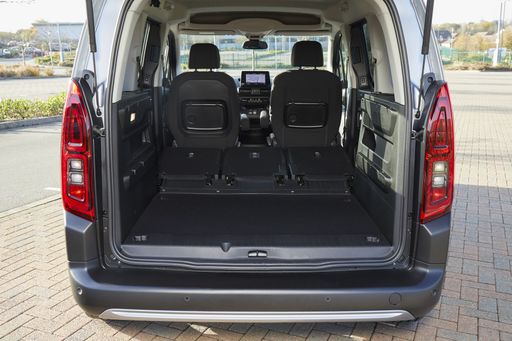
  • visibly more trunk space
details

All details on performance, efficiency, range and trunk space can be found in the technical comparison below – including user reviews for both models.

By Achim Sedelmaier

Bigster

The Battle of the Practical: Citroën Berlingo vs. Dacia Bigster

In the world of versatile vehicles, two models stand out: the Citroën Berlingo and the Dacia Bigster. Both vehicles are designed to meet the demands of diverse driving experiences, from urban commuting to adventurous road trips. Let's dive into the details and innovations of these two models to see which one fits your lifestyle best.
Berlingo

Design and Body Style

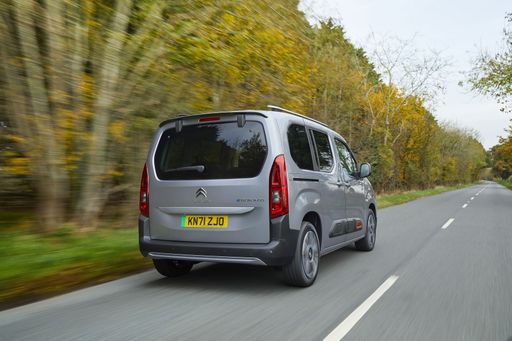
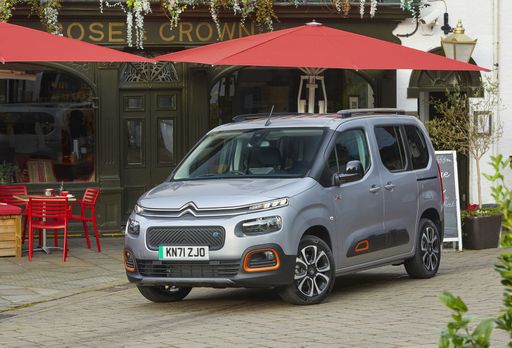
The Citroën Berlingo, in its 2024 model year, comes as a high roof wagon, a design that maximizes space efficiency with elongated cargo and passenger areas. With a length ranging between 4403 mm and 4753 mm, and an impressive height of up to 1849 mm, it embodies practicality.

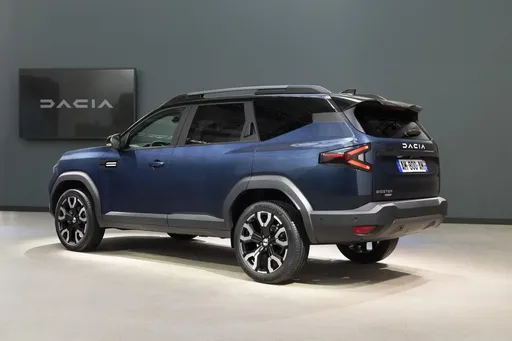
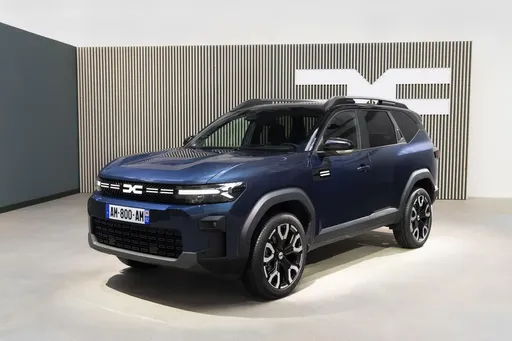
On the other hand, the Dacia Bigster showcases a robust SUV design fresh for 2025. It reaches a more conventional SUV height of 1705 mm and sports a length of 4570 mm, hinting at a design tailored for those looking for both utility and style.

Bigster

Engine and Performance

The Citroën Berlingo offers a wide range of engine options, including petrol, diesel, and fully electric models. Power output varies from 102 to 136 HP, paired with either manual or automatic transmissions. The electric Berlingo provides an impressive range of up to 345 km, catering to eco-conscious drivers. Acceleration to 100 km/h ranges from 11.1 to 13.2 seconds, focusing on a balance of performance and efficiency.

Meanwhile, the Dacia Bigster offers a choice of petrol MHEV, full hybrid, and LPG engines. With power ranging from 130 to 155 HP, it caters to various consumer needs, whether they prioritize fuel efficiency or power. The Bigster can accelerate from 0 to 100 km/h in as little as 9.7 seconds, showcasing its sporty edge over the Berlingo.

Berlingo

Fuel Efficiency and Environmental Impact

Fuel consumption for the Berlingo varies, with petrol models consuming between 5.3 and 6.9 L/100 km, while the electric version uses between 18 and 18.4 kWh/100 km. Its CO2 emissions range significantly, with the electric variant achieving a zero-emission score, while combustion engines produce between 138 and 152 g/km.

On the Dacia Bigster, fuel consumption impresses with figures as low as 4.7 L/100 km for its hybrid variants. CO2 emissions for the Bigster are competitive, spanning from 106 to 137 g/km, making it a strong contender for those seeking an efficient SUV experience.

Bigster

Capacity and Comfort

The Citroën Berlingo prioritizes space and comfort with seating for five and a massive trunk capacity of up to 1050 L, perfect for family getaways or grocery runs. The payload capacity peaks at 840 kg, providing ample room for heavy hauling when required.

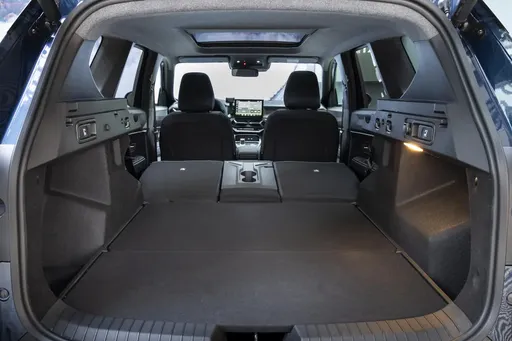
Conversely, the Dacia Bigster's trunk capacity reaches up to 667 L, offering a well-balanced compromise between SUV-style comfort and wagon-like practicality. While slightly lower in payload capacity at 467 kg, the Bigster focuses on efficient space utilization, making it ideal for weekend warriors.

Berlingo

The Verdict

Choosing between the Citroën Berlingo and the Dacia Bigster ultimately hinges on your specific needs. If you prioritize maximum cargo space and the option for an environmentally friendly ride, the Citroën Berlingo might be your best pick. However, if you're drawn to a robust SUV with efficient hybrid options and a more dynamic driving experience, the Dacia Bigster stands tall as a compelling alternative. Both models shine in delivering practicality with a modern twist, ensuring that whichever you choose, you'll ride away satisfied.

Here’s where it gets real: The technical differences in detail

Bigster

Costs and Efficiency:

Price and efficiency are often the first things buyers look at. Here it becomes clear which model has the long-term edge – whether at the pump, the plug, or in purchase price.

Citroen Berlingo is only slightly cheaper – starting at 20,300 £ , while the Dacia Bigster costs 20,600 £ . That’s a price difference of around 231 £.

Fuel consumption also shows a difference: the Dacia Bigster uses 4.7 L/100km and is moderately more efficient than the Citroen Berlingo with 5.3 L/100km. The difference is about 0.6 L/100km.

Berlingo

Engine and Performance:

Power, torque and acceleration are the classic benchmarks for car enthusiasts – and here, some clear differences start to show.

When it comes to engine power, the Dacia Bigster offers slightly more power – delivering 158 HP compared to 136 HP. That’s roughly 22 HP more horsepower.

When accelerating from 0 to 100 km/h, the Dacia Bigster is slightly quicker – completing the sprint in 9.7 s, while the Citroen Berlingo takes 11.2 s. That’s about 1.5 s quicker.

There’s also a difference in torque: the Citroen Berlingo delivers markedly more torque with 300 Nm compared to 230 Nm. That’s about 70 Nm more.

Bigster

Space and Everyday Use:

Whether family car or daily driver – which one offers more room, flexibility and comfort?

Seats: Citroen Berlingo offers more seats – 7 vs 5.

In terms of curb weight, Dacia Bigster is barely lighter – 1,425 kg compared to 1,476 kg. The difference is around 51 kg.

Looking at boot space, the Citroen Berlingo offers visibly more boot space – 1,050 L compared to 667 L. That’s a difference of about 383 L.

When it comes to payload, the Citroen Berlingo carries considerably more – 840 kg compared to 465 kg. That’s a difference of about 375 kg.

Who wins the race in the data check?

The Citroen Berlingo holds a decisive overall lead in the objective data comparison.
This result only shows which model scores more points on paper – not which of the two cars feels right for you.

from £20,300
Berlingo

Citroen Berlingo

  • Engine Type Electric, Diesel, Petrol
  • Transmission Automatic, Manuel
  • Drive Type Front-Wheel Drive
  • Power HP 102 - 136 HP
  • Consumption L/100km 5.3 - 6.3 L/100km
  • Consumption kWh/100km 18 - 18.7 kWh/100km
  • Electric Range 334 - 343 km
Dacia Bigster
Citroen Berlingo

Costs and Consumption

View detailed analysis

Engine and Performance

View detailed analysis

Dimensions and Body

View detailed analysis

Dacia Bigster

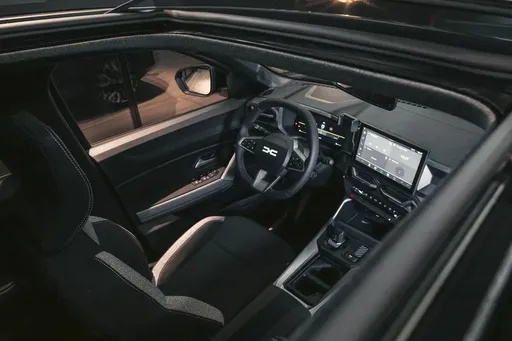
The Dacia Bigster is a straightforward, value-driven SUV that emphasizes space, practicality and low running costs rather than flashy tech. It’s a sensible choice for buyers who want a roomy, well-built family car with rugged styling and easy-to-use features at an affordable price.

details

Citroen Berlingo

The Citroën Berlingo is a charming, practical MPV that blends everyday versatility with a comfy ride and clever storage tricks that make life easier for families and small businesses. It won’t star in a sports-car ad, but its sensible layout, enormous load flexibility and friendly demeanor mean it often wins on plain common sense — perfect for school runs, weekend escapes and the odd IKEA mission.

details
Dacia Bigster
Citroen Berlingo

Costs and Consumption

Price
20,600 - 28,100 £
Price
20,300 - 34,900 £
Consumption L/100km
4.7 - 7.2 L/100km
Consumption L/100km
5.3 - 6.3 L/100km
Consumption kWh/100km
-
Consumption kWh/100km
18 - 18.7 kWh/100km
Electric Range
-
Electric Range
334 - 343 km
Battery Capacity
-
Battery Capacity
-
co2
106 - 134 g/km
co2
0 - 151 g/km
Fuel tank capacity
-
Fuel tank capacity
-

Dimensions and Body

Body Type
SUV
Body Type
High Roof Estate
Seats
5
Seats
5 - 7
Doors
-
Doors
-
Curb weight
1,425 - 1,611 kg
Curb weight
1,476 - 1,922 kg
Trunk capacity
444 - 667 L
Trunk capacity
775 - 1,050 L
Length
-
Length
-
Width
1,813 mm
Width
1,848 mm
Height
-
Height
-
Max trunk capacity
-
Max trunk capacity
-
Payload
434 - 465 kg
Payload
509 - 840 kg

Engine and Performance

Engine Type
Petrol MHEV, Full Hybrid, LPG
Engine Type
Electric, Diesel, Petrol
Transmission
Manuel, Automatic
Transmission
Automatic, Manuel
Transmission Detail
Manual Gearbox, Automated Manual, Dual-Clutch Automatic
Transmission Detail
Reduction Gearbox, Manual Gearbox, Automatic Gearbox
Drive Type
Front-Wheel Drive, All-Wheel Drive
Drive Type
Front-Wheel Drive
Power HP
140 - 158 HP
Power HP
102 - 136 HP
Acceleration 0-100km/h
9.7 - 10.5 s
Acceleration 0-100km/h
11.2 - 14.3 s
Max Speed
-
Max Speed
-
Torque
230 Nm
Torque
205 - 300 Nm
Number of Cylinders
3 - 4
Number of Cylinders
3 - 4
Power kW
103 - 116 kW
Power kW
75 - 100 kW
Engine capacity
1,199 - 1,789 cm3
Engine capacity
1,199 - 1,499 cm3

General

Model Year
2025
Model Year
2,024 - 2,026
CO2 Efficiency Class
D, C
CO2 Efficiency Class
A, E
Brand
Dacia
Brand
Citroen
DriveDuel uses data analysis and artificial intelligence to evaluate vehicle data and create content. Content is regularly reviewed and improved. The displayed prices are estimates based on German list prices, adjusted to the respective country’s VAT. Country-specific registration taxes are not included. This information is not legally binding.