VS

Dacia Sandero vs Dacia Jogger comparison

Compare performance (122 HP vs 158 HP), boot space and price (11,000 £ vs 15,400 £ ) at a glance. Find out which car is the better choice for you – Dacia Sandero or Dacia Jogger?

Dacia Sandero vs Dacia Jogger: Key differences

Dacia Sandero

3.5 (3 Reviews)
rate
  • clearly cheaper
  • a bit lighter

Dacia Jogger

4.6 (1 Reviews)
rate
  • visibly more power
  • slightly more efficient
  • only slightly quicker 0–100 km/h
  • clearly more trunk space

All details on performance, efficiency, range and trunk space can be found in the technical comparison below – including user reviews for both models.

Sandero

When it comes to value for money in the automotive world, Dacia has undoubtedly carved a niche for itself with its practical and reliable offerings. The Dacia Jogger and Dacia Sandero are two of the brand's standout models, each designed to meet different needs and preferences. In this article, we will delve into a detailed comparison of these two models, focusing on their technical aspects, innovations, and overall practicality.
Jogger

Overview of Dacia Jogger

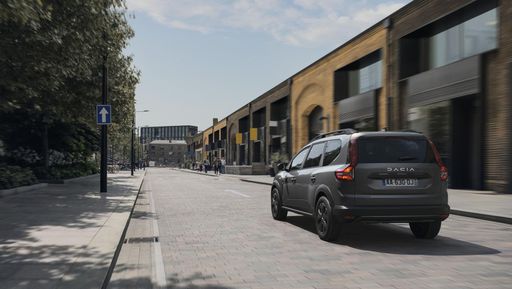
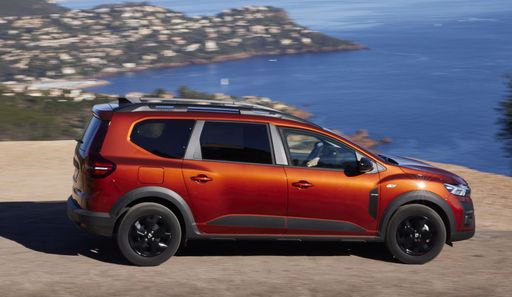
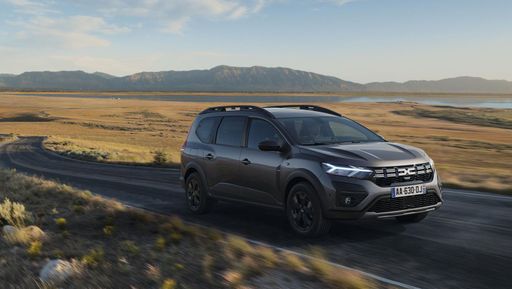
The Dacia Jogger is a versatile MPV that combines the practicality of a family car with a spacious interior. Ideal for larger families or those who frequently travel with friends, the Jogger offers seating for up to seven passengers. Its length of 4547 mm and ample trunk capacity of 607 liters make it a spacious option for those who prioritize roominess.

Sandero

Engine and Performance

Under the hood, the Jogger offers a variety of engine choices, including full hybrid, LPG, and petrol options. Power outputs range from 91 HP to a robust 140 HP, catering to varying driving demands. Fuel efficiency also benefits from these options, with consumption figures as low as 4.7 L/100 km for the hybrid variant and up to 7.7 L/100 km for the more powerful petrol engine. Additionally, its acceleration from 0-100 km/h varies between 9.8 to 13 seconds, depending on the engine choice.

Jogger

Innovative Features

The Jogger comes equipped with modern features like advanced safety systems and an intuitive infotainment setup. Its CO2 emissions are commendably low, ranging from 105 g/km for the hybrid to 137 g/km for some petrol versions, reinforcing Dacia's commitment to sustainability. The interior focuses on comfort and utility, making it an excellent choice for family-oriented buyers.

Sandero

Comparing Dacia Sandero

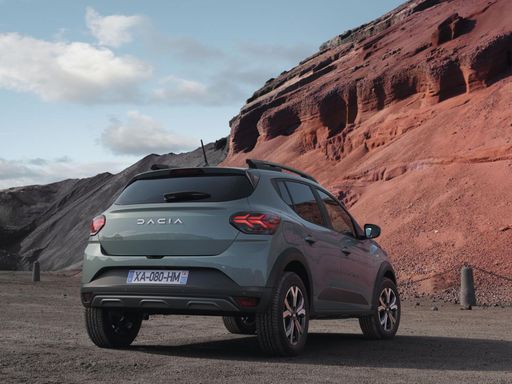
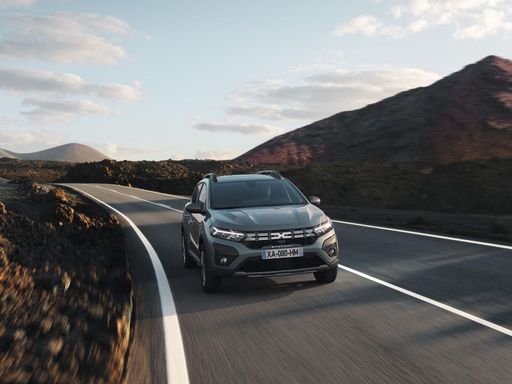
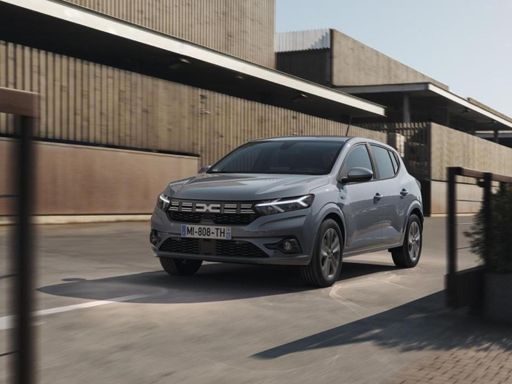
On the other end of the spectrum, we have the Dacia Sandero, a hatchback that has gained popularity for its compact size and affordability. Measuring between 4088 mm and 4099 mm in length, it provides a more agile driving experience while still offering comfort for five passengers. With a trunk capacity of 328 liters, it strikes a balance between space and maneuverability.

Jogger

Engine and Efficiency

The Sandero also presents various engine options, primarily focusing on petrol and LPG engines, ranging from 67 HP to 110 HP. With fuel consumption figures between 5.2 to 7 L/100 km, the Sandero remains efficient, especially appealing to city dwellers. The acceleration from 0-100 km/h is less impressive than the Jogger, ranging from 10 to 16.7 seconds, but it offers a top speed of up to 183 km/h, showcasing its sporty character in a compact form.

Modern Features and Safety

Not to be outdone, the Sandero boasts innovative safety features and a practical infotainment system, making it a great value proposition in its segment. CO2 emissions for the Sandero range from 105 g/km to 139 g/km, making certain models more environmentally friendly than others. Although compact, the Sandero is known for its generous features for the price point, making it a strong contender in the hatchback category.

Conclusion: Which One is Right for You?

In conclusion, the choice between the Dacia Jogger and Dacia Sandero ultimately depends on your specific needs. If you prioritize space, versatility, and the ability to carry more passengers, the Jogger stands out as the perfect solution. Conversely, if you're looking for a more compact, city-friendly vehicle that offers affordability and efficiency, the Sandero is hard to beat.

Both vehicles bring a unique set of features and performance metrics to the table, furthering Dacia's reputation for delivering quality cars at accessible prices. Whether you're planning family trips or navigating urban environments, Dacia offers the right model to fit your lifestyle.

Here’s where it gets real: The technical differences in detail

Sandero

Costs and Efficiency:

Looking at overall running costs, both models reveal some interesting differences in everyday economy.

Dacia Sandero is clearly cheaper – starting at 11,000 £ , while the Dacia Jogger costs 15,400 £ . That’s a price difference of around 4,458 £.

Fuel consumption also shows a difference: the Dacia Jogger uses 4.5 L/100km and is slightly more efficient than the Dacia Sandero with 5.3 L/100km. The difference is about 0.8 L/100km.

Jogger

Engine and Performance:

Power, torque and acceleration say a lot about how a car feels on the road. This is where you see which model delivers more driving dynamics.

When it comes to engine power, the Dacia Jogger offers visibly more power – delivering 158 HP compared to 122 HP. That’s roughly 36 HP more horsepower.

When accelerating from 0 to 100 km/h, the Dacia Jogger is only slightly quicker – completing the sprint in 8.9 s, while the Dacia Sandero takes 9.7 s. That’s about 0.8 s quicker.

Both models offer the same torque – 200 Nm.

Sandero

Space and Everyday Use:

Whether family car or daily driver – which one offers more room, flexibility and comfort?

Seats: Dacia Jogger offers more seats – 7 vs 5.

In terms of curb weight, Dacia Sandero is a bit lighter – 1,100 kg compared to 1,268 kg. The difference is around 168 kg.

Looking at boot space, the Dacia Jogger offers clearly more boot space – 607 L compared to 372 L. That’s a difference of about 235 L.

When it comes to payload, the Dacia Jogger carries noticeably more – 559 kg compared to 436 kg. That’s a difference of about 123 kg.

Who wins the race in the data check?

The Dacia Jogger is clearly superior overall in the objective data comparison.
This result only shows which model scores more points on paper – not which of the two cars feels right for you.

from £15,400
Jogger

Dacia Jogger

  • Engine Type : Petrol, Full Hybrid, LPG
  • Transmission : Manuel, Automatic
  • Drive Type : Front-Wheel Drive
  • Power HP : 110 - 158 HP
  • Consumption L/100km : 4.5 - 7.6 L/100km
Dacia Sandero
Dacia Jogger

Costs and Consumption

View detailed analysis

Engine and Performance

View detailed analysis

Dimensions and Body

View detailed analysis

Dacia Sandero

The Dacia Sandero is the everyman's hatchback — unpretentious, practical and brilliantly affordable, with sensible space and straightforward charm where it matters most. It won't wow in the premium lane, but for buyers who want honest, dependable transport without showroom theatrics, the Sandero is a clever, no‑nonsense pick that keeps running costs low and grin levels high.

details

Dacia Jogger

The Dacia Jogger is a no-nonsense family mover that stretches the idea of value with cavernous practicality and flexible space, perfect for buyers who need a sensible, everyday Swiss Army knife on wheels. It doesn’t try to be glamorous — instead it wins hearts with cheerful thrift, durable materials and honest engineering, giving you useful transport without the pretence.

details
Dacia Sandero
Dacia Jogger

Costs and Consumption

Price
11,000 - 16,300 £
Price
15,400 - 23,500 £
Consumption L/100km
5.3 - 7.2 L/100km
Consumption L/100km
4.5 - 7.6 L/100km
Consumption kWh/100km
-
Consumption kWh/100km
-
Electric Range
-
Electric Range
-
Battery Capacity
-
Battery Capacity
-
co2
111 - 131 g/km
co2
103 - 138 g/km
Fuel tank capacity
-
Fuel tank capacity
-

Dimensions and Body

Body Type
Hatchback
Body Type
MPV
Seats
5
Seats
5 - 7
Doors
-
Doors
-
Curb weight
1,100 - 1,297 kg
Curb weight
1,268 - 1,463 kg
Trunk capacity
372 L
Trunk capacity
160 - 607 L
Length
-
Length
-
Width
1,853 mm
Width
1,784 mm
Height
-
Height
-
Max trunk capacity
-
Max trunk capacity
-
Payload
385 - 436 kg
Payload
384 - 559 kg

Engine and Performance

Engine Type
Petrol, LPG
Engine Type
Petrol, Full Hybrid, LPG
Transmission
Manuel, Automatic
Transmission
Manuel, Automatic
Transmission Detail
Manual Gearbox, Dual-Clutch Automatic
Transmission Detail
Manual Gearbox, Automatic Gearbox, Dual-Clutch Automatic
Drive Type
Front-Wheel Drive
Drive Type
Front-Wheel Drive
Power HP
67 - 122 HP
Power HP
110 - 158 HP
Acceleration 0-100km/h
9.7 - 16.7 s
Acceleration 0-100km/h
8.9 - 12 s
Max Speed
-
Max Speed
-
Torque
95 - 200 Nm
Torque
190 - 200 Nm
Number of Cylinders
3
Number of Cylinders
3 - 4
Power kW
49 - 90 kW
Power kW
81 - 116 kW
Engine capacity
999 - 1,199 cm3
Engine capacity
999 - 1,789 cm3

General

Model Year
2,025
Model Year
2,025
CO2 Efficiency Class
D, C
CO2 Efficiency Class
D, E, C
Brand
Dacia
Brand
Dacia
DriveDuel uses data analysis and artificial intelligence to evaluate vehicle data and create content. Content is regularly reviewed and improved. The displayed prices are estimates based on German list prices, adjusted to the respective country’s VAT. Country-specific registration taxes are not included. This information is not legally binding.