VS

Dacia Sandero vs Jeep Avenger comparison

Compare performance (122 HP vs 156 HP), boot space and price (11,000 £ vs 22,500 £ ) at a glance. Find out which car is the better choice for you – Dacia Sandero or Jeep Avenger?

Dacia Sandero vs Jeep Avenger: Key differences

Dacia Sandero

3.1 (5 Reviews)
rate
  • clearly cheaper
  • barely lighter
details

Jeep Avenger

4.3 (6 Reviews)
rate
  • markedly more power
  • marginally more efficient
  • only slightly quicker 0–100 km/h
  • only slightly more trunk space
details

All details on performance, efficiency, range and trunk space can be found in the technical comparison below – including user reviews for both models.

By Achim Sedelmaier

Sandero

A Clash of Personalities: Dacia Sandero vs. Jeep Avenger

The automotive world thrives on diversity, offering vehicles that cater to every whim and requirement a driver might have. Today, we pit two unique players against each other: the practical Dacia Sandero and the adventurous Jeep Avenger. Each car brings something distinct to the table, whether it’s everyday usability or cutting-edge technology.
Avenger

Design and Aesthetics

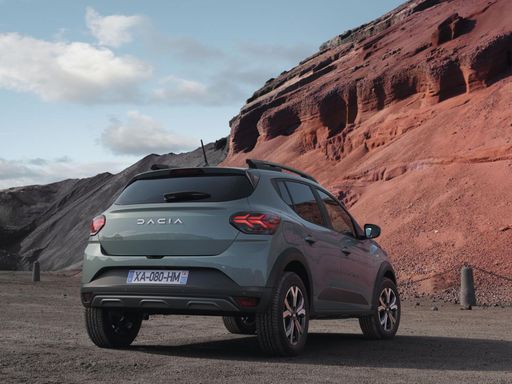
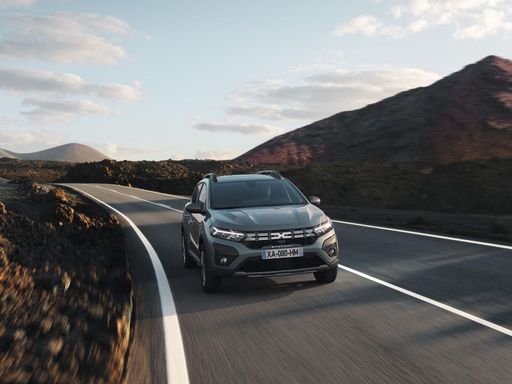
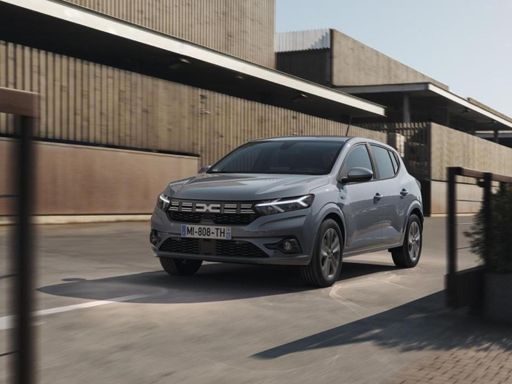
The Dacia Sandero is a hatchback that champions practicality over flamboyance. Its design is straightforward and functional, with a length of nearly 4099 mm and a width of 1848 mm providing ample space for urban maneuverability. A trunk capacity of 328 L ensures that it can accommodate day-to-day storage needs effectively.

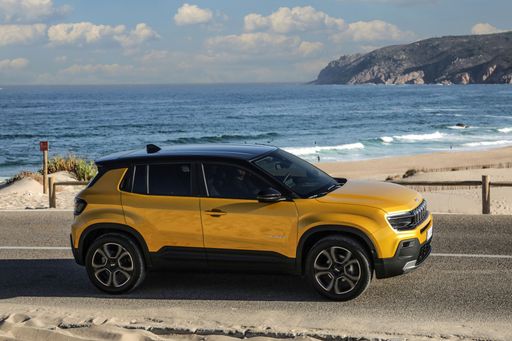
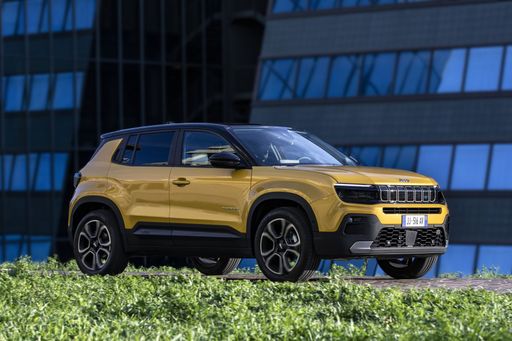
In contrast, the Jeep Avenger embraces the robust styling typical of an SUV, coming in at 4084 mm in length and 1776 mm in width. Its design exudes confidence, with slightly higher ground clearance, hinting at its adventurous side. The Avenger offers a bit more trunk space at up to 380 L, appealing to those who need a bit more room for gear.

Sandero

Under the Hood

The Sandero offers a range of petrol and LPG engines, with power outputs ranging from 67 HP to 110 HP depending on the variant. For those valuing fuel economy, consumption figures range from 5.2 to 7 L/100 km, making it an excellent choice for budget-conscious drivers. Its maximum speed varies from 158 to 183 km/h, alongside an acceleration of 10 to 16.7 seconds from 0 to 100 km/h, tailored for city driving.

The Jeep Avenger comes out strong with a choice between electric and petrol MHEV engines. Its electric model boasts a power output of 156 HP with an electric range of 400 km, and a consumption of 15.4 kWh/100 km. The petrol versions, with horsepower spanning 100 to 136 HP, highlight a more spirited drive compared to the Sandero with faster 0-100 km/h times between 9 and 10.9 seconds.

Avenger

Innovations and Features

While the Sandero doesn’t boast cutting-edge technology, it wins with simplicity and reliability, offering both manual and automatic transmissions (manual gearbox and CVT). The front-wheel-drive setup further emphasizes its role as a functional city car.

The Avenger distinguishes itself with advanced features, especially in its electric variant. The inclusion of a battery capacity of 51 kWh and technological aids complements its modern driving experience. The choice of front-wheel or all-wheel drive, alongside advanced transmissions such as a dual-clutch automatic, enhances its versatility on and off the road.

Sandero

Efficiency and Environmental Impact

The Dacia Sandero remains an environmentally mindful choice, with CO2 emissions measured from 105 to 139 g/km, thanks to its efficient fuel management. It holds a CO2 efficiency class ranging between C and D, keeping its ecological footprint moderate.

In comparison, the Jeep Avenger's electric variant sets a standard with zero emissions, landing in the A class for CO2 efficiency. Its petrol models also strive for efficiency with emissions ranging from 111 to 130 g/km, slightly higher than the Sandero but balanced by the vehicle's higher output.

Avenger

The Verdict

Choosing between the Dacia Sandero and the Jeep Avenger will largely depend on your priorities. For cost-effective urban driving with commendable fuel efficiency, the Sandero stands out as the sensible choice. However, for those seeking modernity combined with a taste of adventure, the Jeep Avenger, particularly its electric version, is hard to beat. Regardless of the choice, both vehicles stand as testaments to the ongoing evolution in the automotive landscape, offering diversity in how we approach mobility.

Here’s where it gets real: The technical differences in detail

Sandero

Costs and Efficiency:

Price and efficiency are often the first things buyers look at. Here it becomes clear which model has the long-term edge – whether at the pump, the plug, or in purchase price.

Dacia Sandero is clearly cheaper – starting at 11,000 £ , while the Jeep Avenger costs 22,500 £ . That’s a price difference of around 11,580 £.

Fuel consumption also shows a difference: the Jeep Avenger uses 4.9 L/100km and is marginally more efficient than the Dacia Sandero with 5.3 L/100km. The difference is about 0.4 L/100km.

Avenger

Engine and Performance:

Under the bonnet, it becomes clear which model is tuned for sportiness and which one takes the lead when you hit the accelerator.

When it comes to engine power, the Jeep Avenger offers markedly more power – delivering 156 HP compared to 122 HP. That’s roughly 34 HP more horsepower.

When accelerating from 0 to 100 km/h, the Jeep Avenger is only slightly quicker – completing the sprint in 9 s, while the Dacia Sandero takes 9.7 s. That’s about 0.7 s quicker.

There’s also a difference in torque: the Jeep Avenger delivers markedly more torque with 260 Nm compared to 200 Nm. That’s about 60 Nm more.

Sandero

Space and Everyday Use:

Cabin size, boot volume and payload all play a role in everyday practicality. Here, comfort and flexibility make the difference.

Both vehicles offer seating for 5 people.

In terms of curb weight, Dacia Sandero is barely lighter – 1,100 kg compared to 1,180 kg. The difference is around 80 kg.

Looking at boot space, the Jeep Avenger offers only slightly more boot space – 380 L compared to 372 L. That’s a difference of about 8 L.

When it comes to payload, the Jeep Avenger carries a bit more – 502 kg compared to 436 kg. That’s a difference of about 66 kg.

Who wins the race in the data check?

The Jeep Avenger is far ahead overall in the objective data comparison.
This result only shows which model scores more points on paper – not which of the two cars feels right for you.

from £22,500
Avenger

Jeep Avenger

  • Engine Type : Petrol MHEV, Electric, Petrol
  • Transmission : Automatic, Manuel
  • Drive Type : Front-Wheel Drive
  • Power HP : 100 - 156 HP
  • Consumption L/100km : 4.9 - 5.7 L/100km
  • Consumption kWh/100km : 15.5 kWh/100km
  • Electric Range : 400 km
Dacia Sandero
Jeep Avenger

Costs and Consumption

View detailed analysis

Engine and Performance

View detailed analysis

Dimensions and Body

View detailed analysis

Dacia Sandero

The Dacia Sandero is the everyman's hatchback — unpretentious, practical and brilliantly affordable, with sensible space and straightforward charm where it matters most. It won't wow in the premium lane, but for buyers who want honest, dependable transport without showroom theatrics, the Sandero is a clever, no‑nonsense pick that keeps running costs low and grin levels high.

details

Jeep Avenger

The Jeep Avenger shrinks Jeep's boxy, adventurous styling into a city-friendly electric crossover that looks just as at home on tight streets as it does on muddy weekend lanes. It's a savvy pick for drivers who want go-anywhere attitude without the truck-size ego — practical inside, lively around town and ready to tackle a bit of rough stuff when the mood strikes.

details
Dacia Sandero
Jeep Avenger

Costs and Consumption

Price
11,000 - 16,300 £
Price
22,500 - 35,000 £
Consumption L/100km
5.3 - 7.2 L/100km
Consumption L/100km
4.9 - 5.7 L/100km
Consumption kWh/100km
-
Consumption kWh/100km
15.5 kWh/100km
Electric Range
-
Electric Range
400 km
Battery Capacity
-
Battery Capacity
-
co2
111 - 131 g/km
co2
0 - 129 g/km
Fuel tank capacity
-
Fuel tank capacity
-

Dimensions and Body

Body Type
Hatchback
Body Type
SUV
Seats
5
Seats
5
Doors
-
Doors
-
Curb weight
1,100 - 1,297 kg
Curb weight
1,180 - 1,520 kg
Trunk capacity
372 L
Trunk capacity
355 - 380 L
Length
-
Length
-
Width
1,853 mm
Width
1,776 mm
Height
-
Height
-
Max trunk capacity
-
Max trunk capacity
-
Payload
385 - 436 kg
Payload
494 - 502 kg

Engine and Performance

Engine Type
Petrol, LPG
Engine Type
Petrol MHEV, Electric, Petrol
Transmission
Manuel, Automatic
Transmission
Automatic, Manuel
Transmission Detail
Manual Gearbox, Dual-Clutch Automatic
Transmission Detail
Dual-Clutch Automatic, Reduction Gearbox, Manual Gearbox
Drive Type
Front-Wheel Drive
Drive Type
Front-Wheel Drive
Power HP
67 - 122 HP
Power HP
100 - 156 HP
Acceleration 0-100km/h
9.7 - 16.7 s
Acceleration 0-100km/h
9 - 10.6 s
Max Speed
-
Max Speed
-
Torque
95 - 200 Nm
Torque
205 - 260 Nm
Number of Cylinders
3
Number of Cylinders
3
Power kW
49 - 90 kW
Power kW
74 - 115 kW
Engine capacity
999 - 1,199 cm3
Engine capacity
1,199 cm3

General

Model Year
2025
Model Year
2026
CO2 Efficiency Class
D, C
CO2 Efficiency Class
C, A, D
Brand
Dacia
Brand
Jeep
DriveDuel uses data analysis and artificial intelligence to evaluate vehicle data and create content. Content is regularly reviewed and improved. The displayed prices are estimates based on German list prices, adjusted to the respective country’s VAT. Country-specific registration taxes are not included. This information is not legally binding.