VS

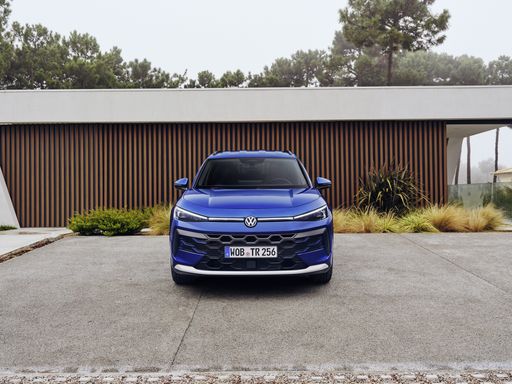
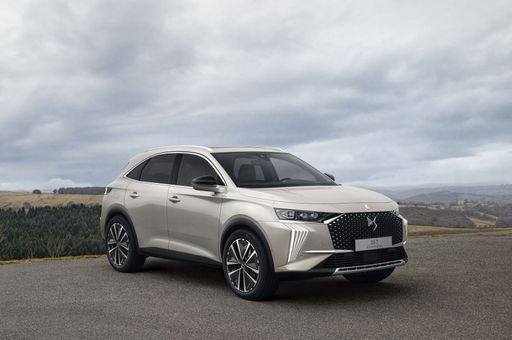
DS Automobiles DS 7 vs VW T-Roc comparison

Compare performance (130 HP vs 150 HP), boot space and price (41,900 £ vs 26,400 £ ) at a glance. Find out which car is the better choice for you – DS Automobiles DS 7 or VW T-Roc?

DS Automobiles DS 7 vs VW T-Roc: Key differences

DS Automobiles DS 7

4.7 (3 Reviews)
rate
  • slightly more trunk space
details

VW T-Roc

4.8 (6 Reviews)
rate
  • substantially cheaper
  • somewhat more power
  • clearly quicker 0–100 km/h
  • a bit lighter
details

All details on performance, efficiency, range and trunk space can be found in the technical comparison below – including user reviews for both models.

By Achim Sedelmaier

DS 7

A Clash of Elegance and Dynamism: DS 7 Crossback vs VW T-Roc

In the ever-evolving world of compact SUVs, two contenders have emerged to captivate both urban explorers and luxury seekers: the DS Automobiles DS 7 Crossback and the VW T-Roc. Each brings a unique blend of style, performance, and technology to the table. Let's delve into their technical features and innovations to understand what sets them apart.
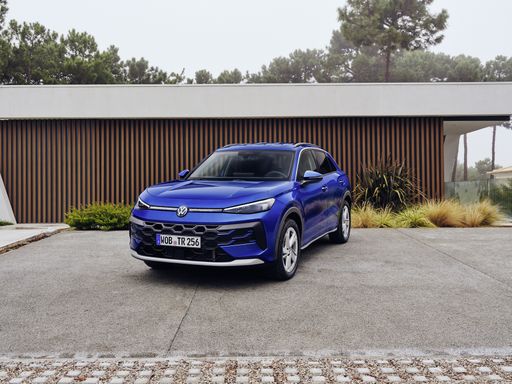
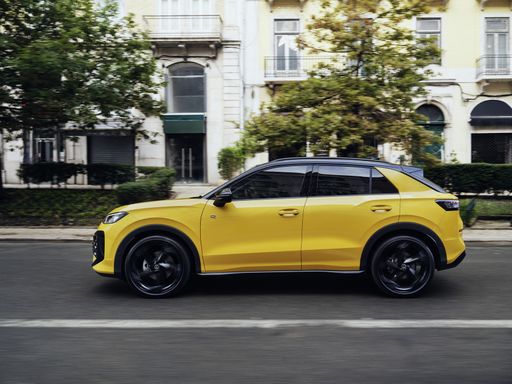
T-Roc

Design and Dimensions

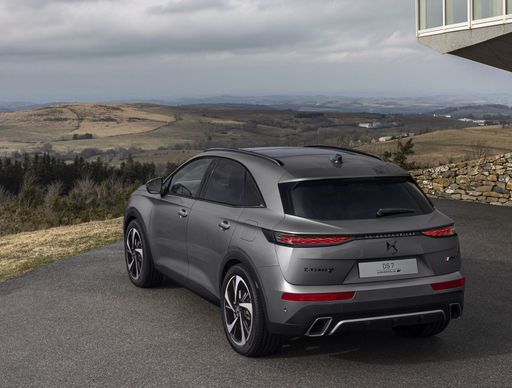
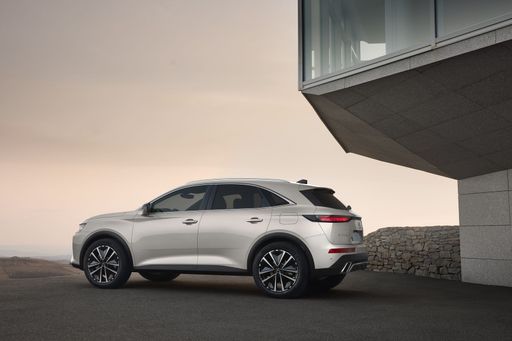
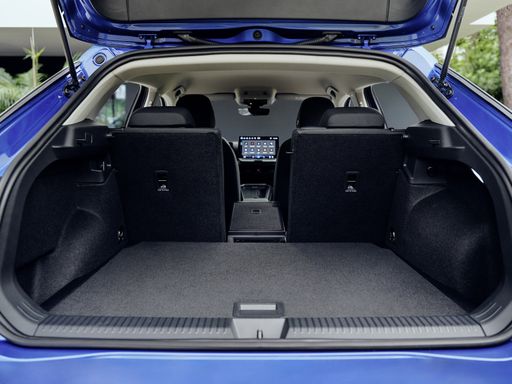
The DS 7 Crossback exudes avant-garde elegance with its distinctive French flair, standing at 4593 mm long, 1891 mm wide, and 1625 mm high. Meanwhile, the VW T-Roc, characterized by German precision, offers a slightly more compact form with lengths between 4236 mm and 4271 mm, widths of 1811 mm to 1819 mm, and heights ranging from 1527 mm to 1584 mm. The DS 7's larger dimensions provide additional space, especially notable in its trunk capacity of 555 liters compared to the T-Roc's maximum of 445 liters.

DS 7

Engine Performance and Efficiency

The DS 7 Crossback presents a sophisticated selection of diesel and plug-in hybrid engines, reaching power outputs from 130 HP to a monumental 360 HP, coupled with electric ranges up to 65 km. Its impressive efficiency is marked by CONSUMPTION as low as 1.3 L/100km. In contrast, the VW T-Roc offers a variety of petrol and diesel engines, with power outputs from 115 HP to 300 HP and consumption ranging from 4.7 L/100km to 8.5 L/100km. Despite its more conventional offerings, the T-Roc provides notable flexibility for diverse driving preferences.

T-Roc

Acceleration and Speed

For the performance enthusiast, the DS 7 Crossback's plug-in hybrid can accelerate from 0 to 100 km/h in as little as 5.7 seconds, reaching speeds up to 235 km/h. The VW T-Roc, while slightly more modest, delivers acceleration as swift as 4.9 seconds to 100 km/h in its top configuration, with maximum speeds reaching 250 km/h. Thus, both vehicles promise engaging driving dynamics tailored to different tastes.

DS 7

Transmission and Drive Options

Both vehicles cater to a range of driving styles with advanced transmission systems. The DS 7 Crossback features an automatic gearbox paired with front-wheel or all-wheel drive configurations. Similarly, the VW T-Roc offers manual and dual-clutch automatic transmissions, alongside front-wheel and all-wheel drivetrains, providing versatility for various driving conditions.

T-Roc

Technological and Innovative Features

The DS 7 Crossback impresses with its cutting-edge tech, including semi-autonomous driving aids and a focus on electric efficiency. Its plug-in hybrid variants reflect a commitment to sustainable innovation. The VW T-Roc, built on the solid foundation of German engineering, includes a wide array of infotainment options and advanced safety systems, contributing to a well-rounded driving experience.

DS 7

Conclusion: Distinct Identities

The DS 7 Crossback and VW T-Roc, though both belonging to the compact SUV segment, offer distinct identities. The DS 7 captivates with luxury and future-forward hybrid efficiency, while the VW T-Roc balances practicality with spirited performance. Ultimately, the choice between them would depend on personal preferences, be it the lavish style and hybrid innovation of the DS 7 or the versatile performance of the T-Roc.

Here’s where it gets real: The technical differences in detail

DS 7

Costs and Efficiency:

Looking at overall running costs, both models reveal some interesting differences in everyday economy.

VW T-Roc is substantially cheaper – starting at 26,400 £ , while the DS Automobiles DS 7 costs 41,900 £ . That’s a price difference of around 15,484 £.

Both cars consume an average of 5.5 L/100km – no difference here.

T-Roc

Engine and Performance:

Under the bonnet, it becomes clear which model is tuned for sportiness and which one takes the lead when you hit the accelerator.

When it comes to engine power, the VW T-Roc offers somewhat more power – delivering 150 HP compared to 130 HP. That’s roughly 20 HP more horsepower.

When accelerating from 0 to 100 km/h, the VW T-Roc is clearly quicker – completing the sprint in 8.9 s, while the DS Automobiles DS 7 takes 11.9 s. That’s about 3 s quicker.

There’s also a difference in torque: the DS Automobiles DS 7 delivers moderately more torque with 300 Nm compared to 250 Nm. That’s about 50 Nm more.

DS 7

Space and Everyday Use:

Whether family car or daily driver – which one offers more room, flexibility and comfort?

Both vehicles offer seating for 5 people.

In terms of curb weight, VW T-Roc is a bit lighter – 1,465 kg compared to 1,651 kg. The difference is around 186 kg.

Looking at boot space, the DS Automobiles DS 7 offers slightly more boot space – 555 L compared to 475 L. That’s a difference of about 80 L.

When it comes to payload, the VW T-Roc carries clearly more – 515 kg compared to 399 kg. That’s a difference of about 116 kg.

Who wins the race in the data check?

The VW T-Roc is clearly superior overall in the objective data comparison.
This result only shows which model scores more points on paper – not which of the two cars feels right for you.

from £26,400
T-Roc

VW T-Roc

  • Engine Type Petrol, Petrol MHEV
  • Transmission Manuel, Automatic
  • Drive Type Front-Wheel Drive
  • Power HP 115 - 150 HP
  • Consumption L/100km 5.5 - 6.3 L/100km
DS Automobiles DS 7
VW T-Roc

Costs and Consumption

View detailed analysis

Engine and Performance

View detailed analysis

Dimensions and Body

View detailed analysis

DS Automobiles DS 7

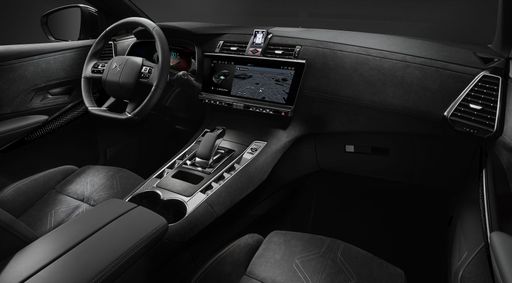
The DS 7 wraps Parisian elegance into SUV practicality, with sculpted surfaces, a jewel-like grille and an interior that feels more boutique lounge than family transporter. It appeals to buyers who want style and comfort without shouting, delivering a refined ride and clever tech that make daily driving feel a little more special — and yes, it’ll turn heads in the school run.

details

VW T-Roc

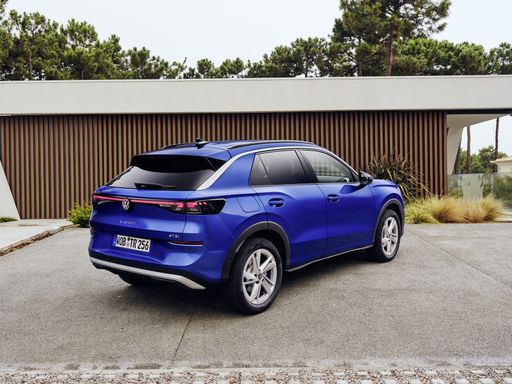
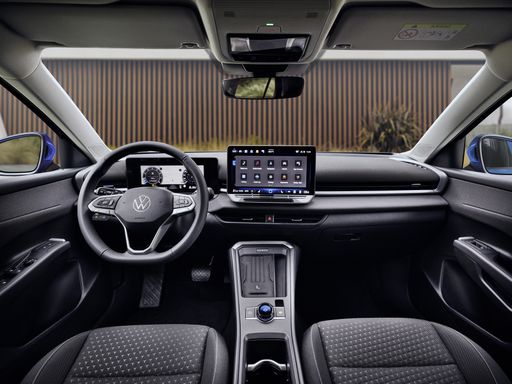
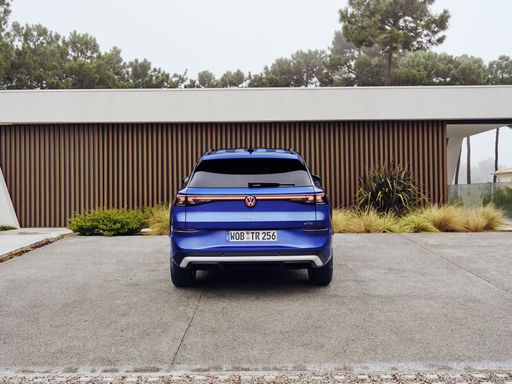
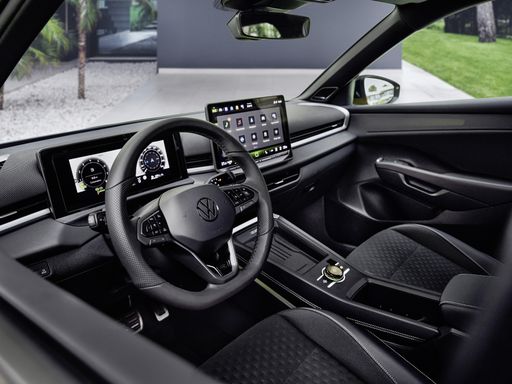
The Volkswagen T‑Roc is a stylish, well-proportioned crossover that blends hatchback agility with SUV presence. It delivers a comfortable cabin, user-friendly tech and a composed ride, making it a sensible choice for buyers who want practicality with a bit of character.

details
DS Automobiles DS 7
VW T-Roc

Costs and Consumption

Price
41,900 - 46,100 £
Price
26,400 - 38,600 £
Consumption L/100km
5.5 L/100km
Consumption L/100km
5.5 - 6.3 L/100km
Consumption kWh/100km
-
Consumption kWh/100km
-
Electric Range
-
Electric Range
-
Battery Capacity
-
Battery Capacity
-
co2
145 g/km
co2
126 - 143 g/km
Fuel tank capacity
-
Fuel tank capacity
-

Dimensions and Body

Body Type
SUV
Body Type
SUV
Seats
5
Seats
4 - 5
Doors
-
Doors
-
Curb weight
1,651 kg
Curb weight
1,465 - 1,539 kg
Trunk capacity
555 L
Trunk capacity
284 - 475 L
Length
-
Length
-
Width
1,891 mm
Width
1,811 - 1,828 mm
Height
-
Height
-
Max trunk capacity
-
Max trunk capacity
-
Payload
399 kg
Payload
368 - 515 kg

Engine and Performance

Engine Type
Diesel
Engine Type
Petrol, Petrol MHEV
Transmission
Automatic
Transmission
Manuel, Automatic
Transmission Detail
Automatic Gearbox
Transmission Detail
Manual Gearbox, Dual-Clutch Automatic
Drive Type
Front-Wheel Drive
Drive Type
Front-Wheel Drive
Power HP
130 HP
Power HP
115 - 150 HP
Acceleration 0-100km/h
11.9 s
Acceleration 0-100km/h
8.9 - 12.3 s
Max Speed
-
Max Speed
-
Torque
300 Nm
Torque
200 - 250 Nm
Number of Cylinders
4
Number of Cylinders
3 - 4
Power kW
96 kW
Power kW
85 - 110 kW
Engine capacity
1,499 cm3
Engine capacity
999 - 1,498 cm3

General

Model Year
2025
Model Year
2,024 - 2,025
CO2 Efficiency Class
E
CO2 Efficiency Class
E, D
Brand
DS Automobiles
Brand
VW
DriveDuel uses data analysis and artificial intelligence to evaluate vehicle data and create content. Content is regularly reviewed and improved. The displayed prices are estimates based on German list prices, adjusted to the respective country’s VAT. Country-specific registration taxes are not included. This information is not legally binding.