@ Dacia / Renault Group Media
VS

Fiat Grande Panda vs Dacia Bigster – Which one offers the better deal?

Both models have their strengths – but which one suits you more?
Compare performance, efficiency, price and space directly: Fiat Grande Panda or Dacia Bigster?

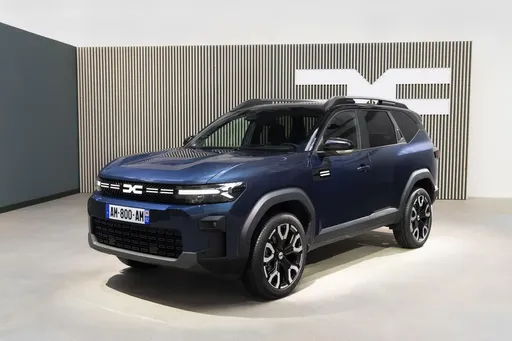
Bigster @ Dacia / Renault Group Media

Fiat Grande Panda vs Dacia Bigster: A Clash of the Titans in the SUV Segment

The SUV market has seen a plethora of entrants, each vying for supremacy in design, efficiency, and innovation. Today, we put two of the latest contenders under the microscope: the Fiat Grande Panda and the Dacia Bigster. Both models set a new standard for their respective manufacturers, but how do they compare when stacked against each other?

Bigster @ Dacia / Renault Group Media

Design and Dimensions: Compact Contenders

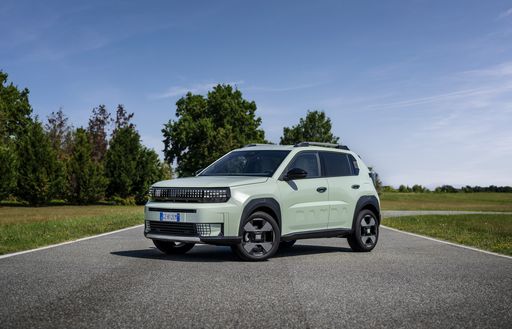
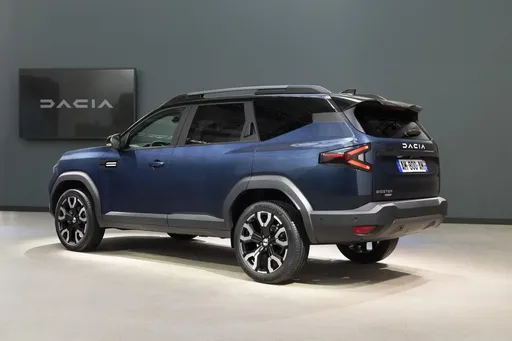
Starting with design, the Fiat Grande Panda is an embodiment of compact optimization. With a length of 3999 mm, a width of 1763 mm, and a variety of heights peaking at 1629 mm, it’s crafted for urban maneuverability and style. Conversely, the Dacia Bigster extends to 4570 mm in length and 1813 mm in width, offering a more robust on-road presence and increased cabin space. Height-wise, it reaches up to 1705 mm, making it a formidable figure in the SUV genre.

Bigster @ Dacia / Renault Group Media

Powertrain and Performance: Efficiency and Excitement

The Grande Panda offers a variety of power options, including a 113 HP electric engine and a 101 HP petrol MHEV. It features a front-wheel drive with automatic transmission, offering a balance between efficiency and performance. With a battery capacity of 43.8 kWh, it provides an impressive electric range of 320 km, while the petrol variant offers a consumption rate of 5.4 L/100km. Maximum speeds stretch from 132 to 160 km/h, with acceleration times varying between 11.5 and 10 seconds from 0-100 km/h.

On the other hand, the Bigster offers more diverse engine options with a petrol MHEV, a full hybrid, and an LPG engine. Its most powerful variant delivers 155 HP, complemented by a torque of 230 Nm. Ranging from front-wheel to all-wheel drive options, the Bigster promises more power and versatility. Fuel consumption rates vary from 4.7 to 6.1 L/100km and offer a top speed of 180 km/h, with slightly faster acceleration, clocking 0-100 km/h in 9.7 to 11.2 seconds.


Bigster @ Dacia / Renault Group Media

Interior Space and Comfort: Room to Relax

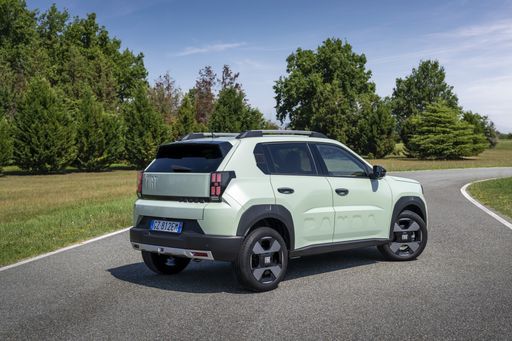
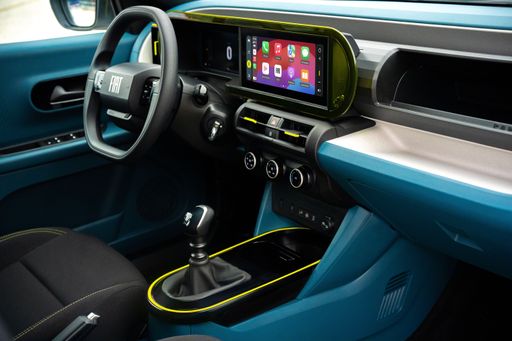
Inside, the Fiat Grande Panda seats five comfortably, with an important focus on efficient space management evidenced by a trunk capacity ranging from 361 to 412 liters. The interior layout is designed with user-friendly technology and a modern aesthetic that reflects its innovative nature.

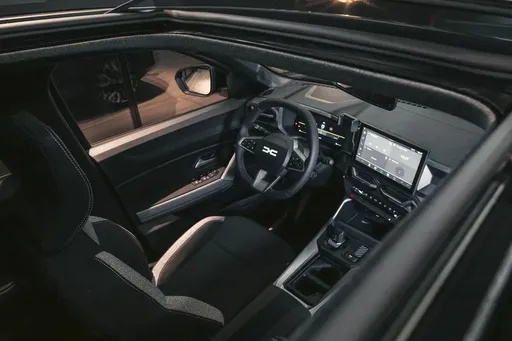
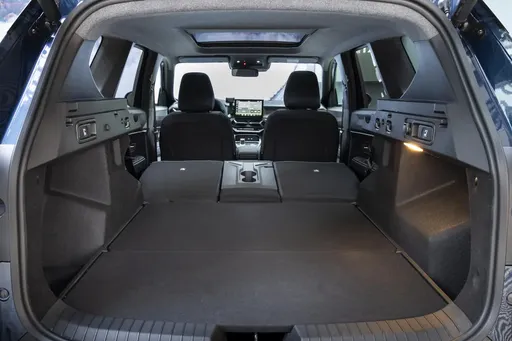
The Bigster, true to its name, offers more room with a significant trunk capacity between 546 and 667 liters. It's designed with spaciousness as a core attribute, enhancing comfort for all passengers. The Bigster also comes equipped with practical technology features, aimed at simplifying driving and enhancing safety.

Bigster @ Dacia / Renault Group Media

Environmental Impact: A Green Revolution

Environmental consciousness remains at the forefront of both models. The all-electric option of the Grande Panda emits zero CO2, while its petrol alternative stays at a commendable 123 g/km. It’s classified within the A to D CO2 efficiency classes, reflecting its commitment to reducing environmental impact.

In contrast, the Bigster’s CO2 emissions range from 106 to 137 g/km across its engine options, which place it in the C to E efficiency classes. This range speaks to Dacia's ongoing efforts to balance power with environmental responsibility.

Conclusion: Choosing Your Champion

Ultimately, the decision between the Fiat Grande Panda and the Dacia Bigster will depend heavily on individual priorities. The Grande Panda is ideal for city dwellers seeking an eco-friendly, compact SUV with the convenience of electric power options. Meanwhile, the Dacia Bigster caters to those who require more space, power, and versatility, without sacrificing efficiency.

As the SUV market continues to evolve, both the Grande Panda and Bigster exemplify the innovation and adaptability modern drivers demand. Whether you lean towards efficiency or exuberance, both models offer compelling cases worthy of consideration in your next automotive purchase.

Here’s where it gets real: The technical differences in detail

Costs and Efficiency:

Looking at overall running costs, both models reveal some interesting differences in everyday economy.

Fiat Grande Panda has a clearly perceptible advantage in terms of price – it starts at 16300 £, while the Dacia Bigster costs 20600 £. That’s a price difference of around 4285 £.

Fuel consumption also shows a difference: Dacia Bigster manages with 4.70 L and is therefore hardly perceptible more efficient than the Fiat Grande Panda with 5.10 L. The difference is about 0.40 L per 100 km.

Engine and Performance:

Power, torque and acceleration are the classic benchmarks for car enthusiasts – and here, some clear differences start to show.

When it comes to engine power, the Dacia Bigster has a distinct edge – offering 155 HP compared to 113 HP. That’s roughly 42 HP more horsepower.

In acceleration from 0 to 100 km/h, the Dacia Bigster is hardly perceptible quicker – completing the sprint in 9.70 s, while the Fiat Grande Panda takes 10 s. That’s about 0.30 s faster.

In terms of top speed, the Dacia Bigster performs somewhat better – reaching 180 km/h, while the Fiat Grande Panda tops out at 160 km/h. The difference is around 20 km/h.

There’s also a difference in torque: Dacia Bigster pulls to a small extent stronger with 230 Nm compared to 205 Nm. That’s about 25 Nm difference.

Space and Everyday Use:

Whether family car or daily driver – which one offers more room, flexibility and comfort?

Both vehicles offer seating for 5 people.

In curb weight, Fiat Grande Panda is slightly lighter – 1295 kg compared to 1425 kg. The difference is around 130 kg.

In terms of boot space, the Dacia Bigster offers noticeable more room – 667 L compared to 412 L. That’s a difference of about 255 L.

In maximum load capacity, the Dacia Bigster performs noticeable better – up to 1937 L, which is about 571 L more than the Fiat Grande Panda.

When it comes to payload, Dacia Bigster slight takes the win – 467 kg compared to 453 kg. That’s a difference of about 14 kg.

Who comes out on top?

Overall, the Dacia Bigster shows itself to be outperforms in nearly all aspects and secures the title of DriveDuel Champion.
It convinces with the more balanced overall package and proves to be the more versatile choice for everyday use.

from about £20,600
Bigster @ Dacia / Renault Group Media

Dacia Bigster

  • Engine Type : Petrol MHEV, Full Hybrid, LPG
  • Transmission : Manuel, Automatic
  • Drive Type : All-Wheel Drive, Front-Wheel Drive
  • Power HP : 130 - 155 HP
  • Consumption L/100km : 4.7 - 7.1 L

Fiat Grande Panda

The Grande Panda is a delightful blend of practicality and charm, making it a popular choice for urban dwellers and families alike. With its compact design, the car navigates city streets effortlessly while providing ample interior space for passengers and cargo. Its quirky styling and user-friendly features make the Grande Panda not just a mode of transport, but a fun driving experience.

details

Dacia Bigster

5 (1)
rate

The Bigster is poised to redefine the SUV segment with its bold design and spacious interior, catering to the needs of both families and adventure seekers alike. Emphasizing sustainability and practicality, this model reflects a modern approach to automotive engineering, making it a compelling choice for environmentally conscious drivers. With its striking presence on the road, the Bigster not only captures attention but also embodies a new era of versatile mobility.

details
Fiat Grande Panda
Dacia Bigster
Bigster @ Dacia / Renault Group Media

Costs and Consumption

Price
16300 - 24000 £
Price
20600 - 26600 £
Consumption L/100km
5.1 - 5.7 L
Consumption L/100km
4.7 - 7.1 L
Consumption kWh/100km
16.80 kWh
Consumption kWh/100km
-
Electric Range
320 km
Electric Range
-
Battery Capacity
43.80 kWh
Battery Capacity
-
co2
0 - 130 g/km
co2
106 - 137 g/km
Fuel tank capacity
44 L
Fuel tank capacity
50 - 55 L

Dimensions and Body

Body Type
SUV
Body Type
SUV
Seats
5
Seats
5
Doors
5
Doors
5
Curb weight
1295 - 1554 kg
Curb weight
1425 - 1547 kg
Trunk capacity
361 - 412 L
Trunk capacity
510 - 667 L
Length
3999 mm
Length
4570 mm
Width
1763 mm
Width
1813 mm
Height
1581 - 1629 mm
Height
1705 mm
Max trunk capacity
1315 - 1366 L
Max trunk capacity
1813 - 1937 L
Payload
353 - 453 kg
Payload
383 - 467 kg

Engine and Performance

Engine Type
Petrol MHEV, Electric, Petrol
Engine Type
Petrol MHEV, Full Hybrid, LPG
Transmission
Automatic, Manuel
Transmission
Manuel, Automatic
Transmission Detail
Dual-Clutch Automatic, Reduction Gearbox, Manual Gearbox
Transmission Detail
Manual Gearbox, Automated Manual
Drive Type
Front-Wheel Drive
Drive Type
All-Wheel Drive, Front-Wheel Drive
Power HP
100 - 113 HP
Power HP
130 - 155 HP
Acceleration 0-100km/h
10 - 11.5 s
Acceleration 0-100km/h
9.7 - 11.2 s
Max Speed
132 - 160 km/h
Max Speed
180 km/h
Torque
122 - 205 Nm
Torque
230 Nm
Number of Cylinders
3
Number of Cylinders
3 - 4
Power kW
74 - 83 kW
Power kW
96 - 115 kW
Engine capacity
1199 cm3
Engine capacity
1199 - 1799 cm3

General

Model Year
2025
Model Year
2025
CO2 Efficiency Class
D, A
CO2 Efficiency Class
E, D, C
Brand
Fiat
Brand
Dacia
Is the Fiat Grande Panda offered with different drivetrains?

The Fiat Grande Panda is available as Front-Wheel Drive.

The prices and data displayed are estimates based on German list prices and may vary by country. This information is not legally binding.