VS

Fiat Grande Panda vs Toyota Yaris Cross comparison

Compare performance (113 HP vs 130 HP), boot space and price (16,300 £ vs 23,700 £ ) at a glance. Find out which car is the better choice for you – Fiat Grande Panda or Toyota Yaris Cross?

Fiat Grande Panda vs Toyota Yaris Cross: Key differences

Fiat Grande Panda

3.8 (1 Reviews)
rate
  • significantly cheaper
  • barely more trunk space
details

Toyota Yaris Cross

4.1 (16 Reviews)
rate
  • a bit more power
  • a bit more efficient
  • marginally quicker 0–100 km/h
  • marginally lighter
details

All details on performance, efficiency, range and trunk space can be found in the technical comparison below – including user reviews for both models.

By Achim Sedelmaier

Grande Panda

The automotive market is witnessing a surge in compact SUVs that cater to a variety of consumer needs. Among these, the Toyota Yaris Cross and the Fiat Grande Panda stand out for their unique features, eco-conscious technologies, and practicality. This comparison delves deep into their technical aspects and innovations, setting the stage for buyers considering these two compelling vehicles.
Yaris Cross

Powertrains and Performance

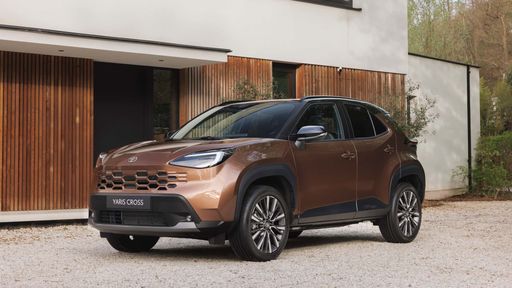
The Toyota Yaris Cross boasts a full hybrid engine that delivers a performant experience with options generating up to 130 HP. It features a Continuously Variable Transmission (CVT) that ensures smooth acceleration. With a fuel consumption ranging from 4.5 to 4.8 L/100km, the Yaris Cross is a champion of efficiency, making it a go-to choice for environmentally-conscious drivers.

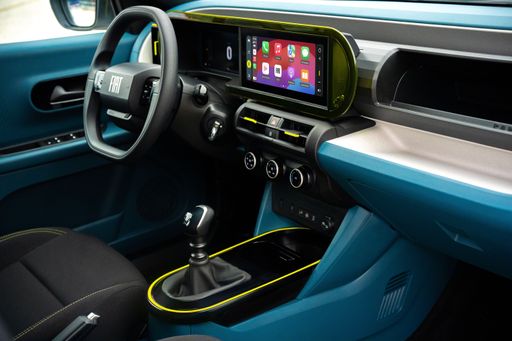
On the other hand, the Fiat Grande Panda offers a more versatile lineup with both electric and petrol Mild Hybrid (MHEV) options. The petrol variant produces 101 HP while the electric version pushes this up to 113 HP. The Grande Panda's electric range reaches an impressive 320 km on a single charge, thanks to its robust 43.8 kWh battery. Moreover, this model achieves a consumption rate of 5.4 L/100km for the petrol version and 17.4 kWh/100km for the electric model, reflecting Fiat's commitment to sustainability.

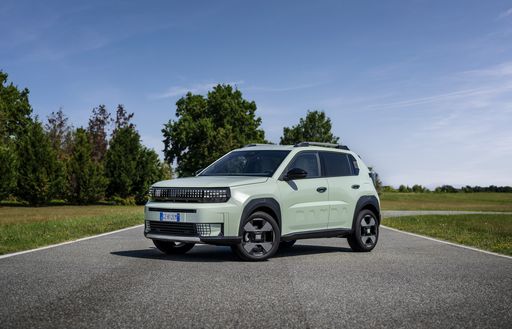
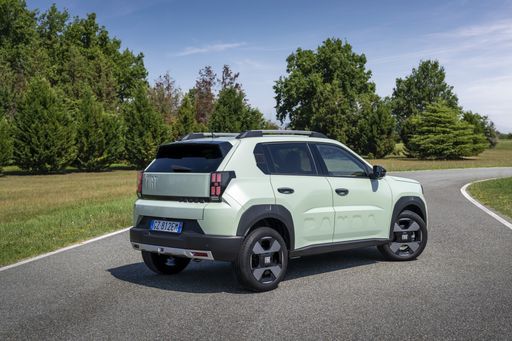
Grande Panda

Dimensions and Comfort

In terms of size, the Yaris Cross measures 4180 mm in length and 1765 mm in width, which contributes to a spacious 397 L trunk capacity. This makes it quite practical for families and those needing extra cargo space. In contrast, the Fiat Grande Panda is slightly shorter at 3999 mm but offers a comparable trunk capacity of 361 L, and an impressive maximum of 412 L in certain configurations, catering to urban mobility without sacrificing utility.

Both vehicles seat five passengers comfortably, providing ample head and legroom. The Yaris Cross stands out with its height of 1595 mm, which can offer a commanding driving position, while the Grande Panda, with height options ranging up to 1629 mm, provides a similar advantage, making both cars easy to navigate in crowded city streets.

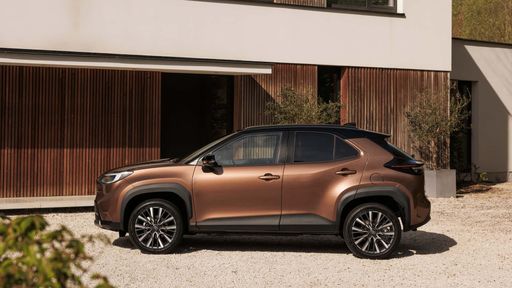
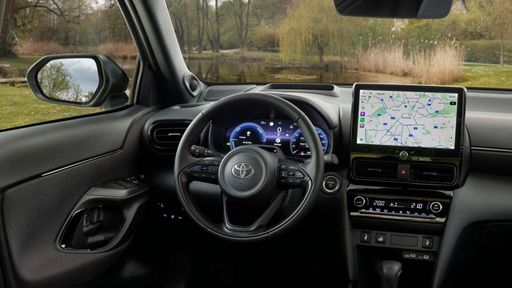
Yaris Cross

Driving Experience and Innovations

The driving dynamics of the Yaris Cross are enhanced by its front-wheel drive system and various performance tweaks, allowing for a 0-100 km/h acceleration of as quick as 10.7 seconds. The maximum speed peaks at 170 km/h, which is competitive in this segment.

Meanwhile, the Grande Panda’s performance achieves a 0-100 km/h time of 10 seconds in the best configurations for the electric model. Although its petrol variant may register a slightly slower 11.5 seconds, it compensates with a higher top speed of 160 km/h for the petrol version, making it versatile for different driving styles.

Grande Panda

Environmental Efficiency

On the eco-friendliness scale, the Yaris Cross displays a CO2 emissions rating ranging from 101-108 g/km, placing it in the C efficiency class. Comparatively, the Grande Panda’s electric version generates zero emissions, categorised as efficiency class A, while the petrol version rests in class D with 123 g/km. As emissions regulations tighten, these stats become increasingly significant for potential buyers.

Yaris Cross

Final Thoughts

The choice between the Toyota Yaris Cross and the Fiat Grande Panda ultimately hinges on individual priorities. The Yaris Cross shines with its hybrid efficiency, spaciousness, and reliable brand reputation. In contrast, the Grande Panda appeals with its innovative electric options and slightly sportier performance metrics.

As the automotive landscape continues to shift towards sustainability, both of these models reflect notable advancements in technology and design, catering to a range of preferences while keeping environmental impact in mind.

Here’s where it gets real: The technical differences in detail

Grande Panda

Costs and Efficiency:

Price and efficiency are key factors when choosing a car – and this is often where the real differences emerge.

Fiat Grande Panda is significantly cheaper – starting at 16,300 £ , while the Toyota Yaris Cross costs 23,700 £ . That’s a price difference of around 7,414 £.

Fuel consumption also shows a difference: the Toyota Yaris Cross uses 4.5 L/100km and is a bit more efficient than the Fiat Grande Panda with 5.1 L/100km. The difference is about 0.6 L/100km.

Yaris Cross

Engine and Performance:

Under the bonnet, it becomes clear which model is tuned for sportiness and which one takes the lead when you hit the accelerator.

When it comes to engine power, the Toyota Yaris Cross offers a bit more power – delivering 130 HP compared to 113 HP. That’s roughly 17 HP more horsepower.

When accelerating from 0 to 100 km/h, the Toyota Yaris Cross is marginally quicker – completing the sprint in 10.7 s, while the Fiat Grande Panda takes 11.2 s. That’s about 0.5 s quicker.

Grande Panda

Space and Everyday Use:

Cabin size, boot volume and payload all play a role in everyday practicality. Here, comfort and flexibility make the difference.

Both vehicles offer seating for 5 people.

In terms of curb weight, Toyota Yaris Cross is marginally lighter – 1,180 kg compared to 1,295 kg. The difference is around 115 kg.

Looking at boot space, the Fiat Grande Panda offers barely more boot space – 412 L compared to 397 L. That’s a difference of about 15 L.

When it comes to payload, the Toyota Yaris Cross carries a bit more – 510 kg compared to 453 kg. That’s a difference of about 57 kg.

Who wins the race in the data check?

The Fiat Grande Panda is far ahead overall in the objective data comparison.
This result only shows which model scores more points on paper – not which of the two cars feels right for you.

from £16,300
Grande Panda

Fiat Grande Panda

  • Engine Type Electric, Petrol MHEV, Petrol
  • Transmission Automatic, Manuel
  • Drive Type Front-Wheel Drive
  • Power HP 100 - 113 HP
  • Consumption L/100km 5.1 - 5.7 L/100km
  • Consumption kWh/100km 16.8 kWh/100km
  • Electric Range 320 km
Fiat Grande Panda
Toyota Yaris Cross

Costs and Consumption

View detailed analysis

Engine and Performance

View detailed analysis

Dimensions and Body

View detailed analysis

Fiat Grande Panda

The Grande Panda is a delightful blend of practicality and charm, making it a popular choice for urban dwellers and families alike. With its compact design, the car navigates city streets effortlessly while providing ample interior space for passengers and cargo. Its quirky styling and user-friendly features make the Grande Panda not just a mode of transport, but a fun driving experience.

details

Toyota Yaris Cross

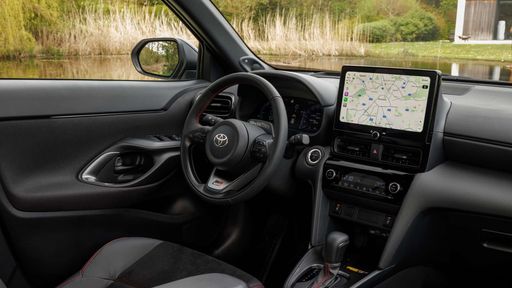
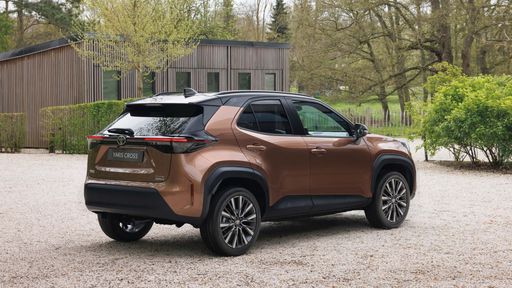
The Toyota Yaris Cross blends the maneuverability of a small hatch with the higher driving position and practicality of a crossover, wrapped in Toyota's dependable build quality. It suits urban buyers who need easy parking, flexible cargo space and a comfortable, economical daily driver.

details
Fiat Grande Panda
Toyota Yaris Cross

Costs and Consumption

Price
16,300 - 25,700 £
Price
23,700 - 34,300 £
Consumption L/100km
5.1 - 5.7 L/100km
Consumption L/100km
4.5 - 4.8 L/100km
Consumption kWh/100km
16.8 kWh/100km
Consumption kWh/100km
-
Electric Range
320 km
Electric Range
-
Battery Capacity
-
Battery Capacity
-
co2
0 - 131 g/km
co2
101 - 108 g/km
Fuel tank capacity
-
Fuel tank capacity
-

Dimensions and Body

Body Type
SUV
Body Type
SUV
Seats
5
Seats
5
Doors
-
Doors
-
Curb weight
1,295 - 1,554 kg
Curb weight
1,180 - 1,290 kg
Trunk capacity
361 - 412 L
Trunk capacity
320 - 397 L
Length
-
Length
-
Width
1,763 mm
Width
1,765 mm
Height
-
Height
-
Max trunk capacity
-
Max trunk capacity
-
Payload
353 - 453 kg
Payload
485 - 510 kg

Engine and Performance

Engine Type
Electric, Petrol MHEV, Petrol
Engine Type
Full Hybrid
Transmission
Automatic, Manuel
Transmission
Automatic
Transmission Detail
Reduction Gearbox, Dual-Clutch Automatic, Manual Gearbox
Transmission Detail
CVT
Drive Type
Front-Wheel Drive
Drive Type
Front-Wheel Drive, All-Wheel Drive
Power HP
100 - 113 HP
Power HP
116 - 130 HP
Acceleration 0-100km/h
11.2 - 11.5 s
Acceleration 0-100km/h
10.7 - 11.3 s
Max Speed
-
Max Speed
-
Torque
122 - 205 Nm
Torque
-
Number of Cylinders
3
Number of Cylinders
3
Power kW
74 - 83 kW
Power kW
85 - 96 kW
Engine capacity
1,199 cm3
Engine capacity
1,490 cm3

General

Model Year
2025
Model Year
2026
CO2 Efficiency Class
A, D
CO2 Efficiency Class
C
Brand
Fiat
Brand
Toyota
DriveDuel uses data analysis and artificial intelligence to evaluate vehicle data and create content. Content is regularly reviewed and improved. The displayed prices are estimates based on German list prices, adjusted to the respective country’s VAT. Country-specific registration taxes are not included. This information is not legally binding.