VS

Ford Capri vs Skoda Kodiaq comparison

Compare performance (340 HP vs 265 HP), boot space and price (36,300 £ vs 37,900 £ ) at a glance. Find out which car is the better choice for you – Ford Capri or Skoda Kodiaq?

Ford Capri vs Skoda Kodiaq: Key differences

Ford Capri

4.8 (4 Reviews)
rate
  • only slightly cheaper
  • noticeably more power
  • considerably more electric range
  • slightly quicker 0–100 km/h
details

Skoda Kodiaq

4.9 (5 Reviews)
rate
  • somewhat lighter
  • visibly more trunk space
details

All details on performance, efficiency, range and trunk space can be found in the technical comparison below – including user reviews for both models.

By Achim Sedelmaier

Capri

The Battle of the SUVs: Ford Capri vs Skoda Kodiaq

As the SUV market heats up, new contenders are emerging to claim a slice of this ever-expanding segment. Among them, the Ford Capri and Skoda Kodiaq stand out, each bringing unique features and innovations to the table. In this article, we delve into both models’ technical specifications and strengths, helping you decide which might be the perfect fit for you.

Kodiaq

Power and Performance

The Ford Capri opts for an all-electric approach, offering a variety of power outputs ranging from 170 HP to 340 HP. This provides a surprisingly dynamic performance for an SUV, with impressive acceleration times clocking in at 5.3 to 6.4 seconds for 0-100 km/h. With a zero emissions output, the Capri makes a strong case for eco-conscious buyers.

On the other hand, the Skoda Kodiaq caters to diverse preferences by offering multiple engine types including plugin hybrid, petrol MHEV, diesel, and petrol. The Kodiaq delivers up to 265 HP, with acceleration times ranging between 6.3 to 9.7 seconds for 0-100 km/h, depending on the powertrain. This versatility in engine choice makes it attractive for those looking for flexibility in fuel types and performance.

Capri

Efficiency and Range

The Ford Capri’s all-electric powertrains lead to an efficient driving experience with energy consumption between 13.3 to 15.8 kWh/100km. Impressively, it provides an electric range of up to 627 km, thanks to a battery capacity of up to 79 kWh, making it highly capable for long-distance travel.

Meanwhile, the Skoda Kodiaq’s plugin hybrid version boasts a notable electric range of up to 123 km on a 19.7 kWh battery. For those who prefer traditional fuel, the Kodiaq offers consumption ranging from 0.4 to 8.2 L/100km, catering to varying needs and price points.

Kodiaq

Interior and Comfort

Both models deliver on interior comfort, featuring 5 seats and ample space. The Ford Capri offers a trunk capacity of up to 572 liters, perfectly adequate for family adventures. Its modern design will certainly appeal to tech-savvy drivers, with a focus on digital interface and user-friendly settings.

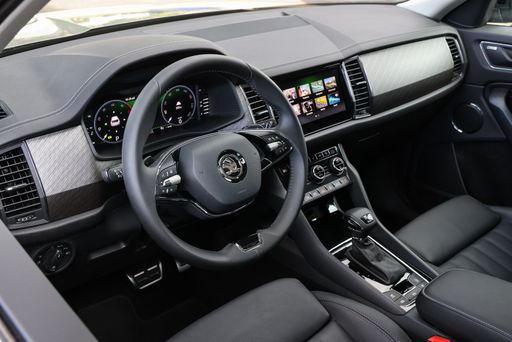
The Skoda Kodiaq, however, takes the lead in storage, offering between 745 to 910 liters of trunk capacity, an attractive choice for those needing extra room. The Kodiaq’s cabin is designed with practicality in mind, providing a comfortable ride and advanced infotainment features.

Design and Innovation

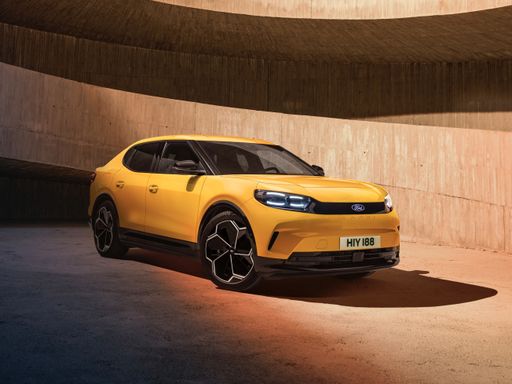
The Ford Capri's design language is futuristic and dynamic, emphasizing its role as an electric SUV. The modern aesthetic is complemented by features aimed at improving efficiency and performance, such as aerodynamic enhancements and a reduction gearbox transmission.

Skoda’s approach with the Kodiaq is rooted in versatility and traditional appeal. It offers a robust build with a focus on safety and convenience, including their latest safety technologies and user-friendly systems.

The Verdict

Choosing between the Ford Capri and Skoda Kodiaq ultimately depends on your priorities. If you’re inclined toward cutting-edge electric performance with zero emissions, the Ford Capri stands out as a pioneering choice. However, if you value versatility in powertrain options and traditional practicality, the Skoda Kodiaq offers a robust and adaptable alternative.

Both models are formidable contenders in the SUV domain, each with its own set of advantages, ensuring that there’s a perfect match for every driver’s needs.

Here’s where it gets real: The technical differences in detail

Capri

Costs and Efficiency:

When it comes to price and running costs, the biggest differences usually appear. This is often where you see which car fits your budget better in the long run.

Ford Capri is only slightly cheaper – starting at 36,300 £ , while the Skoda Kodiaq costs 37,900 £ . That’s a price difference of around 1,535 £.

As for electric range, the Ford Capri offers considerably more range – reaching up to 627 km, about 505 km more than the Skoda Kodiaq.

Kodiaq

Engine and Performance:

Power, torque and acceleration say a lot about how a car feels on the road. This is where you see which model delivers more driving dynamics.

When it comes to engine power, the Ford Capri offers noticeably more power – delivering 340 HP compared to 265 HP. That’s roughly 75 HP more horsepower.

When accelerating from 0 to 100 km/h, the Ford Capri is slightly quicker – completing the sprint in 5.3 s, while the Skoda Kodiaq takes 6.3 s. That’s about 1 s quicker.

There’s also a difference in torque: the Ford Capri delivers considerably more torque with 679 Nm compared to 400 Nm. That’s about 279 Nm more.

Capri

Space and Everyday Use:

Beyond pure performance, interior space and usability matter most in daily life. This is where you see which car is more practical and versatile.

Both vehicles offer seating for 5 people.

In terms of curb weight, Skoda Kodiaq is somewhat lighter – 1,684 kg compared to 2,001 kg. The difference is around 317 kg.

Looking at boot space, the Skoda Kodiaq offers visibly more boot space – 910 L compared to 572 L. That’s a difference of about 338 L.

When it comes to payload, the Ford Capri carries only slightly more – 587 kg compared to 563 kg. That’s a difference of about 24 kg.

Who wins the race in the data check?

The Ford Capri stands well ahead of its rival in the objective data comparison.
This result only shows which model scores more points on paper – not which of the two cars feels right for you.

from £36,300
Capri

Ford Capri

  • Engine Type : Electric
  • Transmission : Automatic
  • Drive Type : Rear-Wheel Drive, All-Wheel Drive
  • Power HP : 190 - 340 HP
  • Consumption kWh/100km : 13.8 - 16.5 kWh/100km
  • Electric Range : 439 - 627 km
Ford Capri
Skoda Kodiaq

Costs and Consumption

View detailed analysis

Engine and Performance

View detailed analysis

Dimensions and Body

View detailed analysis

Ford Capri

The Ford Capri turned the family car into something cheekily sporty, with a long, rakish profile that still promises fun at a glance. Today it lives on as a lovable classic — easy to tinker with, enjoyable to drive and guaranteed to raise smiles at any meet.

details

Skoda Kodiaq

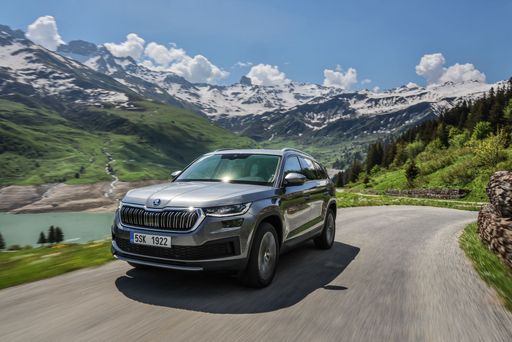
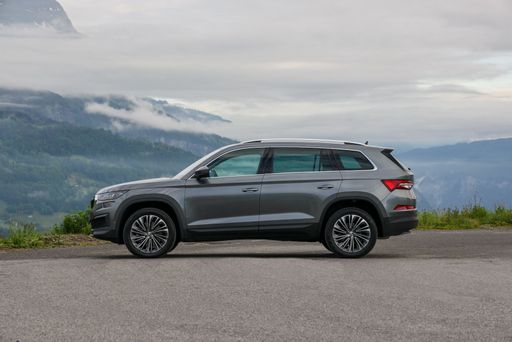
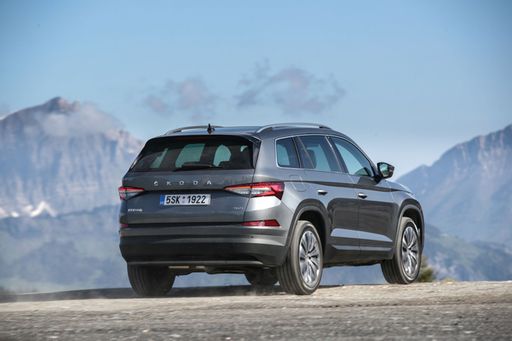
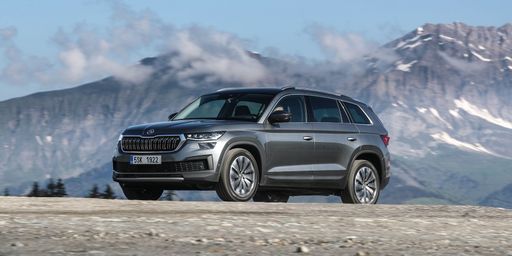
The Skoda Kodiaq blends sensible practicality with surprising style, so families and weekend adventurers get roomy comfort without looking like a moving van. It feels calm and composed on the road, packs clever storage and user-friendly tech, and manages to deliver a near-premium vibe without the pretension.

details
Ford Capri
Skoda Kodiaq

Costs and Consumption

Price
36,300 - 51,800 £
Price
37,900 - 50,600 £
Consumption L/100km
-
Consumption L/100km
1.5 - 8.2 L/100km
Consumption kWh/100km
13.8 - 16.5 kWh/100km
Consumption kWh/100km
-
Electric Range
439 - 627 km
Electric Range
119 - 122 km
Battery Capacity
-
Battery Capacity
-
co2
0 g/km
co2
35 - 186 g/km
Fuel tank capacity
-
Fuel tank capacity
-

Dimensions and Body

Body Type
SUV
Body Type
SUV
Seats
5
Seats
5
Doors
-
Doors
-
Curb weight
2,001 - 2,206 kg
Curb weight
1,684 - 1,970 kg
Trunk capacity
572 L
Trunk capacity
745 - 910 L
Length
-
Length
-
Width
1,872 mm
Width
1,864 mm
Height
-
Height
-
Max trunk capacity
-
Max trunk capacity
-
Payload
539 - 587 kg
Payload
460 - 563 kg

Engine and Performance

Engine Type
Electric
Engine Type
Petrol, Petrol MHEV, Diesel, Plugin Hybrid
Transmission
Automatic
Transmission
Automatic
Transmission Detail
Reduction Gearbox
Transmission Detail
Dual-Clutch Automatic
Drive Type
Rear-Wheel Drive, All-Wheel Drive
Drive Type
All-Wheel Drive, Front-Wheel Drive
Power HP
190 - 340 HP
Power HP
150 - 265 HP
Acceleration 0-100km/h
5.3 - 8 s
Acceleration 0-100km/h
6.3 - 9.7 s
Max Speed
-
Max Speed
-
Torque
350 - 679 Nm
Torque
250 - 400 Nm
Number of Cylinders
-
Number of Cylinders
4
Power kW
140 - 250 kW
Power kW
110 - 195 kW
Engine capacity
-
Engine capacity
1,498 - 1,984 cm3

General

Model Year
2026
Model Year
2,024 - 2,025
CO2 Efficiency Class
A
CO2 Efficiency Class
F, G, E, B
Brand
Ford
Brand
Skoda
DriveDuel uses data analysis and artificial intelligence to evaluate vehicle data and create content. Content is regularly reviewed and improved. The displayed prices are estimates based on German list prices, adjusted to the respective country’s VAT. Country-specific registration taxes are not included. This information is not legally binding.