
 Deutschland
 France
 Nederland
 Great Britain
 Sverige
 Danmark
 Suomi
Suomi Italia
 Polska
 España
VS
Ford Capri vs XPeng P7 comparison
Compare performance (340 HP vs 473 HP), boot space and price (36,300 £ vs 42,500 £ ) at a glance. Find out which car is the better choice for you – Ford Capri or XPeng P7?
Capri
Costs and Efficiency:
When it comes to price and running costs, the biggest differences usually appear. This is often where you see which car fits your budget better in the long run.
Ford Capri is slightly cheaper – starting at 36,300 £ , while the XPeng P7 costs 42,500 £ . That’s a price difference of around 6,172 £.
In terms of energy consumption, the Ford Capri is clearly more efficient: consuming 13.8 kWh/100km compared to 16.8 kWh/100km for the XPeng P7. That’s a difference of about 3 kWh/100km.
As for electric range, the Ford Capri offers marginally more range – reaching up to 627 km, about 51 km more than the XPeng P7.
P7
Engine and Performance:
Under the bonnet, it becomes clear which model is tuned for sportiness and which one takes the lead when you hit the accelerator.
When it comes to engine power, the XPeng P7 offers visibly more power – delivering 473 HP compared to 340 HP. That’s roughly 133 HP more horsepower.
When accelerating from 0 to 100 km/h, the XPeng P7 is visibly quicker – completing the sprint in 4.1 s, while the Ford Capri takes 5.3 s. That’s about 1.2 s quicker.
There’s also a difference in torque: the XPeng P7 delivers somewhat more torque with 757 Nm compared to 679 Nm. That’s about 78 Nm more.
Capri
Space and Everyday Use:
Whether family car or daily driver – which one offers more room, flexibility and comfort?
Both vehicles offer seating for 5 people.
In terms of curb weight, Ford Capri is barely lighter – 2,001 kg compared to 2,020 kg. The difference is around 19 kg.
Looking at boot space, the Ford Capri offers visibly more boot space – 572 L compared to 440 L. That’s a difference of about 132 L.
When it comes to payload, the Ford Capri carries noticeably more – 587 kg compared to 430 kg. That’s a difference of about 157 kg.
Who wins the race in the data check?
The Ford Capri sits just ahead overall in the objective data comparison.
This result only shows which model scores more points on paper – not which of the two cars feels right for you.
from £36,300
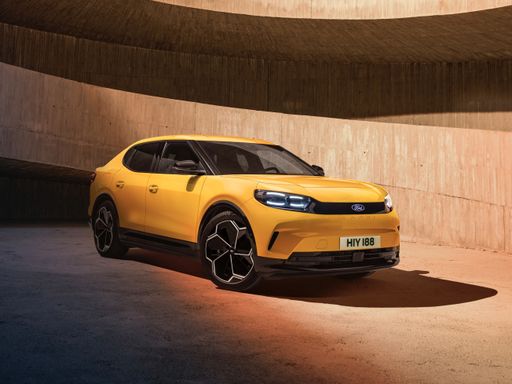
Ford Capri
Ford Capri
XPeng P7
Costs and Consumption
View detailed analysis
View detailed analysis
Engine and Performance
View detailed analysis
View detailed analysis
Dimensions and Body
View detailed analysis
View detailed analysis
Ford Capri
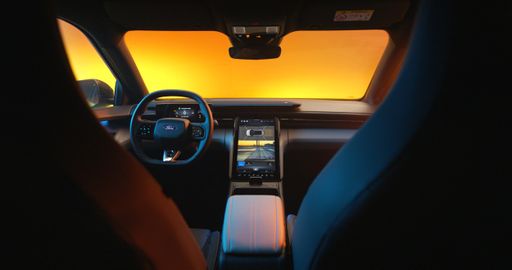
The Ford Capri turned the family car into something cheekily sporty, with a long, rakish profile that still promises fun at a glance. Today it lives on as a lovable classic — easy to tinker with, enjoyable to drive and guaranteed to raise smiles at any meet.
details
XPeng P7
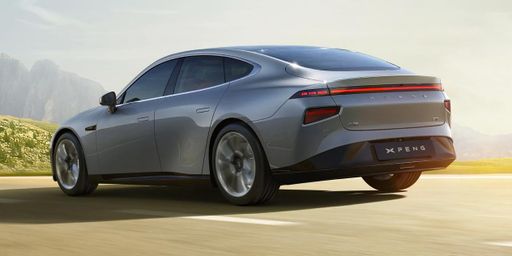
The XPeng P7 cuts a sleek, coupe-like silhouette that looks like a tech firm's idea of a stylish electric sedan, and its minimalist cabin packs smart screens and handy features that actually improve everyday life. Underneath the future-facing image it drives with surprising poise and comes loaded with advanced driver aids, making it a tempting choice for buyers who want electric charisma without the hype.
details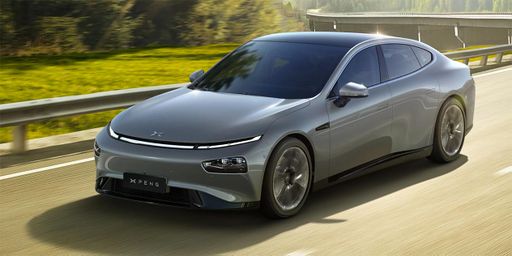
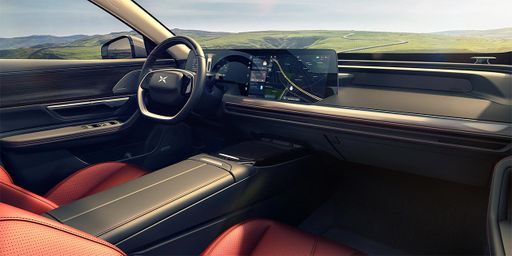
Ford Capri
XPeng P7
Costs and Consumption |
|
|---|---|
|
Price
36,300 - 50,900 £
|
Price
42,500 - 50,200 £
|
|
Consumption L/100km
-
|
Consumption L/100km
-
|
|
Consumption kWh/100km
13.8 - 16.5 kWh/100km
|
Consumption kWh/100km
16.8 - 19.2 kWh/100km
|
|
Electric Range
439 - 627 km
|
Electric Range
505 - 576 km
|
|
Battery Capacity
-
|
Battery Capacity
82.7 kWh
|
|
co2
0 g/km
|
co2
0 g/km
|
|
Fuel tank capacity
-
|
Fuel tank capacity
-
|
Dimensions and Body |
|
|---|---|
|
Body Type
SUV
|
Body Type
Sedan
|
|
Seats
5
|
Seats
5
|
|
Doors
-
|
Doors
5
|
|
Curb weight
2,001 - 2,175 kg
|
Curb weight
2,020 - 2,140 kg
|
|
Trunk capacity
572 L
|
Trunk capacity
440 L
|
|
Length
-
|
Length
4,888 mm
|
|
Width
1,872 mm
|
Width
1,896 mm
|
|
Height
-
|
Height
1,450 mm
|
|
Max trunk capacity
-
|
Max trunk capacity
-
|
|
Payload
559 - 587 kg
|
Payload
430 kg
|
Engine and Performance |
|
|---|---|
|
Engine Type
Electric
|
Engine Type
Electric
|
|
Transmission
Automatic
|
Transmission
Automatic
|
|
Transmission Detail
Reduction Gearbox
|
Transmission Detail
Reduction Gearbox
|
|
Drive Type
Rear-Wheel Drive, All-Wheel Drive
|
Drive Type
Rear-Wheel Drive, All-Wheel Drive
|
|
Power HP
190 - 340 HP
|
Power HP
276 - 473 HP
|
|
Acceleration 0-100km/h
5.3 - 8 s
|
Acceleration 0-100km/h
4.1 - 6.7 s
|
|
Max Speed
-
|
Max Speed
200 km/h
|
|
Torque
350 - 679 Nm
|
Torque
440 - 757 Nm
|
|
Number of Cylinders
-
|
Number of Cylinders
-
|
|
Power kW
140 - 250 kW
|
Power kW
203 - 348 kW
|
|
Engine capacity
-
|
Engine capacity
-
|
General |
|
|---|---|
|
Model Year
2,026
|
Model Year
2,024
|
|
CO2 Efficiency Class
A
|
CO2 Efficiency Class
A
|
|
Brand
Ford
|
Brand
XPeng
|
DriveDuel uses data analysis and artificial intelligence to evaluate vehicle data and create content. Content is regularly reviewed and improved.
The displayed prices are estimates based on German list prices, adjusted to the respective country’s VAT. Country-specific registration taxes are not included. This information is not legally binding.