VS

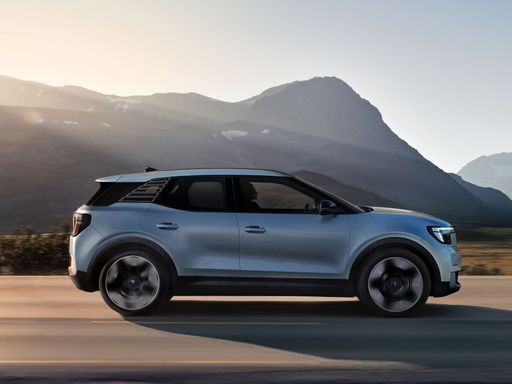
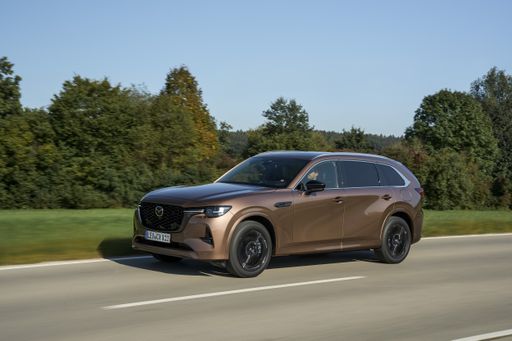
Ford Explorer EV vs Mazda CX-80 comparison

Compare performance (340 HP vs 327 HP), boot space and price (34,200 £ vs 49,300 £ ) at a glance. Find out which car is the better choice for you – Ford Explorer EV or Mazda CX-80?

Ford Explorer EV vs Mazda CX-80: Key differences

Ford Explorer EV

4.9 (3 Reviews)
rate
  • significantly cheaper
  • marginally more power
  • significantly more electric range
  • clearly quicker 0–100 km/h
  • marginally lighter
  • significantly more trunk space
details

Mazda CX-80

3.1 (1 Reviews)
rate
details

All details on performance, efficiency, range and trunk space can be found in the technical comparison below – including user reviews for both models.

By Achim Sedelmaier

Explorer EV

A Clash of Titans: Ford Explorer EV vs Mazda CX-80

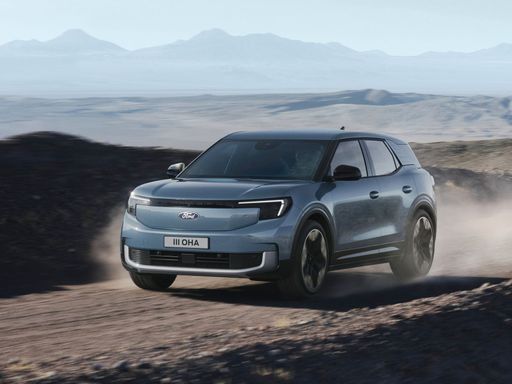
The automotive world welcomes two formidable contenders in the SUV segment— the electric Ford Explorer EV and the Plug-in Hybrid (PHEV) Mazda CX-80. As the demand for eco-friendly vehicles rises, these two SUVs bring a mix of innovation, performance, and sustainability to the table. Let's delve into the technical aspects and innovations that set them apart.
CX-80

Power and Performance

The Ford Explorer EV stands out with its all-electric marvel, featuring multiple power outputs between 170 HP and 340 HP. Offering both Rear-Wheel Drive and All-Wheel Drive, the Explorer EV boasts a remarkable acceleration of 0-100 km/h in just 5.3 seconds (340 HP variant), with a max speed of 180 km/h. Its electric prowess is underscored by a substantial torque ranging from 310 to 679 Nm, providing robust and smooth performance.

In contrast, the Mazda CX-80 offers a blend of performance through its Plugin Hybrid and Diesel Mild Hybrid Electric Vehicle (MHEV). The PHEV version delivers 327 HP, accelerating 0-100 km/h in 6.8 seconds, with a maximum speed of 195 km/h. Torque is impressive at 500 Nm for the PHEV, enhancing its capability, especially useful for navigation in varied terrains. The diesel option, with a slightly lesser output of 254 HP, still impresses with maximum torque of 550 Nm.

Explorer EV

Efficiency and Sustainability

The Explorer EV takes the lead in sustainability with zero CO2 emissions and a CO2 Efficiency Class rating of A, making it an ideal choice for the environmentally conscious. It offers an electric range between 365 km and 602 km, thanks to battery capacities ranging from 52 kWh to 79 kWh. With energy consumption efficiently rated between 13.9 kWh and 16.6 kWh/100 km, it proves its mettle in energy efficiency.

On the efficiency front, the CX-80 PHEV version offers an electric range of 60 km on a full charge, blending electric and gasoline power. It provides a combined fuel consumption of 1.6 L/100 km and CO2 emissions of 35 g/km, earning a CO2 Efficiency Class rating of B. The diesel alternative, however, caters to long-range needs with an efficiency of 5.7 L/100 km but carries a higher CO2 output of 148 g/km, landing it a rating of E.

CX-80

Interior and Space

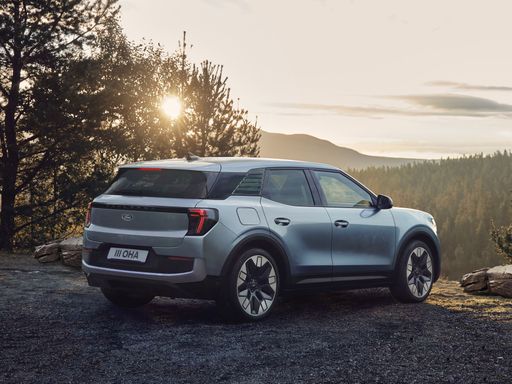
The Ford Explorer EV, while seating five comfortably, optimizes its interior space with a trunk capacity of up to 450 liters and payload options up to 585 kg. Its compact length of 4468 mm and width of 1871 mm make it suitable for urban landscapes without compromising passenger comfort.

The Mazda CX-80, with seating for seven, is slightly larger, offering a generous trunk space of 258 liters and up to 650 kg payload, making it ideal for larger families. Its dimensions, standing at 4995 mm in length, offer substantial room, contributing to its spacious and versatile cabin design.

Explorer EV

Innovations and Technologies

Both vehicles are equipped with state-of-the-art automatic transmissions— the Explorer EV with a reduction gearbox tech and the CX-80 featuring an automatic gearbox— ensuring seamless driving experiences. Moreover, advanced safety and driver-assistive technologies are embedded, aligning with modern automotive standards.

The Ford Explorer EV and Mazda CX-80 exemplify the ongoing evolution in automotive technology. Whether your preference leans towards the pure electric dynamism of the Explorer EV or the versatile hybrid efficiency of the CX-80, both these SUVs are designed to elevate the driving experience while treading lightly on the environment.

Here’s where it gets real: The technical differences in detail

Explorer EV

Costs and Efficiency:

When it comes to price and running costs, the biggest differences usually appear. This is often where you see which car fits your budget better in the long run.

Ford Explorer EV is significantly cheaper – starting at 34,200 £ , while the Mazda CX-80 costs 49,300 £ . That’s a price difference of around 15,128 £.

As for electric range, the Ford Explorer EV offers significantly more range – reaching up to 602 km, about 542 km more than the Mazda CX-80.

CX-80

Engine and Performance:

Under the bonnet, it becomes clear which model is tuned for sportiness and which one takes the lead when you hit the accelerator.

When it comes to engine power, the Ford Explorer EV offers marginally more power – delivering 340 HP compared to 327 HP. That’s roughly 13 HP more horsepower.

When accelerating from 0 to 100 km/h, the Ford Explorer EV is clearly quicker – completing the sprint in 5.3 s, while the Mazda CX-80 takes 6.8 s. That’s about 1.5 s quicker.

There’s also a difference in torque: the Ford Explorer EV delivers somewhat more torque with 679 Nm compared to 550 Nm. That’s about 129 Nm more.

Explorer EV

Space and Everyday Use:

Cabin size, boot volume and payload all play a role in everyday practicality. Here, comfort and flexibility make the difference.

Seats: Mazda CX-80 offers more seats – 7 vs 5.

In terms of curb weight, Ford Explorer EV is marginally lighter – 1,996 kg compared to 2,131 kg. The difference is around 135 kg.

Looking at boot space, the Ford Explorer EV offers significantly more boot space – 472 L compared to 258 L. That’s a difference of about 214 L.

When it comes to payload, the Mazda CX-80 carries barely more – 650 kg compared to 585 kg. That’s a difference of about 65 kg.

Who wins the race in the data check?

The Ford Explorer EV stands well ahead of its rival in the objective data comparison.
This result only shows which model scores more points on paper – not which of the two cars feels right for you.

from £34,200
Explorer EV

Ford Explorer EV

  • Engine Type : Electric
  • Transmission : Automatic
  • Drive Type : Rear-Wheel Drive, All-Wheel Drive
  • Power HP : 190 - 340 HP
  • Consumption kWh/100km : 14.6 - 17.3 kWh/100km
  • Electric Range : 417 - 602 km
Ford Explorer EV
Mazda CX-80

Costs and Consumption

View detailed analysis

Engine and Performance

View detailed analysis

Dimensions and Body

View detailed analysis

Ford Explorer EV

The Ford Explorer EV translates the familiar big‑American SUV presence into whisper‑quiet electric motoring, offering roomy seating and a tech‑forward cabin that will please families and road‑trippers alike. It drives with more composure than its boxy looks suggest, blending a comfortable ride and eager acceleration while undercutting the guilt of gas stops — a practical, modern alternative for buyers who want Explorer space with electric charm.

details

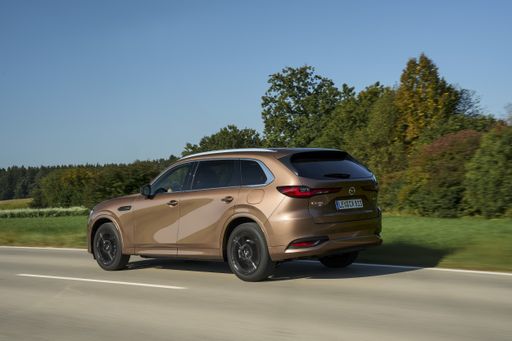
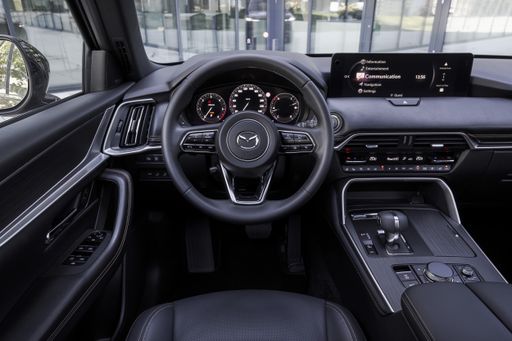
Mazda CX-80

The Mazda CX-80 brings polished, near-premium styling and a cabin that feels far classier than its badge might imply. It steers with a composed, engaging character and packs the sensible practicality families want — with just enough flair to make school runs feel a little less ordinary.

details
Ford Explorer EV
Mazda CX-80

Costs and Consumption

Price
34,200 - 49,600 £
Price
49,300 - 61,400 £
Consumption L/100km
-
Consumption L/100km
4 - 5.6 L/100km
Consumption kWh/100km
14.6 - 17.3 kWh/100km
Consumption kWh/100km
-
Electric Range
417 - 602 km
Electric Range
60 km
Battery Capacity
-
Battery Capacity
-
co2
0 g/km
co2
91 - 146 g/km
Fuel tank capacity
-
Fuel tank capacity
-

Dimensions and Body

Body Type
SUV
Body Type
SUV
Seats
5
Seats
7
Doors
-
Doors
-
Curb weight
1,996 - 2,209 kg
Curb weight
2,131 - 2,240 kg
Trunk capacity
472 L
Trunk capacity
258 L
Length
-
Length
-
Width
1,872 mm
Width
1,890 mm
Height
-
Height
-
Max trunk capacity
-
Max trunk capacity
-
Payload
531 - 585 kg
Payload
649 - 650 kg

Engine and Performance

Engine Type
Electric
Engine Type
Plugin Hybrid, Diesel MHEV
Transmission
Automatic
Transmission
Automatic
Transmission Detail
Reduction Gearbox
Transmission Detail
Automatic Gearbox
Drive Type
Rear-Wheel Drive, All-Wheel Drive
Drive Type
All-Wheel Drive
Power HP
190 - 340 HP
Power HP
254 - 327 HP
Acceleration 0-100km/h
5.3 - 8 s
Acceleration 0-100km/h
6.8 - 8.4 s
Max Speed
-
Max Speed
-
Torque
350 - 679 Nm
Torque
500 - 550 Nm
Number of Cylinders
-
Number of Cylinders
4 - 6
Power kW
140 - 250 kW
Power kW
187 - 241 kW
Engine capacity
-
Engine capacity
2,488 - 3,283 cm3

General

Model Year
2026
Model Year
2025
CO2 Efficiency Class
A
CO2 Efficiency Class
B, E
Brand
Ford
Brand
Mazda
DriveDuel uses data analysis and artificial intelligence to evaluate vehicle data and create content. Content is regularly reviewed and improved. The displayed prices are estimates based on German list prices, adjusted to the respective country’s VAT. Country-specific registration taxes are not included. This information is not legally binding.