@ Ford Motor Company / Ford Media Center
@ Peugeot / Stellantis Media
VS

Ford Explorer EV vs Peugeot 3008 – Performance, range & efficiency compared

Two cars, one duel: Ford Explorer EV meets Peugeot 3008.
Which one wins in performance, efficiency and value for money? Find out now!

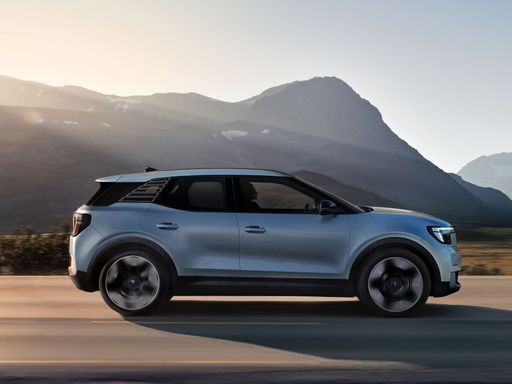
Explorer EV @ Ford Motor Company / Ford Media Center

Exploring the Future of SUVs: Ford Explorer EV vs. Peugeot 3008

The automotive world is buzzing with the ongoing revolution in electric vehicles, and two notable contenders have emerged in the SUV segment: the Ford Explorer EV and the Peugeot 3008. Both vehicles promise innovation and impressive technical specs to satisfy eco-conscious drivers and enthusiasts alike. Let's delve into what each model has to offer.
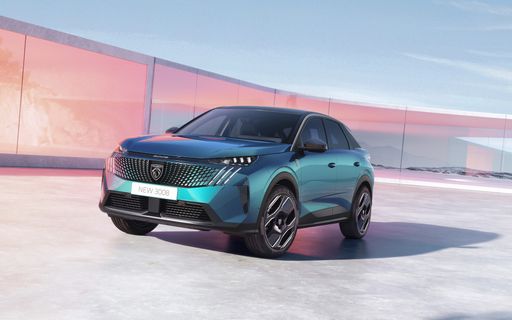
3008 @ Peugeot / Stellantis Media

Design and Dimensions: Making a Bold Statement

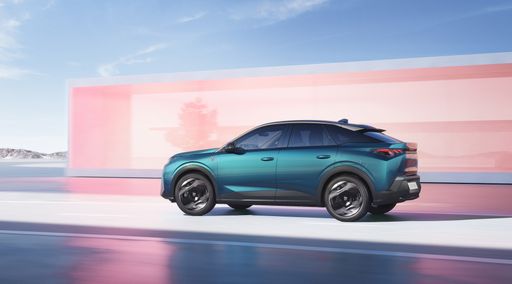
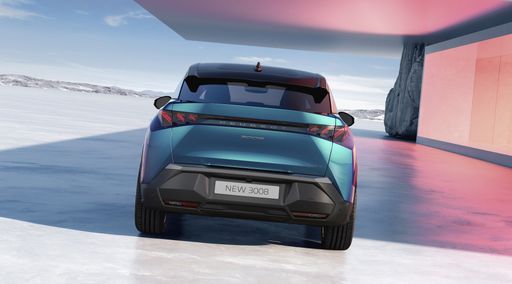
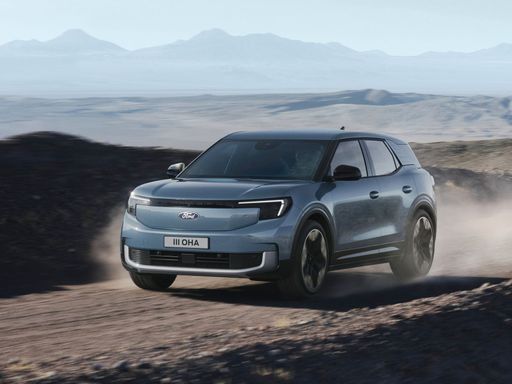
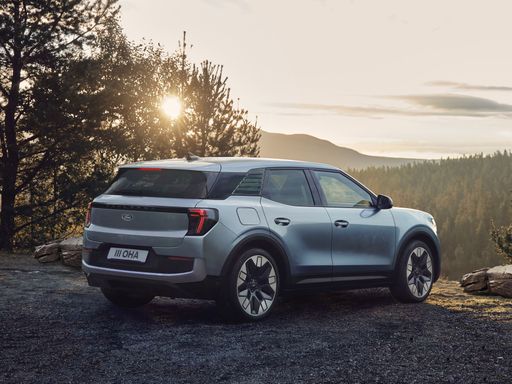
The Ford Explorer EV strikes a balance between contemporary style and classic SUV morphology. Measuring 4468 mm in length, 1871 mm in width, and up to 1639 mm in height, this model exudes a robust presence on the road while maintaining an aerodynamic silhouette. In contrast, the Peugeot 3008, slightly longer at 4542 mm, with a width of 1895 mm and height of 1641 mm, takes its design cues from sleek modernity paired with a distinctive French flair. Both vehicles are sure to attract those who appreciate aesthetic appeal in their driving experience.

Explorer EV @ Ford Motor Company / Ford Media Center

Powertrain and Performance: Under the Hood

The Explorer EV impresses with its all-electric powertrain options, boasting a range of power outputs from 170 HP to a formidable 340 HP. With an acceleration of 0-100 km/h in as fast as 5.3 seconds, it ensures quick and responsive driving. On the eco-friendly spectrum, the Ford Explorer offers an electric range up to 602 km with a maximum battery capacity of 79 kWh.

Meanwhile, the Peugeot 3008 offers versatility through its engine types, showcasing petrol, hybrid, and full electric options. The top electric model in its lineup offers up to 231 HP and a driving range reaching 698 km. Although slightly less nimble than the Explorer with a 0-100 km/h acceleration of 8.4 seconds, its dual-clutch transmission ensures smooth gear shifts.

3008 @ Peugeot / Stellantis Media

Efficiency and Sustainability: Driving Towards Zero Emissions

Both the Ford Explorer EV and Peugeot 3008 are committed to reducing the carbon footprint. The Explorer EV proudly maintains a CO2 output of 0 g/km, classified in the top CO2 efficiency class A. Its consumption ranges between 13.9 and 16.6 kWh/100 km, exemplifying efficiency.

On the other hand, while the 3008 includes petrol options, its fully electric model similarly achieves zero emissions. It offers competitive efficiency levels, with electricity consumption around 17.2 kWh/100 km. With its hybrid variant, it manages a low CO2 output of just 19 g/km, merit-rated at class A.

Explorer EV @ Ford Motor Company / Ford Media Center

Interior Comfort and Practicality: Space and Convenience

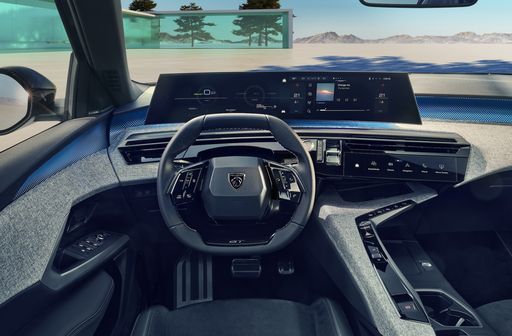
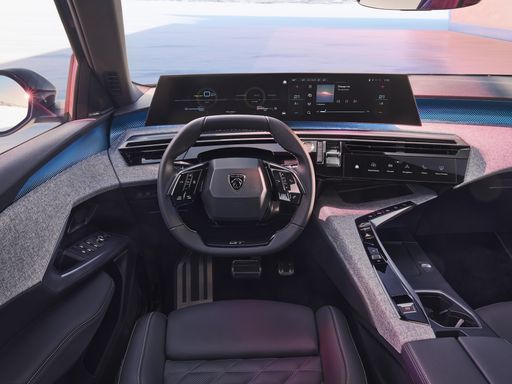
Both vehicles accommodate five passengers comfortably, offering modern interiors with advanced technology to enhance the driving experience. The Explorer EV offers a trunk capacity ranging from 445 to 450 liters, suitable for everyday needs and adventures.

The Peugeot 3008 excels with a spacious trunk capacity of 520 liters, providing ample room for luggage on long journeys or the daily grocery run. Its interior design focuses on driver comfort and ergonomics, reflecting Peugeot’s commitment to luxury and convenience.

3008 @ Peugeot / Stellantis Media

Conclusion: A Choice of Preference and Priorities

The competition between the Ford Explorer EV and the Peugeot 3008 brings consumers tantalizing options in the realm of eco-friendly SUVs. The Explorer EV attracts with its dynamic performance and slightly superior efficiency, making it ideal for those prioritizing power and range. Conversely, the Peugeot 3008 offers versatility through its multiple powertrain options and larger cargo capacity, appealing to drivers seeking flexibility and practicality.

Ultimately, the decision boils down to personal preferences and what features top an individual’s wish list. Both vehicles exemplify the automotive industry's strides towards innovation and sustainability, setting benchmarks for future models.

Here’s where it gets real: The technical differences in detail

Costs and Efficiency:

Price and efficiency are often the first things buyers look at. Here it becomes clear which model has the long-term edge – whether at the pump, the plug, or in purchase price.

Ford Explorer EV has a hardly perceptible advantage in terms of price – it starts at 34200 £, while the Peugeot 3008 costs 35100 £. That’s a price difference of around 942 £.

In terms of energy consumption, the advantage goes to the Ford Explorer EV: with 14.50 kWh per 100 km, it’s somewhat more efficient than the Peugeot 3008 with 16.90 kWh. That’s a difference of about 2.40 kWh.

As for range, the Peugeot 3008 performs somewhat better – achieving up to 698 km, about 96 km more than the Ford Explorer EV.

Engine and Performance:

Power, torque and acceleration say a lot about how a car feels on the road. This is where you see which model delivers more driving dynamics.

When it comes to engine power, the Ford Explorer EV has a hardly perceptible edge – offering 340 HP compared to 325 HP. That’s roughly 15 HP more horsepower.

In acceleration from 0 to 100 km/h, the Ford Explorer EV is a bit quicker – completing the sprint in 5.30 s, while the Peugeot 3008 takes 6 s. That’s about 0.70 s faster.

In terms of top speed, the Peugeot 3008 performs slightly better – reaching 220 km/h, while the Ford Explorer EV tops out at 180 km/h. The difference is around 40 km/h.

There’s also a difference in torque: Ford Explorer EV pulls evident stronger with 679 Nm compared to 511 Nm. That’s about 168 Nm difference.

Space and Everyday Use:

Whether family car or daily driver – which one offers more room, flexibility and comfort?

Both vehicles offer seating for 5 people.

In curb weight, Peugeot 3008 is to a small extent lighter – 1648 kg compared to 1908 kg. The difference is around 260 kg.

In terms of boot space, the Peugeot 3008 offers somewhat more room – 520 L compared to 450 L. That’s a difference of about 70 L.

In maximum load capacity, the Peugeot 3008 performs minimal better – up to 1480 L, which is about 58 L more than the Ford Explorer EV.

When it comes to payload, Ford Explorer EV noticeable takes the win – 585 kg compared to 467 kg. That’s a difference of about 118 kg.

Who comes out on top?

Overall, the Ford Explorer EV shows itself to be won narrowly and secures the title of DriveDuel Champion.
It convinces with the more balanced overall package and proves to be the more versatile choice for everyday use.

from about £34,200
Explorer EV @ Ford Motor Company / Ford Media Center

Ford Explorer EV

  • Engine Type : Electric
  • Transmission : Automatic
  • Drive Type : Rear-Wheel Drive, All-Wheel Drive
  • Power HP : 170 - 340 HP
  • Consumption kWh/100km : 14.5 - 17.2 kWh
  • Electric Range : 360 - 602 km

Ford Explorer EV

5 (2)
rate

The Ford Explorer EV translates the familiar big‑American SUV presence into whisper‑quiet electric motoring, offering roomy seating and a tech‑forward cabin that will please families and road‑trippers alike. It drives with more composure than its boxy looks suggest, blending a comfortable ride and eager acceleration while undercutting the guilt of gas stops — a practical, modern alternative for buyers who want Explorer space with electric charm.

details

Peugeot 3008

5 (1)
rate

The Peugeot 3008 blends bold French styling with a surprisingly grown-up interior that makes even dull commutes feel a little bit special. Practical enough for family life yet lively to drive, it’s a clever all‑rounder that stands out from the crossover crowd without shouting for attention.

details
Ford Explorer EV
Peugeot 3008
Explorer EV @ Ford Motor Company / Ford Media Center
3008 @ Peugeot / Stellantis Media

Costs and Consumption

Price
34200 - 48800 £
Price
35100 - 52000 £
Consumption L/100km
-
Consumption L/100km
2.4 - 5.4 L
Consumption kWh/100km
14.5 - 17.2 kWh
Consumption kWh/100km
16.9 - 17.6 kWh
Electric Range
360 - 602 km
Electric Range
81 - 698 km
Battery Capacity
52 - 79 kWh
Battery Capacity
0.4 - 96.9 kWh
co2
0 g/km
co2
0 - 121 g/km
Fuel tank capacity
-
Fuel tank capacity
55 L

Dimensions and Body

Body Type
SUV
Body Type
SUV
Seats
5
Seats
5
Doors
5
Doors
5
Curb weight
1908 - 2179 kg
Curb weight
1648 - 2266 kg
Trunk capacity
445 - 450 L
Trunk capacity
470 - 520 L
Length
4468 mm
Length
4542 mm
Width
1871 mm
Width
1895 mm
Height
1630 - 1639 mm
Height
1641 mm
Max trunk capacity
1417 - 1422 L
Max trunk capacity
1430 - 1480 L
Payload
561 - 585 kg
Payload
432 - 467 kg

Engine and Performance

Engine Type
Electric
Engine Type
Electric, Petrol MHEV, Plugin Hybrid
Transmission
Automatic
Transmission
Automatic
Transmission Detail
Reduction Gearbox
Transmission Detail
Reduction Gearbox, Dual-Clutch Automatic
Drive Type
Rear-Wheel Drive, All-Wheel Drive
Drive Type
Front-Wheel Drive, All-Wheel Drive
Power HP
170 - 340 HP
Power HP
145 - 325 HP
Acceleration 0-100km/h
5.3 - 8.7 s
Acceleration 0-100km/h
6 - 10.2 s
Max Speed
160 - 180 km/h
Max Speed
170 - 220 km/h
Torque
310 - 679 Nm
Torque
230 - 511 Nm
Number of Cylinders
-
Number of Cylinders
3 - 4
Power kW
125 - 250 kW
Power kW
107 - 239 kW
Engine capacity
-
Engine capacity
1199 - 1598 cm3

General

Model Year
2024 - 2025
Model Year
2024 - 2025
CO2 Efficiency Class
A
CO2 Efficiency Class
A, D, B
Brand
Ford
Brand
Peugeot
What drive types are available for the Ford Explorer EV?

The Ford Explorer EV is available as Rear-Wheel Drive or All-Wheel Drive.

The prices and data displayed are estimates based on German list prices and may vary by country. This information is not legally binding.