VS

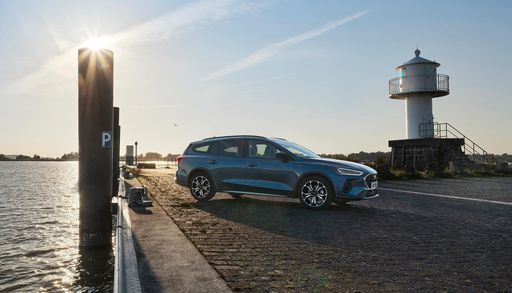
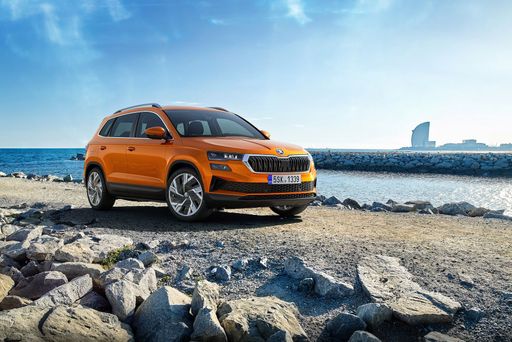
Ford Focus Turnier vs Skoda Karoq comparison

Compare performance (280 HP vs 190 HP), boot space and price (28,500 £ vs 29,100 £ ) at a glance. Find out which car is the better choice for you – Ford Focus Turnier or Skoda Karoq?

Ford Focus Turnier vs Skoda Karoq: Key differences

Ford Focus Turnier

  • very slightly cheaper
  • markedly more power
  • clearly quicker 0–100 km/h
  • somewhat more trunk space

Skoda Karoq

4.6 (2 Reviews)
rate
  • marginally more efficient
  • very slightly lighter

By Achim Sedelmaier

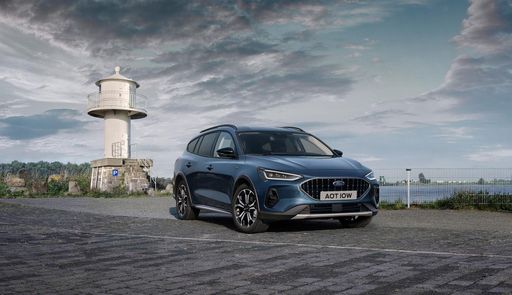
Focus Turnier

The Battle of Utility: Ford Focus Turnier vs. Skoda Karoq

In the constantly evolving automotive world, choosing the right vehicle often comes down to personal preference and specific needs. Today, we compare two versatile models that cater to different lifestyle requirements: the Ford Focus Turnier and the Skoda Karoq. Both vehicles offer a unique blend of technical prowess, comfort, and functionality. Let's dive into the details to see how they stack up against each other.
Karoq

Engine Performance and Transmission

The Ford Focus Turnier, a long-standing favorite among wagon enthusiasts, offers a range of engine options tailored to various driving styles. Buyers can select from petrol MHEV, diesel, and standard petrol engines. The power spectrum extends from 115 HP to a fiery 280 HP, ensuring there's a suitable fit for every requirement. Transmission choices include a dependable manual or a modern dual-clutch automatic system, both delivering power effectively to its front-wheel drive train.

In contrast, the Skoda Karoq steps closer to the SUV category, providing a higher stance and the added benefit of all-wheel drive in some models. Similar to the Focus, Karoq's engine lineup consists of petrol and diesel options. With power ratings between 115 HP and 190 HP, this SUV aims to strike a balance between efficiency and power. It also mirrors the transmission offerings of its Ford counterpart with manual and dual-clutch automatic gearboxes.

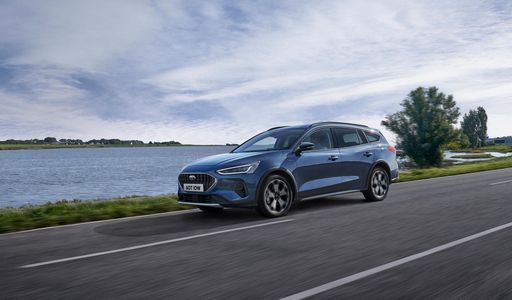
Focus Turnier

Efficiency and Environmental Impact

Fuel efficiency veers in favor of the Ford Focus Turnier. Its diverse engine lineup boasts consumption metrics as low as 5.0 L/100 km, with CO2 emissions starting at a respectable 120 g/km. This makes it a more eco-conscious choice in the current market, particularly when considering the environmental demands on manufacturers today.

The Skoda Karoq is somewhat less conservative in its figures. Averaging between 4.9 L/100 km to 7.6 L/100 km depending on the setup, it presents a worthy competitor in terms of efficiency. However, its CO2 emissions range from 129 to 174 g/km, making it slightly less efficient compared to Ford's wagon.

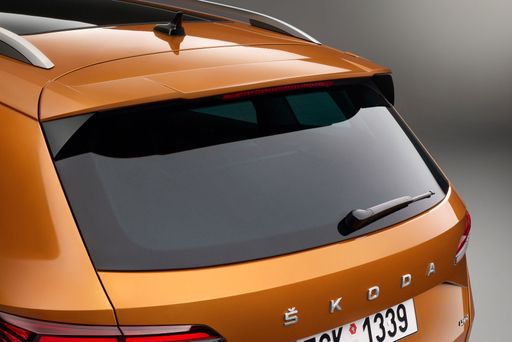
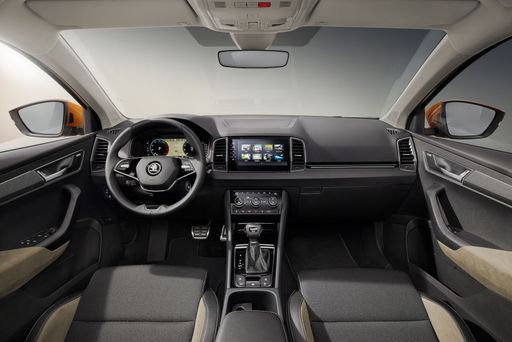
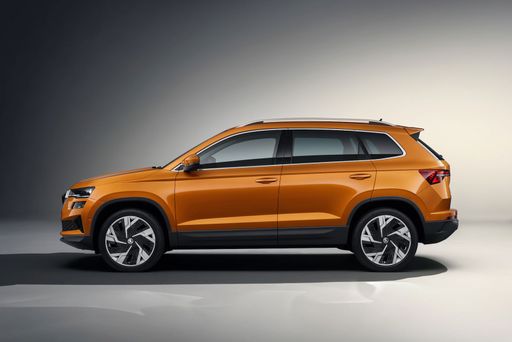
Karoq

Dimensions and Utility

When it comes to size, the Ford Focus Turnier's dimensions scream practicality, with a length of up to 4693 mm and a trunk capacity that expands to 635 liters. It's a perfect companion for those who value cargo space, family outings, or need that extra room for sports equipment.

The Skoda Karoq, on the other hand, impresses with its SUV status whilst maintaining compactness with a length of 4390 mm. Its trunk capacity of 521 liters is useful, although not as ample as the Focus Turnier. However, the Karoq's taller stature offers a different kind of utility, providing better ground clearance and a commanding view of the road.

Focus Turnier

Driving Dynamics and Comfort

Performance enthusiasts might notice the athletic edge of the Focus Turnier, which can accelerate from 0-100 km/h as quickly as 5.8 seconds in its high-performance variants. Comfort doesn't take a back seat either, as the smooth ride and quality interior materials make it a pleasant space for driving longer distances.

The Skoda Karoq offers a balanced drive with its best acceleration time sitting at 7 seconds to reach 100 km/h. It tends to prioritize comfort and practicality, making it an ideal choice for families or those who appreciate a smoother ride cushioned by its effective suspension.

Karoq

Conclusion

Deciding between the Ford Focus Turnier and the Skoda Karoq comes down to individual priorities. The Ford Focus Turnier captivates with its spaciousness, diverse engine lineup, and fuel-saving capability. Meanwhile, the Skoda Karoq appeals with its higher driving position, all-wheel-drive option, and balanced performance offerings. Both models embrace innovation in their right, tailored to deliver satisfaction and functionality for different kinds of drivers.

Take a test drive of both to see which aligns best with your automotive aspirations!

Here’s where it gets real: The technical differences in detail

Focus Turnier

Costs and Efficiency:

Price and efficiency are often the first things buyers look at. Here it becomes clear which model has the long-term edge – whether at the pump, the plug, or in purchase price.

Ford Focus Turnier is very slightly cheaper – starting at 28,500 £ , while the Skoda Karoq costs 29,100 £ . That’s a price difference of around 540 £.

Fuel consumption also shows a difference: the Skoda Karoq uses 4.9 L/100km and is marginally more efficient than the Ford Focus Turnier with 5 L/100km. The difference is about 0.1 L/100km.

Karoq

Engine and Performance:

Under the bonnet, it becomes clear which model is tuned for sportiness and which one takes the lead when you hit the accelerator.

When it comes to engine power, the Ford Focus Turnier offers markedly more power – delivering 280 HP compared to 190 HP. That’s roughly 90 HP more horsepower.

When accelerating from 0 to 100 km/h, the Ford Focus Turnier is clearly quicker – completing the sprint in 5.8 s, while the Skoda Karoq takes 7 s. That’s about 1.2 s quicker.

Looking at top speed, the Ford Focus Turnier is somewhat faster – reaching 250 km/h, while the Skoda Karoq tops out at 210 km/h. The difference is around 40 km/h.

There’s also a difference in torque: the Ford Focus Turnier delivers slightly more torque with 420 Nm compared to 360 Nm. That’s about 60 Nm more.

Focus Turnier

Space and Everyday Use:

Whether family car or daily driver – which one offers more room, flexibility and comfort?

Both vehicles offer seating for 5 people.

In terms of curb weight, Skoda Karoq is very slightly lighter – 1,380 kg compared to 1,413 kg. The difference is around 33 kg.

Looking at boot space, the Ford Focus Turnier offers somewhat more boot space – 635 L compared to 521 L. That’s a difference of about 114 L.

For maximum load capacity, the Ford Focus Turnier offers marginally more capacity – up to 1,653 L, about 23 L more than the Skoda Karoq.

When it comes to payload, the Ford Focus Turnier carries very slightly more – 557 kg compared to 549 kg. That’s a difference of about 8 kg.

Who wins the race in the data check?

The Ford Focus Turnier holds a decisive overall lead in the objective data comparison.
This result only shows which model scores more points on paper – not which of the two cars feels right for you.

from £28,500
Focus Turnier

Ford Focus Turnier

  • Engine Type : Petrol MHEV, Diesel, Petrol
  • Transmission : Manuel, Automatic
  • Drive Type : Front-Wheel Drive
  • Power HP : 115 - 280 HP
  • Consumption L/100km : 5 - 8 L/100km
Ford Focus Turnier
Skoda Karoq

Costs and Consumption

View detailed analysis

Engine and Performance

View detailed analysis

Dimensions and Body

View detailed analysis

Ford Focus Turnier

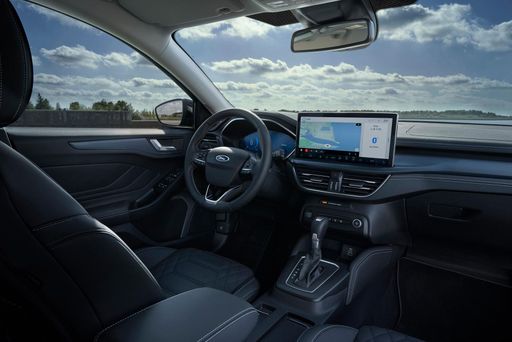
The Ford Focus Estate packs practical, family-friendly space into a compact, poised package that feels sharper and more grown-up than its price suggests. It steers with tidy composure, offers sensible interior flexibility, and is perfect for buyers who want everyday usability without turning into a moving van.

details

Skoda Karoq

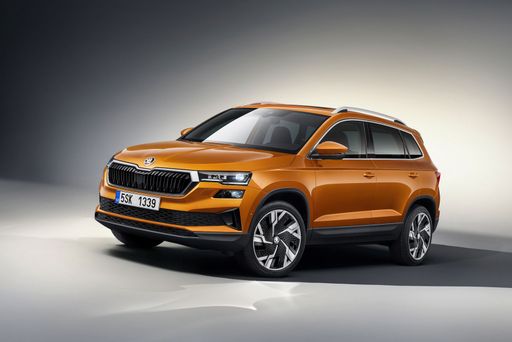
The Skoda Karoq is a smart, unfussy compact SUV that blends roomy practicality with a pleasantly composed driving character. It won’t turn heads at a car meet, but it will make daily life easier with clever storage, sensible ergonomics and a reassuringly grown-up ride.

details
Ford Focus Turnier
Skoda Karoq

Costs and Consumption

Price
28,500 - 39,900 £
Price
29,100 - 41,700 £
Consumption L/100km
5 - 8 L/100km
Consumption L/100km
4.9 - 7.6 L/100km
Consumption kWh/100km
-
Consumption kWh/100km
-
Electric Range
-
Electric Range
-
Battery Capacity
-
Battery Capacity
-
co2
120 - 183 g/km
co2
128 - 173 g/km
Fuel tank capacity
52 L
Fuel tank capacity
50 - 55 L

Dimensions and Body

Body Type
Estate
Body Type
SUV
Seats
5
Seats
5
Doors
5
Doors
5
Curb weight
1,413 - 1,563 kg
Curb weight
1,380 - 1,655 kg
Trunk capacity
608 - 635 L
Trunk capacity
521 L
Length
4,672 - 4,693 mm
Length
4,390 mm
Width
1,825 - 1,844 mm
Width
1,841 mm
Height
1,459 - 1,504 mm
Height
1,624 mm
Max trunk capacity
1,653 L
Max trunk capacity
1,630 L
Payload
523 - 557 kg
Payload
456 - 549 kg

Engine and Performance

Engine Type
Petrol MHEV, Diesel, Petrol
Engine Type
Petrol, Diesel
Transmission
Manuel, Automatic
Transmission
Manuel, Automatic
Transmission Detail
Manual Gearbox, Dual-Clutch Automatic, Automatic Gearbox
Transmission Detail
Manual Gearbox, Dual-Clutch Automatic
Drive Type
Front-Wheel Drive
Drive Type
Front-Wheel Drive, All-Wheel Drive
Power HP
115 - 280 HP
Power HP
115 - 190 HP
Acceleration 0-100km/h
5.8 - 12.1 s
Acceleration 0-100km/h
7 - 11.2 s
Max Speed
184 - 250 km/h
Max Speed
192 - 210 km/h
Torque
170 - 420 Nm
Torque
200 - 360 Nm
Number of Cylinders
3 - 4
Number of Cylinders
3 - 4
Power kW
85 - 206 kW
Power kW
85 - 140 kW
Engine capacity
999 - 2,261 cm3
Engine capacity
999 - 1,984 cm3

General

Model Year
2,023 - 2,024
Model Year
2,025
CO2 Efficiency Class
D, G
CO2 Efficiency Class
D, E, F
Brand
Ford
Brand
Skoda
DriveDuel uses data analysis and artificial intelligence to evaluate vehicle data and create content. Content is regularly reviewed and improved. The displayed prices are estimates based on German list prices, adjusted to the respective country’s VAT. Country-specific registration taxes are not included. This information is not legally binding.