VS

Ford Kuga vs VW ID.4 comparison

Compare performance (243 HP vs 299 HP), boot space and price (34,200 £ vs 34,800 £ ) at a glance. Find out which car is the better choice for you – Ford Kuga or VW ID.4?

Ford Kuga vs VW ID.4: Key differences

Ford Kuga

4.2 (6 Reviews)
rate
  • very slightly cheaper
  • noticeably lighter
details

VW ID.4

4.4 (10 Reviews)
rate
  • a bit more power
  • clearly more electric range
  • moderately quicker 0–100 km/h
details

All details on performance, efficiency, range and trunk space can be found in the technical comparison below – including user reviews for both models.

By Achim Sedelmaier

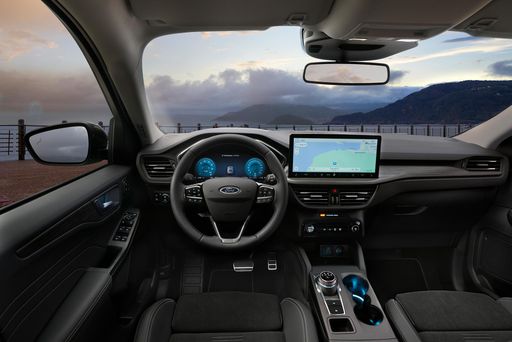
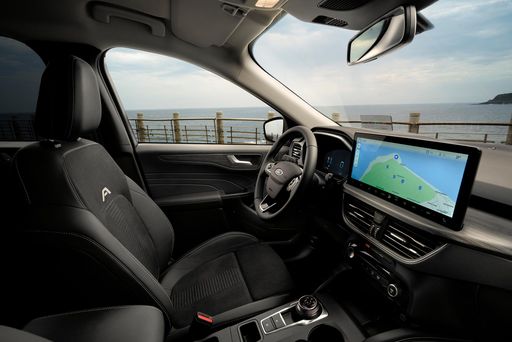
Kuga

The Battle of the SUVs: Ford Kuga vs. VW ID.4

In the ever-evolving landscape of automotive technology, the demand for environmentally friendly and innovative SUVs is higher than ever. Two contenders, the Ford Kuga and VW ID.4, have piqued the interest of eco-conscious drivers. Both models offer unique benefits, but which one truly leads the pack? Let's delve into the details and compare these SUVs on technical aspects and pioneering innovations.
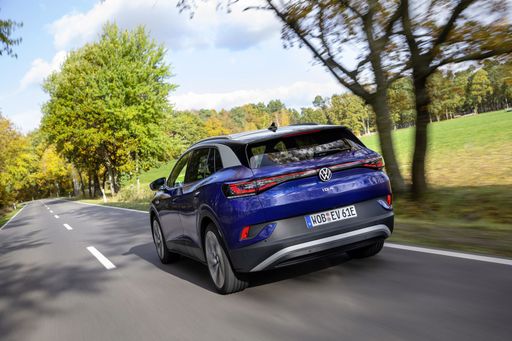
ID.4

Power and Performance

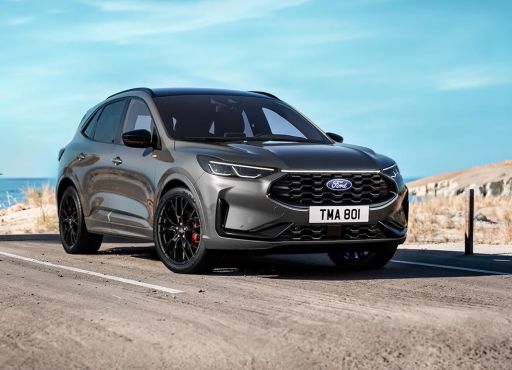
The Ford Kuga offers a robust range of engines, including traditional petrol, full hybrid, and plug-in hybrid options. Drivers can choose from power outputs ranging from 150 HP to a maximum of 243 HP. The Kuga can accelerate from 0 to 100 km/h in as fast as 7.3 seconds, with a top speed of up to 200 km/h.

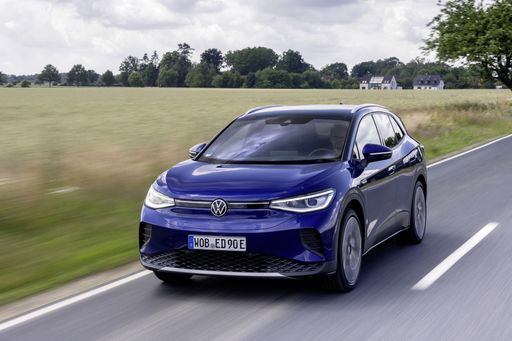
In contrast, the VW ID.4 is powered solely by electricity, offering a clean emission experience with power outputs ranging from 170 HP to 340 HP. Its acceleration capabilities are impressive, reaching 0 to 100 km/h in as quick as 5.4 seconds and a top speed capped at 180 km/h.

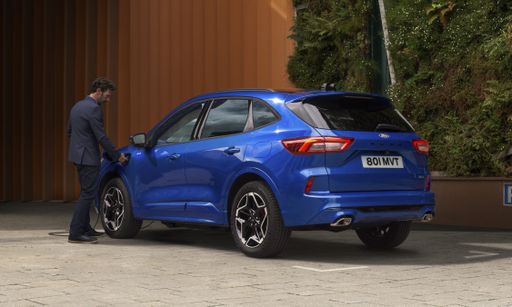
Kuga

Efficiency and Range

The Ford Kuga stands out with its flexible efficiency standards. Its plug-in hybrid version delivers a consumption rate as low as 0.9 L/100km and offers an electric range of 69 km for those short city drives. The CO2 emissions for the hybrid models can be as low as 20 g/km, showcasing its eco-friendly design.

On the other hand, the VW ID.4 exhibits a notable electric range, with capabilities extending up to 572 km on a full charge, depending on the specific variant. The ID.4 maintains high efficiency, consuming between 15.8 to 16.8 kWh per 100 km, ensuring minimal environmental impact with zero carbon emissions.

ID.4

Design and Practicality

Both SUVs are crafted for comfort and practicality with a five-door design accommodating five passengers. The Ford Kuga presents a roomy trunk capacity of 412 liters, highlighting its focus on carrying capacity. It strikes a balance between stylish design and functionality, appealing to traditional and modern enthusiasts alike.

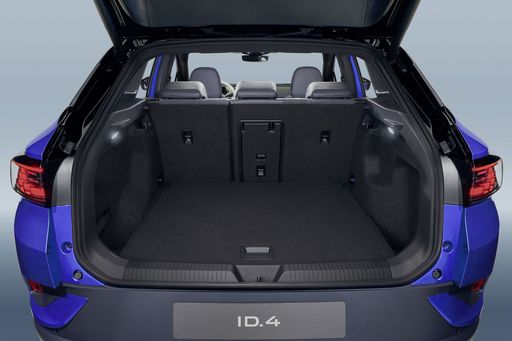
In comparison, the VW ID.4 comes with a larger trunk capacity of 543 liters, providing ample space for adventurers and families. Its sleek electric design echoes future-forward aesthetics, making it an attractive option for those inclined towards innovation.

Kuga

Advanced Technology and Innovations

The Ford Kuga integrates advanced hybrid technology with a choice of manual and automatic transmissions; it adapts to diverse driving needs. Additionally, the Ford Co-Pilot360 suite offers an array of driver assistance features that enhance safety and convenience.

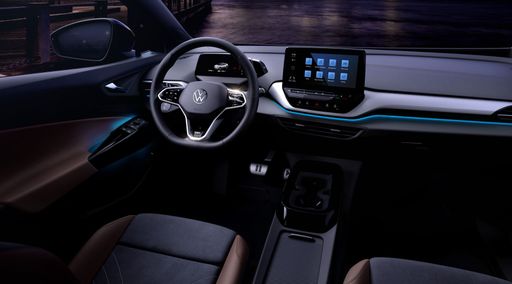
VW ID.4, embracing its all-electric identity, emphasizes smart connectivity and digital experiences. It features advanced driver-assistance systems and an intuitive infotainment platform, delivering a seamless interaction between driver and machine.

ID.4

Conclusion: Choosing the Right SUV

Both the Ford Kuga and VW ID.4 showcase their strengths in the realm of eco-friendly SUVs. The Ford Kuga is ideal for those seeking versatility with its hybrid options and strong performance credentials. On the flip side, the VW ID.4 caters to the environmentally-conscious driver eager for a fully electric, forward-thinking vehicle.

Ultimately, the choice between the Ford Kuga and VW ID.4 depends on individual priorities, whether they lie in hybrid flexibility and performance or in the zero-emissions allure of electric innovation.

Here’s where it gets real: The technical differences in detail

Kuga

Costs and Efficiency:

Price and efficiency are key factors when choosing a car – and this is often where the real differences emerge.

Ford Kuga is very slightly cheaper – starting at 34,200 £ , while the VW ID.4 costs 34,800 £ . That’s a price difference of around 540 £.

As for electric range, the VW ID.4 offers clearly more range – reaching up to 570 km, about 502 km more than the Ford Kuga.

ID.4

Engine and Performance:

Power, torque and acceleration say a lot about how a car feels on the road. This is where you see which model delivers more driving dynamics.

When it comes to engine power, the VW ID.4 offers a bit more power – delivering 299 HP compared to 243 HP. That’s roughly 56 HP more horsepower.

When accelerating from 0 to 100 km/h, the VW ID.4 is moderately quicker – completing the sprint in 6.1 s, while the Ford Kuga takes 7.3 s. That’s about 1.2 s quicker.

There’s also a difference in torque: the VW ID.4 delivers considerably more torque with 545 Nm compared to 240 Nm. That’s about 305 Nm more.

Kuga

Space and Everyday Use:

Beyond pure performance, interior space and usability matter most in daily life. This is where you see which car is more practical and versatile.

Both vehicles offer seating for 5 people.

In terms of curb weight, Ford Kuga is noticeably lighter – 1,526 kg compared to 2,065 kg. The difference is around 539 kg.

When it comes to payload, the VW ID.4 carries barely more – 554 kg compared to 550 kg. That’s a difference of about 4 kg.

Who wins the race in the data check?

The VW ID.4 is decisively ahead in the objective data comparison.
This result only shows which model scores more points on paper – not which of the two cars feels right for you.

from £34,800
ID.4

VW ID.4

  • Engine Type Electric
  • Transmission Automatic
  • Drive Type Rear-Wheel Drive, All-Wheel Drive
  • Power HP 190 - 299 HP
  • Consumption kWh/100km 15.4 - 16.6 kWh/100km
  • Electric Range 425 - 570 km
Ford Kuga
VW ID.4

Costs and Consumption

View detailed analysis

Engine and Performance

View detailed analysis

Dimensions and Body

View detailed analysis

Ford Kuga

The Ford Kuga is a practical and comfortable compact SUV that balances everyday usability with a composed ride and adaptable interior. It offers sensible tech and safety features, making it a solid choice for families or anyone seeking a versatile, easy-to-live-with crossover.

details

VW ID.4

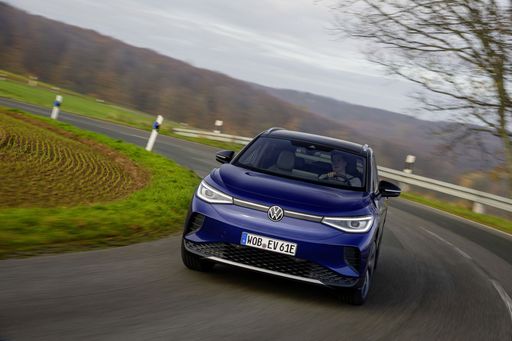
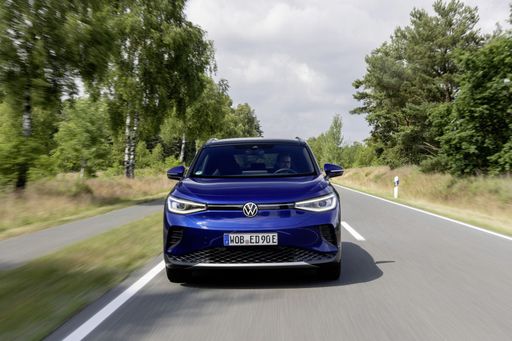
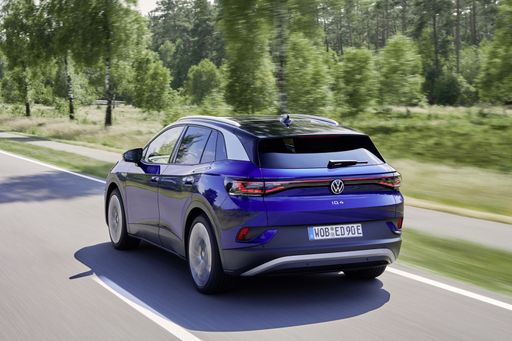
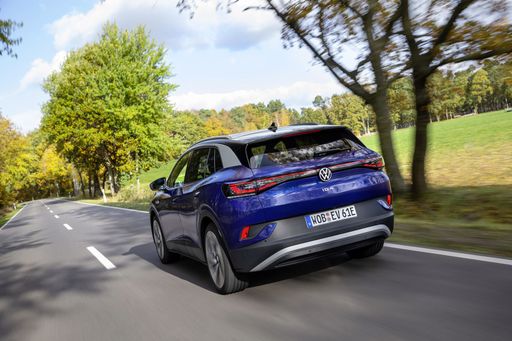
The VW ID.4 is a practical, family-friendly electric SUV that balances everyday usability with a calm, composed driving character. It pairs a roomy, well-finished cabin and easy-to-use tech with predictable handling and convenient charging options, making it a sensible choice for buyers switching to electric.

details
Ford Kuga
VW ID.4

Costs and Consumption

Price
34,200 - 46,300 £
Price
34,800 - 47,600 £
Consumption L/100km
2.8 - 6.8 L/100km
Consumption L/100km
-
Consumption kWh/100km
-
Consumption kWh/100km
15.4 - 16.6 kWh/100km
Electric Range
68 km
Electric Range
425 - 570 km
Battery Capacity
-
Battery Capacity
-
co2
55 - 154 g/km
co2
0 g/km
Fuel tank capacity
-
Fuel tank capacity
-

Dimensions and Body

Body Type
SUV
Body Type
SUV
Seats
5
Seats
5
Doors
-
Doors
-
Curb weight
1,526 - 1,859 kg
Curb weight
2,065 - 2,219 kg
Trunk capacity
-
Trunk capacity
-
Length
-
Length
-
Width
1,882 mm
Width
1,852 mm
Height
-
Height
-
Max trunk capacity
-
Max trunk capacity
-
Payload
541 - 550 kg
Payload
525 - 554 kg

Engine and Performance

Engine Type
Petrol, Full Hybrid, Plugin Hybrid
Engine Type
Electric
Transmission
Manuel, Automatic
Transmission
Automatic
Transmission Detail
Manual Gearbox, CVT, Automatic Gearbox
Transmission Detail
Reduction Gearbox
Drive Type
Front-Wheel Drive, All-Wheel Drive
Drive Type
Rear-Wheel Drive, All-Wheel Drive
Power HP
150 - 243 HP
Power HP
190 - 299 HP
Acceleration 0-100km/h
7.3 - 9.9 s
Acceleration 0-100km/h
6.1 - 8.5 s
Max Speed
-
Max Speed
-
Torque
240 Nm
Torque
310 - 545 Nm
Number of Cylinders
3 - 4
Number of Cylinders
-
Power kW
111 - 178 kW
Power kW
140 - 220 kW
Engine capacity
1,496 - 2,488 cm3
Engine capacity
-

General

Model Year
2025
Model Year
2026
CO2 Efficiency Class
E, D, B
CO2 Efficiency Class
A
Brand
Ford
Brand
VW
DriveDuel uses data analysis and artificial intelligence to evaluate vehicle data and create content. Content is regularly reviewed and improved. The displayed prices are estimates based on German list prices, adjusted to the respective country’s VAT. Country-specific registration taxes are not included. This information is not legally binding.