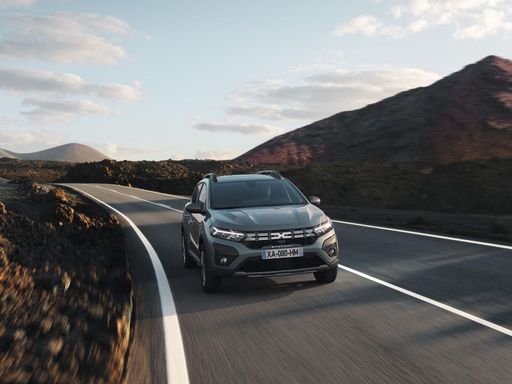
VS

Ford Puma vs Dacia Sandero comparison

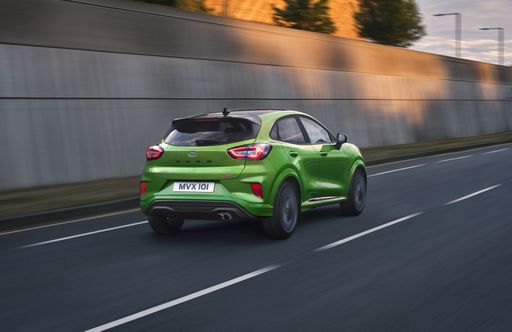
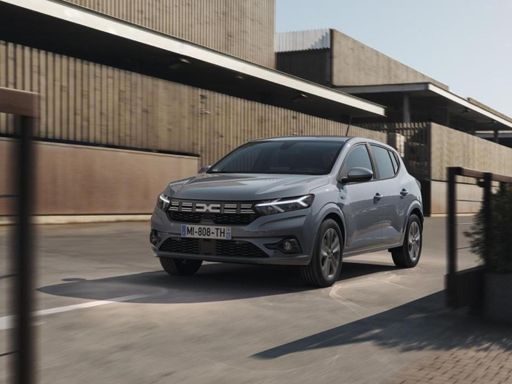
Compare performance (168 HP vs 122 HP), boot space and price (23,900 £ vs 11,000 £ ) at a glance. Find out which car is the better choice for you – Ford Puma or Dacia Sandero?

Ford Puma vs Dacia Sandero: Key differences

Ford Puma

3 (11 Reviews)
rate
  • noticeably more power
  • visibly quicker 0–100 km/h
  • markedly more trunk space
details

Dacia Sandero

3.3 (5 Reviews)
rate
  • substantially cheaper
  • only slightly more efficient
  • moderately lighter
details

All details on performance, efficiency, range and trunk space can be found in the technical comparison below – including user reviews for both models.

By Achim Sedelmaier

Puma

Overview: Dacia Sandero VS Ford Puma — value-first hatchback or playful compact SUV?

Dacia Sandero VS Ford Puma frames a simple choice: the Sandero focuses on getting the essentials right at a very low cost, while the Puma trades up for sharper handling, smarter luggage solutions and a more modern cabin. The Sandero is an exercise in honest utility — roomy up front, easy to live with and cheap to run — whereas the Puma sells a sense of engagement and tech that feels newer and more expensive. This comparison walks through character, comfort, practicality and cabin feel so you can see how those headline differences play out day to day. Read on to find which car suits city commuting, family errands or longer weekend drives for your priorities.
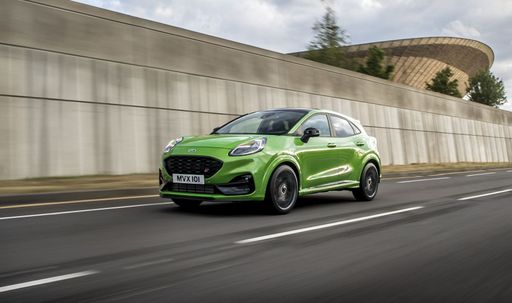
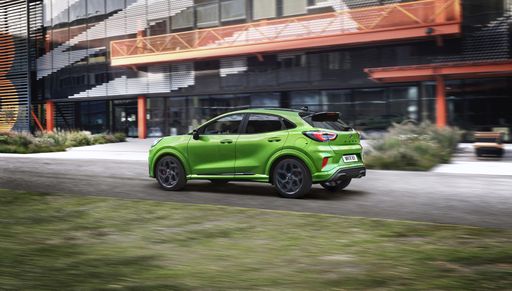
Sandero

Character and driving feel

On the road the Dacia Sandero presents itself as deliberately unassuming: steering is light, responses are predictable and the whole package is tuned for stress‑free daily driving rather than excitement. The Ford Puma, by contrast, feels livelier and more communicative — its sharper steering and more eager engine make it noticeably more fun on twisty roads and better at confident overtakes. That extra zest in the Puma comes with trade-offs: a firmer edge to the ride and occasional transmission fuss in stop‑start traffic that the Sandero largely avoids. If you want comfortable, uncomplicated transport for inner‑city life the Sandero suits better; if you crave engagement and a car that invites you to drive it, the Puma is the clearer choice.

Puma

Comfort and long‑distance behavior

Long trips highlight how different the two cars aim to be: the Sandero is straightforward and upright in its seating but lets wind and road noise into the cabin at higher speeds, which makes long motorway stints more fatiguing. The Ford Puma is generally quieter and settles more confidently at speed, with front seats that offer stronger support for hours on the road, reducing driver tiredness on long runs. Yet the Puma's firmer suspension and tighter rear bench mean passengers in the back will feel cramped on extended journeys, where the Sandero's rear can be more forgiving for average-size adults. In short, Puma favours driver comfort and composure; Sandero gives acceptable long‑distance usability at the cost of acoustic refinement.

Sandero

Practicality and everyday usability

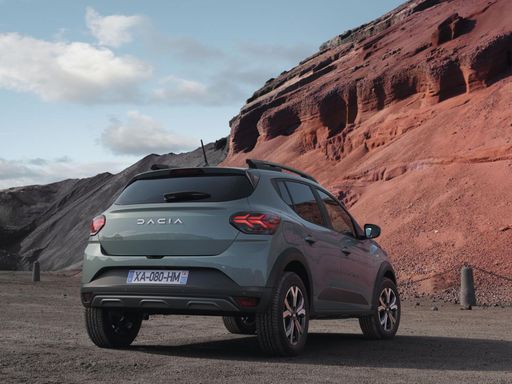
Practical differences are less about capacity and more about how you use the space: the Dacia Sandero gives a plain, sensible interior with easy access up front and a usable boot that covers daily shopping and weekend luggage with no fuss. The Ford Puma shines with a clever boot layout — a wide hatch and a washable lower compartment make it easier to load dirty gear, bikes' mud or wet kit without a second thought. Those cargo strengths come at the expense of rear passenger room in the Puma; tight rear headroom and a sloping roofline mean child seats and tall rear occupants are managed more awkwardly than in the Sandero. So choose Sandero for straightforward passenger space and lower hassle, Puma for smarter, more versatile cargo handling.

Puma

Cabin feel, tech and perceived quality

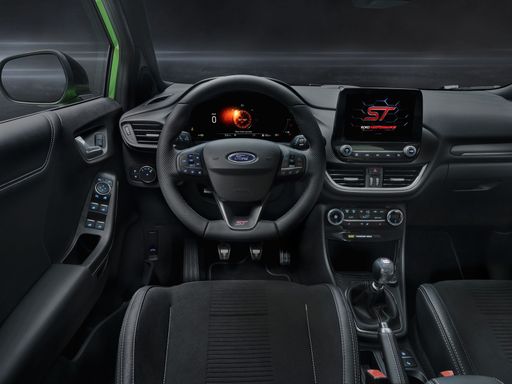
Step inside the Sandero and the budget approach is obvious: hard plastics and visible cost-saving details dominate, but physical switches and a simple layout mean controls are intuitive and distraction‑free. The Ford Puma presents a more modern environment with larger screens, wireless phone integration and a generally neater presentation that lifts perceived quality and connectivity. That modernity has a flip side: fewer physical controls in the Puma make some basic tasks fiddlier on the move, and some materials still fall short of a genuinely premium sense. If you value clear, no-nonsense operation and predictability pick the Sandero; if you want a cabin that looks and feels up to date, the Puma will satisfy better.

Sandero

Buyer fit: who should pick which car?

Put simply, the Dacia Sandero is tailored for price‑minded buyers, first‑time owners and city commuters who value low purchase and running costs and prefer uncomplicated, robust kit. The Ford Puma suits people who prioritise driving enjoyment, modern infotainment and clever cargo solutions and who are willing to pay more for those benefits. Families with taller rear-seat occupants or buyers who spend many motorway hours should weigh Sandero's quieter per‑passenger economics against Puma's driver comfort and tech. Below this editorial comparison, the technical section breaks down how engine, weight and packaging choices create these real‑world trade‑offs so you can match numbers to the practical differences that matter.

Here’s where it gets real: The technical differences in detail

Puma

Costs and Efficiency:

When it comes to price and running costs, the biggest differences usually appear. This is often where you see which car fits your budget better in the long run.

Dacia Sandero is substantially cheaper – starting at 11,000 £ , while the Ford Puma costs 23,900 £ . That’s a price difference of around 12,952 £.

Fuel consumption also shows a difference: the Dacia Sandero uses 5.3 L/100km and is only slightly more efficient than the Ford Puma with 5.4 L/100km. The difference is about 0.1 L/100km.

Sandero

Engine and Performance:

Power, torque and acceleration say a lot about how a car feels on the road. This is where you see which model delivers more driving dynamics.

When it comes to engine power, the Ford Puma offers noticeably more power – delivering 168 HP compared to 122 HP. That’s roughly 46 HP more horsepower.

When accelerating from 0 to 100 km/h, the Ford Puma is visibly quicker – completing the sprint in 7.4 s, while the Dacia Sandero takes 9.7 s. That’s about 2.3 s quicker.

There’s also a difference in torque: the Ford Puma delivers visibly more torque with 290 Nm compared to 200 Nm. That’s about 90 Nm more.

Puma

Space and Everyday Use:

Cabin size, boot volume and payload all play a role in everyday practicality. Here, comfort and flexibility make the difference.

Both vehicles offer seating for 5 people.

In terms of curb weight, Dacia Sandero is moderately lighter – 1,100 kg compared to 1,316 kg. The difference is around 216 kg.

Looking at boot space, the Ford Puma offers markedly more boot space – 523 L compared to 372 L. That’s a difference of about 151 L.

When it comes to payload, the Ford Puma carries only slightly more – 469 kg compared to 436 kg. That’s a difference of about 33 kg.

Who wins the race in the data check?

The Ford Puma stands well ahead of its rival in the objective data comparison.
This result only shows which model scores more points on paper – not which of the two cars feels right for you.

from £23,900
Puma

Ford Puma

  • Engine Type Petrol MHEV, Electric
  • Transmission Manuel, Automatic
  • Drive Type Front-Wheel Drive
  • Power HP 125 - 168 HP
  • Consumption L/100km 5.4 - 5.9 L/100km
  • Consumption kWh/100km 13 - 13.9 kWh/100km
  • Electric Range 404 - 417 km
Ford Puma
Dacia Sandero

Costs and Consumption

View detailed analysis

Engine and Performance

View detailed analysis

Dimensions and Body

View detailed analysis

Ford Puma

The Ford Puma blends sporty styling with practical everyday usability, making it a smart choice for drivers who want flair without sacrificing versatility. Its engaging driving character and clever interior packaging give it a more dynamic and useful feel than many rivals.

details

Dacia Sandero

The Sandero is a no-nonsense hatchback that prioritises practicality and low running costs, making it a smart choice for budget-minded buyers. It delivers a surprisingly roomy interior and straightforward, useful equipment so you get everyday usability without paying for unnecessary frills.

details
Ford Puma
Dacia Sandero

Costs and Consumption

Price
23,900 - 36,300 £
Price
11,000 - 16,300 £
Consumption L/100km
5.4 - 5.9 L/100km
Consumption L/100km
5.3 - 7.2 L/100km
Consumption kWh/100km
13 - 13.9 kWh/100km
Consumption kWh/100km
-
Electric Range
404 - 417 km
Electric Range
-
Battery Capacity
-
Battery Capacity
-
co2
0 - 135 g/km
co2
111 - 131 g/km
Fuel tank capacity
-
Fuel tank capacity
-

Dimensions and Body

Body Type
SUV
Body Type
Hatchback
Seats
5
Seats
5
Doors
-
Doors
-
Curb weight
1,316 - 1,563 kg
Curb weight
1,100 - 1,297 kg
Trunk capacity
456 - 523 L
Trunk capacity
328 - 372 L
Length
-
Length
-
Width
1,805 mm
Width
1,853 mm
Height
-
Height
-
Max trunk capacity
-
Max trunk capacity
-
Payload
367 - 469 kg
Payload
385 - 436 kg

Engine and Performance

Engine Type
Petrol MHEV, Electric
Engine Type
Petrol, LPG
Transmission
Manuel, Automatic
Transmission
Manuel, Automatic
Transmission Detail
Manual Gearbox, Dual-Clutch Automatic, Reduction Gearbox
Transmission Detail
Manual Gearbox, Dual-Clutch Automatic
Drive Type
Front-Wheel Drive
Drive Type
Front-Wheel Drive
Power HP
125 - 168 HP
Power HP
67 - 122 HP
Acceleration 0-100km/h
7.4 - 9.8 s
Acceleration 0-100km/h
9.7 - 16.7 s
Max Speed
-
Max Speed
-
Torque
170 - 290 Nm
Torque
95 - 200 Nm
Number of Cylinders
3
Number of Cylinders
3
Power kW
92 - 124 kW
Power kW
49 - 90 kW
Engine capacity
999 cm3
Engine capacity
999 - 1,199 cm3

General

Model Year
2,025 - 2,026
Model Year
2025
CO2 Efficiency Class
D, A
CO2 Efficiency Class
D, C
Brand
Ford
Brand
Dacia
DriveDuel uses data analysis and artificial intelligence to evaluate vehicle data and create content. Content is regularly reviewed and improved. The displayed prices are estimates based on German list prices, adjusted to the respective country’s VAT. Country-specific registration taxes are not included. This information is not legally binding.