
 Deutschland
 France
 Nederland
 Great Britain
 Sverige
 Norge
Norge Danmark
 Suomi
Suomi Italia
 Polska
 España
VS
Ford Ranger vs Mercedes Citan Transporter - Differences and prices compared
Compare performance (292 HP vs 131 HP), boot space and price (37500 £ vs 21700 £ ) at a glance. Find out which car is the better choice for you – Ford Ranger or Mercedes Citan Transporter?
Ranger
Costs and Efficiency:
Looking at overall running costs, both models reveal some interesting differences in everyday economy.
Mercedes Citan Transporter has a convincingly advantage in terms of price – it starts at 21700 £ , while the Ford Ranger costs 37500 £ . That’s a price difference of around 15784 £.
Fuel consumption also shows a difference: Ford Ranger manages with 3.10 L and is therefore clearly more efficient than the Mercedes Citan Transporter with 5.10 L. The difference is about 2 L per 100 km.
As for electric range, the Mercedes Citan Transporter performs significantly better – achieving up to 290 km, about 248 km more than the Ford Ranger.
Ranger
Engine and Performance:
Power, torque and acceleration say a lot about how a car feels on the road. This is where you see which model delivers more driving dynamics.
When it comes to engine power, the Ford Ranger has a significantly edge – offering 292 HP compared to 131 HP. That’s roughly 161 HP more horsepower.
In acceleration from 0 to 100 km/h, the Ford Ranger is convincingly quicker – completing the sprint in 7.90 s, while the Mercedes Citan Transporter takes 11.70 s. That’s about 3.80 s faster.
In terms of top speed, the Ford Ranger performs slight better – reaching 190 km/h, while the Mercedes Citan Transporter tops out at 183 km/h. The difference is around 7 km/h.
There’s also a difference in torque: Ford Ranger pulls clearly stronger with 697 Nm compared to 270 Nm. That’s about 427 Nm difference.
Ad · Affiliate
As an Amazon Associate, we earn from qualifying purchases.
Space and Everyday Use:
Cabin size, boot volume and payload all play a role in everyday practicality. Here, comfort and flexibility make the difference.
Both vehicles offer seating for 5 people.
In curb weight, Mercedes Citan Transporter is decisively lighter – 1381 kg compared to 2082 kg. The difference is around 701 kg.
When it comes to payload, Ford Ranger evident takes the win – 1108 kg compared to 787 kg. That’s a difference of about 321 kg.
Who wins the race?
The Ford Ranger proves to be offers a more balanced package and therefore becomes our DriveDuel Champion!
Ford Ranger is the better all-rounder in this comparison.
from about £37,500
Ford Ranger
Ford Ranger
Mercedes Citan Transporter
Costs and Consumption
View detailed analysis
View detailed analysis
Engine and Performance
View detailed analysis
View detailed analysis
Dimensions and Body
View detailed analysis
View detailed analysis
Ford Ranger
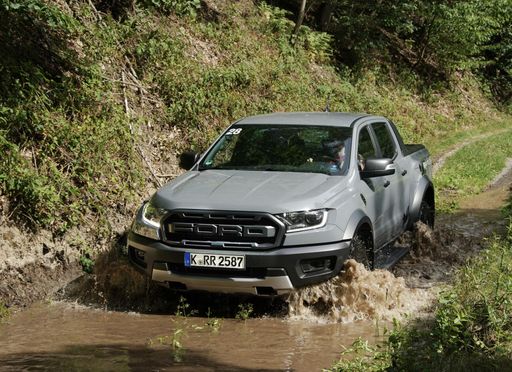
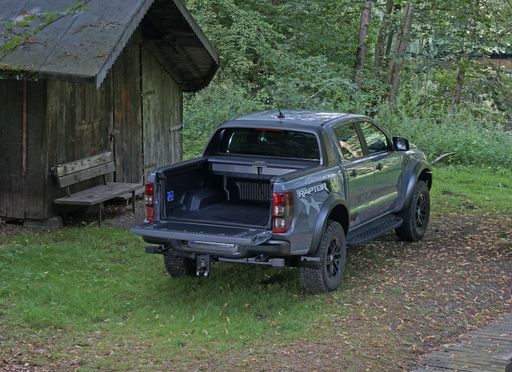
The Ford Ranger is a workhorse with the manners of a grown-up pickup—practical, tough, and surprisingly civilized on the road. It’s the sort of truck that laughs at mud on the weekend and performs like a sensible daily driver during the week, making it an easy sell for buyers who want capability without theatrics.
details
Mercedes Citan Transporter
The Mercedes Citan is a practical, city-friendly van that blends Mercedes' premium touches with sensible commercial utility — it's nimble in tight streets, easy to load, and feels more polished than its price suggests. For small-business owners who want something professional-looking without fuss, the Citan is a dependable workhorse that won’t embarrass you at client meetings and is surprisingly pleasant to drive.
details
Ford Ranger
Mercedes Citan Transporter
Costs and Consumption |
|
|---|---|
|
Price
37500 - 71900 £
|
Price
21700 - 33300 £
|
|
Consumption L/100km
3.1 - 13.8 L
|
Consumption L/100km
5.1 - 6.9 L
|
|
Consumption kWh/100km
-
|
Consumption kWh/100km
18.7 - 21.1 kWh
|
|
Electric Range
42 km
|
Electric Range
262 - 290 km
|
|
Battery Capacity
11.80 kWh
|
Battery Capacity
45 kWh
|
|
co2
70 - 315 g/km
|
co2
0 - 156 g/km
|
|
Fuel tank capacity
80 L
|
Fuel tank capacity
54 L
|
Dimensions and Body |
|
|---|---|
|
Body Type
Pickup
|
Body Type
Cargo Van
|
|
Seats
2 - 5
|
Seats
2 - 5
|
|
Doors
2 - 4
|
Doors
4 - 5
|
|
Curb weight
2082 - 2511 kg
|
Curb weight
1381 - 1939 kg
|
|
Trunk capacity
-
|
Trunk capacity
-
|
|
Length
5370 - 5420 mm
|
Length
4498 - 4922 mm
|
|
Width
1918 - 1968 mm
|
Width
1859 mm
|
|
Height
1868 - 1922 mm
|
Height
1819 - 1830 mm
|
|
Max trunk capacity
-
|
Max trunk capacity
2900 - 3620 L
|
|
Payload
676 - 1108 kg
|
Payload
449 - 787 kg
|
Engine and Performance |
|
|---|---|
|
Engine Type
Diesel, Petrol, Plugin Hybrid
|
Engine Type
Diesel, Petrol, Electric
|
|
Transmission
Manuel, Automatic
|
Transmission
Manuel, Automatic
|
|
Transmission Detail
Manual Gearbox, Automatic Gearbox
|
Transmission Detail
Manual Gearbox, Dual-Clutch Automatic, Reduction Gearbox
|
|
Drive Type
All-Wheel Drive
|
Drive Type
Front-Wheel Drive
|
|
Power HP
170 - 292 HP
|
Power HP
95 - 131 HP
|
|
Acceleration 0-100km/h
7.9 - 12.1 s
|
Acceleration 0-100km/h
11.7 - 13.8 s
|
|
Max Speed
180 - 190 km/h
|
Max Speed
132 - 183 km/h
|
|
Torque
405 - 697 Nm
|
Torque
240 - 270 Nm
|
|
Number of Cylinders
4 - 6
|
Number of Cylinders
4
|
|
Power kW
125 - 215 kW
|
Power kW
70 - 96 kW
|
|
Engine capacity
1996 - 2993 cm3
|
Engine capacity
1332 - 1461 cm3
|
General |
|
|---|---|
|
Model Year
2022 - 2025
|
Model Year
2021 - 2024
|
|
CO2 Efficiency Class
G, B
|
CO2 Efficiency Class
E, F, D, A
|
|
Brand
Ford
|
Brand
Mercedes-Benz
|
What drive types are available for the Ford Ranger?
The Ford Ranger is offered with All-Wheel Drive.
The prices shown are estimates based on German list prices, adjusted for local VAT. Local registration taxes (e.g. NoVA, BPM or CO2 malus) are not included. This information is not legally binding.