Deutschland
 France
 Nederland
 Great Britain
 Sverige
 Danmark
 Suomi
Suomi Italia
 Polska
 Česko
Česko España
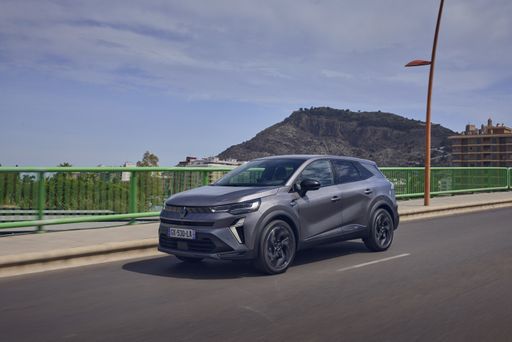
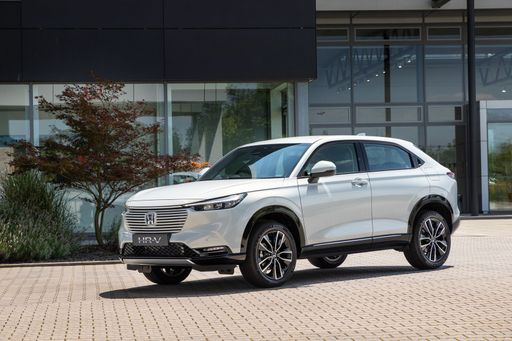
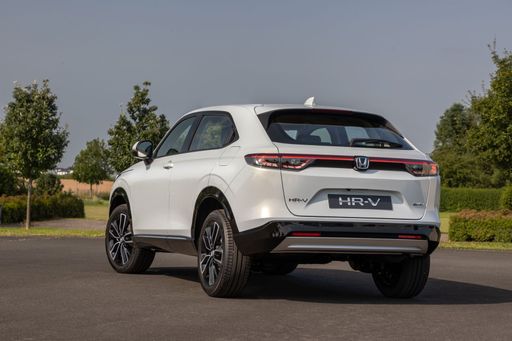
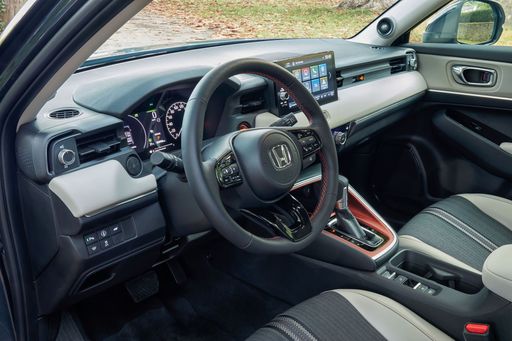
Honda HR-V vs Renault Symbioz: A Clash of SUVs
Both the Honda HR-V and Renault Symbioz represent the next generation of hybrid SUVs, designed to offer efficiency and performance without compromising the standard comforts of an SUV. While they share common attributes, each brings unique elements to the table, making the choice between them an intriguing decision for potential buyers.
Design and Dimensions
The Honda HR-V, launched in 2022, features an exterior length of 4340 mm and a height of 1582 mm, encapsulating a compact yet spacious design typical of an urban SUV. It's practical for those who require maneuverability and interior space simultaneously.
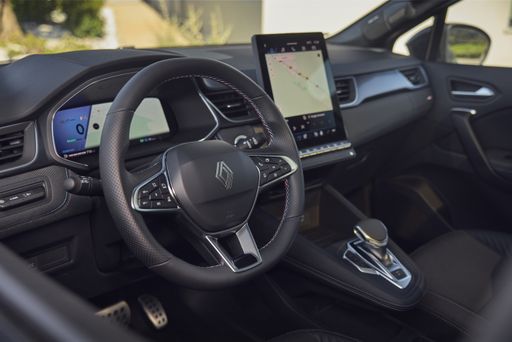
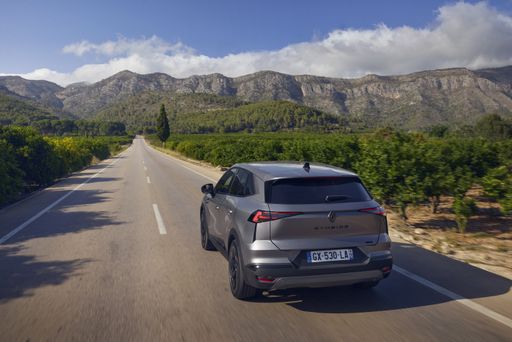
The Renault Symbioz, on the other hand, with its model year marked at 2024, stretches to 4413 mm in length and offers a slightly lower height of 1575 mm. Its additional width at 1797 mm gives it a broader stance, promising more interior space, especially in terms of carrying capacity with a larger trunk offering of 492 liters compared to HR-V's 335 liters.
Engine and Efficiency
Both SUVs come equipped with full hybrid engines; however, they differ in capacity and efficiency. The HR-V boasts a 1498 cm3 engine with a respectable 130 HP output and a CO2 efficiency class of D. With a combined consumption of 5.4 L/100km, it merges decent performance with environmental concern.
The Symbioz takes a step forward with a more robust 1598 cm3 engine, offering 143 HP and a better CO2 efficiency class of C, owing to its lower emissions of 109 g/km. What's more, its hybrid system proves to be more efficient, achieving a consumption rate of 4.8 L/100km, making it a more environmentally friendly option.
Performance Details
When it comes to performance, the Honda HR-V accelerates from 0-100 km/h in approximately 10.7 seconds, providing a smoother yet slightly slower drive compared to the Symbioz, which edges out slightly at 10.6 seconds. Both vehicles share a maximum speed of 170 km/h, aligning them equally in terms of speed capabilities.
In terms of power delivery, both cars are neck and neck with the HR-V pushing 96 kW and the Symbioz harnessing an output of 105 kW. For torque, the HR-V claims 253 Nm while the Symbioz registers a close 250 Nm. These subtle differences suggest marginal variances in how power is managed and delivered on-road.
Practicality and Capacity
The HR-V offers a curb weight of 1452 kg with a payload of 418 kg, underlining its capacity for both passenger comfort and baggage. It comes fitted with a fuel tank capacity of 40 liters, ideal for a balanced urban and highway drive.
Conversely, the Symbioz's slightly higher curb weight of 1498 kg and its expanded fuel tank of 48 liters allows for longer drives without frequent refueling stops, complemented by its higher payload, providing greater utility.
Conclusion
Choosing between the Honda HR-V and the Renault Symbioz primarily rests on priorities—whether it’s the HR-V with its compact practicality and well-rounded performance or the Symbioz with its superior efficiency, slightly larger dimensions, and enhanced environmental profile. Both have their own distinct charms, making them worthy considerations for anyone in the market for a hybrid SUV.