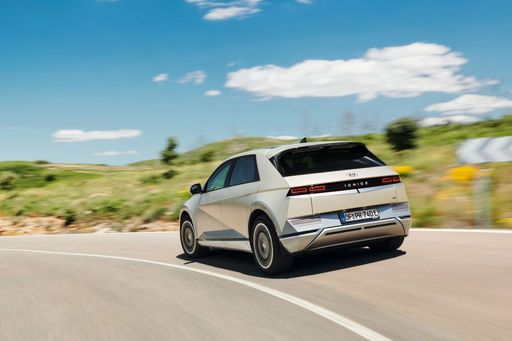
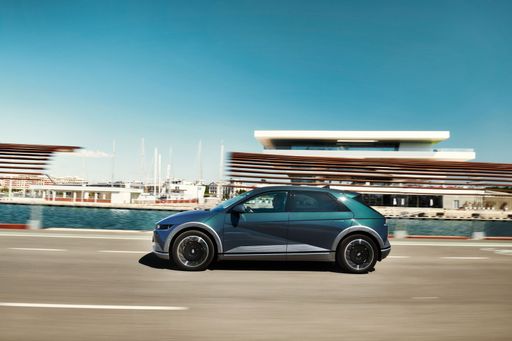
@ Hyundai Motor Company
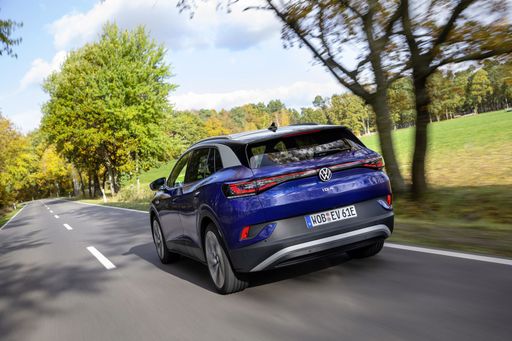
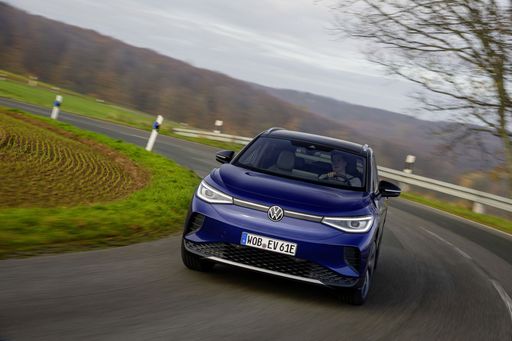
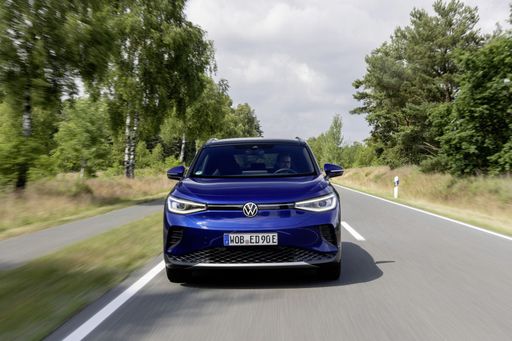
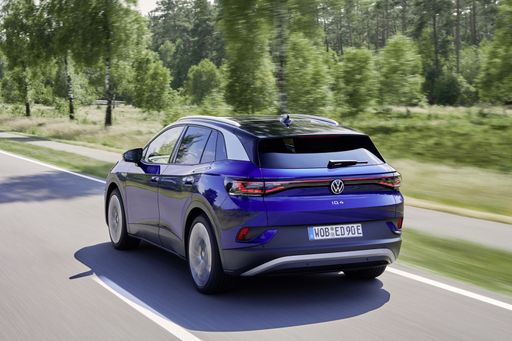
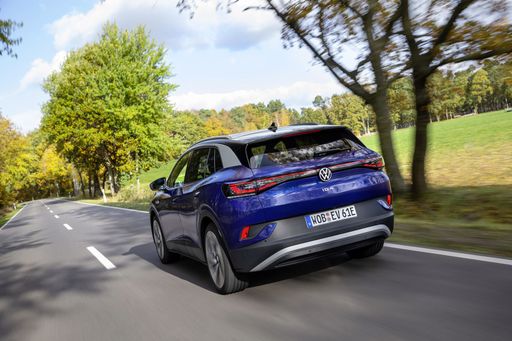
@ Volkswagen AG / VW Media
VS

Hyundai IONIQ 5 vs VW ID.4 – Which model is better for everyday use?

Everyday use, family trips or long-distance drives – here’s where the differences show.
Discover whether Hyundai IONIQ 5 or VW ID.4 fits your lifestyle better.

IONIQ 5 @ Hyundai Motor Company

Introduction

The electric vehicle (EV) market continues to expand, offering consumers a wide array of choices filled with technological innovations and sustainability. Two strong contenders in the electric SUV segment are the Hyundai IONIQ 5 and the Volkswagen ID.4. Both vehicles showcase unique advantages, impressive specifications, and cutting-edge technologies, making them appealing to different types of drivers. In this article, we will compare these two electric SUVs based on their technical aspects and innovations.
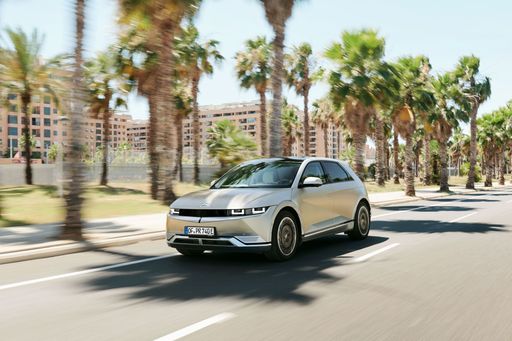
ID.4 @ Volkswagen AG / VW Media

Powertrain and Performance

The Hyundai IONIQ 5 offers a range of performance options with power outputs ranging from 170 HP to a staggering 609 HP in its high-performance variant. With rear-wheel and all-wheel drive configurations, this SUV boasts an acceleration time of just 3.5 seconds from 0 to 100 km/h for the performance model. The IONIQ 5's battery capacity options include 63 kWh and 84 kWh, enabling it to achieve an electric range of up to 570 km. This impressive figure is supported by a low consumption rate, with the most efficient variant consuming just 15.6 kWh per 100 km.

In contrast, the Volkswagen ID.4 comes with a slightly lower maximum power output peaking at 340 HP, offering a variety of configurations with power ranging from 170 HP to 286 HP. The ID.4 reaches 100 km/h in as little as 5.4 seconds in its most potent iteration. Its battery capacity is also competitive, featuring options of 52 kWh and 77 kWh, which allow for an electric range of up to 572 km. While both SUVs perform admirably, the IONIQ 5 appears to have a slight edge in power and acceleration, especially in its top-tier variant.

IONIQ 5 @ Hyundai Motor Company

Design and Dimensions

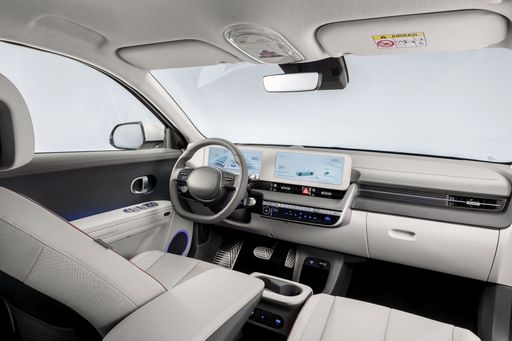
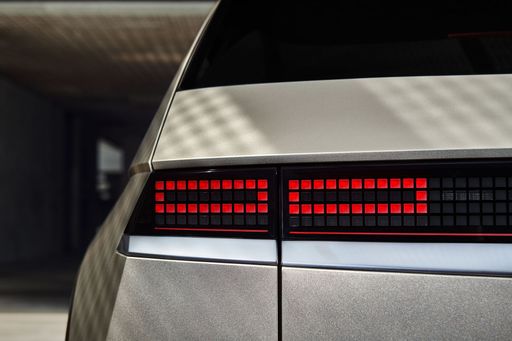
The IONIQ 5 features a distinctive design, combining retro elements with a futuristic aesthetic. It measures 4655 mm in length, 1890 mm in width, and 1605 mm in height, giving it a sleek profile. The SUV offers an impressive trunk capacity of 520 liters, making it practical for family use or road trips. Moreover, the IONIQ 5 is known for its spacious interior and high-quality materials, delivering a comfortable experience for all passengers.

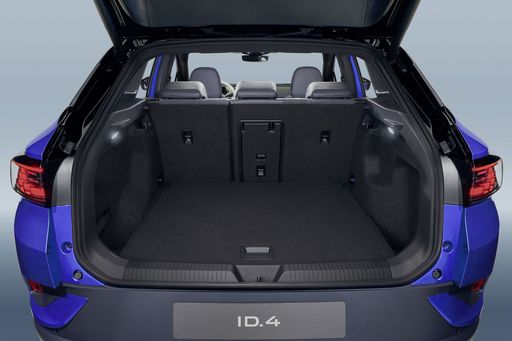
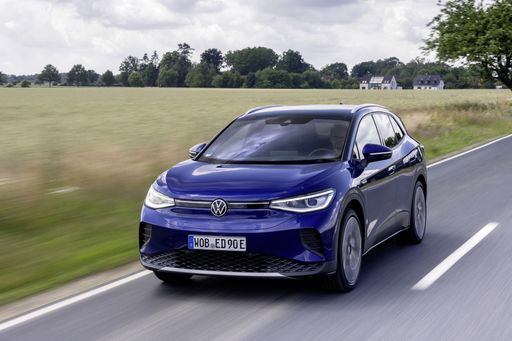
On the other hand, the VW ID.4 measures in slightly smaller at 4584 mm in length and 1852 mm in width, while its height reaches 1634 mm. Despite its reduced size, the ID.4 still provides a generous trunk space of 543 liters, creating a versatile storage option. Its design leans toward a more conventional SUV look, which might appeal to traditional VW enthusiasts. While both vehicles are spacious, the IONIQ 5 boasts a more innovative design language, whereas the ID.4 sticks to a more classic VW aesthetic.

ID.4 @ Volkswagen AG / VW Media

Technology and Innovations

Both the Hyundai IONIQ 5 and Volkswagen ID.4 are technologically advanced, featuring extensive infotainment systems, driver-assistance features, and connectivity options. The IONIQ 5 is equipped with a 12.3-inch digital cluster and a similarly sized infotainment display, offering intuitive access to navigation, music, and car settings. One of its standout features is its ultra-fast charging capability, with a maximum charging speed that allows an 80% charge in just 18 minutes.

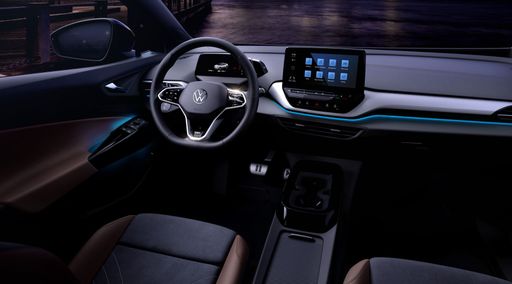
The ID.4, in turn, prides itself on its ID. Cockpit, which includes a customizable digital display. It also supports over-the-air updates, enhancing the vehicle's functionality over time. The ID.4 features a host of driver-assistance technologies, including adaptive cruise control and lane-keeping assistance. Both vehicles are equipped with regenerative braking systems, further enhancing their efficiency and extending range.

IONIQ 5 @ Hyundai Motor Company

Environmental Impact and Efficiency

In terms of environmental impact, both the Hyundai IONIQ 5 and Volkswagen ID.4 have a CO2 efficiency class of A, indicating their low emissions and sustainable design. The IONIQ 5, with its lowest consumption rate of 15.6 kWh per 100 km, positions itself as one of the more efficient vehicles in its category. The ID.4’s energy consumption varies slightly, with a maximum of 16.8 kWh per 100 km, still within an impressive range for electric SUVs.

ID.4 @ Volkswagen AG / VW Media

Conclusion

In the battle between the Hyundai IONIQ 5 and Volkswagen ID.4, buyers are presented with two exceptional electric SUVs, each with its own strengths. The IONIQ 5 excels in performance with more powerful variants and exceptional range, coupled with a striking design and fast-charging capabilities. The ID.4, while slightly less powerful, offers a more traditional Volkswagen experience, packed with user-friendly technology and a well-designed interior.

Ultimately, the choice between the IONIQ 5 and ID.4 may come down to personal preferences in aesthetics, performance, or brand loyalty. Regardless of the choice, both vehicles represent the future of sustainable driving and elevated electric mobility.

Video - VW ID.4

Here’s where it gets real: The technical differences in detail

IONIQ 5 @ Hyundai Motor Company

Costs and Efficiency:

Looking at overall running costs, both models reveal some interesting differences in everyday economy.

VW ID.4 has a a bit advantage in terms of price – it starts at 34600 £, while the Hyundai IONIQ 5 costs 38500 £. That’s a price difference of around 3913 £.

When it comes to electricity consumption, both models perform equally – each averaging 15.60 kWh per 100 km.

As for range, the Hyundai IONIQ 5 performs minimal better – achieving up to 570 km, about 1 km more than the VW ID.4.

ID.4 @ Volkswagen AG / VW Media

Engine and Performance:

Power, torque and acceleration are the classic benchmarks for car enthusiasts – and here, some clear differences start to show.

When it comes to engine power, the Hyundai IONIQ 5 has a significantly edge – offering 650 HP compared to 340 HP. That’s roughly 310 HP more horsepower.

In acceleration from 0 to 100 km/h, the Hyundai IONIQ 5 is decisively quicker – completing the sprint in 3.50 s, while the VW ID.4 takes 5.40 s. That’s about 1.90 s faster.

In terms of top speed, the Hyundai IONIQ 5 performs noticeable better – reaching 260 km/h, while the VW ID.4 tops out at 180 km/h. The difference is around 80 km/h.

There’s also a difference in torque: Hyundai IONIQ 5 pulls slightly stronger with 770 Nm compared to 679 Nm. That’s about 91 Nm difference.

IONIQ 5 @ Hyundai Motor Company

Space and Everyday Use:

Cabin size, boot volume and payload all play a role in everyday practicality. Here, comfort and flexibility make the difference.

Both vehicles offer seating for 5 people.

In curb weight, Hyundai IONIQ 5 is slight lighter – 1955 kg compared to 1975 kg. The difference is around 20 kg.

In terms of boot space, the VW ID.4 offers minimal more room – 543 L compared to 520 L. That’s a difference of about 23 L.

In maximum load capacity, the Hyundai IONIQ 5 performs minimal better – up to 1580 L, which is about 5 L more than the VW ID.4.

When it comes to payload, VW ID.4 slight takes the win – 551 kg compared to 530 kg. That’s a difference of about 21 kg.

Who wins the race?

The Hyundai IONIQ 5 proves to be dominates this comparison and therefore becomes our DriveDuel Champion!
Hyundai IONIQ 5 is the better all-rounder in this comparison.

from about £38,500
IONIQ 5 @ Hyundai Motor Company

Hyundai IONIQ 5

  • Engine Type : Electric
  • Transmission : Automatic
  • Drive Type : Rear-Wheel Drive, All-Wheel Drive
  • Power HP : 170 - 650 HP
  • Consumption kWh/100km : 15.6 - 21.2 kWh
  • Electric Range : 440 - 570 km

Hyundai IONIQ 5

The Hyundai IONIQ 5 looks like a spaceship that moved into suburbia, pairing bold retro‑futuristic styling with a roomy, cleverly laid-out cabin that makes long trips surprisingly comfortable. Its electric character delivers instant, silky acceleration and low running costs, making it a smart, slightly cheeky pick for buyers who want tech, practicality and personality without the drama.

details

VW ID.4

4.5 (2)
rate

The VW ID.4 is a calm, roomy electric SUV that turns everyday driving into a quietly confident experience, its practical packaging and smooth manners tailored perfectly for family life. Volkswagen's solid build and intuitive interior tech mean you get electric practicality without the sci‑fi theatrics, making the ID.4 a sensible, surprisingly likable choice for most buyers.

details
Hyundai IONIQ 5
VW ID.4
IONIQ 5 @ Hyundai Motor Company
ID.4 @ Volkswagen AG / VW Media

Costs and Consumption

Price
38500 - 64200 £
Price
34600 - 47200 £
Consumption L/100km
-
Consumption L/100km
-
Consumption kWh/100km
15.6 - 21.2 kWh
Consumption kWh/100km
15.6 - 17 kWh
Electric Range
440 - 570 km
Electric Range
356 - 569 km
Battery Capacity
63 - 84 kWh
Battery Capacity
52 - 77 kWh
co2
0 g/km
co2
0 g/km
Fuel tank capacity
-
Fuel tank capacity
-

Dimensions and Body

Body Type
SUV
Body Type
SUV
Seats
5
Seats
5
Doors
5
Doors
5
Curb weight
1955 - 2275 kg
Curb weight
1975 - 2248 kg
Trunk capacity
480 - 520 L
Trunk capacity
543 L
Length
4655 - 4715 mm
Length
4582 - 4584 mm
Width
1890 - 1940 mm
Width
1852 mm
Height
1585 - 1605 mm
Height
1619 - 1634 mm
Max trunk capacity
1540 - 1580 L
Max trunk capacity
1575 L
Payload
385 - 530 kg
Payload
511 - 551 kg

Engine and Performance

Engine Type
Electric
Engine Type
Electric
Transmission
Automatic
Transmission
Automatic
Transmission Detail
Reduction Gearbox
Transmission Detail
Reduction Gearbox
Drive Type
Rear-Wheel Drive, All-Wheel Drive
Drive Type
Rear-Wheel Drive, All-Wheel Drive
Power HP
170 - 650 HP
Power HP
170 - 340 HP
Acceleration 0-100km/h
3.5 - 8.5 s
Acceleration 0-100km/h
5.4 - 9 s
Max Speed
185 - 260 km/h
Max Speed
160 - 180 km/h
Torque
350 - 770 Nm
Torque
310 - 679 Nm
Number of Cylinders
-
Number of Cylinders
-
Power kW
125 - 478 kW
Power kW
125 - 250 kW
Engine capacity
-
Engine capacity
-

General

Model Year
2024 - 2025
Model Year
2023 - 2025
CO2 Efficiency Class
A
CO2 Efficiency Class
A
Brand
Hyundai
Brand
VW
What drive types are available for the Hyundai IONIQ 5?

The Hyundai IONIQ 5 is available as Rear-Wheel Drive or All-Wheel Drive.

The prices and data displayed are estimates based on German list prices and may vary by country. This information is not legally binding.