@ Jeep / Stellantis Media
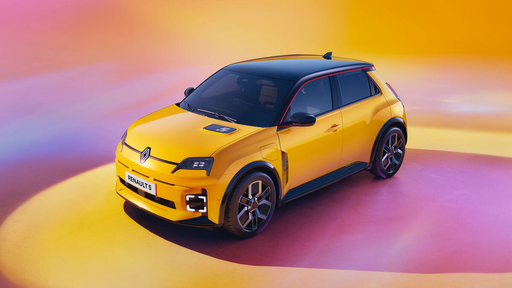
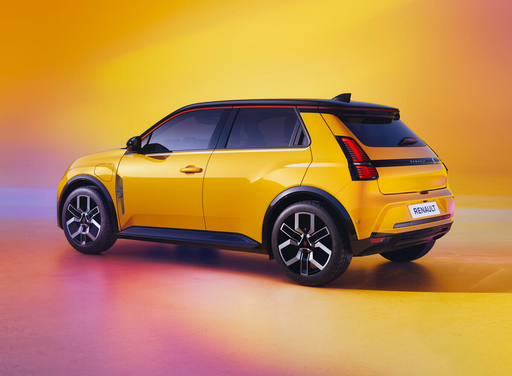
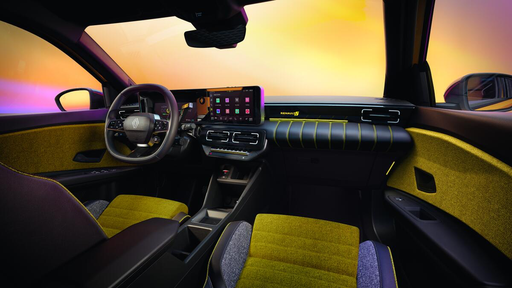
@ Renault Group Media
VS

Jeep Avenger vs Renault R5 – Performance, range & efficiency compared

Everyday use, family trips or long-distance drives – here’s where the differences show.
Discover whether Jeep Avenger or Renault R5 fits your lifestyle better.

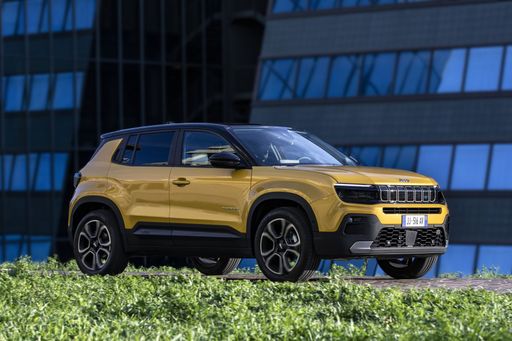
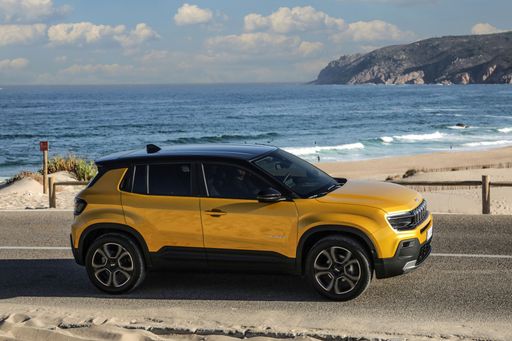
Avenger @ Jeep / Stellantis Media

Jeep Avenger vs. Renault R5: A Battle of Contemporary Compacts

The automotive world has witnessed a dynamic shift towards eco-friendly solutions, and compact electric vehicles are leading this evolution. Two models at the forefront are the Jeep Avenger and the Renault R5. Both vehicles are the epitome of modern engineering, each presenting a unique blend of performance, style, and innovation. Let's delve deeper into what makes these two contenders stand out in today’s electric vehicle market.
R5 @ Renault Group Media

Design and Build: Rugged SUV vs. Chic Hatchback

The Jeep Avenger embodies the rugged appeal typical of the SUV category, with its dimensions measuring 4084 mm in length, 1776 mm in width, and a height range of 1528-1536 mm. Its robust exterior hints at adventure readiness, while inside, it comfortably accommodates five passengers, boasting a trunk capacity ranging from 325 to 380 liters, depending on configuration. Its thoughtful design cleverly merges functionality with style, catering to the needs of modern SUV enthusiasts.

Contrastingly, the Renault R5 bears the hallmark of a classic yet progressive hatchback design. Slightly more compact than the Avenger, it measures 3922 mm in length, 1744 mm in width, and 1498 mm in height. This compact form factor, coupled with a practical trunk capacity of 326 liters, makes the R5 a quintessential urban vehicle, ideal for city dwellers who value agility and efficiency.

Avenger @ Jeep / Stellantis Media

Performance and Power: Electric Prowess

The heart of both these models is an electric engine, emphasizing a zero-emission drive. The Jeep Avenger offers a broad spectrum of power outputs from 100 to 156 HP, with electric variants producing 115 kW and delivering torque up to 260 Nm, ensuring robust performance across different terrains. It offers both front-wheel and all-wheel-drive options, tailored for those who seek flexibility and power. Meanwhile, its electric variant shines with a respectable range of 400 km on a single charge, paired with a 51 kWh battery capacity.

On the other hand, the Renault R5 focuses on a singular drive type: front-wheel drive, with a clear commitment to providing an efficient urban ride. With power outputs ranging from 95 to 150 HP and a high torque of up to 245 Nm, the R5 strikes a balance between power and efficiency. Its electric variants promise a range of up to 405 km, supported by a slightly smaller 40 kWh battery. This alignment ensures that the R5 remains nimble yet powerful, a true stalwart for eco-conscious city commuters.

R5 @ Renault Group Media

Advanced Technology and Features

Both vehicles come equipped with an automatic transmission in electric variants, supplemented by a reduction gearbox, reinforcing seamless power delivery and enhancing the driving experience. The Jeep Avenger provides a choice of a dual-clutch automatic or manual gearbox in its petrol variants, showcasing versatility for traditionalists and modernists alike.

Innovations in technology are a distinctive highlight of both models. The Avenger’s state-of-the-art infotainment system and driver assistance features reflect its dedication to safety and connectivity, catering to tech-savvy drivers. The Renault R5 is equally equipped with cutting-edge tech, designed to enhance driver comfort and safety, while ensuring its passengers stay connected to the digital world throughout their journey.

Avenger @ Jeep / Stellantis Media

Conclusion: Choosing Between Distinct Identities

The Jeep Avenger and Renault R5 present compelling arguments in the ever-evolving landscape of compact electric vehicles. While the Avenger appeals to those who favor the SUV's versatile and rugged charm, the Renault R5 captivates with its compact design and efficiency-friendly ethos. Both models herald a new era where eco-consciousness isn't at odds with performance or style, paving the way for future innovations in urban mobility.

Here’s where it gets real: The technical differences in detail

R5 @ Renault Group Media

Costs and Efficiency:

Looking at overall running costs, both models reveal some interesting differences in everyday economy.

Jeep Avenger has a barely noticeable advantage in terms of price – it starts at 21900 £, while the Renault R5 costs 23900 £. That’s a price difference of around 1972 £.

In terms of energy consumption, the advantage goes to the Renault R5: with 14.80 kWh per 100 km, it’s slight more efficient than the Jeep Avenger with 15.50 kWh. That’s a difference of about 0.70 kWh.

As for range, the Renault R5 performs hardly perceptible better – achieving up to 405 km, about 5 km more than the Jeep Avenger.

Avenger @ Jeep / Stellantis Media

Engine and Performance:

Power, torque and acceleration say a lot about how a car feels on the road. This is where you see which model delivers more driving dynamics.

When it comes to engine power, the Renault R5 has a clearly edge – offering 540 HP compared to 156 HP. That’s roughly 384 HP more horsepower.

In acceleration from 0 to 100 km/h, the Renault R5 is significantly quicker – completing the sprint in 3.50 s, while the Jeep Avenger takes 9 s. That’s about 5.50 s faster.

In terms of top speed, the Renault R5 performs clearly perceptible better – reaching 270 km/h, while the Jeep Avenger tops out at 194 km/h. The difference is around 76 km/h.

There’s also a difference in torque: Renault R5 pulls significantly stronger with 4800 Nm compared to 260 Nm. That’s about 4540 Nm difference.

Space and Everyday Use:

Whether family car or daily driver – which one offers more room, flexibility and comfort?

Both vehicles offer seating for 5 people.

In curb weight, Jeep Avenger is distinct lighter – 1180 kg compared to 1447 kg. The difference is around 267 kg.

In terms of boot space, the Jeep Avenger offers to a small extent more room – 380 L compared to 326 L. That’s a difference of about 54 L.

In maximum load capacity, the Jeep Avenger performs a bit better – up to 1277 L, which is about 171 L more than the Renault R5.

When it comes to payload, Jeep Avenger a bit takes the win – 502 kg compared to 418 kg. That’s a difference of about 84 kg.

Who wins the race?

The Renault R5 proves to be is largely superior and therefore becomes our DriveDuel Champion!
Renault R5 is the better all-rounder in this comparison.

from about £23,900
R5 @ Renault Group Media

Renault R5

  • Engine Type : Electric
  • Transmission : Automatic
  • Drive Type : Front-Wheel Drive, Rear-Wheel Drive
  • Power HP : 122 - 540 HP
  • Consumption kWh/100km : 14.8 - 15.2 kWh
  • Electric Range : 307 - 405 km

Jeep Avenger

5 (2)
rate

The Jeep Avenger shrinks Jeep's boxy, adventurous styling into a city-friendly electric crossover that looks just as at home on tight streets as it does on muddy weekend lanes. It's a savvy pick for drivers who want go-anywhere attitude without the truck-size ego — practical inside, lively around town and ready to tackle a bit of rough stuff when the mood strikes.

details

Renault R5

5 (1)
rate

The Renault 5 is a cheeky city car that marries retro charm with modern flair, its playful looks promising smiles before you even start the engine. Practical enough for daily life yet lively enough to make short trips feel like mini adventures, it’s an irresistible choice for buyers who prefer personality to bland practicality.

details
Jeep Avenger
Renault R5
Avenger @ Jeep / Stellantis Media
R5 @ Renault Group Media

Costs and Consumption

Price
21900 - 36900 £
Price
23900 - 137100 £
Consumption L/100km
4.9 - 5.7 L
Consumption L/100km
-
Consumption kWh/100km
15.50 kWh
Consumption kWh/100km
14.8 - 15.2 kWh
Electric Range
400 km
Electric Range
307 - 405 km
Battery Capacity
51 kWh
Battery Capacity
40 - 52 kWh
co2
0 - 129 g/km
co2
0 g/km
Fuel tank capacity
44 L
Fuel tank capacity
-

Dimensions and Body

Body Type
SUV
Body Type
Hatchback
Seats
5
Seats
2 - 5
Doors
5
Doors
3 - 5
Curb weight
1180 - 1520 kg
Curb weight
1447 - 1524 kg
Trunk capacity
325 - 380 L
Trunk capacity
326 L
Length
4084 - 4088 mm
Length
3922 - 4080 mm
Width
1776 mm
Width
1744 - 2030 mm
Height
1527 - 1541 mm
Height
1380 - 1498 mm
Max trunk capacity
1218 - 1277 L
Max trunk capacity
1106 L
Payload
494 - 502 kg
Payload
396 - 418 kg

Engine and Performance

Engine Type
Electric, Petrol, Petrol MHEV
Engine Type
Electric
Transmission
Automatic, Manuel
Transmission
Automatic
Transmission Detail
Reduction Gearbox, Manual Gearbox, Dual-Clutch Automatic
Transmission Detail
Reduction Gearbox
Drive Type
Front-Wheel Drive, All-Wheel Drive
Drive Type
Front-Wheel Drive, Rear-Wheel Drive
Power HP
100 - 156 HP
Power HP
122 - 540 HP
Acceleration 0-100km/h
9 - 10.6 s
Acceleration 0-100km/h
3.5 - 9 s
Max Speed
150 - 194 km/h
Max Speed
150 - 270 km/h
Torque
205 - 260 Nm
Torque
225 - 4800 Nm
Number of Cylinders
3
Number of Cylinders
-
Power kW
74 - 115 kW
Power kW
90 - 397 kW
Engine capacity
1199 cm3
Engine capacity
-

General

Model Year
2023 - 2025
Model Year
2025 - 2027
CO2 Efficiency Class
A, D, C
CO2 Efficiency Class
A
Brand
Jeep
Brand
Renault
What drivetrain options does the Jeep Avenger have?

Available configurations include Front-Wheel Drive or All-Wheel Drive.

The prices and data displayed are estimates based on German list prices and may vary by country. This information is not legally binding.