VS

Jeep Avenger vs VW ID.3 comparison

Compare performance (156 HP vs 326 HP), boot space and price (22,500 £ vs 28,600 £ ) at a glance. Find out which car is the better choice for you – Jeep Avenger or VW ID.3?

Jeep Avenger vs VW ID.3: Key differences

Jeep Avenger

4.2 (4 Reviews)
rate
  • clearly cheaper
  • substantially lighter

VW ID.3

4.9 (3 Reviews)
rate
  • substantially more power
  • marginally more efficient
  • visibly more electric range
  • considerably quicker 0–100 km/h
  • marginally more trunk space

All details on performance, efficiency, range and trunk space can be found in the technical comparison below – including user reviews for both models.

Avenger

Electric Showdown: Jeep Avenger vs. VW ID.3

In the rapidly evolving world of electric vehicles, the Jeep Avenger and the VW ID.3 represent two distinct approaches to sustainable driving. While both cars promise high efficiency and a clean electric life, their technical specifications and innovations offer unique features catering to different buyer preferences. Let's dive deeper into this electric showdown.
ID.3

Design and Body Type

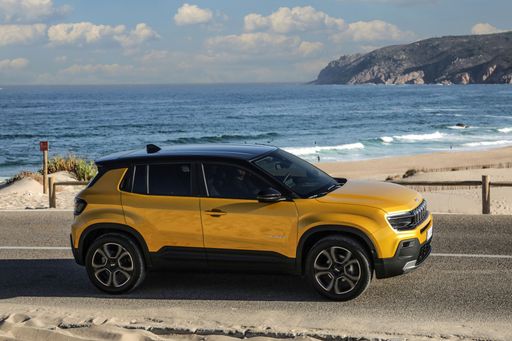
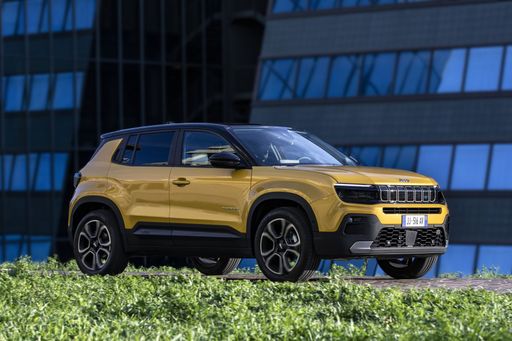
The Jeep Avenger and VW ID.3 demonstrate how diverse EV design can be. The Avenger takes on the classic Jeep charm, presenting itself as a robust SUV. With dimensions of 4084 mm in length, 1776 mm in width, and standing at a height of 1536 mm, it offers a sturdy and compact visage typical of the SUV category.

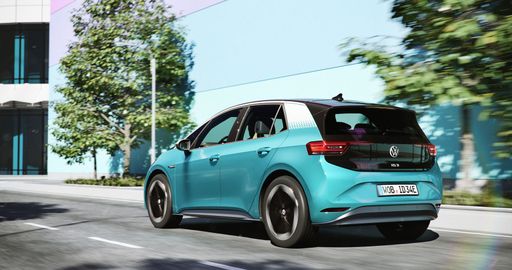
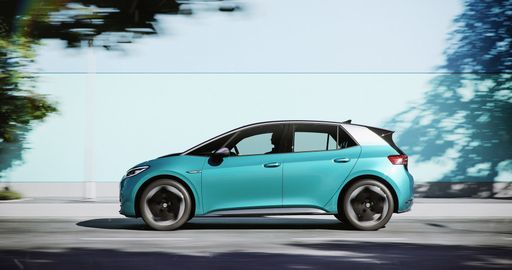
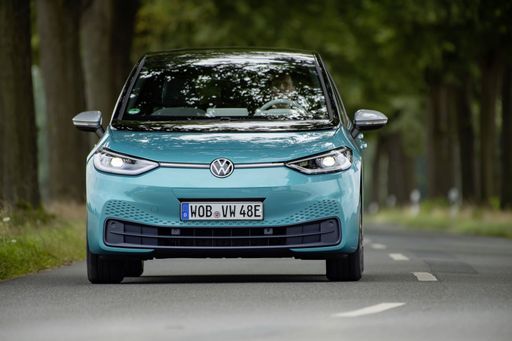
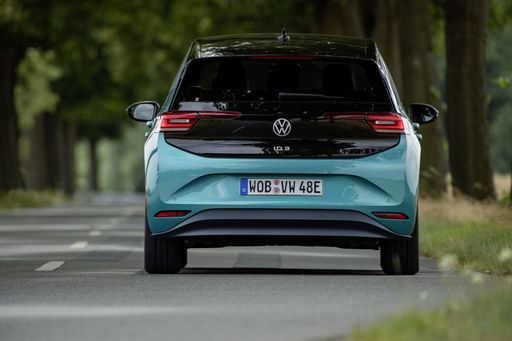
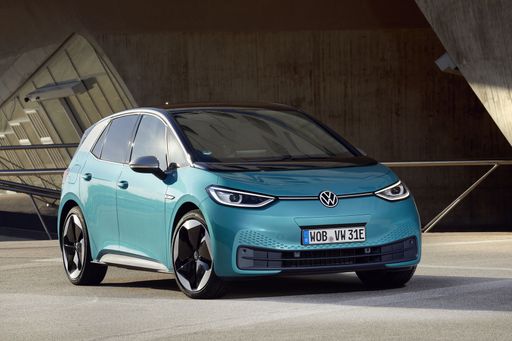
On the other hand, the VW ID.3 is crafted as a hatchback, measuring a longer length of 4264 mm, slightly wider at 1809 mm, and taller at 1564 mm, embracing an aerodynamic design. The hatchback structure aims at urban dwellers who need a mix of flexibility and style.

Avenger

Performance and Power

The Jeep Avenger encompasses an electric engine option, delivering 156 HP, along with variants powered by petrol MHEV and petrol engines with 136 and 100 HP, respectively. The electric variant accelerates from 0 to 100 km/h in 9 seconds, providing a balanced blend of power and efficiency with a maximum speed of 150 km/h.

Conversely, the VW ID.3 speaks to the performance enthusiast with a stronger electric power configuration. It delivers up to 326 HP and can accelerate from 0 to 100 km/h in an impressive 5.7 seconds, with a top speed of up to 200 km/h, making it a sports hatchback in the electric scene.

ID.3

Electric Range and Efficiency

Range anxiety is a significant consideration for EV buyers. The Jeep Avenger offers an electric range of 400 km per full charge with a 51 kWh battery capacity. It boasts a consumption rate of 15.4 kWh/100 km, fitting into the average consumption spectrum.

The VW ID.3 stands out with a maximum range of 604 km, thanks to its larger battery option at 79 kWh. With its superior consumption of as low as 14.5 kWh/100 km, the ID.3 provides a strong case for those who prioritize both range and efficiency.

Avenger

Comfort and Space

Both vehicles accommodate five passengers, ensuring they meet family and individual needs comfortably. The Jeep Avenger's trunk offers between 325 and 380 liters of space, depending on the configuration, adept for those occasional long road trips.

The VW ID.3, with a slightly larger trunk capacity of 385 liters, is designed for everyday practicality while offering enough space for cargo transportation.

ID.3

Technical Innovations

Jeep integrates advanced features across both its electric and internal combustion variants, with a focus on durability and off-road capabilities, typical of the brand's hallmark.

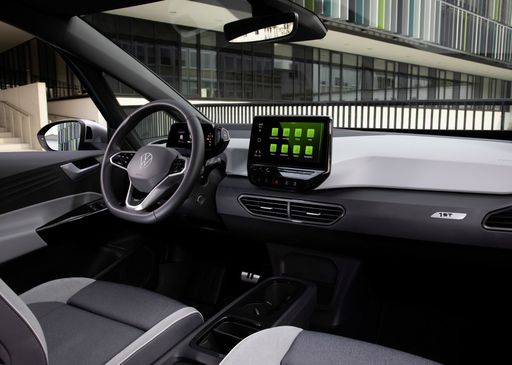
The VW ID.3, on the other hand, leverages Volkswagen's MEB platform, pushing boundaries with its rear-wheel drive and a variety of battery options, coupling performance and tailor-made customizations.

Avenger

Conclusion: Which EV Wins?

The choice between the Jeep Avenger and VW ID.3 largely depends on the buyer's lifestyle and needs. The Jeep Avenger offers diverse engine options, including robust off-road capabilities, appealing to those who enjoy versatility. Meanwhile, the VW ID.3 is an exciting offer for those desiring top-notch range and performance wrapped in a sleek urban design.

As both models continue to innovate and reduce carbon footprints, they showcase the future of the automobile industry, leading the charge into a more sustainable driving era.

Here’s where it gets real: The technical differences in detail

Avenger

Costs and Efficiency:

Looking at overall running costs, both models reveal some interesting differences in everyday economy.

Jeep Avenger is clearly cheaper – starting at 22,500 £ , while the VW ID.3 costs 28,600 £ . That’s a price difference of around 6,026 £.

In terms of energy consumption, the VW ID.3 is marginally more efficient: consuming 14.5 kWh/100km compared to 15.5 kWh/100km for the Jeep Avenger. That’s a difference of about 1 kWh/100km.

As for electric range, the VW ID.3 offers visibly more range – reaching up to 605 km, about 205 km more than the Jeep Avenger.

ID.3

Engine and Performance:

Power, torque and acceleration are the classic benchmarks for car enthusiasts – and here, some clear differences start to show.

When it comes to engine power, the VW ID.3 offers substantially more power – delivering 326 HP compared to 156 HP. That’s roughly 170 HP more horsepower.

When accelerating from 0 to 100 km/h, the VW ID.3 is considerably quicker – completing the sprint in 5.7 s, while the Jeep Avenger takes 9 s. That’s about 3.3 s quicker.

Looking at top speed, the VW ID.3 is only slightly faster – reaching 200 km/h, while the Jeep Avenger tops out at 194 km/h. The difference is around 6 km/h.

There’s also a difference in torque: the VW ID.3 delivers substantially more torque with 545 Nm compared to 260 Nm. That’s about 285 Nm more.

Avenger

Space and Everyday Use:

Cabin size, boot volume and payload all play a role in everyday practicality. Here, comfort and flexibility make the difference.

Both vehicles offer seating for 5 people.

In terms of curb weight, Jeep Avenger is substantially lighter – 1,180 kg compared to 1,787 kg. The difference is around 607 kg.

Looking at boot space, the VW ID.3 offers marginally more boot space – 385 L compared to 380 L. That’s a difference of about 5 L.

For maximum load capacity, the Jeep Avenger offers barely more capacity – up to 1,277 L, about 10 L more than the VW ID.3.

When it comes to payload, the Jeep Avenger carries barely more – 502 kg compared to 473 kg. That’s a difference of about 29 kg.

Who wins the race in the data check?

The VW ID.3 is decisively ahead in the objective data comparison.
This result only shows which model scores more points on paper – not which of the two cars feels right for you.

from £28,600
ID.3

VW ID.3

  • Engine Type : Electric
  • Transmission : Automatic
  • Drive Type : Rear-Wheel Drive
  • Power HP : 170 - 326 HP
  • Consumption kWh/100km : 14.5 - 15.8 kWh/100km
  • Electric Range : 383 - 605 km
Jeep Avenger
VW ID.3

Costs and Consumption

View detailed analysis

Engine and Performance

View detailed analysis

Dimensions and Body

View detailed analysis

Jeep Avenger

The Jeep Avenger shrinks Jeep's boxy, adventurous styling into a city-friendly electric crossover that looks just as at home on tight streets as it does on muddy weekend lanes. It's a savvy pick for drivers who want go-anywhere attitude without the truck-size ego — practical inside, lively around town and ready to tackle a bit of rough stuff when the mood strikes.

details

VW ID.3

The VW ID.3 is a crisply styled electric hatch that masks serious practicality behind a friendly, modern face, making city runs and longer trips pleasantly fuss free. For buyers seeking a sensible, well-equipped EV that doesn't take itself too seriously, the ID.3 strikes a neat balance of comfort, tech and everyday usability with a cheeky smile.

details
Jeep Avenger
VW ID.3

Costs and Consumption

Price
22,500 - 36,900 £
Price
28,600 - 49,300 £
Consumption L/100km
4.9 - 5.7 L/100km
Consumption L/100km
-
Consumption kWh/100km
15.5 kWh/100km
Consumption kWh/100km
14.5 - 15.8 kWh/100km
Electric Range
400 km
Electric Range
383 - 605 km
Battery Capacity
51 kWh
Battery Capacity
52 - 79 kWh
co2
0 - 129 g/km
co2
0 g/km
Fuel tank capacity
44 L
Fuel tank capacity
-

Dimensions and Body

Body Type
SUV
Body Type
Hatchback
Seats
5
Seats
5
Doors
5
Doors
5
Curb weight
1,180 - 1,520 kg
Curb weight
1,787 - 1,993 kg
Trunk capacity
325 - 380 L
Trunk capacity
385 L
Length
4,084 - 4,088 mm
Length
4,264 mm
Width
1,776 mm
Width
1,809 mm
Height
1,527 - 1,541 mm
Height
1,564 mm
Max trunk capacity
1,218 - 1,277 L
Max trunk capacity
1,267 L
Payload
494 - 502 kg
Payload
437 - 473 kg

Engine and Performance

Engine Type
Electric, Petrol MHEV, Petrol
Engine Type
Electric
Transmission
Automatic, Manuel
Transmission
Automatic
Transmission Detail
Reduction Gearbox, Dual-Clutch Automatic, Manual Gearbox
Transmission Detail
Reduction Gearbox
Drive Type
Front-Wheel Drive, All-Wheel Drive
Drive Type
Rear-Wheel Drive
Power HP
100 - 156 HP
Power HP
170 - 326 HP
Acceleration 0-100km/h
9 - 10.6 s
Acceleration 0-100km/h
5.7 - 8.2 s
Max Speed
150 - 194 km/h
Max Speed
160 - 200 km/h
Torque
205 - 260 Nm
Torque
310 - 545 Nm
Number of Cylinders
3
Number of Cylinders
-
Power kW
74 - 115 kW
Power kW
125 - 240 kW
Engine capacity
1,199 cm3
Engine capacity
-

General

Model Year
2,023 - 2,026
Model Year
2,024 - 2,025
CO2 Efficiency Class
A, C, D
CO2 Efficiency Class
A
Brand
Jeep
Brand
VW
DriveDuel uses data analysis and artificial intelligence to evaluate vehicle data and create content. Content is regularly reviewed and improved. The displayed prices are estimates based on German list prices, adjusted to the respective country’s VAT. Country-specific registration taxes are not included. This information is not legally binding.