VS

Jeep Renegade vs Omoda 5 comparison

Compare performance (240 HP vs 224 HP), boot space and price (26,700 £ vs 24,800 £ ) at a glance. Find out which car is the better choice for you – Jeep Renegade or Omoda 5?

Jeep Renegade vs Omoda 5: Key differences

Jeep Renegade

  • only slightly more power
  • clearly more efficient
  • barely quicker 0–100 km/h
  • slightly lighter
  • marginally more trunk space
details

Omoda 5

4.9 (5 Reviews)
rate
  • marginally cheaper
  • clearly more electric range
details

All details on performance, efficiency, range and trunk space can be found in the technical comparison below – including user reviews for both models.

By Achim Sedelmaier

Renegade

The automotive market is booming with diverse offers, but few can compete in the small SUV segment like the Jeep Renegade and the Omoda 5. Both models showcase unique characteristics that cater to a wide range of consumers, from urban dwellers to adventurous spirits. This article provides a comparative analysis of the two models, focusing on their technical aspects and innovations.
5

Design and Dimensions

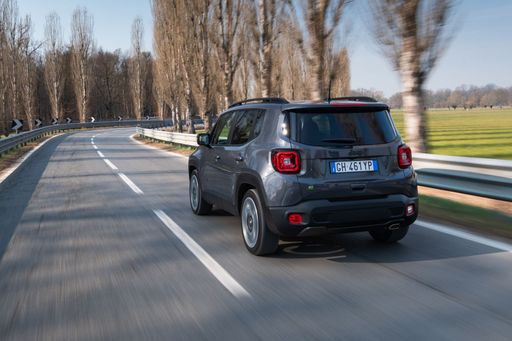
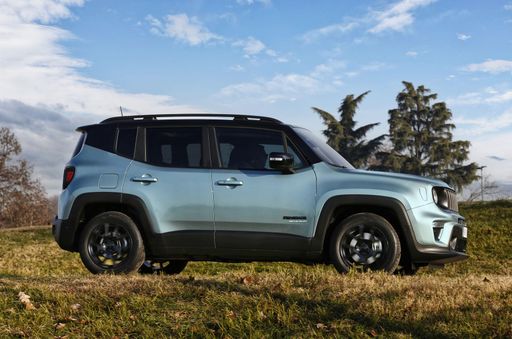
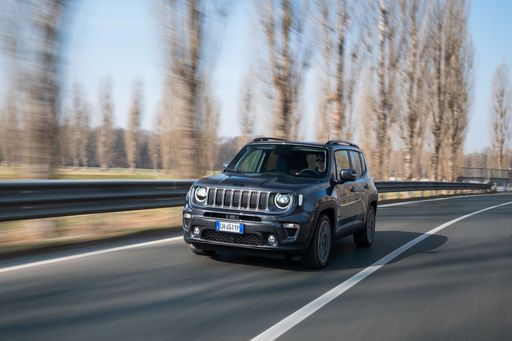
The Jeep Renegade stands out with its rugged and classic SUV aesthetic, measuring 4,236 mm in length, 1,805 mm in width, and 1,684 mm in height. This design not only enhances its off-road capability but also conveys a robust presence on the road.

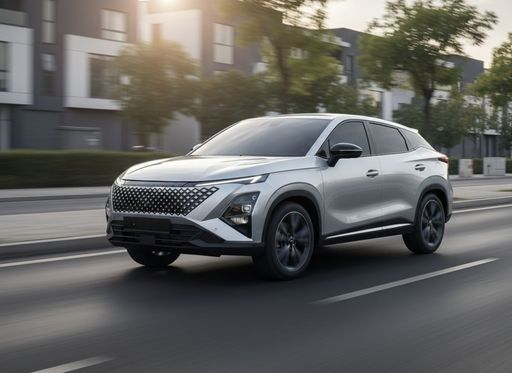
On the other hand, the Omoda 5 adopts a more modern and sleek design. It is slightly larger at 4,424 mm in length, 1,830 mm in width, and 1,588 mm in height, giving it a more streamlined appearance. The design choices of the Omoda 5 reflect a contemporary taste, appealing to those who prefer a stylish yet practical vehicle.

Renegade

Engine Performance and Efficiency

The Jeep Renegade offers an array of engine types, including petrol MHEV and plug-in hybrid options. It provides a power output ranging from 130 HP to 240 HP. The 1.4L, 4-cylinder engine achieves a fuel consumption of 5.5 L/100 km, with an impressive hybrid variant boasting a minimal 2.1 L/100 km and an electric range of 36 km. This makes the Renegade a versatile option for both city driving and off-road trails.

Conversely, the Omoda 5 is powered by a 1.6L petrol engine, delivering 204 HP and torque of 290 Nm. Though its fuel consumption is higher at 7.5 L/100 km, the Omoda 5 compensates with a higher maximum speed of 220 km/h, appealing to those who prioritize performance.

Transmission Options

Both models feature advanced automatic transmissions, but the Jeep Renegade provides more diversity with options for a dual-clutch automatic system as well as a standard automatic gearbox. This variety addresses different driving preferences, ensuring a smoother experience whether on highways or rugged terrains.

The Omoda 5 utilizes an automated dual-clutch transmission, ensuring rapid gear shifts and enhanced driving dynamics. This system is particularly noted for its responsiveness, catering well to urban environments while delivering solid acceleration performance, achieving 0-100 km/h in 7.8 seconds.

Interior Comfort and Space

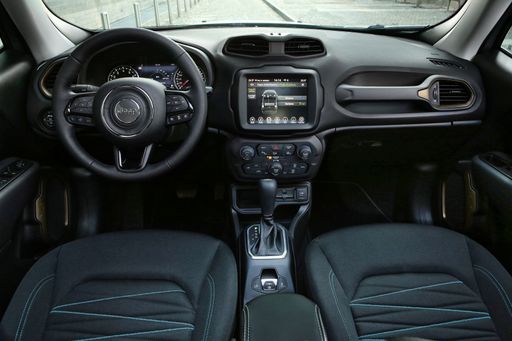
Inside, the Jeep Renegade seats up to five passengers comfortably, boasting a trunk capacity of 351 liters, allowing for ample luggage space. Its higher height compared to the Omoda 5 enhances headroom, making it a favorable option for families and outdoor enthusiasts.

Meanwhile, the Omoda 5, with a trunk capacity that remains unspecified but noted for being adaptable, also seats five passengers. The layout is designed to maximize comfort and feature a more modern infotainment system, appealing to tech-savvy customers.

Safety and Innovations

In terms of safety, the Jeep Renegade is equipped with a range of features that include advanced driver assistance systems, ensuring higher safety standards whether on or off the road. The model has earned commendable ratings in crash tests, reflecting its sturdy construction and safety protocols.

Omoda has also prioritized safety, offering various hybrid safety features. Both models excel in CO2 efficiency, with the Renegade achieving a low 48 g/km in its hybrid variant and the Omoda 5 performing competitively in this regard, although specific details on emissions are not provided.

Conclusion

Choosing between the Jeep Renegade and the Omoda 5 ultimately depends on the buyer's preferences. The Renegade appeals to those looking for a traditional SUV experience with hybrid efficiency and off-road capability. In contrast, the Omoda 5 attracts consumers with its modern design, performance-oriented engine, and advanced technology. Each vehicle offers a unique perspective on what a small SUV can be, making them worthy contenders in today's automotive landscape.

Here’s where it gets real: The technical differences in detail

Renegade

Costs and Efficiency:

Price and efficiency are key factors when choosing a car – and this is often where the real differences emerge.

Omoda 5 is marginally cheaper – starting at 24,800 £ , while the Jeep Renegade costs 26,700 £ . That’s a price difference of around 1,886 £.

Fuel consumption also shows a difference: the Jeep Renegade uses 2.1 L/100km and is clearly more efficient than the Omoda 5 with 5.3 L/100km. The difference is about 3.2 L/100km.

As for electric range, the Omoda 5 offers clearly more range – reaching up to 430 km, about 394 km more than the Jeep Renegade.

5

Engine and Performance:

Under the bonnet, it becomes clear which model is tuned for sportiness and which one takes the lead when you hit the accelerator.

When it comes to engine power, the Jeep Renegade offers only slightly more power – delivering 240 HP compared to 224 HP. That’s roughly 16 HP more horsepower.

When accelerating from 0 to 100 km/h, the Jeep Renegade is barely quicker – completing the sprint in 7.1 s, while the Omoda 5 takes 7.6 s. That’s about 0.5 s quicker.

There’s also a difference in torque: the Omoda 5 delivers markedly more torque with 340 Nm compared to 240 Nm. That’s about 100 Nm more.

Renegade

Space and Everyday Use:

Beyond pure performance, interior space and usability matter most in daily life. This is where you see which car is more practical and versatile.

Both vehicles offer seating for 5 people.

In terms of curb weight, Jeep Renegade is slightly lighter – 1,420 kg compared to 1,621 kg. The difference is around 201 kg.

Looking at boot space, the Jeep Renegade offers marginally more boot space – 351 L compared to 350 L. That’s a difference of about 1 L.

When it comes to payload, the Jeep Renegade carries very slightly more – 570 kg compared to 536 kg. That’s a difference of about 34 kg.

Who wins the race in the data check?

The Omoda 5 has the upper hand in the objective data comparison.
This result only shows which model scores more points on paper – not which of the two cars feels right for you.

from £24,800
5

Omoda 5

  • Engine Type Electric, Full Hybrid
  • Transmission Automatic
  • Drive Type Front-Wheel Drive
  • Power HP 204 - 224 HP
  • Consumption L/100km 5.3 L/100km
  • Consumption kWh/100km 15.9 kWh/100km
  • Electric Range 430 km
Jeep Renegade
Omoda 5

Costs and Consumption

View detailed analysis

Engine and Performance

View detailed analysis

Dimensions and Body

View detailed analysis

Jeep Renegade

The Jeep Renegade wears its chunky, boxy looks like a badge of character, blending genuine off-road swagger with city-friendly manners so it feels at home on a muddy trail or a tight urban lane. Inside you'll find a surprisingly practical cabin with rugged touches and clever storage, making it a sensible choice for buyers who want a compact SUV with personality rather than just another anonymous crossover.

details

Omoda 5

The Omoda 5 is a stylish compact crossover that catches the eye with a bold, contemporary look and a tech-forward cabin. It offers a comfortable ride and a surprisingly spacious interior, making it a practical yet distinctive choice for buyers who want modern features and solid value.

details
Jeep Renegade
Omoda 5

Costs and Consumption

Price
26,700 - 39,200 £
Price
24,800 - 31,600 £
Consumption L/100km
2.1 - 5.5 L/100km
Consumption L/100km
5.3 L/100km
Consumption kWh/100km
-
Consumption kWh/100km
15.9 kWh/100km
Electric Range
36 km
Electric Range
430 km
Battery Capacity
-
Battery Capacity
-
co2
48 - 125 g/km
co2
0 - 120 g/km
Fuel tank capacity
36 - 48 L
Fuel tank capacity
-

Dimensions and Body

Body Type
SUV
Body Type
SUV
Seats
5
Seats
5
Doors
5
Doors
-
Curb weight
1,420 - 1,770 kg
Curb weight
1,621 - 1,710 kg
Trunk capacity
330 - 351 L
Trunk capacity
300 - 350 L
Length
4,236 mm
Length
-
Width
1,805 mm
Width
1,824 - 1,830 mm
Height
1,684 - 1,718 mm
Height
-
Max trunk capacity
1,277 - 1,297 L
Max trunk capacity
-
Payload
545 - 570 kg
Payload
431 - 536 kg

Engine and Performance

Engine Type
Petrol MHEV, Plugin Hybrid
Engine Type
Electric, Full Hybrid
Transmission
Automatic
Transmission
Automatic
Transmission Detail
Dual-Clutch Automatic, Automatic Gearbox
Transmission Detail
Reduction Gearbox, Automatic Gearbox
Drive Type
Front-Wheel Drive, All-Wheel Drive
Drive Type
Front-Wheel Drive
Power HP
130 - 240 HP
Power HP
204 - 224 HP
Acceleration 0-100km/h
7.1 - 9.7 s
Acceleration 0-100km/h
7.6 - 7.9 s
Max Speed
191 - 199 km/h
Max Speed
-
Torque
240 Nm
Torque
295 - 340 Nm
Number of Cylinders
4
Number of Cylinders
4
Power kW
96 - 177 kW
Power kW
150 - 165 kW
Engine capacity
1,332 - 1,469 cm3
Engine capacity
1,499 cm3

General

Model Year
2024
Model Year
2026
CO2 Efficiency Class
D, B
CO2 Efficiency Class
A, D
Brand
Jeep
Brand
Omoda
DriveDuel uses data analysis and artificial intelligence to evaluate vehicle data and create content. Content is regularly reviewed and improved. The displayed prices are estimates based on German list prices, adjusted to the respective country’s VAT. Country-specific registration taxes are not included. This information is not legally binding.