VS

Omoda 5 vs Peugeot 3008 comparison

Compare performance (224 HP vs 325 HP), boot space and price (24,800 £ vs 36,800 £ ) at a glance. Find out which car is the better choice for you – Omoda 5 or Peugeot 3008?

Omoda 5 vs Peugeot 3008: Key differences

Omoda 5

4.9 (5 Reviews)
rate
  • substantially cheaper
  • very slightly more efficient
  • marginally lighter
details

Peugeot 3008

3.5 (6 Reviews)
rate
  • clearly more power
  • considerably more efficient
  • visibly more electric range
  • noticeably quicker 0–100 km/h
  • visibly more trunk space
details

All details on performance, efficiency, range and trunk space can be found in the technical comparison below – including user reviews for both models.

By Achim Sedelmaier

5

Omoda 5 VS Peugeot 3008 — quick take

Omoda 5 VS Peugeot 3008 pits a value-packed newcomer against a more refined, design-led compact SUV. The Omoda 5 brings an aggressive equipment list and reassuring long warranty for buyers who want bang for their buck, while the Peugeot 3008 trades some headline specs for a quieter cabin and a more premium feel. In everyday terms that means the Omoda looks like more car on the sticker and the Peugeot feels nicer behind the wheel. Both appeal to safety- and tech-conscious buyers, but they reach that goal with noticeably different priorities. This page unpacks where those priorities matter to real drivers rather than to spec sheets.
3008

Character and driving dynamics

The Omoda 5 feels like a comfort-first compromise: soft suspension, a high seating position and steering that never quite sharpens up for sporty driving. The Peugeot 3008 leans toward composed, confidence-inspiring cruising — steadier on the motorway and less prone to the wobbles you can feel in the Omoda. If you want brisk shove and a firmer, more planted sensation the Peugeot’s drivetrains (especially in their stronger forms) deliver a clearer impression of progress. Omoda’s hybrid option calms noise and smooths city starts, but it doesn’t change the basic steering and body-control character. For buyers who care about driver engagement the Peugeot will feel like the more mature choice; for buyers who prioritise relaxed, cushioned motion at a lower price the Omoda fits better.

Comfort and long‑distance behavior

On long trips the Peugeot 3008 stands out with a hushed cabin and seats designed for extended hours, so fatigue is less of an issue on motorway stints. The Omoda 5 can be surprisingly composed on the highway, particularly in hybrid guise, but it tends to show its softer damping over undulating surfaces and can feel floaty after a few hours. Rear-seat comfort is another dividing line: the Peugeot’s cabin packaging better protects passengers from vibrations and wind noise, while the Omoda’s rear passengers may notice tighter headroom and a firmer ride. If your weekly routine includes long intercity journeys the Peugeot’s lounge-like feel will be appreciated; the Omoda rewards owners who value initial price and equipment over absolute serenity. Both will cover country miles, but the subjective comfort balance clearly favors the Peugeot for endurance trips.

Practicality, day‑to‑day usability and family sense

The Omoda 5 presents itself as an efficient packager for active urban lifestyles but its boot is shallower and the rear cabin a bit snug, which becomes obvious with bulky luggage or three adults in the back. The Peugeot 3008 generally gives more usable load space and a tidier cargo area, though its load lip and coupe-like silhouette impose their own compromises when loading heavy items. A subtle trade-off: Omoda will carry heavier payloads in some trims so it suits buyers who regularly load weighty equipment, whereas Peugeot favours volumetric utility and easier long-haul packing. Visibility and parking are handled differently too — Omoda’s high seats aid forward view but the small rear window makes cameras more necessary, while Peugeot’s lighter steering and compact turn-in make tight manoeuvres feel easier. For families that prize luggage capacity and rear comfort the Peugeot will feel more natural; for buyers prioritising purchase value and payload over cubic capacity the Omoda is persuasive.

Cabin feel, controls and perceived quality

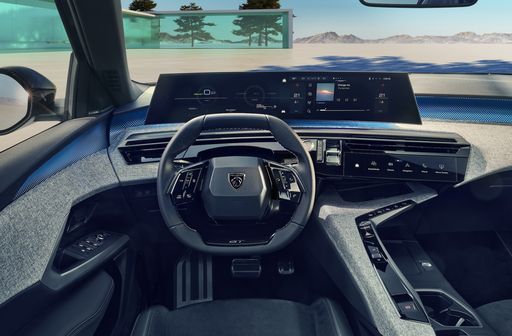
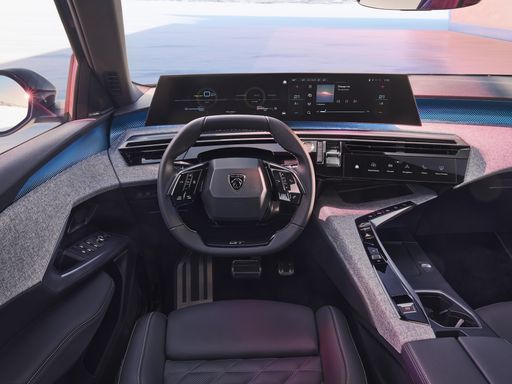
The interior of the Peugeot 3008 reads like a step up: richer materials, considered detailing and a quieter, more cohesive ambience that lifts perceived quality. Omoda 5 punches above its price with big screens and generous kit, but close inspection reveals harder plastics, fiddly menu structures and controls that demand more attention. Both cabins show modern tech, yet the Peugeot’s graphics, fit and finish deliver a more premium tactile experience, while the Omoda trades some refinement for straightforward kit levels and a value story. Ergonomically the Peugeot’s i‑Cockpit layout requires a short acclimatisation for some drivers; the Omoda’s layout feels more conventional but its touch-based climate/infotainment operation can be frustrating in everyday use. If perceived quality and a calm, adult-friendly cockpit matter, the Peugeot pulls ahead; if you want maximum hardware and warranty for the outlay, the Omoda makes sense.

Who should buy which car — buyer fit and final trade‑offs

Choose the Omoda 5 if you want a strong equipment-to-price ratio, a long warranty and a hybrid option that trims running noise and fuel use while accepting compromises in rear space and handling. Opt for the Peugeot 3008 if cabin refinement, a quieter motorway experience and more usable luggage space are higher on your checklist and you’re willing to pay a premium for those traits. Urban drivers who prioritise easy steering and a composed feel will enjoy the Peugeot’s street manners; budget‑minded buyers and those who load heavy gear regularly will find the Omoda’s proposition hard to ignore. The technical comparison that follows digs into range, charging behavior, power delivery and payload specifics to help you match the headline trade-offs to your exact driving pattern. Pick the car that aligns with the compromises you’re prepared to live with rather than the one that looks best on paper.

Here’s where it gets real: The technical differences in detail

5

Costs and Efficiency:

Price and efficiency are often the first things buyers look at. Here it becomes clear which model has the long-term edge – whether at the pump, the plug, or in purchase price.

Omoda 5 is substantially cheaper – starting at 24,800 £ , while the Peugeot 3008 costs 36,800 £ . That’s a price difference of around 12,043 £.

Fuel consumption also shows a difference: the Peugeot 3008 uses 2.4 L/100km and is considerably more efficient than the Omoda 5 with 5.3 L/100km. The difference is about 2.9 L/100km.

In terms of energy consumption, the Omoda 5 is very slightly more efficient: consuming 15.9 kWh/100km compared to 16.9 kWh/100km for the Peugeot 3008. That’s a difference of about 1 kWh/100km.

As for electric range, the Peugeot 3008 offers visibly more range – reaching up to 698 km, about 268 km more than the Omoda 5.

3008

Engine and Performance:

Power, torque and acceleration say a lot about how a car feels on the road. This is where you see which model delivers more driving dynamics.

When it comes to engine power, the Peugeot 3008 offers clearly more power – delivering 325 HP compared to 224 HP. That’s roughly 101 HP more horsepower.

When accelerating from 0 to 100 km/h, the Peugeot 3008 is noticeably quicker – completing the sprint in 6 s, while the Omoda 5 takes 7.6 s. That’s about 1.6 s quicker.

There’s also a difference in torque: the Peugeot 3008 delivers noticeably more torque with 511 Nm compared to 340 Nm. That’s about 171 Nm more.

Space and Everyday Use:

Beyond pure performance, interior space and usability matter most in daily life. This is where you see which car is more practical and versatile.

Both vehicles offer seating for 5 people.

In terms of curb weight, Omoda 5 is marginally lighter – 1,621 kg compared to 1,648 kg. The difference is around 27 kg.

Looking at boot space, the Peugeot 3008 offers visibly more boot space – 520 L compared to 350 L. That’s a difference of about 170 L.

When it comes to payload, the Omoda 5 carries slightly more – 536 kg compared to 467 kg. That’s a difference of about 69 kg.

Who wins the race in the data check?

The Peugeot 3008 holds a decisive overall lead in the objective data comparison.
This result only shows which model scores more points on paper – not which of the two cars feels right for you.

from £36,800
3008

Peugeot 3008

  • Engine Type Electric, Petrol MHEV, Plugin Hybrid
  • Transmission Automatic
  • Drive Type Front-Wheel Drive, All-Wheel Drive
  • Power HP 145 - 325 HP
  • Consumption L/100km 2.4 - 5.3 L/100km
  • Consumption kWh/100km 16.9 - 17.4 kWh/100km
  • Electric Range 81 - 698 km
Omoda 5
Peugeot 3008

Costs and Consumption

View detailed analysis

Engine and Performance

View detailed analysis

Dimensions and Body

View detailed analysis

Omoda 5

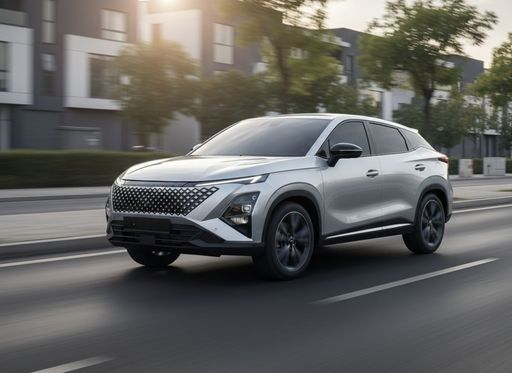
The Omoda 5 is a stylish compact crossover that catches the eye with a bold, contemporary look and a tech-forward cabin. It offers a comfortable ride and a surprisingly spacious interior, making it a practical yet distinctive choice for buyers who want modern features and solid value.

details

Peugeot 3008

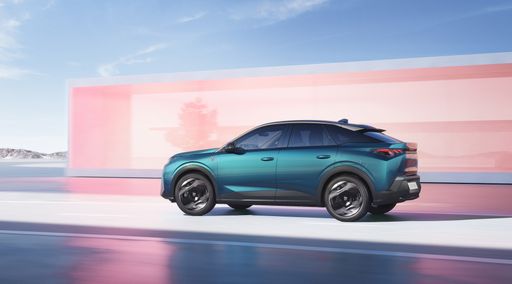
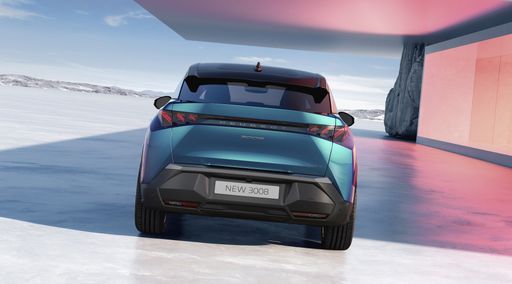
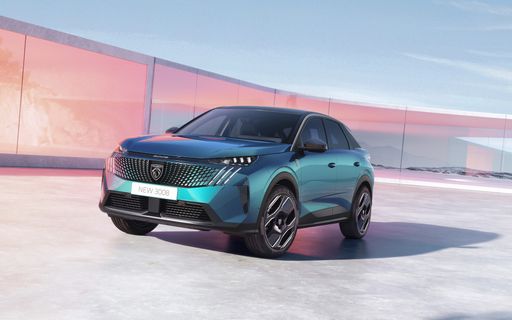
The Peugeot 3008 blends striking, modern styling with a comfortable, well-appointed interior that feels more premium than its class. It's practical and composed on the road, with clever storage and driver-focused tech that make it an easy choice for everyday family life or longer, relaxed drives.

details
Omoda 5
Peugeot 3008

Costs and Consumption

Price
24,800 - 31,600 £
Price
36,800 - 52,200 £
Consumption L/100km
5.3 L/100km
Consumption L/100km
2.4 - 5.3 L/100km
Consumption kWh/100km
15.9 kWh/100km
Consumption kWh/100km
16.9 - 17.4 kWh/100km
Electric Range
430 km
Electric Range
81 - 698 km
Battery Capacity
-
Battery Capacity
-
co2
0 - 120 g/km
co2
0 - 121 g/km
Fuel tank capacity
-
Fuel tank capacity
-

Dimensions and Body

Body Type
SUV
Body Type
SUV
Seats
5
Seats
5
Doors
-
Doors
-
Curb weight
1,621 - 1,710 kg
Curb weight
1,648 - 2,266 kg
Trunk capacity
300 - 350 L
Trunk capacity
470 - 520 L
Length
-
Length
-
Width
1,824 - 1,830 mm
Width
1,895 mm
Height
-
Height
-
Max trunk capacity
-
Max trunk capacity
-
Payload
431 - 536 kg
Payload
432 - 467 kg

Engine and Performance

Engine Type
Electric, Full Hybrid
Engine Type
Electric, Petrol MHEV, Plugin Hybrid
Transmission
Automatic
Transmission
Automatic
Transmission Detail
Reduction Gearbox, Automatic Gearbox
Transmission Detail
Reduction Gearbox, Dual-Clutch Automatic
Drive Type
Front-Wheel Drive
Drive Type
Front-Wheel Drive, All-Wheel Drive
Power HP
204 - 224 HP
Power HP
145 - 325 HP
Acceleration 0-100km/h
7.6 - 7.9 s
Acceleration 0-100km/h
6 - 10.2 s
Max Speed
-
Max Speed
-
Torque
295 - 340 Nm
Torque
230 - 511 Nm
Number of Cylinders
4
Number of Cylinders
3 - 4
Power kW
150 - 165 kW
Power kW
107 - 239 kW
Engine capacity
1,499 cm3
Engine capacity
1,199 - 1,598 cm3

General

Model Year
2026
Model Year
2,024 - 2,026
CO2 Efficiency Class
A, D
CO2 Efficiency Class
A, D, B
Brand
Omoda
Brand
Peugeot
DriveDuel uses data analysis and artificial intelligence to evaluate vehicle data and create content. Content is regularly reviewed and improved. The displayed prices are estimates based on German list prices, adjusted to the respective country’s VAT. Country-specific registration taxes are not included. This information is not legally binding.