VS

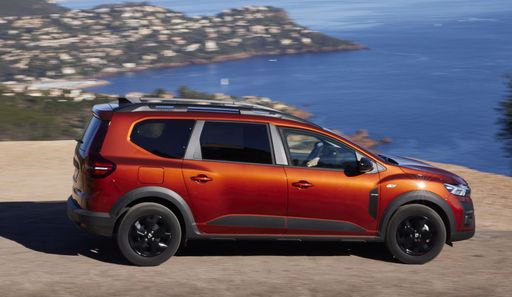
Kia Sportage vs Dacia Jogger comparison

Compare performance (288 HP vs 158 HP), boot space and price (30,200 £ vs 15,400 £ ) at a glance. Find out which car is the better choice for you – Kia Sportage or Dacia Jogger?

Kia Sportage vs Dacia Jogger: Key differences

Kia Sportage

4.9 (2 Reviews)
rate
  • significantly more power
  • substantially more efficient
  • a bit quicker 0–100 km/h

Dacia Jogger

4.6 (1 Reviews)
rate
  • considerably cheaper
  • noticeably lighter
  • very slightly more trunk space

All details on performance, efficiency, range and trunk space can be found in the technical comparison below – including user reviews for both models.

Sportage

In the ever-evolving world of automotive design and engineering, the Dacia Jogger and Kia Sportage stand out as commendable options for buyers seeking practicality, performance, and economy. This article breaks down their key features and innovations to help you make an informed choice.

Jogger

Body and Design: MPV vs. SUV

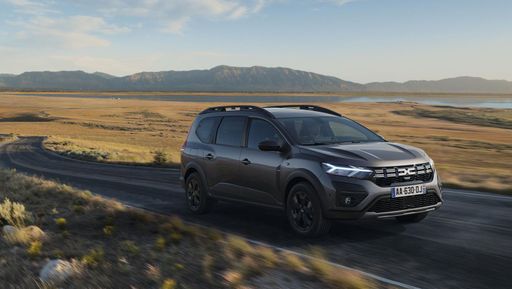
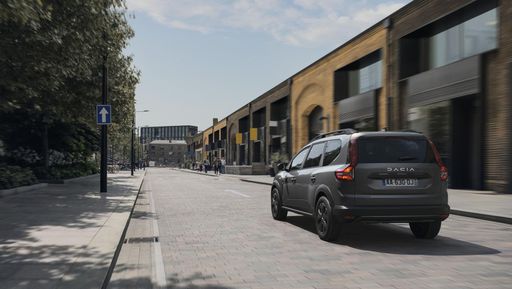
The Dacia Jogger, classified as a Multi-Purpose Vehicle (MPV), offers a unique blend of space and versatility. With a length of 4,547 mm and a height of 1,674 mm, it accommodates up to seven people, making it an ideal family vehicle. The interior boasts a trunk capacity of 607 liters, which can be extremely beneficial for those who need to transport larger items.

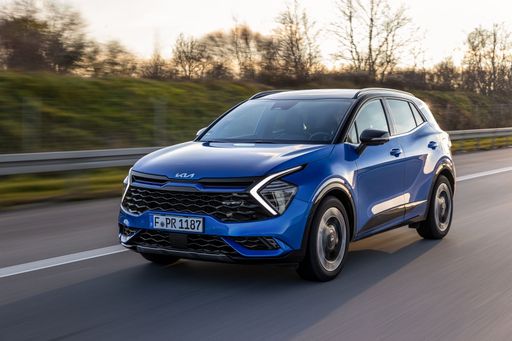
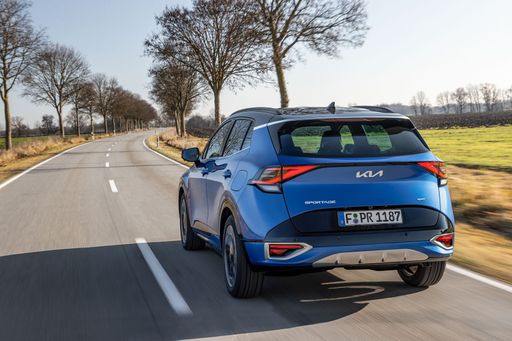
In contrast, the Kia Sportage takes the SUV route, boasting a more aggressive stance with a length of 4,515 mm and a width of 1,865 mm. Its sporty design is complemented by a luxurious interior that can hold 526 to 587 liters of cargo, depending on the variant. This SUV captures attention not just on the road, but also with its compelling design aesthetics.


Sportage

Engine Performance: Power and Efficiency

The Dacia Jogger offers a range of engine options, including Full Hybrid, LPG, and petrol engines. The most powerful variant boasts 140 HP and can achieve 0-100 km/h in 9.8 seconds. Fuel efficiency is impressive as well, with consumption figures as low as 4.7 L/100 km, and CO2 emissions ranging from 105 to 137 g/km, making it a competitive option for environmentally conscious drivers.

On the other hand, the Kia Sportage presents a more powerful lineup with options reaching up to 252 HP. While achieving 0-100 km/h in only 8.3 seconds in its highest variant, it also offers various engine types, including petrol, diesel, and hybrids. The fuel consumption ranges from 5 to 7.2 L/100 km, and CO2 emissions vary between 132 to 162 g/km, reflecting its efforts to balance performance with efficiency.

Jogger

Transmission Options: Manual vs. Automatic

The transmission systems of both vehicles are designed to enhance driving performance. The Dacia Jogger provides flexibility with both manual and automatic options, catering to diverse driver preferences. The automatic variants employ a smooth gear transition that complements the engine's capabilities.

Similarly, the Kia Sportage offers manual and automatic gearbox configurations, including a dual-clutch variant in some models. This technology allows for quicker shifts and enhances the driving experience, especially when navigating urban settings or tackling challenging terrains.

Sportage

Technological Innovations: Features and Connectivity

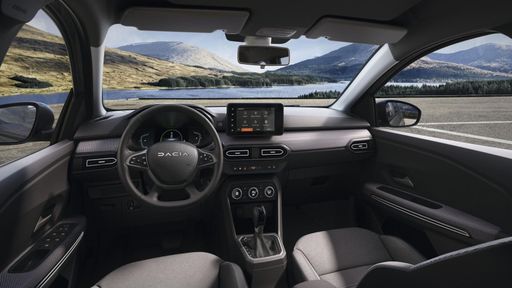
Technological advancement plays a critical role in modern vehicles. The Dacia Jogger integrates essential features for convenience such as a user-friendly infotainment system and optional driver assist technologies that elevate the overall driving experience. Although budget-friendly, it does not compromise on safety and ergonomic design.

The Kia Sportage, a frontrunner in innovation, boasts a host of advanced technology features including a digital cockpit, comprehensive driver assistance systems, and enhanced connectivity options. With features like smartphone integration, advanced safety systems, and an intuitive layout, the Sportage appeals to tech-savvy consumers seeking a picturesque blend of luxury and utility.

Jogger

Final Thoughts: Choosing Your Ideal Vehicle

Ultimately, both the Dacia Jogger and the Kia Sportage present strong cases for their respective markets. If you require a spacious, family-oriented vehicle with economical options, the Jogger promises reliability and efficiency at an attractive price point. In contrast, if you seek a sporty, technologically advanced SUV that doesn’t shy away from power, the Sportage should be at the forefront of your consideration.

Choosing between these two models boils down to personal preference and specific needs. Focus on what you value most in a vehicle—whether it's space and efficiency or performance and technology—and you'll find the ideal match for your driving lifestyle.

Here’s where it gets real: The technical differences in detail

Sportage

Costs and Efficiency:

Price and efficiency are key factors when choosing a car – and this is often where the real differences emerge.

Dacia Jogger is considerably cheaper – starting at 15,400 £ , while the Kia Sportage costs 30,200 £ . That’s a price difference of around 14,742 £.

Fuel consumption also shows a difference: the Kia Sportage uses 2.9 L/100km and is substantially more efficient than the Dacia Jogger with 4.5 L/100km. The difference is about 1.6 L/100km.

Jogger

Engine and Performance:

Power, torque and acceleration say a lot about how a car feels on the road. This is where you see which model delivers more driving dynamics.

When it comes to engine power, the Kia Sportage offers significantly more power – delivering 288 HP compared to 158 HP. That’s roughly 130 HP more horsepower.

When accelerating from 0 to 100 km/h, the Kia Sportage is a bit quicker – completing the sprint in 7.5 s, while the Dacia Jogger takes 8.9 s. That’s about 1.4 s quicker.

There’s also a difference in torque: the Kia Sportage delivers clearly more torque with 380 Nm compared to 200 Nm. That’s about 180 Nm more.

Sportage

Space and Everyday Use:

Whether family car or daily driver – which one offers more room, flexibility and comfort?

Seats: Dacia Jogger offers more seats – 7 vs 5.

In terms of curb weight, Dacia Jogger is noticeably lighter – 1,268 kg compared to 1,552 kg. The difference is around 284 kg.

Looking at boot space, the Dacia Jogger offers very slightly more boot space – 607 L compared to 587 L. That’s a difference of about 20 L.

When it comes to payload, the Kia Sportage carries barely more – 580 kg compared to 559 kg. That’s a difference of about 21 kg.

Who wins the race in the data check?

The Kia Sportage is far ahead overall in the objective data comparison.
This result only shows which model scores more points on paper – not which of the two cars feels right for you.

from £30,200
Sportage

Kia Sportage

  • Engine Type : Petrol, Full Hybrid, Diesel MHEV, Plugin Hybrid
  • Transmission : Manuel, Automatic
  • Drive Type : Front-Wheel Drive, All-Wheel Drive
  • Power HP : 136 - 288 HP
  • Consumption L/100km : 2.9 - 7.8 L/100km
  • Electric Range : 63 - 66 km
Kia Sportage
Dacia Jogger

Costs and Consumption

View detailed analysis

Engine and Performance

View detailed analysis

Dimensions and Body

View detailed analysis

Kia Sportage

The Kia Sportage proves you don't have to choose between style and sensible family motoring, wrapping modern, confident looks around a roomy, well-equipped cabin. It's an easy car to live with — comfortable on daily runs, pleasantly engaging when you want a bit of fun, and kind to your wallet so you can keep smiling at the fuel pump.

details

Dacia Jogger

The Dacia Jogger is a no-nonsense family mover that stretches the idea of value with cavernous practicality and flexible space, perfect for buyers who need a sensible, everyday Swiss Army knife on wheels. It doesn’t try to be glamorous — instead it wins hearts with cheerful thrift, durable materials and honest engineering, giving you useful transport without the pretence.

details
Kia Sportage
Dacia Jogger

Costs and Consumption

Price
30,200 - 47,100 £
Price
15,400 - 23,500 £
Consumption L/100km
2.9 - 7.8 L/100km
Consumption L/100km
4.5 - 7.6 L/100km
Consumption kWh/100km
-
Consumption kWh/100km
-
Electric Range
63 - 66 km
Electric Range
-
Battery Capacity
-
Battery Capacity
-
co2
67 - 177 g/km
co2
103 - 138 g/km
Fuel tank capacity
-
Fuel tank capacity
-

Dimensions and Body

Body Type
SUV
Body Type
MPV
Seats
5
Seats
5 - 7
Doors
-
Doors
-
Curb weight
1,552 - 1,896 kg
Curb weight
1,268 - 1,463 kg
Trunk capacity
526 - 587 L
Trunk capacity
160 - 607 L
Length
-
Length
-
Width
1,865 mm
Width
1,784 mm
Height
-
Height
-
Max trunk capacity
-
Max trunk capacity
-
Payload
533 - 580 kg
Payload
384 - 559 kg

Engine and Performance

Engine Type
Petrol, Full Hybrid, Diesel MHEV, Plugin Hybrid
Engine Type
Petrol, Full Hybrid, LPG
Transmission
Manuel, Automatic
Transmission
Manuel, Automatic
Transmission Detail
Manual Gearbox, Dual-Clutch Automatic, Automatic Gearbox
Transmission Detail
Manual Gearbox, Automatic Gearbox, Dual-Clutch Automatic
Drive Type
Front-Wheel Drive, All-Wheel Drive
Drive Type
Front-Wheel Drive
Power HP
136 - 288 HP
Power HP
110 - 158 HP
Acceleration 0-100km/h
7.5 - 11.6 s
Acceleration 0-100km/h
8.9 - 12 s
Max Speed
-
Max Speed
-
Torque
250 - 380 Nm
Torque
190 - 200 Nm
Number of Cylinders
4
Number of Cylinders
3 - 4
Power kW
100 - 212 kW
Power kW
81 - 116 kW
Engine capacity
1,598 cm3
Engine capacity
999 - 1,789 cm3

General

Model Year
2,025 - 2,026
Model Year
2,025
CO2 Efficiency Class
F, D, E, G, B
CO2 Efficiency Class
D, E, C
Brand
Kia
Brand
Dacia
DriveDuel uses data analysis and artificial intelligence to evaluate vehicle data and create content. Content is regularly reviewed and improved. The displayed prices are estimates based on German list prices, adjusted to the respective country’s VAT. Country-specific registration taxes are not included. This information is not legally binding.