VS

Kia Sportage vs Skoda Kamiq comparison

Compare performance (288 HP vs 150 HP), boot space and price (29,100 £ vs 22,300 £ ) at a glance. Find out which car is the better choice for you – Kia Sportage or Skoda Kamiq?

Kia Sportage vs Skoda Kamiq: Key differences

Kia Sportage

5 (4 Reviews)
rate
  • clearly more power
  • considerably more efficient
  • only slightly quicker 0–100 km/h
  • clearly more trunk space
details

Skoda Kamiq

4.9 (6 Reviews)
rate
  • markedly cheaper
  • markedly lighter
details

All details on performance, efficiency, range and trunk space can be found in the technical comparison below – including user reviews for both models.

By Achim Sedelmaier

Sportage

The Kia Sportage and Skoda Kamiq are two popular contenders in the fiercely competitive compact SUV segment. Both vehicles offer a mix of practicality, comfort, and modern technology, yet they appeal to different facets of the market. In this comparison, we will delve into the technical specifications, innovations, and key features that set these SUVs apart.
Kamiq

Design and Dimensions

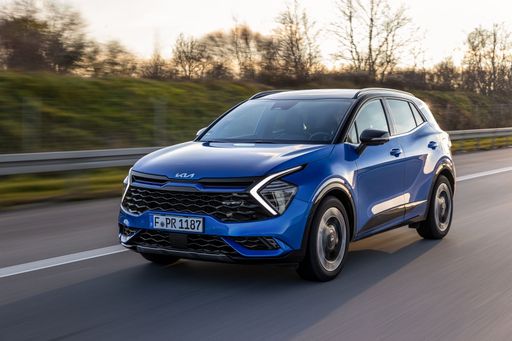
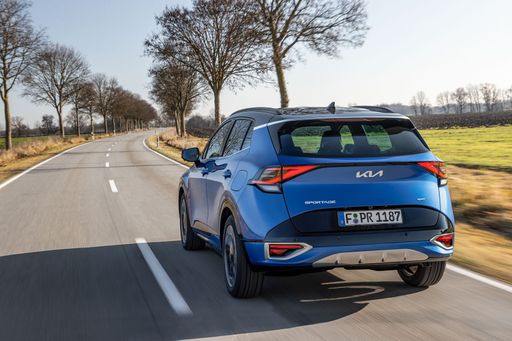
When it comes to aesthetics, the Kia Sportage boasts a contemporary design with bold lines and a distinctive front grille. Measuring 4,515 mm in length, 1,865 mm in width, and 1,650 mm in height, it offers a commanding presence on the road.

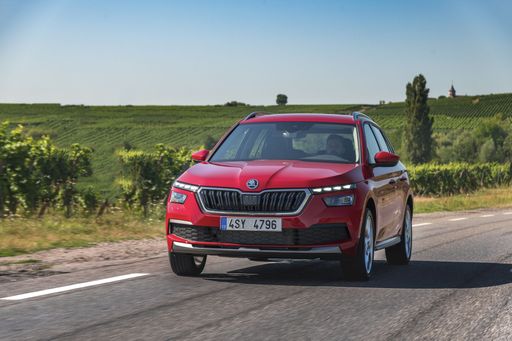
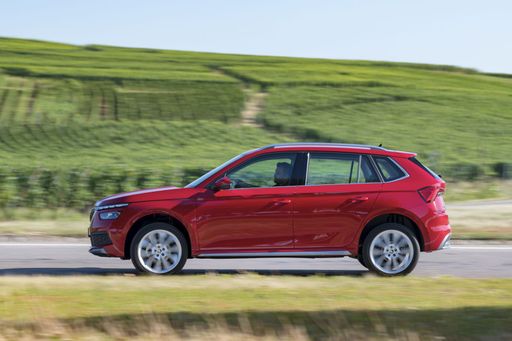
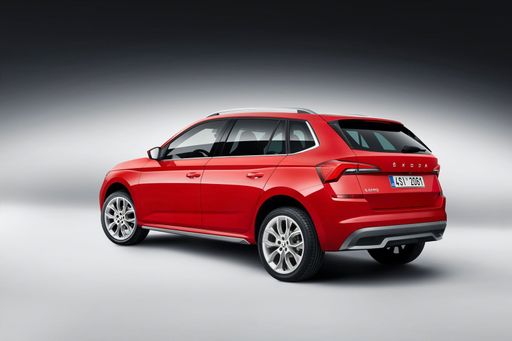
In contrast, the Skoda Kamiq is slightly smaller, measuring 4,241 mm in length, 1,793 mm in width, and 1,562 mm in height. Its design is more understated, yet it remains sleek and modern, appealing to those who prefer a more subtle style.

Sportage

Powertrains and Performance

The Kia Sportage offers a variety of engine options, including Petrol, Diesel MHEV, and Hybrid powertrains ranging from 136 to 252 HP. The acceleration figures vary, with the fastest models able to sprint from 0 to 100 km/h in just 8.3 seconds. Fuel consumption is also competitive, with figures ranging from 1.2 L/100km for the plug-in hybrid variant to 7.2 L/100km for the petrol engine.

The Skoda Kamiq, while having fewer engine options, still provides commendable performance across its variants. The engines produce between 95 and 150 HP, and the top-performing version can achieve 0-100 km/h in just 8.3 seconds. Fuel efficiency is a highlight here as well, with consumption figures ranging from 5.4 to 5.7 L/100km.

Kamiq

Interior and Technology

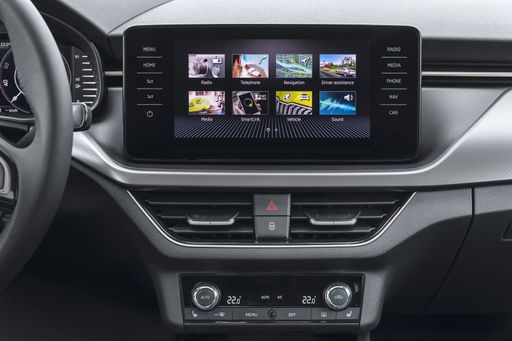
The interior of the Kia Sportage is designed with comfort and advanced technology in mind. It features a spacious cabin with a boot capacity of up to 587 liters, making it one of the most accommodating options in its class. The Sportage integrates a state-of-the-art infotainment system with a touchscreen interface, advanced driver assistance systems, and high-quality materials that enhance the overall experience.

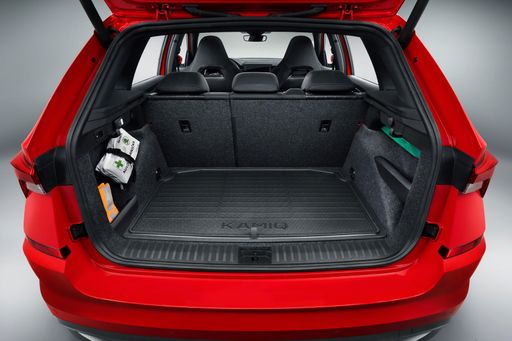
On the other hand, the Skoda Kamiq provides a well-thought-out interior that focuses on practicality and user-friendliness. While its trunk capacity is slightly smaller at 400 liters, it maximizes every inch of space, making it an excellent option for urban drivers. Skoda’s infotainment options are intuitive, and additional features such as the Virtual Cockpit bring a modern flair to the driver's experience.

Sportage

Drive and Handling

In terms of driving dynamics, the Kia Sportage is available in both Front-Wheel Drive and All-Wheel Drive configurations, allowing for flexibility in various driving conditions. Its suspension system is tuned for comfort, making it a great choice for longer journeys.

The Skoda Kamiq, while only offering Front-Wheel Drive, compensates with its agile handling and lightweight design, making it feel nimble in urban environments. Both vehicles provide confident steering responses, although the Sportage may feel more composed on the highway given its added weight.

Kamiq

Safety Features and Ratings

Safety is paramount in both SUVs, with the Kia Sportage equipped with numerous safety features such as adaptive cruise control, lane-keeping assist, and multiple airbags. The Sportage has received favorable safety ratings, enhancing its reputation as a family-friendly vehicle.

The Skoda Kamiq also excels in safety, featuring similar advanced driver-assistance technologies designed to enhance security during drive. It has proven to earn good safety scores, making it a reliable choice for anyone concerned about safety on the road.

Sportage

Conclusion

The comparison between the Kia Sportage and Skoda Kamiq highlights the diversity within the compact SUV segment. While the Sportage stands out with a wide range of powertrains, advanced technology, and a spacious interior, the Kamiq offers practicality, competitive performance, and comfort in a compact design. Ultimately, the choice will depend on individual preferences, whether one prioritizes versatility and style or practicality and ease of use. Regardless of the choice, both SUVs promise a satisfying driving experience tailored to modern needs.

Here’s where it gets real: The technical differences in detail

Sportage

Costs and Efficiency:

When it comes to price and running costs, the biggest differences usually appear. This is often where you see which car fits your budget better in the long run.

Skoda Kamiq is markedly cheaper – starting at 22,300 £ , while the Kia Sportage costs 29,100 £ . That’s a price difference of around 6,866 £.

Fuel consumption also shows a difference: the Kia Sportage uses 2.9 L/100km and is considerably more efficient than the Skoda Kamiq with 5.3 L/100km. The difference is about 2.4 L/100km.

Kamiq

Engine and Performance:

Power, torque and acceleration say a lot about how a car feels on the road. This is where you see which model delivers more driving dynamics.

When it comes to engine power, the Kia Sportage offers clearly more power – delivering 288 HP compared to 150 HP. That’s roughly 138 HP more horsepower.

When accelerating from 0 to 100 km/h, the Kia Sportage is only slightly quicker – completing the sprint in 7.5 s, while the Skoda Kamiq takes 8.1 s. That’s about 0.6 s quicker.

There’s also a difference in torque: the Kia Sportage delivers clearly more torque with 380 Nm compared to 250 Nm. That’s about 130 Nm more.

Sportage

Space and Everyday Use:

Cabin size, boot volume and payload all play a role in everyday practicality. Here, comfort and flexibility make the difference.

Both vehicles offer seating for 5 people.

In terms of curb weight, Skoda Kamiq is markedly lighter – 1,231 kg compared to 1,552 kg. The difference is around 321 kg.

Looking at boot space, the Kia Sportage offers clearly more boot space – 587 L compared to 400 L. That’s a difference of about 187 L.

When it comes to payload, the Kia Sportage carries only slightly more – 580 kg compared to 539 kg. That’s a difference of about 41 kg.

Who wins the race in the data check?

The Kia Sportage holds a decisive overall lead in the objective data comparison.
This result only shows which model scores more points on paper – not which of the two cars feels right for you.

from £29,100
Sportage

Kia Sportage

  • Engine Type Petrol, Full Hybrid, Diesel MHEV, Plugin Hybrid
  • Transmission Manuel, Automatic
  • Drive Type Front-Wheel Drive, All-Wheel Drive
  • Power HP 136 - 288 HP
  • Consumption L/100km 2.9 - 7.8 L/100km
  • Electric Range 63 - 66 km
Kia Sportage
Skoda Kamiq

Costs and Consumption

View detailed analysis

Engine and Performance

View detailed analysis

Dimensions and Body

View detailed analysis

Kia Sportage

The Kia Sportage is a roomy, well-equipped compact SUV that balances comfort and practicality for daily driving. It delivers a modern interior, composed ride, and strong value for buyers who want versatility without fuss.

details

Skoda Kamiq

The Skoda Kamiq is a practical, well-built small crossover that mixes city-friendly manners with surprisingly versatile interior space and clever storage solutions. It offers a comfortable ride, user-friendly technology and solid value, making it a sensible choice for everyday driving.

details
Kia Sportage
Skoda Kamiq

Costs and Consumption

Price
29,100 - 47,100 £
Price
22,300 - 32,700 £
Consumption L/100km
2.9 - 7.8 L/100km
Consumption L/100km
5.3 - 5.7 L/100km
Consumption kWh/100km
-
Consumption kWh/100km
-
Electric Range
63 - 66 km
Electric Range
-
Battery Capacity
-
Battery Capacity
-
co2
67 - 177 g/km
co2
121 - 128 g/km
Fuel tank capacity
-
Fuel tank capacity
-

Dimensions and Body

Body Type
SUV
Body Type
SUV
Seats
5
Seats
5
Doors
-
Doors
-
Curb weight
1,552 - 1,896 kg
Curb weight
1,231 - 1,340 kg
Trunk capacity
526 - 587 L
Trunk capacity
400 L
Length
-
Length
-
Width
1,865 mm
Width
1,793 mm
Height
-
Height
-
Max trunk capacity
-
Max trunk capacity
-
Payload
533 - 580 kg
Payload
439 - 539 kg

Engine and Performance

Engine Type
Petrol, Full Hybrid, Diesel MHEV, Plugin Hybrid
Engine Type
Petrol
Transmission
Manuel, Automatic
Transmission
Manuel, Automatic
Transmission Detail
Manual Gearbox, Dual-Clutch Automatic, Automatic Gearbox
Transmission Detail
Manual Gearbox, Dual-Clutch Automatic
Drive Type
Front-Wheel Drive, All-Wheel Drive
Drive Type
Front-Wheel Drive
Power HP
136 - 288 HP
Power HP
95 - 150 HP
Acceleration 0-100km/h
7.5 - 11.6 s
Acceleration 0-100km/h
8.1 - 11 s
Max Speed
-
Max Speed
-
Torque
250 - 380 Nm
Torque
175 - 250 Nm
Number of Cylinders
4
Number of Cylinders
3 - 4
Power kW
100 - 212 kW
Power kW
70 - 110 kW
Engine capacity
1,598 cm3
Engine capacity
999 - 1,498 cm3

General

Model Year
2,025 - 2,026
Model Year
2025
CO2 Efficiency Class
F, D, E, G, B
CO2 Efficiency Class
D
Brand
Kia
Brand
Skoda
DriveDuel uses data analysis and artificial intelligence to evaluate vehicle data and create content. Content is regularly reviewed and improved. The displayed prices are estimates based on German list prices, adjusted to the respective country’s VAT. Country-specific registration taxes are not included. This information is not legally binding.