VS

Kia Stonic vs Hyundai i30 comparison

Compare performance (115 HP vs 150 HP), boot space and price (20,400 £ vs 24,600 £ ) at a glance. Find out which car is the better choice for you – Kia Stonic or Hyundai i30?

Kia Stonic vs Hyundai i30: Key differences

Kia Stonic

4.6 (2 Reviews)
rate
  • visibly cheaper
  • marginally more efficient
  • very slightly lighter
details

Hyundai i30

4.3 (2 Reviews)
rate
  • clearly more power
  • clearly quicker 0–100 km/h
  • slightly more trunk space
details

All details on performance, efficiency, range and trunk space can be found in the technical comparison below – including user reviews for both models.

By Achim Sedelmaier

Stonic

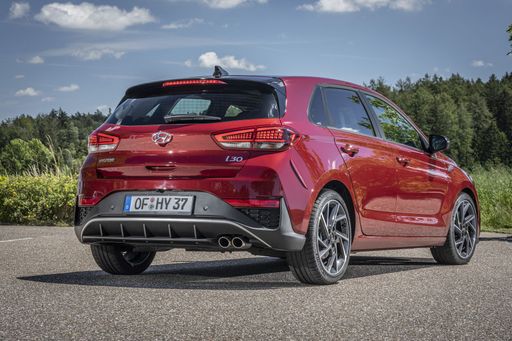
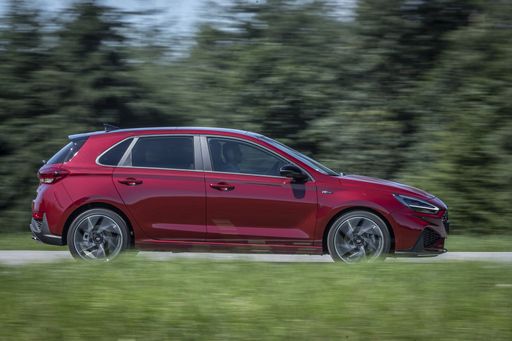
The Hyundai i30 vs. Kia Stonic: Hatchback Meets Compact SUV

Choosing between a hatchback and a compact SUV can be a conundrum for many car enthusiasts. The Hyundai i30 and Kia Stonic offer intriguing options in their respective categories. Here, we delve deep into their technical aspects and innovative features to help potential buyers make an informed choice.
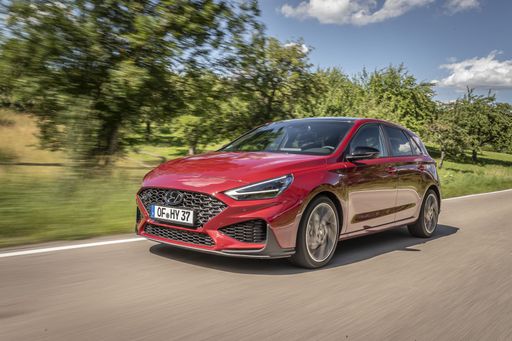
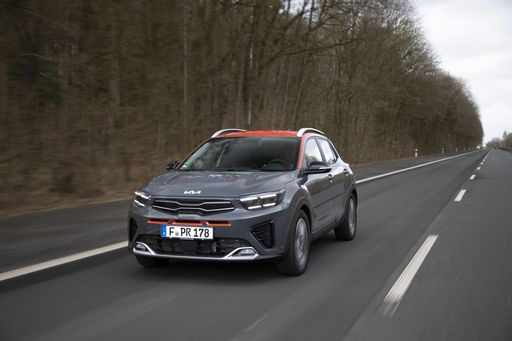
i30

Performance and Power

The Hyundai i30 brings to the table a choice between petrol and petrol MHEV engines. With power outputs ranging from 100 to 140 HP and accelerated zip from 0 to 100 km/h in as little as 9.6 seconds, it offers a balance of performance and efficiency. The i30's max speed peaks at 197 km/h, and it offers torque options up to 253 Nm, ensuring a lively driving experience for hatchback enthusiasts.

On the other hand, the Kia Stonic is also available in both petrol and petrol MHEV engine variations, with power output choices up to 100 HP. The Stonic offers moderate acceleration, reaching 100 km/h from a standstill in a minimum of 11.3 seconds, with a max speed of 179 km/h. Its torque maxes out at 200 Nm, catering to those who prefer a steady and stable ride in their compact SUVs.

Stonic

Efficiency and Consumption

Fuel efficiency is a critical consideration for many buyers. The Hyundai i30 boasts fuel consumption figures between 5.6 and 5.9 L/100km, while the Kia Stonic provides a slightly broader range from 5.5 to 5.8 L/100km. Both vehicles fall within the CO2 efficiency class D, with emissions ranging from 126 to 133 g/km for the i30 and 125 to 132 g/km for the Stonic.

i30

Design and Dimensions

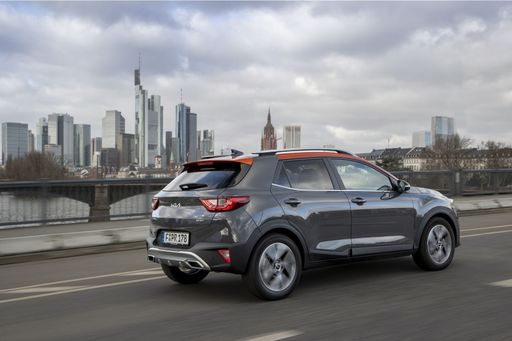
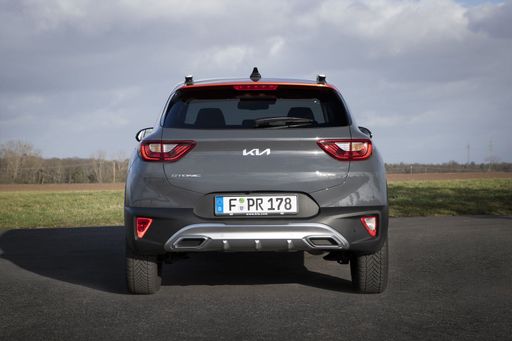
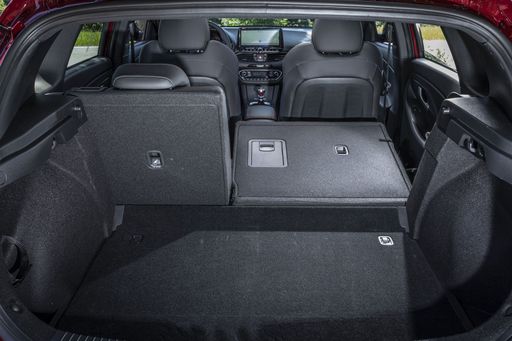
The Hyundai i30 spans 4340 mm in length and 1795 mm in width, with a height of 1455 mm. Its trunk capacity is a practical 395 liters, making it ideal for those who value hatchback utility. Meanwhile, the Kia Stonic, with its SUV stance, is slightly more compact in length at 4140 mm, yet taller with a height of 1505 mm. Its trunk provides a capacity of 352 liters, efficiently catering to urban adventures and light off-road excursions.

Stonic

Interior and Comfort

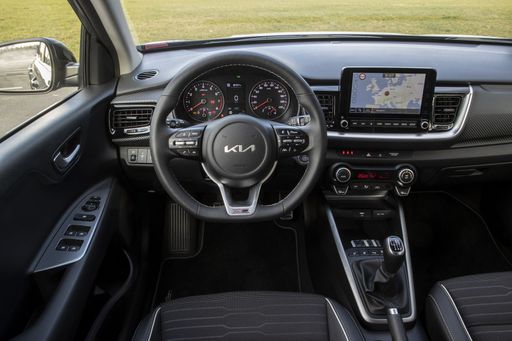
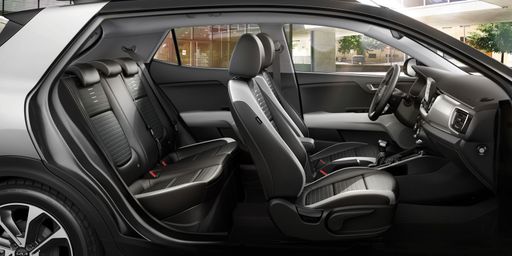
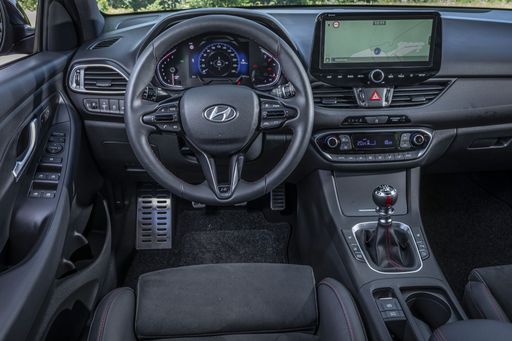
Both the Hyundai i30 and Kia Stonic are designed to comfortably seat five passengers. However, they differ slightly in their ride heights, as the Stonic’s SUV build provides a more elevated seating position, often preferred for better visibility on the road.

i30

Technical Innovations

When it comes to technical advancements, Hyundai and Kia, as sibling brands, often share technological platforms. This allows both the i30 and Stonic to offer contemporary features like advanced infotainment systems and driver assistance technologies. Each comes equipped with a range of customizable options, from manual gearboxes to modern dual-clutch automatics.

Stonic

Conclusion

The choice between the Hyundai i30 and Kia Stonic ultimately hinges on the buyer’s individual needs and preferences. The i30, with its punchy performance and practical design, appeals to those in the market for a dynamic hatchback. In contrast, the Stonic offers compact SUV enthusiasts a blend of versatility and urban-friendly dimensions. Whichever way your automotive compass points, both models promise a satisfying blend of style, innovation, and efficiency.

Here’s where it gets real: The technical differences in detail

Stonic

Costs and Efficiency:

Price and efficiency are key factors when choosing a car – and this is often where the real differences emerge.

Kia Stonic is visibly cheaper – starting at 20,400 £ , while the Hyundai i30 costs 24,600 £ . That’s a price difference of around 4,166 £.

Fuel consumption also shows a difference: the Kia Stonic uses 5.6 L/100km and is marginally more efficient than the Hyundai i30 with 5.9 L/100km. The difference is about 0.3 L/100km.

i30

Engine and Performance:

Power, torque and acceleration are the classic benchmarks for car enthusiasts – and here, some clear differences start to show.

When it comes to engine power, the Hyundai i30 offers clearly more power – delivering 150 HP compared to 115 HP. That’s roughly 35 HP more horsepower.

When accelerating from 0 to 100 km/h, the Hyundai i30 is clearly quicker – completing the sprint in 8.9 s, while the Kia Stonic takes 10.7 s. That’s about 1.8 s quicker.

There’s also a difference in torque: the Hyundai i30 delivers a bit more torque with 250 Nm compared to 200 Nm. That’s about 50 Nm more.

Stonic

Space and Everyday Use:

Cabin size, boot volume and payload all play a role in everyday practicality. Here, comfort and flexibility make the difference.

Both vehicles offer seating for 5 people.

In terms of curb weight, Kia Stonic is very slightly lighter – 1,205 kg compared to 1,315 kg. The difference is around 110 kg.

Looking at boot space, the Hyundai i30 offers slightly more boot space – 395 L compared to 352 L. That’s a difference of about 43 L.

When it comes to payload, the Hyundai i30 carries barely more – 485 kg compared to 445 kg. That’s a difference of about 40 kg.

Who wins the race in the data check?

The Hyundai i30 is clearly superior overall in the objective data comparison.
This result only shows which model scores more points on paper – not which of the two cars feels right for you.

from £24,600
i30

Hyundai i30

  • Engine Type Petrol
  • Transmission Manuel, Automatic
  • Drive Type Front-Wheel Drive
  • Power HP 115 - 150 HP
  • Consumption L/100km 5.9 - 6.3 L/100km
Kia Stonic
Hyundai i30

Costs and Consumption

View detailed analysis

Engine and Performance

View detailed analysis

Dimensions and Body

View detailed analysis

Kia Stonic

The Kia Stonic is a compact crossover that pairs nimble city manners with a surprisingly spacious and comfortable cabin. It’s a practical, well-equipped choice for buyers who value sensible features, approachable styling and easy everyday usability.

details

Hyundai i30

The Hyundai i30 proves that sensible can also be stylish, offering a confident driving character wrapped in neat, modern design. It serves up a roomy, well-equipped cabin and composed ride that make everyday motoring feel like a clever purchase rather than a compromise.

details
Kia Stonic
Hyundai i30

Costs and Consumption

Price
20,400 - 26,800 £
Price
24,600 - 31,400 £
Consumption L/100km
5.6 - 5.7 L/100km
Consumption L/100km
5.9 - 6.3 L/100km
Consumption kWh/100km
-
Consumption kWh/100km
-
Electric Range
-
Electric Range
-
Battery Capacity
-
Battery Capacity
-
co2
126 - 128 g/km
co2
134 - 142 g/km
Fuel tank capacity
-
Fuel tank capacity
-

Dimensions and Body

Body Type
SUV
Body Type
Hatchback
Seats
5
Seats
5
Doors
-
Doors
-
Curb weight
1,205 - 1,270 kg
Curb weight
1,315 - 1,435 kg
Trunk capacity
352 L
Trunk capacity
395 L
Length
-
Length
-
Width
1,760 mm
Width
1,795 mm
Height
-
Height
-
Max trunk capacity
-
Max trunk capacity
-
Payload
440 - 445 kg
Payload
445 - 485 kg

Engine and Performance

Engine Type
Petrol, Petrol MHEV
Engine Type
Petrol
Transmission
Manuel, Automatic
Transmission
Manuel, Automatic
Transmission Detail
Manual Gearbox, Dual-Clutch Automatic
Transmission Detail
Manual Gearbox, Dual-Clutch Automatic
Drive Type
Front-Wheel Drive
Drive Type
Front-Wheel Drive
Power HP
100 - 115 HP
Power HP
115 - 150 HP
Acceleration 0-100km/h
10.7 - 12.1 s
Acceleration 0-100km/h
8.9 - 11.7 s
Max Speed
-
Max Speed
-
Torque
172 - 200 Nm
Torque
172 - 250 Nm
Number of Cylinders
3
Number of Cylinders
3 - 4
Power kW
74 - 85 kW
Power kW
85 - 110 kW
Engine capacity
998 cm3
Engine capacity
998 - 1,598 cm3

General

Model Year
2025
Model Year
2026
CO2 Efficiency Class
D
CO2 Efficiency Class
D, E
Brand
Kia
Brand
Hyundai
DriveDuel uses data analysis and artificial intelligence to evaluate vehicle data and create content. Content is regularly reviewed and improved. The displayed prices are estimates based on German list prices, adjusted to the respective country’s VAT. Country-specific registration taxes are not included. This information is not legally binding.