VS

Kia Stonic vs Suzuki Vitara comparison

Compare performance (115 HP vs 184 HP), boot space and price (20,400 £ vs 23,600 £ ) at a glance. Find out which car is the better choice for you – Kia Stonic or Suzuki Vitara?

Kia Stonic vs Suzuki Vitara: Key differences

Kia Stonic

4.6 (2 Reviews)
rate
  • slightly cheaper
  • only slightly lighter
details

Suzuki Vitara

4.5 (5 Reviews)
rate
  • noticeably more power
  • very slightly more efficient
  • substantially quicker 0–100 km/h
  • barely more trunk space
details

All details on performance, efficiency, range and trunk space can be found in the technical comparison below – including user reviews for both models.

By Achim Sedelmaier

Stonic

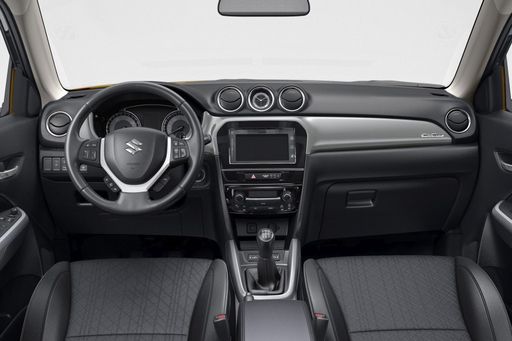
A Clash of Compacts: Kia Stonic vs. Suzuki Vitara

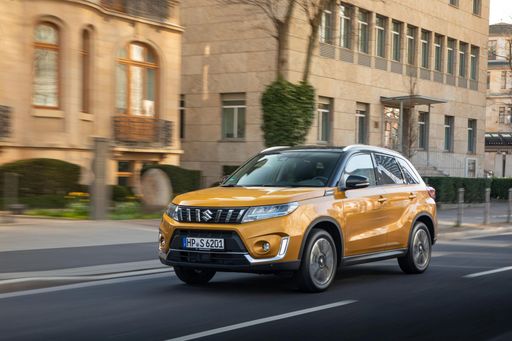
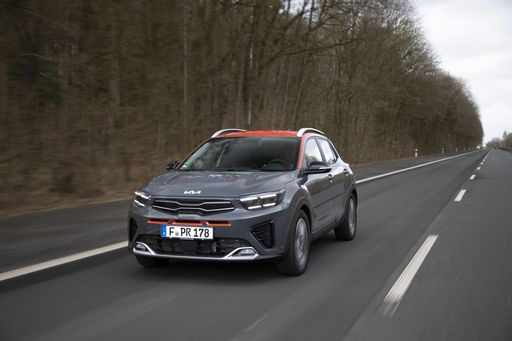
In the ever-growing compact SUV segment, the Kia Stonic and Suzuki Vitara stand out as compelling options for urban drivers and adventure enthusiasts alike. Each model offers its unique combination of style, performance, and tech-savvy features, making the choice between them a tough one. In this article, we delve into the specifics, comparing technical aspects and innovations of both vehicles to help prospective buyers decide which best suits their needs.
Vitara

Powertrain Performance and Efficiency

The Kia Stonic is available with two petrol engine options, including a mild-hybrid variant. The 1.0-liter engine delivers 100 HP while the larger 1.2-liter variant produces 79 HP. Each variant offers a front-wheel-drive option and is paired with either a manual or a dual-clutch automatic transmission. Acceleration from 0 to 100 km/h ranges from a respectable 11.3 seconds to 14.2 seconds, with a maximum speed of 179 km/h.

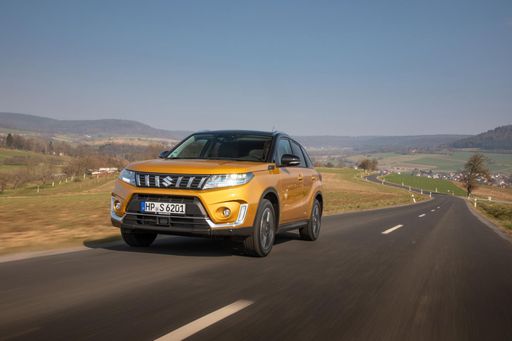
On the other hand, the Suzuki Vitara boasts a slightly more powerful lineup with its petrol mild-hybrid and full hybrid options, generating up to 129 HP. The Vitara accelerates quicker, clocking in at just 9.5 seconds for the 0-100 km/h test, and maxing out at 190 km/h. This power, combined with options for both front-wheel and all-wheel drive, makes the Vitara suitable for a variety of driving conditions.

Stonic

Fuel Efficiency

When it comes to fuel consumption, both the Stonic and Vitara offer competitive figures. The Kia Stonic shows a range of consumption between 5.5 to 5.8 L/100 km, depending on the engine configuration. Conversely, the Suzuki Vitara proves to be slightly more fuel-efficient, with consumption figures between 5.0 and 5.6 L/100 km, making it an ideal choice for those conscious of fuel costs.

Vitara

Interior Space and Comfort

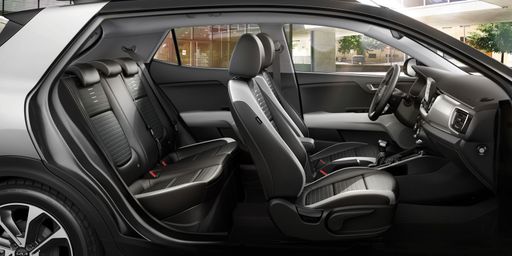
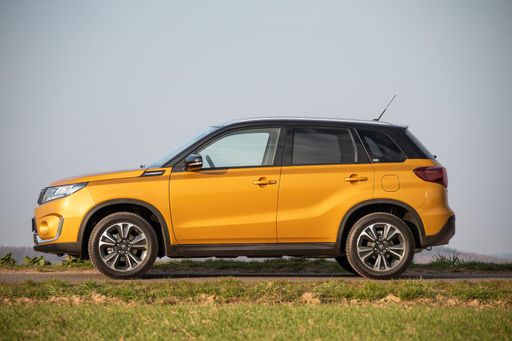
In terms of dimensions, the Stonic measures 4140 mm in length, 1760 mm in width, and 1505 mm in height, while the Vitara is slightly larger, coming in at 4185 mm long, 1775 mm wide, and 1595 mm in height. Inside, both vehicles comfortably seat five individuals. However, the Vitara offers a more generous trunk capacity, boasting 375 liters compared to the Stonic's 352 liters, giving the former an advantage for those who need extra cargo space.

Stonic

Innovations and Technology

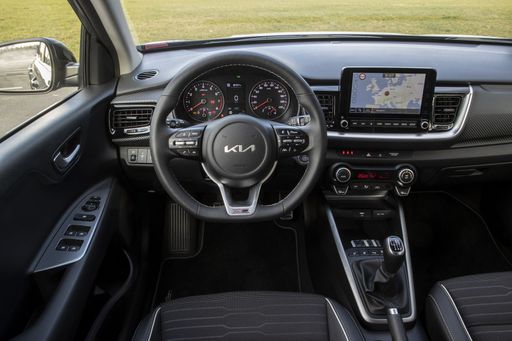
Both SUVs come equipped with a variety of tech features aimed at enhancing the driving experience. The Kia Stonic includes modern infotainment options with a touchscreen interface, smartphone connectivity, and a suite of advanced safety features. Highlights include lane-keeping assist and a collision avoidance system, appealing to safety-conscious consumers.

Meanwhile, the Suzuki Vitara does not fall short in this department. It also integrates a comprehensive infotainment system and supports smartphone connectivity. The notable hybrid technology in the Vitara not only elevates performance but also enhances its eco-friendliness, providing a forward-thinking appeal for environmentally conscious drivers.

Vitara

Final Verdict: Choosing Between Stonic and Vitara

Ultimately, the decision between the Kia Stonic and Suzuki Vitara comes down to the priorities of the buyer. The Stonic is a fantastic compact SUV for those looking for stylish design, efficiency, and a solid tech package. However, for drivers requiring a bit more power and room, along with advanced hybrid innovations, the Suzuki Vitara will likely prove to be a more fitting choice.

Whichever vehicle you lean towards, both the Kia Stonic and Suzuki Vitara exemplify the best of compact SUV offerings. With distinctive qualities and credible performance metrics, either choice promises to meet various lifestyle needs.

Here’s where it gets real: The technical differences in detail

Stonic

Costs and Efficiency:

Price and efficiency are key factors when choosing a car – and this is often where the real differences emerge.

Kia Stonic is slightly cheaper – starting at 20,400 £ , while the Suzuki Vitara costs 23,600 £ . That’s a price difference of around 3,180 £.

Fuel consumption also shows a difference: the Suzuki Vitara uses 5.3 L/100km and is very slightly more efficient than the Kia Stonic with 5.6 L/100km. The difference is about 0.3 L/100km.

Vitara

Engine and Performance:

Power, torque and acceleration are the classic benchmarks for car enthusiasts – and here, some clear differences start to show.

When it comes to engine power, the Suzuki Vitara offers noticeably more power – delivering 184 HP compared to 115 HP. That’s roughly 69 HP more horsepower.

When accelerating from 0 to 100 km/h, the Suzuki Vitara is substantially quicker – completing the sprint in 7.4 s, while the Kia Stonic takes 10.7 s. That’s about 3.3 s quicker.

There’s also a difference in torque: the Suzuki Vitara delivers noticeably more torque with 307 Nm compared to 200 Nm. That’s about 107 Nm more.

Stonic

Space and Everyday Use:

Cabin size, boot volume and payload all play a role in everyday practicality. Here, comfort and flexibility make the difference.

Both vehicles offer seating for 5 people.

In terms of curb weight, Kia Stonic is only slightly lighter – 1,205 kg compared to 1,255 kg. The difference is around 50 kg.

Looking at boot space, the Suzuki Vitara offers barely more boot space – 375 L compared to 352 L. That’s a difference of about 23 L.

When it comes to payload, the Kia Stonic carries very slightly more – 445 kg compared to 425 kg. That’s a difference of about 20 kg.

Who wins the race in the data check?

The Suzuki Vitara holds a decisive overall lead in the objective data comparison.
This result only shows which model scores more points on paper – not which of the two cars feels right for you.

from £23,600
Vitara

Suzuki Vitara

  • Engine Type : Petrol MHEV, Electric
  • Transmission : Automatic, Manuel
  • Drive Type : Front-Wheel Drive, All-Wheel Drive
  • Power HP : 110 - 184 HP
  • Consumption L/100km : 5.3 - 5.8 L/100km
  • Consumption kWh/100km : 14.9 - 16.6 kWh/100km
  • Electric Range : 344 - 426 km
Kia Stonic
Suzuki Vitara

Costs and Consumption

View detailed analysis

Engine and Performance

View detailed analysis

Dimensions and Body

View detailed analysis

Kia Stonic

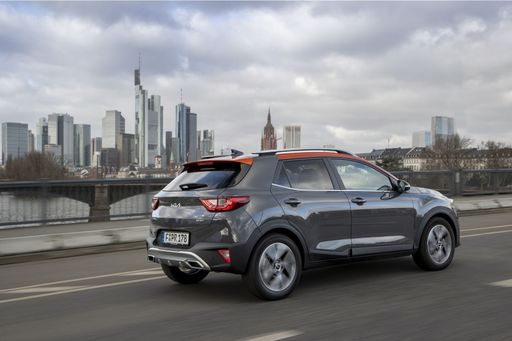
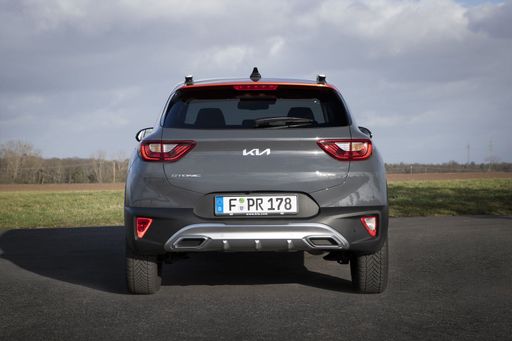
The Kia Stonic is a compact crossover that pairs nimble city manners with a surprisingly spacious and comfortable cabin. It’s a practical, well-equipped choice for buyers who value sensible features, approachable styling and easy everyday usability.

details

Suzuki Vitara

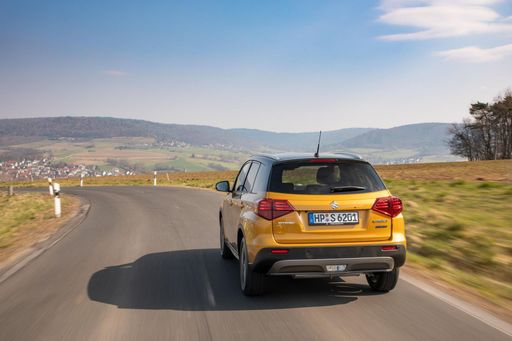
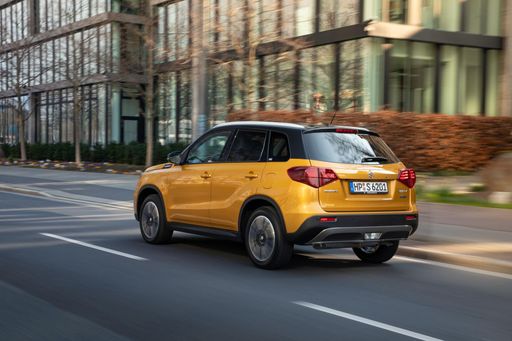
The Suzuki Vitara is a practical compact SUV that balances a comfortable, composed ride with easy-to-live-with interior space, making it well suited for daily driving and weekend getaways. It's widely praised for reliable engineering and sensible running costs, offering straightforward value to buyers who want a no-nonsense, economical crossover.

details
Kia Stonic
Suzuki Vitara

Costs and Consumption

Price
20,400 - 26,800 £
Price
23,600 - 36,800 £
Consumption L/100km
5.6 - 5.7 L/100km
Consumption L/100km
5.3 - 5.8 L/100km
Consumption kWh/100km
-
Consumption kWh/100km
14.9 - 16.6 kWh/100km
Electric Range
-
Electric Range
344 - 426 km
Battery Capacity
-
Battery Capacity
-
co2
126 - 128 g/km
co2
0 - 137 g/km
Fuel tank capacity
-
Fuel tank capacity
-

Dimensions and Body

Body Type
SUV
Body Type
SUV
Seats
5
Seats
5
Doors
-
Doors
-
Curb weight
1,205 - 1,270 kg
Curb weight
1,255 - 1,935 kg
Trunk capacity
352 L
Trunk capacity
310 - 375 L
Length
-
Length
-
Width
1,760 mm
Width
1,775 - 1,800 mm
Height
-
Height
-
Max trunk capacity
-
Max trunk capacity
-
Payload
440 - 445 kg
Payload
395 - 425 kg

Engine and Performance

Engine Type
Petrol, Petrol MHEV
Engine Type
Petrol MHEV, Electric
Transmission
Manuel, Automatic
Transmission
Automatic, Manuel
Transmission Detail
Manual Gearbox, Dual-Clutch Automatic
Transmission Detail
Automatic Gearbox, Manual Gearbox
Drive Type
Front-Wheel Drive
Drive Type
Front-Wheel Drive, All-Wheel Drive
Power HP
100 - 115 HP
Power HP
110 - 184 HP
Acceleration 0-100km/h
10.7 - 12.1 s
Acceleration 0-100km/h
7.4 - 9.6 s
Max Speed
-
Max Speed
-
Torque
172 - 200 Nm
Torque
193 - 307 Nm
Number of Cylinders
3
Number of Cylinders
4
Power kW
74 - 85 kW
Power kW
81 - 135 kW
Engine capacity
998 cm3
Engine capacity
1,373 cm3

General

Model Year
2025
Model Year
2,025 - 2,026
CO2 Efficiency Class
D
CO2 Efficiency Class
D, E, A
Brand
Kia
Brand
Suzuki
DriveDuel uses data analysis and artificial intelligence to evaluate vehicle data and create content. Content is regularly reviewed and improved. The displayed prices are estimates based on German list prices, adjusted to the respective country’s VAT. Country-specific registration taxes are not included. This information is not legally binding.