VS

Mazda CX-30 vs Kia Niro comparison

Compare performance (186 HP vs 138 HP), boot space and price (25,200 £ vs 29,100 £ ) at a glance. Find out which car is the better choice for you – Mazda CX-30 or Kia Niro?

Mazda CX-30 vs Kia Niro: Key differences

Mazda CX-30

4.6 (3 Reviews)
rate
  • somewhat cheaper
  • markedly more power
  • markedly quicker 0–100 km/h
  • very slightly lighter

Kia Niro

4.5 (2 Reviews)
rate
  • clearly more efficient

All details on performance, efficiency, range and trunk space can be found in the technical comparison below – including user reviews for both models.

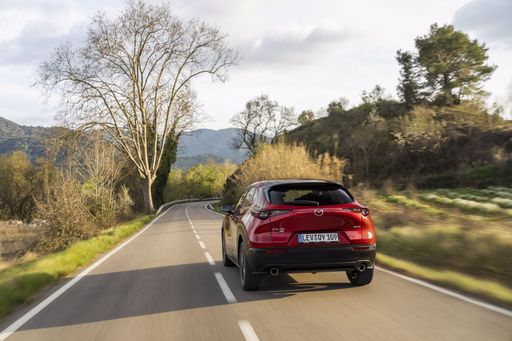
CX-30

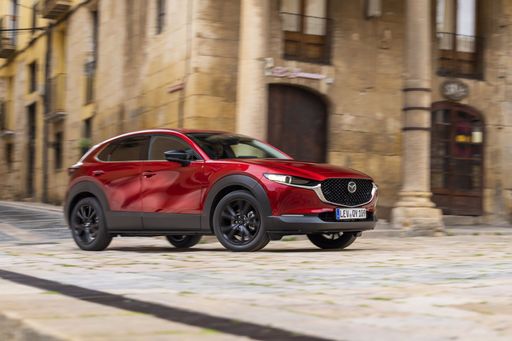
In the ever-evolving automotive landscape, two players are making a significant mark in the compact SUV segment: the Kia Niro and the Mazda CX-30. Both models offer distinct features that cater to a variety of driver preferences, whether you're looking for hybrid technology or dynamic performance. Let’s explore these two contenders in depth and see how they stack up against each other in terms of technical specifications, innovations, and overall driving experience.
Niro

Specifications Overview

The Kia Niro, available in full hybrid and plug-in hybrid variants, presents a unique opportunity for eco-conscious drivers. With a power output of up to 171 HP from its 1.6L 4-cylinder engine, the Niro excels in efficiency, boasting a fuel consumption rate as low as 4.4 L/100 km and a CO2 output of just 100 g/km. In contrast, the Mazda CX-30 features a gasoline mild-hybrid engine that delivers up to 186 HP from a 2.5L 4-cylinder engine. Its fuel consumption figures are slightly higher, ranging from 5.7 L/100 km to 6.6 L/100 km, with CO2 emissions varying from 129 g/km to 148 g/km.

CX-30

Performance Metrics

When it comes to acceleration, the Kia Niro offers respectable figures with a 0-100 km/h time of 10.4 seconds for the most performant variant. Meanwhile, the Mazda CX-30 impressively races to the same mark in just 8.3 seconds, showcasing its sporty dynamics. The CX-30 also offers a top speed of up to 204 km/h, significantly exceeding the Niro's top speed of 160 km/h, which might appeal to those seeking a more exhilarating driving experience.

Niro

Design and Comfort

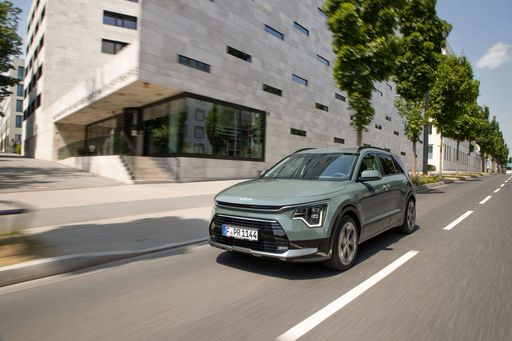
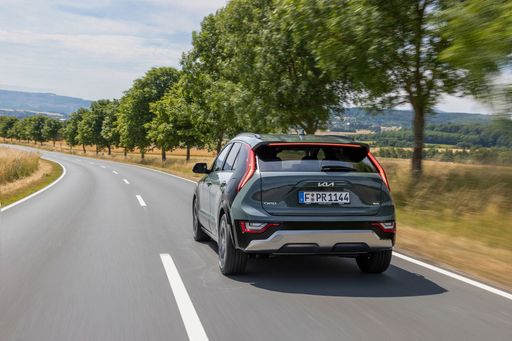
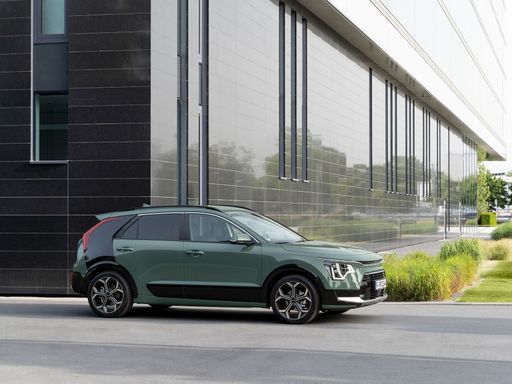
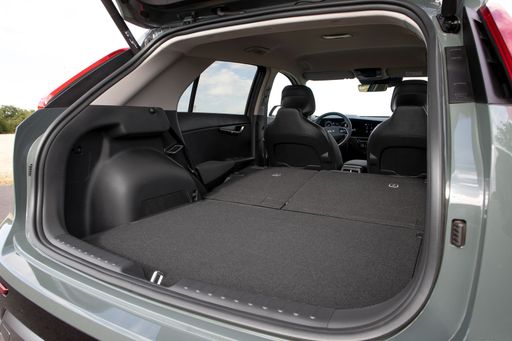
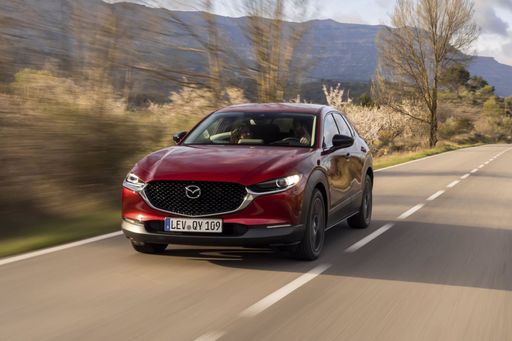
Both vehicles feature modern SUV styling, but their designs reflect different philosophies. The Kia Niro has a practical and functional design, emphasizing aerodynamic efficiency and cargo space. With 451 liters of trunk capacity, it is ideal for families and adventure seekers. Conversely, the Mazda CX-30 boasts a more sculpted exterior and an upscale interior that focuses on delivering an engaging driving experience combined with ample comfort, offering a trunk capacity of 430 liters.

CX-30

Interior Technology and Innovations

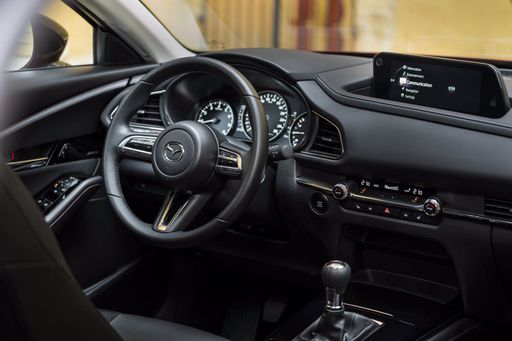
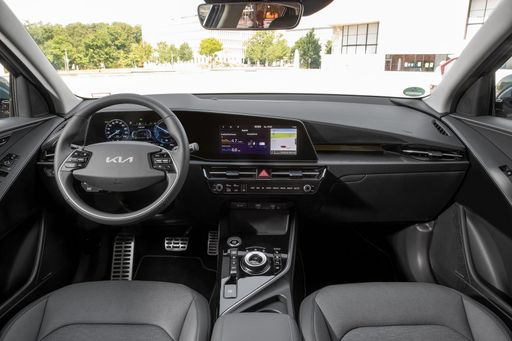
In terms of interior technology, both models are well-suited for the tech-savvy consumer. The Kia Niro comes equipped with a wide array of safety features and an advanced infotainment system with smartphone integration via Android Auto and Apple CarPlay. The Mazda CX-30 also incorporates a user-friendly infotainment system but places a stronger emphasis on a driver-centric cabin design, combining elegance with functionality.

Niro

Driving Experience

The Niro’s hybrid engines provide a tranquil driving experience, making it perfect for city commuting while offering the flexibility of hybrid technology. Its adaptive cruise control and lane-keeping assist enhance the ease of driving. On the other hand, the Mazda CX-30's suspension setup and steering response deliver a sporty handling characteristic, making it enjoyable to drive on twisty roads while still maintaining comfort for daily commutes.

CX-30

Value for Money

Pricing both vehicles competitively in their segments, the Kia Niro attracts buyers looking for eco-friendly solutions without compromising on performance. The cost-effective operation is substantiated by its impressive fuel economy and lower emissions. Alternatively, the Mazda CX-30 justifies its price with a premium feel, sporty performance, and an array of cutting-edge safety features that enhance its value.

Niro

Conclusion

Ultimately, the choice between the Kia Niro and the Mazda CX-30 boils down to personal preferences and priorities. If efficiency and hybrid technology top your list, the Niro stands out as an excellent choice. However, if you seek sporty handling and a touch of luxury, the CX-30 may be better suited for your needs. Whichever you choose, both models represent exceptional value in the compact SUV class, offering unique qualities that cater to different driving styles and lifestyles.

Here’s where it gets real: The technical differences in detail

CX-30

Costs and Efficiency:

Looking at overall running costs, both models reveal some interesting differences in everyday economy.

Mazda CX-30 is somewhat cheaper – starting at 25,200 £ , while the Kia Niro costs 29,100 £ . That’s a price difference of around 3,900 £.

Fuel consumption also shows a difference: the Kia Niro uses 4.5 L/100km and is clearly more efficient than the Mazda CX-30 with 5.7 L/100km. The difference is about 1.2 L/100km.

Niro

Engine and Performance:

Power, torque and acceleration say a lot about how a car feels on the road. This is where you see which model delivers more driving dynamics.

When it comes to engine power, the Mazda CX-30 offers markedly more power – delivering 186 HP compared to 138 HP. That’s roughly 48 HP more horsepower.

When accelerating from 0 to 100 km/h, the Mazda CX-30 is markedly quicker – completing the sprint in 8.3 s, while the Kia Niro takes 11.1 s. That’s about 2.8 s quicker.

There’s also a difference in torque: the Kia Niro delivers marginally more torque with 265 Nm compared to 240 Nm. That’s about 25 Nm more.

CX-30

Space and Everyday Use:

Beyond pure performance, interior space and usability matter most in daily life. This is where you see which car is more practical and versatile.

Both vehicles offer seating for 5 people.

In terms of curb weight, Mazda CX-30 is very slightly lighter – 1,455 kg compared to 1,474 kg. The difference is around 19 kg.

When it comes to payload, the Mazda CX-30 carries only slightly more – 496 kg compared to 466 kg. That’s a difference of about 30 kg.

Who wins the race in the data check?

The Mazda CX-30 is far ahead overall in the objective data comparison.
This result only shows which model scores more points on paper – not which of the two cars feels right for you.

from £25,200
CX-30

Mazda CX-30

  • Engine Type : Petrol MHEV
  • Transmission : Manuel, Automatic
  • Drive Type : Front-Wheel Drive, All-Wheel Drive
  • Power HP : 140 - 186 HP
  • Consumption L/100km : 5.7 - 6.6 L/100km
Mazda CX-30
Kia Niro

Costs and Consumption

View detailed analysis

Engine and Performance

View detailed analysis

Dimensions and Body

View detailed analysis

Mazda CX-30

The Mazda CX-30 blends sleek coupe-like lines with the practicality of a compact crossover, feeling more premium than its price tag suggests. It’s a joy to drive for anyone who likes a taut chassis and an interior that treats daily commutes like a small luxury escape.

details

Kia Niro

The Kia Niro blends clever packaging and modern styling into a compact crossover that’s refreshingly sensible for daily life. It’s comfortable, economical and packed with user‑friendly tech, so if you want a fuss‑free family car with a touch of green credibility, the Niro is worth a test drive.

details
Mazda CX-30
Kia Niro

Costs and Consumption

Price
25,200 - 36,800 £
Price
29,100 - 33,800 £
Consumption L/100km
5.7 - 6.6 L/100km
Consumption L/100km
4.5 - 4.9 L/100km
Consumption kWh/100km
-
Consumption kWh/100km
-
Electric Range
-
Electric Range
-
Battery Capacity
-
Battery Capacity
-
co2
129 - 148 g/km
co2
102 - 111 g/km
Fuel tank capacity
-
Fuel tank capacity
-

Dimensions and Body

Body Type
SUV
Body Type
SUV
Seats
5
Seats
5
Doors
-
Doors
-
Curb weight
1,455 - 1,587 kg
Curb weight
1,474 kg
Trunk capacity
422 - 430 L
Trunk capacity
-
Length
-
Length
-
Width
1,795 mm
Width
1,825 mm
Height
-
Height
-
Max trunk capacity
-
Max trunk capacity
-
Payload
458 - 496 kg
Payload
466 kg

Engine and Performance

Engine Type
Petrol MHEV
Engine Type
Full Hybrid
Transmission
Manuel, Automatic
Transmission
Automatic
Transmission Detail
Manual Gearbox, Automatic Gearbox
Transmission Detail
Dual-Clutch Automatic
Drive Type
Front-Wheel Drive, All-Wheel Drive
Drive Type
Front-Wheel Drive
Power HP
140 - 186 HP
Power HP
138 HP
Acceleration 0-100km/h
8.3 - 10.3 s
Acceleration 0-100km/h
11.1 - 11.4 s
Max Speed
-
Max Speed
-
Torque
238 - 240 Nm
Torque
265 Nm
Number of Cylinders
4
Number of Cylinders
4
Power kW
103 - 137 kW
Power kW
102 kW
Engine capacity
1,998 - 2,488 cm3
Engine capacity
1,580 cm3

General

Model Year
2,025
Model Year
2,025
CO2 Efficiency Class
D, E
CO2 Efficiency Class
C
Brand
Mazda
Brand
Kia
DriveDuel uses data analysis and artificial intelligence to evaluate vehicle data and create content. Content is regularly reviewed and improved. The displayed prices are estimates based on German list prices, adjusted to the respective country’s VAT. Country-specific registration taxes are not included. This information is not legally binding.