VS

Mazda CX-30 vs Kia Sportage comparison

Compare performance (186 HP vs 288 HP), boot space and price (25,200 £ vs 30,200 £ ) at a glance. Find out which car is the better choice for you – Mazda CX-30 or Kia Sportage?

Mazda CX-30 vs Kia Sportage: Key differences

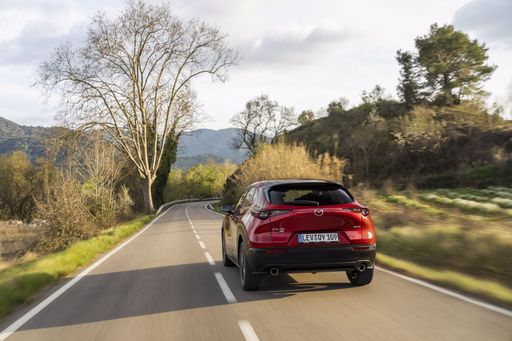
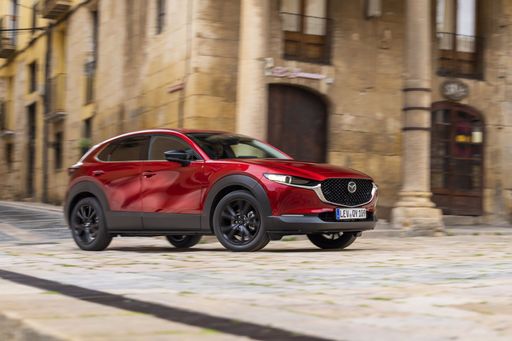
Mazda CX-30

4.6 (3 Reviews)
rate
  • a bit cheaper
  • barely lighter

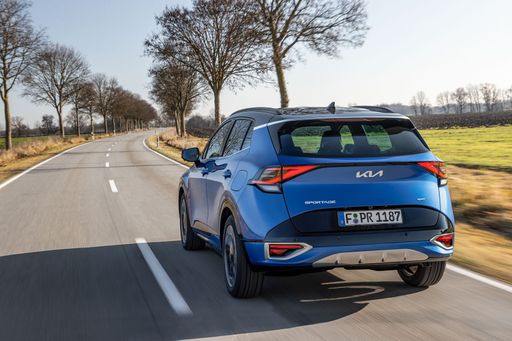
Kia Sportage

4.9 (2 Reviews)
rate
  • clearly more power
  • considerably more efficient
  • a bit quicker 0–100 km/h
  • visibly more trunk space

All details on performance, efficiency, range and trunk space can be found in the technical comparison below – including user reviews for both models.

CX-30

The automotive landscape continues to evolve rapidly, with manufacturers striving to strike the perfect balance between performance, technology, and practicality. In this comparison, we look at two popular entries in the compact SUV segment: the Kia Sportage and the Mazda CX-30. Both vehicles have carved a niche for themselves with their unique offerings and innovations, making them strong contenders in the market. Let’s dive into the technical aspects and innovations that set these vehicles apart.
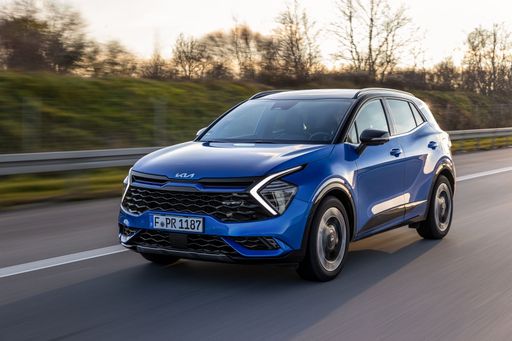
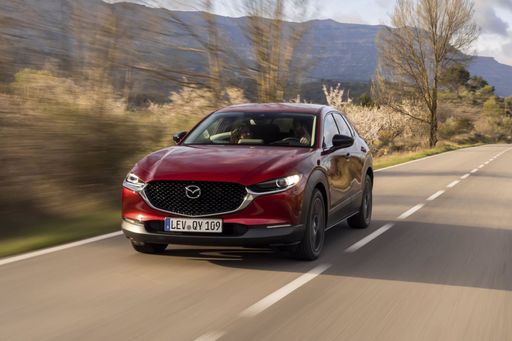
Sportage

Engine Options and Performance

The 2024 Kia Sportage comes with a diverse lineup of engine options catering to various driver needs. It offers a range of alternatives including Diesel MHEV, Petrol MHEV, Full Hybrid, Petrol, and Plugin Hybrid, giving it an edge in versatility. The power output ranges from 136 HP to a powerful 252 HP, with diesel options providing robust torque figures as high as 350 Nm. The Sportage showcases a quick acceleration from 0-100 km/h, clocking in as low as 8.3 seconds with its most potent engine.

On the other hand, the 2024 Mazda CX-30 is powered primarily by a Petrol MHEV which produces up to 186 HP. This positions the CX-30 as a capable vehicle, but with less engine variety compared to the Sportage. Its acceleration is commendable as well, reaching 100 km/h in as little as 8.3 seconds, but the maximum torque peaks at 240 Nm, which is lower than the Sportage’s highest output.

CX-30

Fuel Efficiency

When it comes to fuel efficiency, the Kia Sportage stands out with consumption figures ranging between 5.0 to 7.2 L/100 km depending on the trim and engine choice. The availability of mild-hybrid and hybrid technologies contributes significantly to its impressive efficiency. Its Plugin Hybrid variant also boasts an electric range of up to 64 km, enhancing the appeal for environmentally conscious drivers.

The Mazda CX-30, while not as diverse in its engine offerings, is quite efficient in its own right. Fuel consumption figures vary from 5.7 to 6.6 L/100 km, making it a solid choice for daily driving. However, the absence of hybrid variants may deter buyers looking for an eco-friendly option.

Sportage

Interior Space and Comfort

Space is a critical factor when evaluating SUVs, and both Kia and Mazda have imbued their models with functionality. The Kia Sportage boasts a generous trunk capacity ranging from 526 to 587 liters, which is excellent for families or those carrying larger items. The cabin of the Sportage is designed with comfort in mind, offering ample legroom and a high-quality interior that rivals more premium brands.

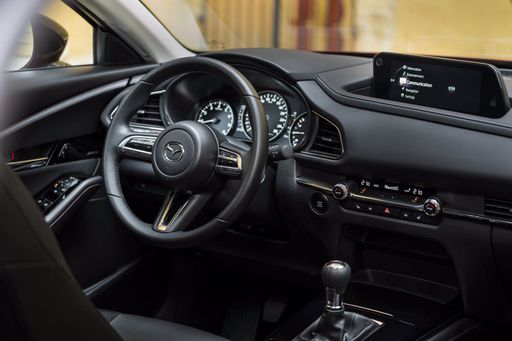
Conversely, the Mazda CX-30 offers a slightly smaller trunk capacity at 430 to 422 liters. However, it compensates with a driver-focused cockpit that emphasizes ergonomics and premium materials. The overall ambience of the CX-30’s interior is sophisticated, making it a pleasant place to spend time in.

CX-30

Technology and Safety Innovations

In terms of technology, both vehicles are equipped with advanced features, but the Kia Sportage leans more into innovations. The Sportage includes a highly intuitive infotainment system, large touchscreen interfaces, and a series of driver-assistance technologies, such as adaptive cruise control and lane-keeping assist. Furthermore, the vehicle typically receives high ratings in safety tests, reflecting Kia’s commitment to driver and passenger security.

The Mazda CX-30, while offering a slightly less extensive tech package, does not fall short in safety features. Its innovative i-Activsense suite includes smart brake support and blind-spot monitoring, which contribute to its reputation for reliability. The CX-30’s infotainment system, albeit simpler, is functional and user-friendly, enhancing the overall driving experience.

Sportage

Conclusion

Each vehicle has its strong points, making the decision largely dependent on personal priorities. The Kia Sportage shines with its extensive engine options, spacious interiors, and cutting-edge technology, making it ideal for families and tech-savvy drivers. Meanwhile, the Mazda CX-30 stands out with its stylish design, engaging driving dynamics, and premium interior, appealing to those who value aesthetics and comfort.

Ultimately, potential buyers should take both models for a test drive to experience firsthand how their distinctive characteristics align with individual preferences. In this competitive compact SUV segment, both the Kia Sportage and Mazda CX-30 offer compelling reasons to be considered for anyone’s next vehicle purchase.

Here’s where it gets real: The technical differences in detail

CX-30

Costs and Efficiency:

Price and efficiency are often the first things buyers look at. Here it becomes clear which model has the long-term edge – whether at the pump, the plug, or in purchase price.

Mazda CX-30 is a bit cheaper – starting at 25,200 £ , while the Kia Sportage costs 30,200 £ . That’s a price difference of around 4,928 £.

Fuel consumption also shows a difference: the Kia Sportage uses 2.9 L/100km and is considerably more efficient than the Mazda CX-30 with 5.7 L/100km. The difference is about 2.8 L/100km.

Sportage

Engine and Performance:

Under the bonnet, it becomes clear which model is tuned for sportiness and which one takes the lead when you hit the accelerator.

When it comes to engine power, the Kia Sportage offers clearly more power – delivering 288 HP compared to 186 HP. That’s roughly 102 HP more horsepower.

When accelerating from 0 to 100 km/h, the Kia Sportage is a bit quicker – completing the sprint in 7.5 s, while the Mazda CX-30 takes 8.3 s. That’s about 0.8 s quicker.

There’s also a difference in torque: the Kia Sportage delivers visibly more torque with 380 Nm compared to 240 Nm. That’s about 140 Nm more.

CX-30

Space and Everyday Use:

Beyond pure performance, interior space and usability matter most in daily life. This is where you see which car is more practical and versatile.

Both vehicles offer seating for 5 people.

In terms of curb weight, Mazda CX-30 is barely lighter – 1,455 kg compared to 1,552 kg. The difference is around 97 kg.

Looking at boot space, the Kia Sportage offers visibly more boot space – 587 L compared to 430 L. That’s a difference of about 157 L.

When it comes to payload, the Kia Sportage carries somewhat more – 580 kg compared to 496 kg. That’s a difference of about 84 kg.

Who wins the race in the data check?

The Kia Sportage is far ahead overall in the objective data comparison.
This result only shows which model scores more points on paper – not which of the two cars feels right for you.

from £30,200
Sportage

Kia Sportage

  • Engine Type : Petrol, Full Hybrid, Diesel MHEV, Plugin Hybrid
  • Transmission : Manuel, Automatic
  • Drive Type : Front-Wheel Drive, All-Wheel Drive
  • Power HP : 136 - 288 HP
  • Consumption L/100km : 2.9 - 7.8 L/100km
  • Electric Range : 63 - 66 km
Mazda CX-30
Kia Sportage

Costs and Consumption

View detailed analysis

Engine and Performance

View detailed analysis

Dimensions and Body

View detailed analysis

Mazda CX-30

The Mazda CX-30 blends sleek coupe-like lines with the practicality of a compact crossover, feeling more premium than its price tag suggests. It’s a joy to drive for anyone who likes a taut chassis and an interior that treats daily commutes like a small luxury escape.

details

Kia Sportage

The Kia Sportage proves you don't have to choose between style and sensible family motoring, wrapping modern, confident looks around a roomy, well-equipped cabin. It's an easy car to live with — comfortable on daily runs, pleasantly engaging when you want a bit of fun, and kind to your wallet so you can keep smiling at the fuel pump.

details
Mazda CX-30
Kia Sportage

Costs and Consumption

Price
25,200 - 36,800 £
Price
30,200 - 47,100 £
Consumption L/100km
5.7 - 6.6 L/100km
Consumption L/100km
2.9 - 7.8 L/100km
Consumption kWh/100km
-
Consumption kWh/100km
-
Electric Range
-
Electric Range
63 - 66 km
Battery Capacity
-
Battery Capacity
-
co2
129 - 148 g/km
co2
67 - 177 g/km
Fuel tank capacity
-
Fuel tank capacity
-

Dimensions and Body

Body Type
SUV
Body Type
SUV
Seats
5
Seats
5
Doors
-
Doors
-
Curb weight
1,455 - 1,587 kg
Curb weight
1,552 - 1,896 kg
Trunk capacity
422 - 430 L
Trunk capacity
526 - 587 L
Length
-
Length
-
Width
1,795 mm
Width
1,865 mm
Height
-
Height
-
Max trunk capacity
-
Max trunk capacity
-
Payload
458 - 496 kg
Payload
533 - 580 kg

Engine and Performance

Engine Type
Petrol MHEV
Engine Type
Petrol, Full Hybrid, Diesel MHEV, Plugin Hybrid
Transmission
Manuel, Automatic
Transmission
Manuel, Automatic
Transmission Detail
Manual Gearbox, Automatic Gearbox
Transmission Detail
Manual Gearbox, Dual-Clutch Automatic, Automatic Gearbox
Drive Type
Front-Wheel Drive, All-Wheel Drive
Drive Type
Front-Wheel Drive, All-Wheel Drive
Power HP
140 - 186 HP
Power HP
136 - 288 HP
Acceleration 0-100km/h
8.3 - 10.3 s
Acceleration 0-100km/h
7.5 - 11.6 s
Max Speed
-
Max Speed
-
Torque
238 - 240 Nm
Torque
250 - 380 Nm
Number of Cylinders
4
Number of Cylinders
4
Power kW
103 - 137 kW
Power kW
100 - 212 kW
Engine capacity
1,998 - 2,488 cm3
Engine capacity
1,598 cm3

General

Model Year
2,025
Model Year
2,025 - 2,026
CO2 Efficiency Class
D, E
CO2 Efficiency Class
F, D, E, G, B
Brand
Mazda
Brand
Kia
DriveDuel uses data analysis and artificial intelligence to evaluate vehicle data and create content. Content is regularly reviewed and improved. The displayed prices are estimates based on German list prices, adjusted to the respective country’s VAT. Country-specific registration taxes are not included. This information is not legally binding.