VS

Mazda CX-5 vs Ford Puma comparison

Compare performance (141 HP vs 168 HP), boot space and price (30,000 £ vs 23,900 £ ) at a glance. Find out which car is the better choice for you – Mazda CX-5 or Ford Puma?

Mazda CX-5 vs Ford Puma: Key differences

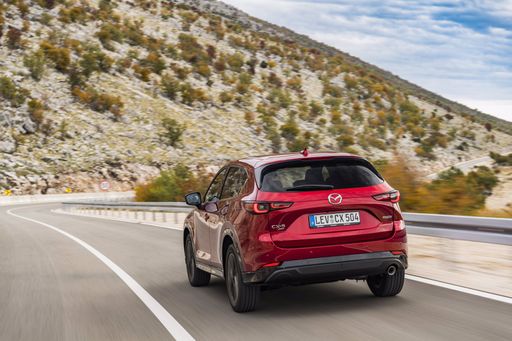
Mazda CX-5

4.6 (7 Reviews)
rate

Ford Puma

3 (11 Reviews)
rate
  • noticeably cheaper
  • a bit more power
  • markedly more efficient
  • substantially quicker 0–100 km/h
  • visibly lighter

All details on performance, efficiency, range and trunk space can be found in the technical comparison below – including user reviews for both models.

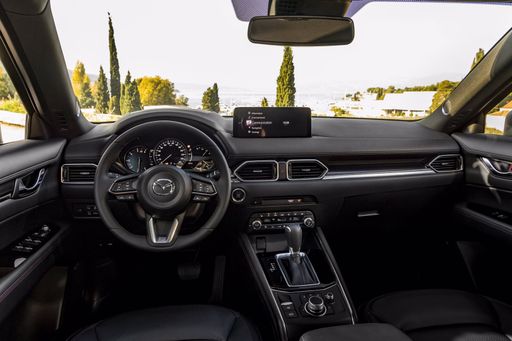
CX-5

The Ford Puma versus Mazda CX-5: An In-Depth Comparison

In the ever-evolving world of SUVs, two contenders have carved out a niche for themselves: the Ford Puma and the Mazda CX-5. As both models present strong offerings for the 2024-2025 timeframe, discerning drivers must weigh their options carefully before choosing their next ride. From technical specifications to innovative features, we'll dive deep into what these models bring to the table.
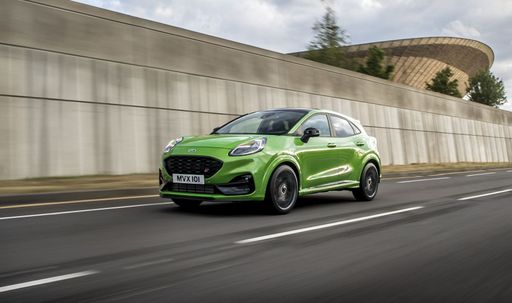
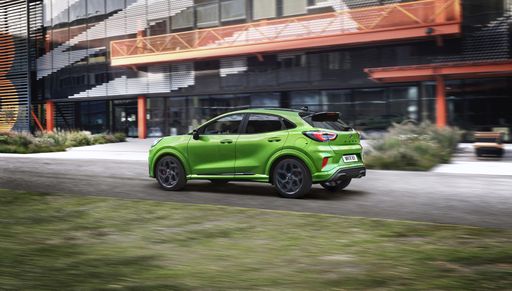
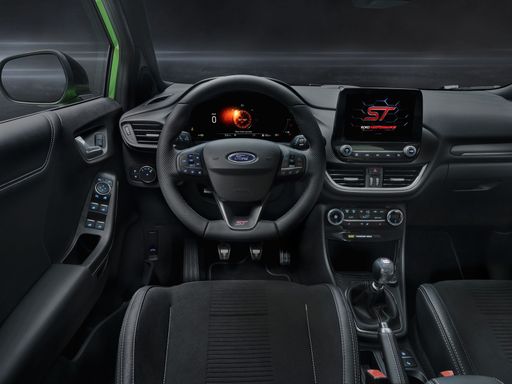
Puma

Performance and Powertrains

Both the Ford Puma and the Mazda CX-5 host a variety of engine options, catering to different driving needs. The Puma boasts a selection of petrol hybrid (MHEV) and electric variants, with power outputs ranging from 125 to 168 HP. The three-cylinder, 999 cm3 engine delivers a torque of up to 290 Nm, ensuring a responsive ride.

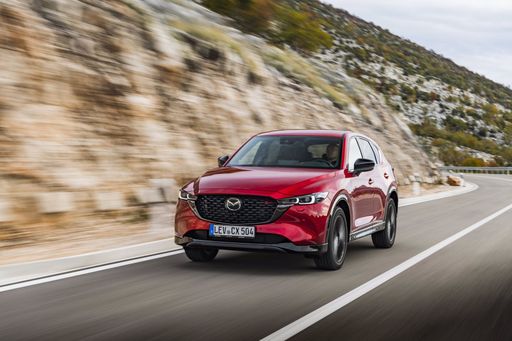
On the other hand, the CX-5 offers both petrol and diesel options, with power ranging from 150 to 194 HP. The four-cylinder engine variants provide a torque peak at 445 Nm, which is particularly impressive in the diesel configurations. While both models have manual and automatic transmissions, the Puma adds a dual-clutch automatic and reduction gearbox to its offerings.

CX-5

Efficiency and Range

For those concerned with fuel efficiency and environmental impact, the Puma stands out with its electric variant offering an impressive range of up to 376 km and a battery capacity of 43 kWh. Fuel consumption for the petrol options is competitive, with figures between 5.4 and 6 L/100km.

The CX-5, while unable to match the full electric range, does present respectable fuel consumption figures from 5.6 to 7.6 L/100km. Its larger fuel tank capacity of 56-58 liters provides the advantage of longer travel distances without refueling.

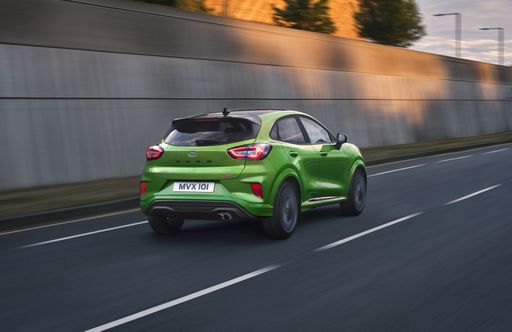
Puma

Interior Space and Practicality

Both SUVs offer seating for five, but differ slightly in cargo capacity. The Ford Puma provides a trunk capacity of up to 523 liters, making it a suitable choice for families and active individuals alike. Its compact dimensions, with a length of up to 4226 mm, are ideal for urban settings.

The Mazda CX-5, slightly larger at 4575 mm in length, offers up to 522 liters of trunk space. Its all-wheel-drive option adds versatility for those who might tackle varied terrains. The larger fuel tank and enhanced payload capacity also make it a practical option for longer road trips.

CX-5

Technological Innovations

Looking at technological advancements, the Ford Puma shines with its hybrid technology. The inclusion of multiple driving modes further enhances energy efficiency, particularly in city driving conditions. Additionally, its dual-clutch automatic transmission promises smoother gear changes, translating to a more refined driving experience.

The CX-5 counters with Mazda's renowned Skyactiv technology, enhancing fuel efficiency and performance. The inclusion of modern infotainment systems, with features like a user-friendly interface and smartphone integration, keeps drivers and passengers connected and entertained on the go.

Puma

Conclusion: Choosing the Right Fit

Both the Ford Puma and Mazda CX-5 stand as strong choices in the competitive SUV market. The Puma, with its emphasis on hybrid and electric efficiency, caters to those prioritizing eco-friendly technology in a compact form. Meanwhile, the CX-5 offers a robust performance, especially in its diesel configurations, with larger dimensions catering to those requiring more space and power.

Ultimately, the choice between these two depends on one's specific needs: efficiency and compact design with the Puma, or space and power with the CX-5. Whichever option drivers lean towards, both models promise reliability, style, and modern innovation, making them worthy contenders in their class.

Here’s where it gets real: The technical differences in detail

CX-5

Costs and Efficiency:

When it comes to price and running costs, the biggest differences usually appear. This is often where you see which car fits your budget better in the long run.

Ford Puma is noticeably cheaper – starting at 23,900 £ , while the Mazda CX-5 costs 30,000 £ . That’s a price difference of around 6,077 £.

Fuel consumption also shows a difference: the Ford Puma uses 5.4 L/100km and is markedly more efficient than the Mazda CX-5 with 7 L/100km. The difference is about 1.6 L/100km.

Puma

Engine and Performance:

Power, torque and acceleration are the classic benchmarks for car enthusiasts – and here, some clear differences start to show.

When it comes to engine power, the Ford Puma offers a bit more power – delivering 168 HP compared to 141 HP. That’s roughly 27 HP more horsepower.

When accelerating from 0 to 100 km/h, the Ford Puma is substantially quicker – completing the sprint in 7.4 s, while the Mazda CX-5 takes 10.5 s. That’s about 3.1 s quicker.

There’s also a difference in torque: the Ford Puma delivers slightly more torque with 290 Nm compared to 238 Nm. That’s about 52 Nm more.

CX-5

Space and Everyday Use:

Beyond pure performance, interior space and usability matter most in daily life. This is where you see which car is more practical and versatile.

Both vehicles offer seating for 5 people.

In terms of curb weight, Ford Puma is visibly lighter – 1,316 kg compared to 1,629 kg. The difference is around 313 kg.

When it comes to payload, the Mazda CX-5 carries noticeably more – 601 kg compared to 469 kg. That’s a difference of about 132 kg.

Who wins the race in the data check?

The Ford Puma is decisively ahead in the objective data comparison.
This result only shows which model scores more points on paper – not which of the two cars feels right for you.

from £23,900
Puma

Ford Puma

  • Engine Type : Petrol MHEV, Electric
  • Transmission : Manuel, Automatic
  • Drive Type : Front-Wheel Drive
  • Power HP : 125 - 168 HP
  • Consumption L/100km : 5.4 - 5.9 L/100km
  • Consumption kWh/100km : 13 - 13.7 kWh/100km
  • Electric Range : 404 - 417 km
Mazda CX-5
Ford Puma

Costs and Consumption

View detailed analysis

Engine and Performance

View detailed analysis

Dimensions and Body

View detailed analysis

Mazda CX-5

The Mazda CX-5 blends elegant, athletic styling with a surprisingly engaging driving character, turning routine trips into small, satisfying adventures. Inside it feels thoughtfully built and comfortable, offering sensible practicality and a premium feel that punches above its price.

details

Ford Puma

The Ford Puma is a cheeky compact crossover that blends sporty styling with city-friendly practicality, giving drivers a surprisingly fun and composed ride. With clever storage tricks and a lively personality, it’s a smart pick for buyers who want enjoyment without fuss.

details
Mazda CX-5
Ford Puma

Costs and Consumption

Price
30,000 - 39,500 £
Price
23,900 - 36,300 £
Consumption L/100km
7 - 7.4 L/100km
Consumption L/100km
5.4 - 5.9 L/100km
Consumption kWh/100km
-
Consumption kWh/100km
13 - 13.7 kWh/100km
Electric Range
-
Electric Range
404 - 417 km
Battery Capacity
-
Battery Capacity
-
co2
157 - 168 g/km
co2
0 - 135 g/km
Fuel tank capacity
56 - 58 L
Fuel tank capacity
-

Dimensions and Body

Body Type
SUV
Body Type
SUV
Seats
5
Seats
5
Doors
5
Doors
-
Curb weight
1,629 - 1,671 kg
Curb weight
1,316 - 1,563 kg
Trunk capacity
466 - 583 L
Trunk capacity
-
Length
4,690 mm
Length
-
Width
1,860 mm
Width
1,805 mm
Height
1,695 mm
Height
-
Max trunk capacity
2,019 L
Max trunk capacity
-
Payload
601 kg
Payload
367 - 469 kg

Engine and Performance

Engine Type
Petrol MHEV
Engine Type
Petrol MHEV, Electric
Transmission
Automatic
Transmission
Manuel, Automatic
Transmission Detail
Automatic Gearbox
Transmission Detail
Manual Gearbox, Dual-Clutch Automatic, Reduction Gearbox
Drive Type
Front-Wheel Drive, All-Wheel Drive
Drive Type
Front-Wheel Drive
Power HP
141 HP
Power HP
125 - 168 HP
Acceleration 0-100km/h
10.5 - 10.9 s
Acceleration 0-100km/h
7.4 - 9.8 s
Max Speed
195 km/h
Max Speed
-
Torque
238 Nm
Torque
170 - 290 Nm
Number of Cylinders
4
Number of Cylinders
3
Power kW
104 kW
Power kW
92 - 124 kW
Engine capacity
2,488 cm3
Engine capacity
999 cm3

General

Model Year
2,025
Model Year
2,025 - 2,026
CO2 Efficiency Class
F
CO2 Efficiency Class
D, A
Brand
Mazda
Brand
Ford
DriveDuel uses data analysis and artificial intelligence to evaluate vehicle data and create content. Content is regularly reviewed and improved. The displayed prices are estimates based on German list prices, adjusted to the respective country’s VAT. Country-specific registration taxes are not included. This information is not legally binding.