VS

Mercedes B Class vs Mazda CX-30 comparison

Compare performance (238 HP vs 186 HP), boot space and price (33,100 £ vs 25,700 £ ) at a glance. Find out which car is the better choice for you – Mercedes B Class or Mazda CX-30?

Mercedes B Class vs Mazda CX-30: Key differences

Mercedes B Class

4.9 (5 Reviews)
rate
  • noticeably more power
  • a bit more efficient
  • clearly quicker 0–100 km/h
  • very slightly lighter
  • barely more trunk space
details

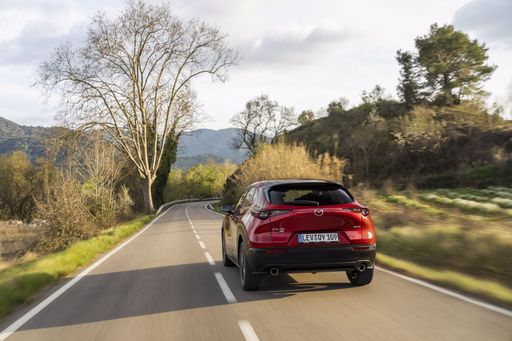
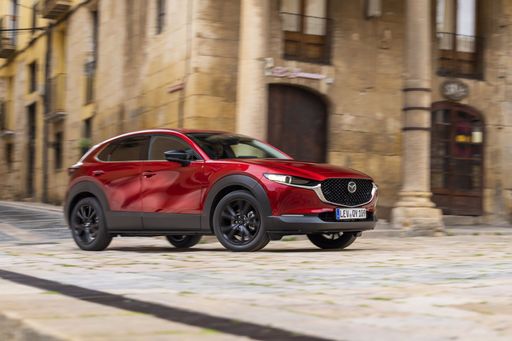
Mazda CX-30

4.5 (9 Reviews)
rate
  • noticeably cheaper
details

All details on performance, efficiency, range and trunk space can be found in the technical comparison below – including user reviews for both models.

By Achim Sedelmaier

B Class

Mazda CX-30 vs. Mercedes B-Klasse: Unveiling the Ultimate Crossover Contenders

In the dynamic world of automotive engineering, the Mazda CX-30 and Mercedes B-Klasse have carved niches for themselves, attracting attention with their distinct attributes. As 2024 rolls in, these vehicles continue to evolve, offering impressive advancements that cater to modern drivers' desires. This article delves into the unique features and technical specifications of each model, guiding you to understand what makes them stand out in the competitive landscape.
CX-30

Body Design and Dimensions

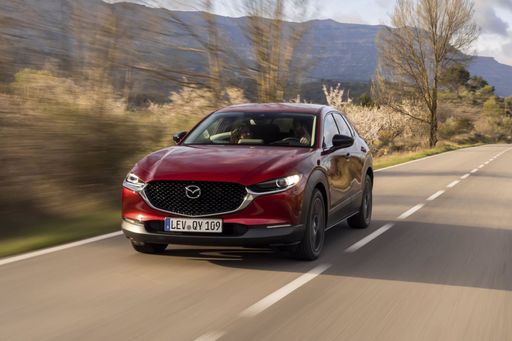
The Mazda CX-30 comes as a sleek and sporty SUV, emphasizing its robust and aerodynamic aesthetics. Measuring 4395 mm in length, 1795 mm in width, and 1540 mm in height, it offers a compact yet spacious profile suitable for urban and off-road adventures. Its trunk capacity of 430 liters ensures flexibility for various storage needs.

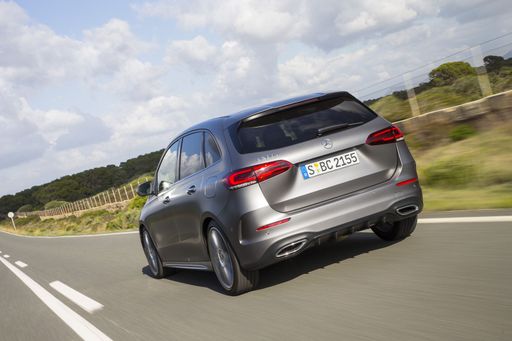
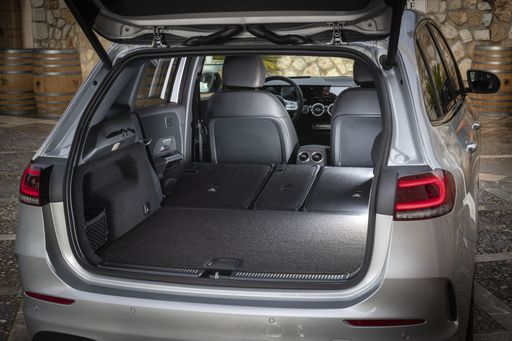
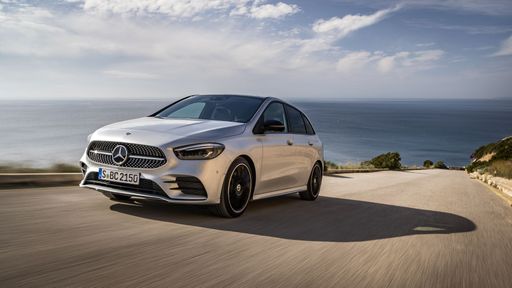
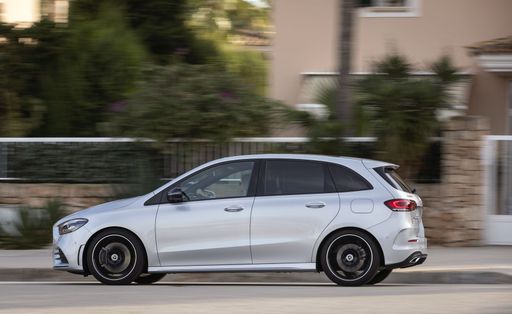
In contrast, the Mercedes B-Klasse embraces its MPV heritage with a sleek and versatile body. It stretches slightly longer at 4419 mm and stands taller at 1562 mm, providing a spacious interior that complements its trunk capacity of 455 liters, emphasizing functionality and comfort for family expeditions.

B Class

Power and Performance

The Mazda CX-30 boasts a choice between front-wheel drive and all-wheel drive systems, powered by a petrol MHEV engine. With power outputs ranging from 140 to 186 HP and torque between 238 to 240 Nm, it achieves an impressive acceleration from 0 to 100 km/h in just 8.3 to 10.3 seconds. Its top speed varies from 191 km/h to 204 km/h, allowing for spirited driving experiences.

Conversely, the Mercedes B-Klasse offers a diverse powertrain lineup, including petrol MHEV, diesel, and plug-in hybrid options. Delivering power between 116 and 238 HP and torque up to 450 Nm, its acceleration capabilities range from 6.5 to 10 seconds for 0 to 100 km/h, accommodating a broader spectrum of driving styles. Hybrid enthusiasts will appreciate the 83 km electric range, enhancing efficiency and reducing emission footprints.

CX-30

Transmission and Efficiency

The Mazda CX-30 presents drivers with flexibility in transmission preference, providing both manual and automatic gearbox options. Its fuel efficiency ranges between 5.7 and 6.6 L/100km, ensuring an economical drive.

In contrast, the Mercedes B-Klasse standardizes on a dual-clutch automatic transmission, optimizing performance and seamless gear shifts. Its fuel consumption lies between 0.8 and 7.1 L/100km, particularly advantageous for the plug-in hybrid variant, which benefits from superior efficiency and an impressive CO2 efficiency class B rating.

B Class

Comfort and Technology Innovations

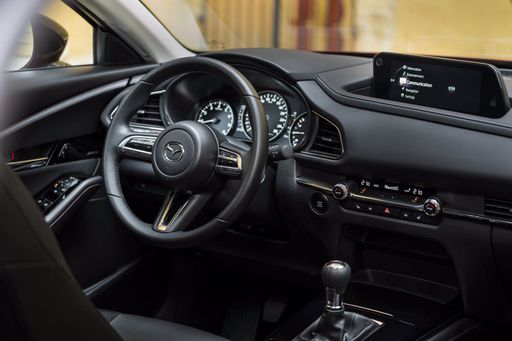
Mazda’s CX-30 offers a minimalist yet sophisticated interior, championing functionality without compromising on comfort. It caters to five passengers and includes advanced safety systems to enhance the driving experience.

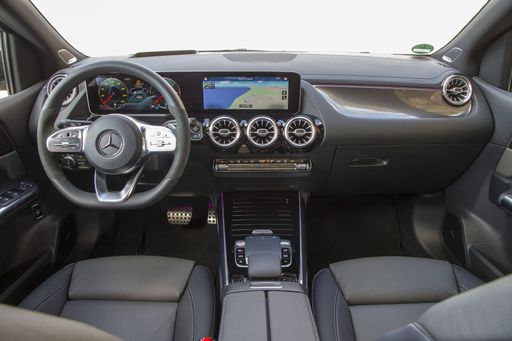
The Mercedes B-Klasse, known for its luxurious approach, provides innovative infotainment systems and top-tier comfort for its occupants. Seating five as well, it establishes a premium atmosphere, supported by cutting-edge technology that elevates convenience and safety.

CX-30

Conclusion: Choosing Your Ideal Companion

The choice between the Mazda CX-30 and Mercedes B-Klasse depends significantly on individual preferences. The CX-30 appeals to those valuing sporty design and versatile performance, while the B-Klasse attracts drivers looking for a versatile, efficient MPV with premium features. Both models reflect their brands' commitment to innovation and performance, ensuring a satisfying ownership experience in today's diverse automotive landscape.

Here’s where it gets real: The technical differences in detail

B Class

Costs and Efficiency:

When it comes to price and running costs, the biggest differences usually appear. This is often where you see which car fits your budget better in the long run.

Mazda CX-30 is noticeably cheaper – starting at 25,700 £ , while the Mercedes B Class costs 33,100 £ . That’s a price difference of around 7,424 £.

Fuel consumption also shows a difference: the Mercedes B Class uses 5.1 L/100km and is a bit more efficient than the Mazda CX-30 with 5.7 L/100km. The difference is about 0.6 L/100km.

CX-30

Engine and Performance:

Power, torque and acceleration say a lot about how a car feels on the road. This is where you see which model delivers more driving dynamics.

When it comes to engine power, the Mercedes B Class offers noticeably more power – delivering 238 HP compared to 186 HP. That’s roughly 52 HP more horsepower.

When accelerating from 0 to 100 km/h, the Mercedes B Class is clearly quicker – completing the sprint in 6.5 s, while the Mazda CX-30 takes 8.3 s. That’s about 1.8 s quicker.

There’s also a difference in torque: the Mercedes B Class delivers clearly more torque with 400 Nm compared to 240 Nm. That’s about 160 Nm more.

B Class

Space and Everyday Use:

Beyond pure performance, interior space and usability matter most in daily life. This is where you see which car is more practical and versatile.

Both vehicles offer seating for 5 people.

In terms of curb weight, Mercedes B Class is very slightly lighter – 1,405 kg compared to 1,455 kg. The difference is around 50 kg.

Looking at boot space, the Mercedes B Class offers barely more boot space – 455 L compared to 430 L. That’s a difference of about 25 L.

When it comes to payload, the Mercedes B Class carries very slightly more – 550 kg compared to 496 kg. That’s a difference of about 54 kg.

Who wins the race in the data check?

The Mercedes B Class holds a decisive overall lead in the objective data comparison.
This result only shows which model scores more points on paper – not which of the two cars feels right for you.

from £33,100
B Class

Mercedes B Class

  • Engine Type Petrol MHEV, Diesel
  • Transmission Automatic
  • Drive Type Front-Wheel Drive, All-Wheel Drive
  • Power HP 116 - 238 HP
  • Consumption L/100km 5.1 - 6.9 L/100km
Mercedes B Class
Mazda CX-30

Costs and Consumption

View detailed analysis

Engine and Performance

View detailed analysis

Dimensions and Body

View detailed analysis

Mercedes B Class

The Mercedes B-Class is a smart, grown-up compact people carrier that dresses everyday practicality in a near‑premium polish, perfect for buyers who want comfort and a classy badge without the theatrics. It won’t set your pulse racing on a back road, but it will make school runs, commutes and grocery hauls feel pleasantly civilized — a reliable, slightly posh companion for real life.

details

Mazda CX-30

The Mazda CX-30 blends Mazda’s upscale styling with a compact crossover body, offering a refined interior and engaging driving dynamics. It’s a practical choice for buyers who want a premium feel and agile handling in a city-friendly package.

details
Mercedes B Class
Mazda CX-30

Costs and Consumption

Price
33,100 - 52,500 £
Price
25,700 - 37,200 £
Consumption L/100km
5.1 - 6.9 L/100km
Consumption L/100km
5.7 - 6.6 L/100km
Consumption kWh/100km
-
Consumption kWh/100km
-
Electric Range
-
Electric Range
-
Battery Capacity
-
Battery Capacity
-
co2
133 - 156 g/km
co2
129 - 148 g/km
Fuel tank capacity
-
Fuel tank capacity
-

Dimensions and Body

Body Type
MPV
Body Type
SUV
Seats
5
Seats
5
Doors
-
Doors
-
Curb weight
1,405 - 1,565 kg
Curb weight
1,455 - 1,587 kg
Trunk capacity
445 - 455 L
Trunk capacity
422 - 430 L
Length
-
Length
-
Width
1,796 mm
Width
1,795 mm
Height
-
Height
-
Max trunk capacity
-
Max trunk capacity
-
Payload
515 - 550 kg
Payload
458 - 496 kg

Engine and Performance

Engine Type
Petrol MHEV, Diesel
Engine Type
Petrol MHEV
Transmission
Automatic
Transmission
Manuel, Automatic
Transmission Detail
Dual-Clutch Automatic
Transmission Detail
Manual Gearbox, Automatic Gearbox
Drive Type
Front-Wheel Drive, All-Wheel Drive
Drive Type
Front-Wheel Drive, All-Wheel Drive
Power HP
116 - 238 HP
Power HP
140 - 186 HP
Acceleration 0-100km/h
6.5 - 10 s
Acceleration 0-100km/h
8.3 - 10.3 s
Max Speed
-
Max Speed
-
Torque
200 - 400 Nm
Torque
238 - 240 Nm
Number of Cylinders
4
Number of Cylinders
4
Power kW
85 - 175 kW
Power kW
103 - 137 kW
Engine capacity
1,332 - 1,991 cm3
Engine capacity
1,998 - 2,488 cm3

General

Model Year
2025
Model Year
2025
CO2 Efficiency Class
D, E, F
CO2 Efficiency Class
D, E
Brand
Mercedes-Benz
Brand
Mazda
DriveDuel uses data analysis and artificial intelligence to evaluate vehicle data and create content. Content is regularly reviewed and improved. The displayed prices are estimates based on German list prices, adjusted to the respective country’s VAT. Country-specific registration taxes are not included. This information is not legally binding.