VS

Mercedes B Class vs Skoda Karoq comparison

Compare performance (238 HP vs 190 HP), boot space and price (33,100 £ vs 29,100 £ ) at a glance. Find out which car is the better choice for you – Mercedes B Class or Skoda Karoq?

Mercedes B Class vs Skoda Karoq: Key differences

Mercedes B Class

4.9 (5 Reviews)
rate
  • markedly more power
  • clearly more efficient
  • marginally quicker 0–100 km/h
details

Skoda Karoq

4.6 (2 Reviews)
rate
  • slightly cheaper
  • marginally lighter
  • a bit more trunk space
details

All details on performance, efficiency, range and trunk space can be found in the technical comparison below – including user reviews for both models.

By Achim Sedelmaier

B Class

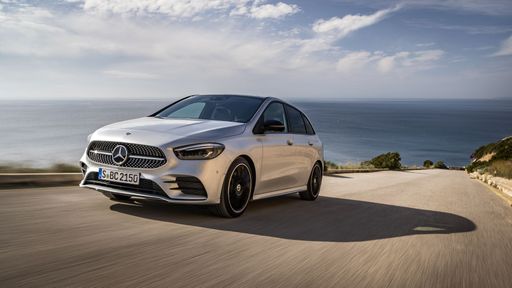
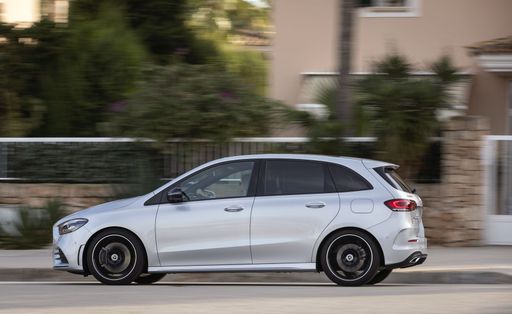
In the competitive automotive landscape of 2024, two cars stand out for their contrasting approaches to the compact vehicle segment: the Mercedes B-Klasse and the Skoda Karoq. Both models target modern families with a blend of practicality and technology, but each car boasts unique traits that make them appealing to different types of drivers. Let's dive into a detailed comparison of these two vehicles across various technical aspects and innovations.
Karoq

Design and Dimensions

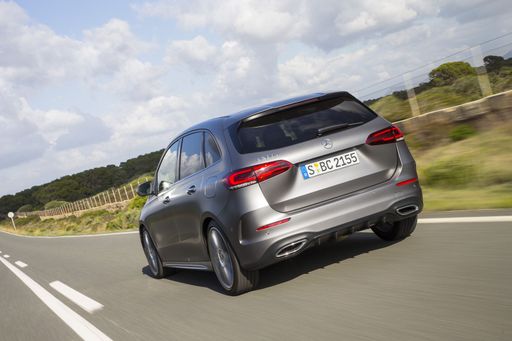
The Mercedes B-Klasse is classified as an MPV (Multi-Purpose Vehicle), measuring 4419 mm in length, 1796 mm in width, and 1562 mm in height. Its design speaks volumes about Mercedes-Benz's signature luxury styling, offering a refined appearance that blends elegance with functionality.

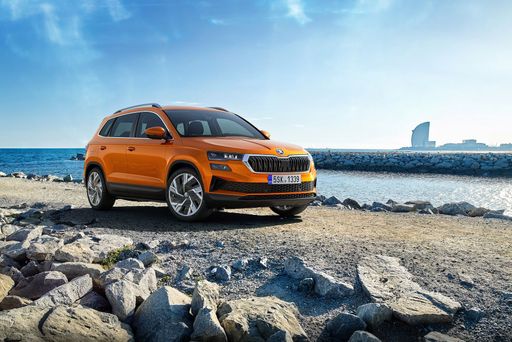
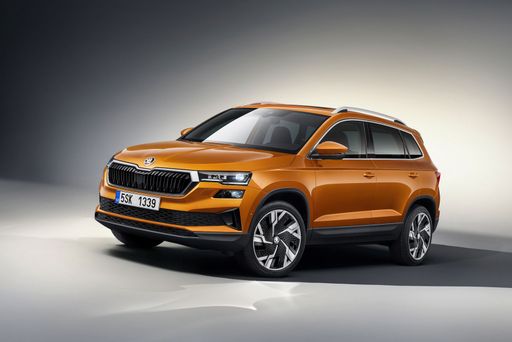
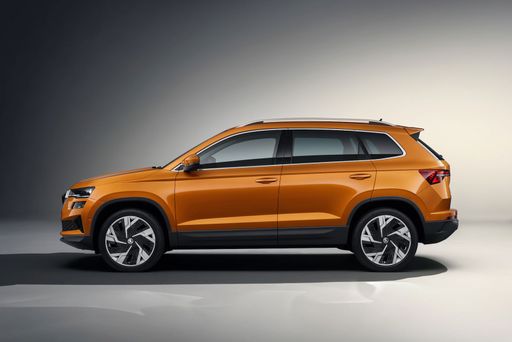
Alternatively, the Skoda Karoq is an SUV that presents a more robust and sporty aesthetic. It has slightly smaller dimensions, with a length of 4390 mm and a width of 1841 mm, providing a commanding presence on the road. Its height varies between 1603 mm and 1624 mm, depending on the model variant, enhancing its SUV character.

B Class

Power and Performance

Under the hood, the B-Klasse offers a range of powertrains including petrol MHEV, diesel options, and a plugin hybrid variant. The power output ranges from 116 hp to an impressive 238 hp, making for a versatile driving experience. Acceleration can reach 0-100 km/h in as little as 6.5 seconds with its most powerful engine, reflecting Mercedes-Benz’s engineering prowess.

The Karoq, while more modest in performance, still has commendable options with power outputs from 115 hp to 190 hp. Its acceleration performance peaks at 7 seconds for the faster variants, indicating a fun yet practical drive. Skoda engineers have designed the Karoq to feature efficient petrol and diesel engines, emphasizing a balance between power and fuel economy.

Karoq

Fuel Efficiency

Fuel economy is a critical factor for modern consumers, and here the B-Klasse demonstrates impressive figures. Its consumption ranges from 5.1 to 7.1 L/100 km across different engine types. Notably, its plugin hybrid model boasts an electric range of 83 km and a consumption rate as low as 0.8 L/100 km, showcasing advanced hybrid technology.

The Karoq also makes a compelling case with fuel efficiency ratings between 4.9 and 7.6 L/100 km. Skoda's engineering reflects a focus on achieving maximum range from both petrol and diesel engines, ensuring drivers can enjoy longer trips without frequent stops for refueling.

B Class

Interior Space and Comfort

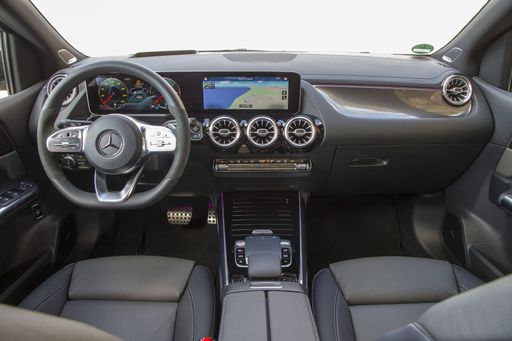
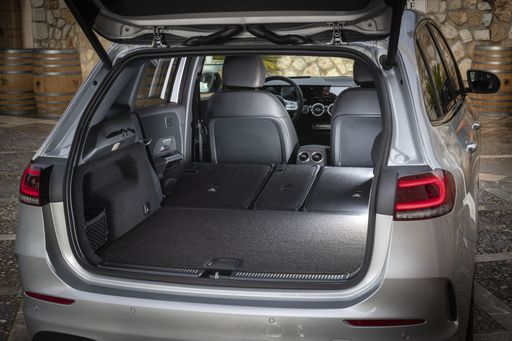
When it comes to interior space, the Mercedes B-Klasse offers a spacious cabin for up to five passengers, with a trunk capacity of 455 liters. The luxury touches throughout the interior, combined with advanced technology like the MBUX infotainment system, provide an immersive driving experience.

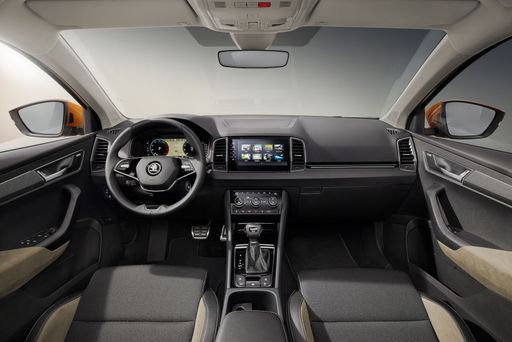
The Skoda Karoq excels in practicality, with a larger trunk space of 521 liters, making it ideal for those who regularly carry luggage or gear. The layout is user-friendly, boasting Skoda’s smart storage solutions and a comfortable seating arrangement designed for family outings.

Karoq

Technology and Safety Innovations

Mercedes-Benz is renowned for integrating cutting-edge technology into their vehicles, and the B-Klasse is no exception. With features like advanced driver assistance systems, high-resolution displays, and voice control through MBUX, the B-Klasse elevates the driving experience to new heights.

In contrast, the Karoq comes equipped with a suite of safety features and practical tech, including adaptive cruise control and lane assist. Skoda's infotainment system is intuitive, ensuring that drivers remain connected while focusing on the road ahead.

B Class

Conclusion: Which One to Choose?

Choosing between the Mercedes B-Klasse and Skoda Karoq ultimately comes down to personal preference. The B-Klasse impresses with its luxury appeal, innovative technology, and hybrid options, while the Karoq offers practicality, space, and a solid driving experience at potentially lower running costs.

Each model caters to distinct user needs, making both worthy contenders in the compact vehicle market. Whether you lean towards the heritage and refinement of Mercedes-Benz or the functional design and affordability of Skoda, there's no denying that both the B-Klasse and Karoq are champions in their respective fields.

Here’s where it gets real: The technical differences in detail

B Class

Costs and Efficiency:

Price and efficiency are key factors when choosing a car – and this is often where the real differences emerge.

Skoda Karoq is slightly cheaper – starting at 29,100 £ , while the Mercedes B Class costs 33,100 £ . That’s a price difference of around 4,047 £.

Fuel consumption also shows a difference: the Mercedes B Class uses 2.5 L/100km and is clearly more efficient than the Skoda Karoq with 4.9 L/100km. The difference is about 2.4 L/100km.

Karoq

Engine and Performance:

Power, torque and acceleration are the classic benchmarks for car enthusiasts – and here, some clear differences start to show.

When it comes to engine power, the Mercedes B Class offers markedly more power – delivering 238 HP compared to 190 HP. That’s roughly 48 HP more horsepower.

When accelerating from 0 to 100 km/h, the Mercedes B Class is marginally quicker – completing the sprint in 6.5 s, while the Skoda Karoq takes 7 s. That’s about 0.5 s quicker.

Looking at top speed, the Mercedes B Class is barely faster – reaching 223 km/h, while the Skoda Karoq tops out at 210 km/h. The difference is around 13 km/h.

There’s also a difference in torque: the Mercedes B Class delivers moderately more torque with 450 Nm compared to 360 Nm. That’s about 90 Nm more.

B Class

Space and Everyday Use:

Cabin size, boot volume and payload all play a role in everyday practicality. Here, comfort and flexibility make the difference.

Both vehicles offer seating for 5 people.

In terms of curb weight, Skoda Karoq is marginally lighter – 1,380 kg compared to 1,405 kg. The difference is around 25 kg.

Looking at boot space, the Skoda Karoq offers a bit more boot space – 521 L compared to 455 L. That’s a difference of about 66 L.

For maximum load capacity, the Skoda Karoq offers somewhat more capacity – up to 1,630 L, about 190 L more than the Mercedes B Class.

When it comes to payload, the Mercedes B Class carries marginally more – 550 kg compared to 549 kg. That’s a difference of about 1 kg.

Who wins the race in the data check?

The Mercedes B Class is far ahead overall in the objective data comparison.
This result only shows which model scores more points on paper – not which of the two cars feels right for you.

from £33,100
B Class

Mercedes B Class

  • Engine Type : Plugin Hybrid, Petrol MHEV, Diesel
  • Transmission : Automatic
  • Drive Type : Front-Wheel Drive, All-Wheel Drive
  • Power HP : 116 - 238 HP
  • Consumption L/100km : 2.5 - 6.9 L/100km
  • Electric Range : 83 km
Mercedes B Class
Skoda Karoq

Costs and Consumption

View detailed analysis

Engine and Performance

View detailed analysis

Dimensions and Body

View detailed analysis

Mercedes B Class

The Mercedes B-Class is a smart, grown-up compact people carrier that dresses everyday practicality in a near‑premium polish, perfect for buyers who want comfort and a classy badge without the theatrics. It won’t set your pulse racing on a back road, but it will make school runs, commutes and grocery hauls feel pleasantly civilized — a reliable, slightly posh companion for real life.

details

Skoda Karoq

The Skoda Karoq is a smart, unfussy compact SUV that blends roomy practicality with a pleasantly composed driving character. It won’t turn heads at a car meet, but it will make daily life easier with clever storage, sensible ergonomics and a reassuringly grown-up ride.

details
Mercedes B Class
Skoda Karoq

Costs and Consumption

Price
33,100 - 52,500 £
Price
29,100 - 41,700 £
Consumption L/100km
2.5 - 6.9 L/100km
Consumption L/100km
4.9 - 7.6 L/100km
Consumption kWh/100km
-
Consumption kWh/100km
-
Electric Range
83 km
Electric Range
-
Battery Capacity
12.9 kWh
Battery Capacity
-
co2
56 - 156 g/km
co2
128 - 173 g/km
Fuel tank capacity
35 L
Fuel tank capacity
50 - 55 L

Dimensions and Body

Body Type
MPV
Body Type
SUV
Seats
5
Seats
5
Doors
5
Doors
5
Curb weight
1,405 - 1,745 kg
Curb weight
1,380 - 1,655 kg
Trunk capacity
405 - 455 L
Trunk capacity
521 L
Length
4,419 mm
Length
4,390 mm
Width
1,796 mm
Width
1,841 mm
Height
1,562 mm
Height
1,624 mm
Max trunk capacity
1,440 L
Max trunk capacity
1,630 L
Payload
505 - 550 kg
Payload
456 - 549 kg

Engine and Performance

Engine Type
Plugin Hybrid, Petrol MHEV, Diesel
Engine Type
Petrol, Diesel
Transmission
Automatic
Transmission
Manuel, Automatic
Transmission Detail
Dual-Clutch Automatic
Transmission Detail
Manual Gearbox, Dual-Clutch Automatic
Drive Type
Front-Wheel Drive, All-Wheel Drive
Drive Type
Front-Wheel Drive, All-Wheel Drive
Power HP
116 - 238 HP
Power HP
115 - 190 HP
Acceleration 0-100km/h
6.5 - 10 s
Acceleration 0-100km/h
7 - 11.2 s
Max Speed
223 km/h
Max Speed
192 - 210 km/h
Torque
200 - 450 Nm
Torque
200 - 360 Nm
Number of Cylinders
4
Number of Cylinders
3 - 4
Power kW
85 - 175 kW
Power kW
85 - 140 kW
Engine capacity
1,332 - 1,991 cm3
Engine capacity
999 - 1,984 cm3

General

Model Year
2,024 - 2,025
Model Year
2025
CO2 Efficiency Class
B, D, E, F
CO2 Efficiency Class
D, E, F
Brand
Mercedes-Benz
Brand
Skoda
DriveDuel uses data analysis and artificial intelligence to evaluate vehicle data and create content. Content is regularly reviewed and improved. The displayed prices are estimates based on German list prices, adjusted to the respective country’s VAT. Country-specific registration taxes are not included. This information is not legally binding.