VS

MINI Aceman vs Volvo EC40 comparison

Compare performance (258 HP vs 442 HP), boot space and price (27,000 £ vs 46,500 £ ) at a glance. Find out which car is the better choice for you – MINI Aceman or Volvo EC40?

MINI Aceman vs Volvo EC40: Key differences

MINI Aceman

4.5 (2 Reviews)
rate
  • substantially cheaper
  • moderately more efficient
  • markedly lighter
details

Volvo EC40

4.7 (1 Reviews)
rate
  • significantly more power
  • clearly more electric range
  • markedly quicker 0–100 km/h
  • clearly more trunk space
details

All details on performance, efficiency, range and trunk space can be found in the technical comparison below – including user reviews for both models.

By Achim Sedelmaier

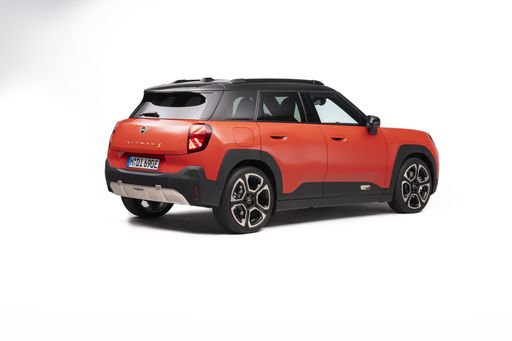
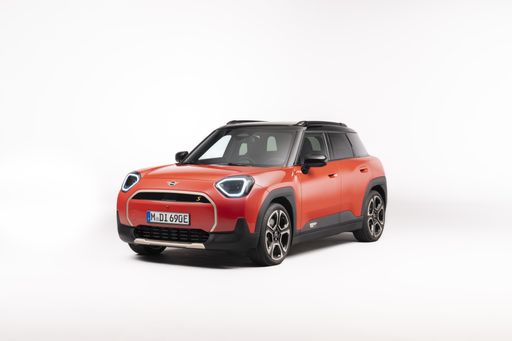
Aceman

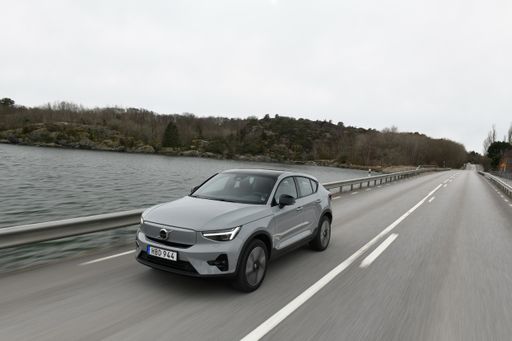
The automotive landscape is rapidly evolving, particularly in the realm of electric vehicles (EVs). Today, we take a closer look at two standout models vying for attention in the compact SUV segment—the MINI Aceman and the Volvo EC40. Both vehicles emphasize innovative technology, sustainability, and performance, making them worthy contenders for eco-conscious drivers. Let's delve into their specifications, features, and innovations.
EC40

Powertrains and Performance

Starting with the heart of the matter, the MINI Aceman is offered with several electric powertrain options ranging from 184 to 258 horsepower. The Aceman's front-wheel drive system, combined with an automatic transmission featuring a reduction gearbox, allows for efficient power delivery and a zippy acceleration that can get you from 0 to 100 km/h in as little as 6.4 seconds. With battery capacities of 38.5 kWh and 49.2 kWh, the Aceman promises an electric range of up to 405 km, making it perfectly suited for both urban and longer journeys.

On the other hand, the Volvo EC40 boasts a more robust lineup of power with options beginning at 238 horsepower and going up to a thrilling 408 horsepower. It provides customers with the flexibility of rear-wheel and all-wheel drive configurations, ensuring enhanced traction and performance. The EC40's acceleration is impressive, with the top variant achieving 0-100 km/h in just 4.6 seconds. Thanks to a larger battery capacity of up to 79 kWh, the EC40 can cover an impressive range of up to 584 km, catering to the demands of more adventurous drivers.

Aceman

Efficiency and Consumption

When it comes to energy consumption, the MINI Aceman shines with figures as low as 14 kWh/100 km, reflecting its compact design and optimized powertrain. In contrast, the Volvo EC40 has a slightly higher consumption, ranging from 16.2 kWh/100 km to 17.3 kWh/100 km depending on the variant. However, considering the significant difference in power output and battery size, the EC40 remains an efficient option within its segment.

Interior Space and Specifications

Interior design and space utilization play a crucial role in the decision-making process for buyers. The MINI Aceman offers a cozy cabin with seating for five and a trunk capacity of 300 liters, catering well to city living and essential storage needs. Its compact dimensions (4079 mm in length and 1754 mm in width) facilitate easy maneuverability, especially in urban settings.

Conversely, the Volvo EC40 provides more room with a trunk capacity of 404 liters and overall larger dimensions (4440 mm in length and 1873 mm in width). This extra space adds to the practicality of the EC40, making it an excellent choice for families or those needing additional cargo capacity. Both vehicles, however, comfortably accommodate five passengers.

Innovations and Technology

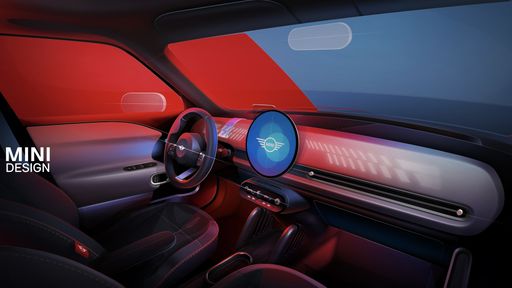
Both MINI and Volvo are at the forefront of automotive technology, and their latest offerings are no exception. The MINI Aceman is equipped with MINI's latest infotainment system featuring digital displays and connectivity options that enhance the driving experience. Its efficient use of technology not only caters to convenience but also promotes sustainable driving practices.

The Volvo EC40, on the other hand, emphasizes safety and innovation. It features advanced driver assistance systems and an intuitive infotainment system powered by Google, which seamlessly integrates navigation, connectivity, and voice commands. Volvo's reputation for safety is complemented by enhanced crash protection features and a commitment to sustainable materials throughout the cabin.

Conclusion: Which One to Choose?

Ultimately, the choice between the MINI Aceman and the Volvo EC40 depends largely on individual preferences and requirements. If agile urban performance and efficiency are priorities, the Aceman offers an appealing package. However, for those who value a powerful driving experience, longer range, and greater cargo capacity, the EC40 stands out as a solid choice. Both models exemplify the future of electric mobility, showcasing how innovative engineering and design can create exciting and sustainable vehicles for today and beyond.

Here’s where it gets real: The technical differences in detail

Aceman

Costs and Efficiency:

Price and efficiency are often the first things buyers look at. Here it becomes clear which model has the long-term edge – whether at the pump, the plug, or in purchase price.

MINI Aceman is substantially cheaper – starting at 27,000 £ , while the Volvo EC40 costs 46,500 £ . That’s a price difference of around 19,534 £.

In terms of energy consumption, the MINI Aceman is moderately more efficient: consuming 14.1 kWh/100km compared to 16.2 kWh/100km for the Volvo EC40. That’s a difference of about 2.1 kWh/100km.

As for electric range, the Volvo EC40 offers clearly more range – reaching up to 585 km, about 230 km more than the MINI Aceman.

EC40

Engine and Performance:

Power, torque and acceleration say a lot about how a car feels on the road. This is where you see which model delivers more driving dynamics.

When it comes to engine power, the Volvo EC40 offers significantly more power – delivering 442 HP compared to 258 HP. That’s roughly 184 HP more horsepower.

When accelerating from 0 to 100 km/h, the Volvo EC40 is markedly quicker – completing the sprint in 4.6 s, while the MINI Aceman takes 6.4 s. That’s about 1.8 s quicker.

There’s also a difference in torque: the Volvo EC40 delivers substantially more torque with 670 Nm compared to 350 Nm. That’s about 320 Nm more.

Aceman

Space and Everyday Use:

Cabin size, boot volume and payload all play a role in everyday practicality. Here, comfort and flexibility make the difference.

Both vehicles offer seating for 5 people.

In terms of curb weight, MINI Aceman is markedly lighter – 1,720 kg compared to 2,065 kg. The difference is around 345 kg.

Looking at boot space, the Volvo EC40 offers clearly more boot space – 404 L compared to 300 L. That’s a difference of about 104 L.

When it comes to payload, the MINI Aceman carries moderately more – 530 kg compared to 435 kg. That’s a difference of about 95 kg.

Who wins the race in the data check?

The Volvo EC40 stands well ahead of its rival in the objective data comparison.
This result only shows which model scores more points on paper – not which of the two cars feels right for you.

from £46,500
EC40

Volvo EC40

  • Engine Type : Electric
  • Transmission : Automatic
  • Drive Type : Rear-Wheel Drive, All-Wheel Drive
  • Power HP : 238 - 442 HP
  • Consumption kWh/100km : 16.2 - 17.3 kWh/100km
  • Electric Range : 486 - 585 km
MINI Aceman
Volvo EC40

Costs and Consumption

View detailed analysis

Engine and Performance

View detailed analysis

Dimensions and Body

View detailed analysis

MINI Aceman

The MINI Aceman squeezes classic MINI charm into a sharper, more crossover-ready shape, trading some of the old curves for grown-up practicality while keeping the wink-and-grin personality buyers crave. Inside it's a surprisingly premium, customizable cabin that feels clever rather than cluttered, and on the road the Aceman is eager and nimble — ideal for city dwellers who want an SUV silhouette with proper fun behind the wheel.

details

Volvo EC40

The Volvo EC40 feels like a polished slice of Scandinavian calm on wheels, blending minimalist design with a cocoon-like interior that makes everyday driving surprisingly serene. It’s an electric compact that puts safety and comfort front and center, while still injecting enough personality and tech-savvy charm to keep city buyers smiling.

details
MINI Aceman
Volvo EC40

Costs and Consumption

Price
27,000 - 36,400 £
Price
46,500 - 59,000 £
Consumption L/100km
-
Consumption L/100km
-
Consumption kWh/100km
14.1 - 16 kWh/100km
Consumption kWh/100km
16.2 - 17.3 kWh/100km
Electric Range
309 - 355 km
Electric Range
486 - 585 km
Battery Capacity
-
Battery Capacity
-
co2
0 g/km
co2
0 g/km
Fuel tank capacity
-
Fuel tank capacity
-

Dimensions and Body

Body Type
SUV
Body Type
SUV
Seats
5
Seats
5
Doors
-
Doors
-
Curb weight
1,720 - 1,825 kg
Curb weight
2,065 - 2,185 kg
Trunk capacity
300 L
Trunk capacity
404 L
Length
-
Length
-
Width
1,754 mm
Width
1,873 mm
Height
-
Height
-
Max trunk capacity
-
Max trunk capacity
-
Payload
450 - 530 kg
Payload
395 - 435 kg

Engine and Performance

Engine Type
Electric
Engine Type
Electric
Transmission
Automatic
Transmission
Automatic
Transmission Detail
Reduction Gearbox
Transmission Detail
Reduction Gearbox
Drive Type
Front-Wheel Drive
Drive Type
Rear-Wheel Drive, All-Wheel Drive
Power HP
184 - 258 HP
Power HP
238 - 442 HP
Acceleration 0-100km/h
6.4 - 7.9 s
Acceleration 0-100km/h
4.6 - 7.3 s
Max Speed
-
Max Speed
-
Torque
290 - 350 Nm
Torque
420 - 670 Nm
Number of Cylinders
-
Number of Cylinders
-
Power kW
135 - 190 kW
Power kW
175 - 325 kW
Engine capacity
-
Engine capacity
-

General

Model Year
2,025 - 2,026
Model Year
2,024 - 2,026
CO2 Efficiency Class
A
CO2 Efficiency Class
A
Brand
MINI
Brand
Volvo
DriveDuel uses data analysis and artificial intelligence to evaluate vehicle data and create content. Content is regularly reviewed and improved. The displayed prices are estimates based on German list prices, adjusted to the respective country’s VAT. Country-specific registration taxes are not included. This information is not legally binding.