VS

Nissan Juke vs Ford Puma comparison

Compare performance (143 HP vs 168 HP), boot space and price (21,400 £ vs 23,900 £ ) at a glance. Find out which car is the better choice for you – Nissan Juke or Ford Puma?

Nissan Juke vs Ford Puma: Key differences

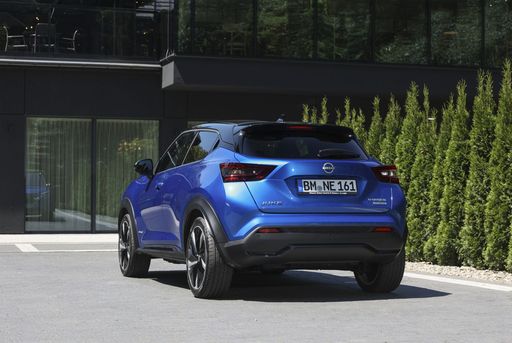
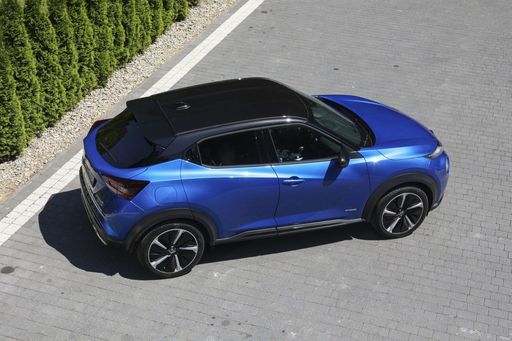
Nissan Juke

5 (1 Reviews)
rate
  • somewhat cheaper
  • moderately more efficient
  • marginally lighter

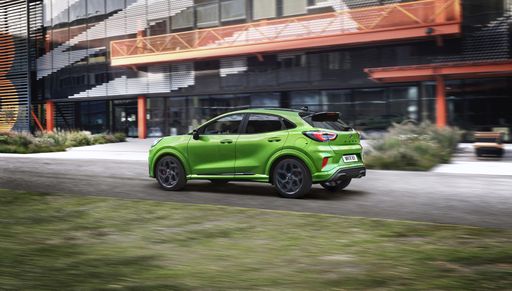
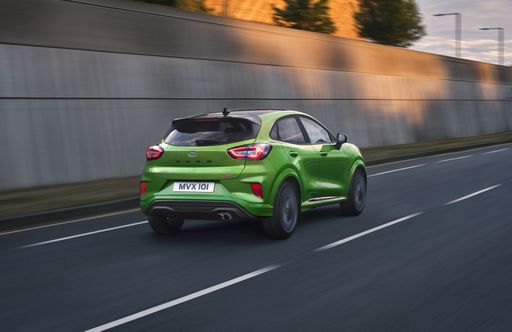
Ford Puma

3 (11 Reviews)
rate
  • somewhat more power
  • noticeably quicker 0–100 km/h

All details on performance, efficiency, range and trunk space can be found in the technical comparison below – including user reviews for both models.

Juke

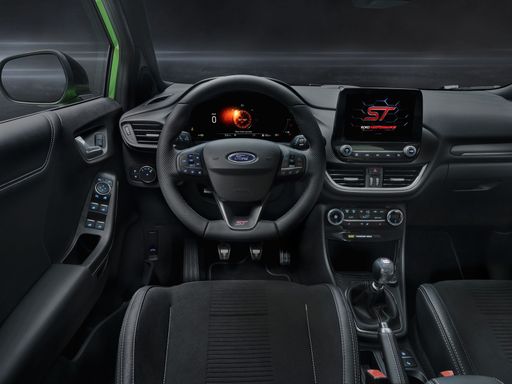
The compact SUV segment has seen remarkable growth, with Ford's Puma and Nissan's Juke standing out as notable contenders. Both vehicles blend style, modern technology, and practicality, but how do they stack up against each other? This comparison dives into the technical aspects and innovations of the Ford Puma and Nissan Juke, helping you decide which model suits your lifestyle better.
Puma

Design and Dimensions

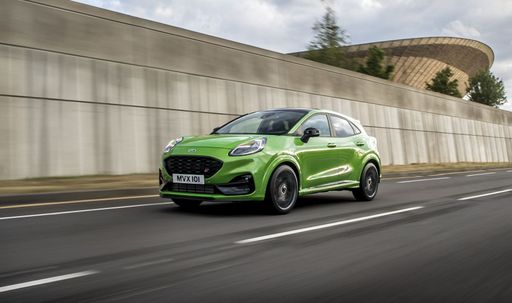
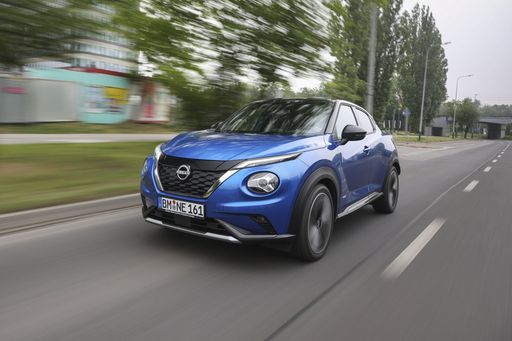
When it comes to looks, both vehicles offer a sporty profile that appeals to urban drivers. The Ford Puma measures 4186 mm in length, 1805 mm in width, and has a height of 1550 mm. The Nissan Juke, while slightly longer at 4210 mm, matches Ford's width but is taller at 1593 mm. This extra height in the Juke may provide a more commanding view of the road, but the Puma presents a sleeker silhouette overall.

Juke

Powertrain and Performance

The Ford Puma is available with a choice of petrol mild-hybrid and electric engines, with power output ranging from 125 to 168 HP. Notably, the electric variant boasts an impressive range of up to 376 km on a single charge, and the acceleration can achieve 0-100 km/h in as little as 7.4 seconds. In contrast, the Nissan Juke features petrol and full hybrid options, offering power levels from 114 to 143 HP. With a slightly slower 0-100 km/h time of 10.1 seconds, it sacrifices some acceleration for efficiency, especially considering its lower fuel consumption rate of 4.7 L/100 km in the hybrid variant.

Puma

Fuel Efficiency and Emissions

Speaking of efficiency, the Puma showcases a fuel consumption range of 5.4 to 6 L/100 km for its petrol engines, while its electric model's consumption stands at 13.1 kWh/100 km. The Nissan Juke, on the other hand, offers slightly higher consumption figures—5.8 to 6 L/100 km—with its traditional petrol engines. The Juke’s hybrid model proves more environmentally friendly with a CO2 emission level of 107 g/km, while the Puma varies from 121 to 136 g/km depending on the engine.

Juke

Interior and Practicality

In terms of interior space, both models cater to five occupants comfortably. The Ford Puma provides impressive trunk capacity of 456 to 523 liters, making it a better choice for families or those who require extra storage. The Nissan Juke’s trunk space is notably smaller, offering up to 422 liters. Both vehicles boast user-friendly infotainment systems, with Ford incorporating the latest technology to enhance the driving experience, including a FordPass app for remote features.

Puma

Innovative Features

One of the star innovations in the Ford Puma is its advanced hybrid technology paired with the option of a hybrid-like electric range. Ford has also integrated a host of driver-assist technologies to ensure safety and comfort on the road. Meanwhile, the Nissan Juke proudly offers the Nissan Intelligent Mobility suite, providing features such as ProPILOT Assist, which makes highway driving easier and safer.

Juke

Conclusion

Choosing between the Ford Puma and Nissan Juke ultimately comes down to personal preference and specific needs. If practicality and advanced hybrid technology are at the top of your list, the Ford Puma has the edge. Alternatively, if you're looking for a stylish, compact SUV with strong hybrid efficiency, the Nissan Juke could be your perfect match. Both vehicles offer a blend of technology, comfort, and performance, ensuring that either choice will make for an exciting driving experience.

Here’s where it gets real: The technical differences in detail

Juke

Costs and Efficiency:

Price and efficiency are often the first things buyers look at. Here it becomes clear which model has the long-term edge – whether at the pump, the plug, or in purchase price.

Nissan Juke is somewhat cheaper – starting at 21,400 £ , while the Ford Puma costs 23,900 £ . That’s a price difference of around 2,529 £.

Fuel consumption also shows a difference: the Nissan Juke uses 4.7 L/100km and is moderately more efficient than the Ford Puma with 5.4 L/100km. The difference is about 0.7 L/100km.

Puma

Engine and Performance:

Power, torque and acceleration say a lot about how a car feels on the road. This is where you see which model delivers more driving dynamics.

When it comes to engine power, the Ford Puma offers somewhat more power – delivering 168 HP compared to 143 HP. That’s roughly 25 HP more horsepower.

When accelerating from 0 to 100 km/h, the Ford Puma is noticeably quicker – completing the sprint in 7.4 s, while the Nissan Juke takes 10.1 s. That’s about 2.7 s quicker.

There’s also a difference in torque: the Ford Puma delivers markedly more torque with 290 Nm compared to 200 Nm. That’s about 90 Nm more.

Juke

Space and Everyday Use:

Cabin size, boot volume and payload all play a role in everyday practicality. Here, comfort and flexibility make the difference.

Both vehicles offer seating for 5 people.

In terms of curb weight, Nissan Juke is marginally lighter – 1,274 kg compared to 1,316 kg. The difference is around 42 kg.

When it comes to payload, the Ford Puma carries marginally more – 469 kg compared to 427 kg. That’s a difference of about 42 kg.

Who wins the race in the data check?

The Ford Puma is decisively ahead in the objective data comparison.
This result only shows which model scores more points on paper – not which of the two cars feels right for you.

from £23,900
Puma

Ford Puma

  • Engine Type : Petrol MHEV, Electric
  • Transmission : Manuel, Automatic
  • Drive Type : Front-Wheel Drive
  • Power HP : 125 - 168 HP
  • Consumption L/100km : 5.4 - 5.9 L/100km
  • Consumption kWh/100km : 13 - 13.7 kWh/100km
  • Electric Range : 404 - 417 km
Nissan Juke
Ford Puma

Costs and Consumption

View detailed analysis

Engine and Performance

View detailed analysis

Dimensions and Body

View detailed analysis

Nissan Juke

The Nissan Juke is a pocket-sized crossover that refuses to blend in, with quirky styling and a cheeky stance that turns heads at every traffic light. It’s ideal for shoppers who value personality and nimble urban driving over maximum practicality, delivering surprising pep and a well-equipped feel for everyday fun.

details

Ford Puma

The Ford Puma is a cheeky compact crossover that blends sporty styling with city-friendly practicality, giving drivers a surprisingly fun and composed ride. With clever storage tricks and a lively personality, it’s a smart pick for buyers who want enjoyment without fuss.

details
Nissan Juke
Ford Puma

Costs and Consumption

Price
21,400 - 31,800 £
Price
23,900 - 36,300 £
Consumption L/100km
4.7 - 6 L/100km
Consumption L/100km
5.4 - 5.9 L/100km
Consumption kWh/100km
-
Consumption kWh/100km
13 - 13.7 kWh/100km
Electric Range
-
Electric Range
404 - 417 km
Battery Capacity
-
Battery Capacity
-
co2
105 - 136 g/km
co2
0 - 135 g/km
Fuel tank capacity
-
Fuel tank capacity
-

Dimensions and Body

Body Type
SUV
Body Type
SUV
Seats
5
Seats
5
Doors
-
Doors
-
Curb weight
1,274 - 1,405 kg
Curb weight
1,316 - 1,563 kg
Trunk capacity
354 - 422 L
Trunk capacity
-
Length
-
Length
-
Width
1,800 mm
Width
1,805 mm
Height
-
Height
-
Max trunk capacity
-
Max trunk capacity
-
Payload
405 - 427 kg
Payload
367 - 469 kg

Engine and Performance

Engine Type
Petrol, Full Hybrid
Engine Type
Petrol MHEV, Electric
Transmission
Manuel, Automatic
Transmission
Manuel, Automatic
Transmission Detail
Manual Gearbox, Dual-Clutch Automatic, Automatic Gearbox
Transmission Detail
Manual Gearbox, Dual-Clutch Automatic, Reduction Gearbox
Drive Type
Front-Wheel Drive
Drive Type
Front-Wheel Drive
Power HP
114 - 143 HP
Power HP
125 - 168 HP
Acceleration 0-100km/h
10.1 - 11.8 s
Acceleration 0-100km/h
7.4 - 9.8 s
Max Speed
-
Max Speed
-
Torque
200 Nm
Torque
170 - 290 Nm
Number of Cylinders
3 - 4
Number of Cylinders
3
Power kW
84 - 105 kW
Power kW
92 - 124 kW
Engine capacity
999 - 1,598 cm3
Engine capacity
999 cm3

General

Model Year
2,025
Model Year
2,025 - 2,026
CO2 Efficiency Class
D, E, C
CO2 Efficiency Class
D, A
Brand
Nissan
Brand
Ford
DriveDuel uses data analysis and artificial intelligence to evaluate vehicle data and create content. Content is regularly reviewed and improved. The displayed prices are estimates based on German list prices, adjusted to the respective country’s VAT. Country-specific registration taxes are not included. This information is not legally binding.