VS

Nissan Qashqai vs Dacia Bigster comparison

Compare performance (205 HP vs 158 HP), boot space and price (29,600 £ vs 20,600 £ ) at a glance. Find out which car is the better choice for you – Nissan Qashqai or Dacia Bigster?

Nissan Qashqai vs Dacia Bigster: Key differences

Nissan Qashqai

4.9 (3 Reviews)
rate
  • markedly more power
  • very slightly more efficient
  • noticeably quicker 0–100 km/h
  • only slightly lighter
details

Dacia Bigster

4.6 (7 Reviews)
rate
  • considerably cheaper
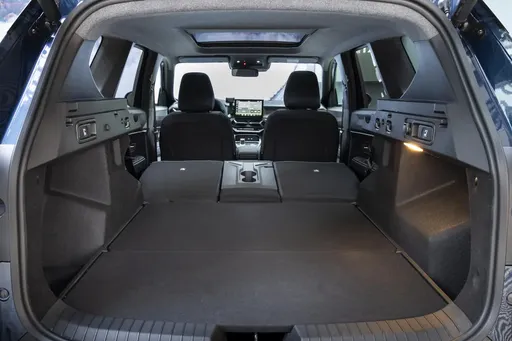
  • noticeably more trunk space
details

All details on performance, efficiency, range and trunk space can be found in the technical comparison below – including user reviews for both models.

By Achim Sedelmaier

Qashqai

A Clash of Titans: Nissan Qashqai vs. Dacia Bigster

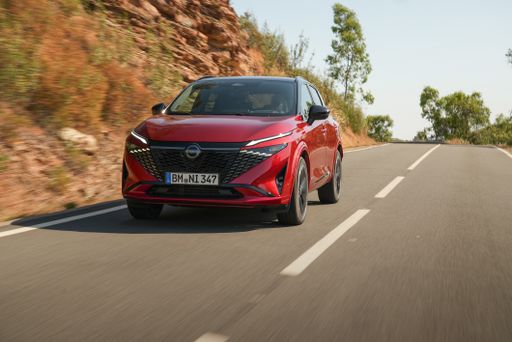
In the burgeoning compact SUV market, two contenders have emerged that cater to distinct preferences and needs: the Nissan Qashqai and the Dacia Bigster. Both vehicles boast innovative technologies and design philosophies, yet they differ significantly in their offerings. This article delves into a comprehensive comparison of these two popular models, analyzing their technical aspects and innovations.
Bigster

Design and Dimensions

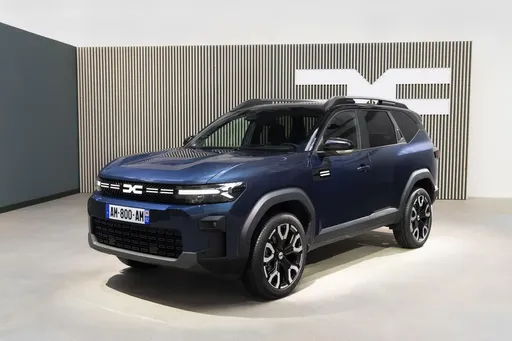
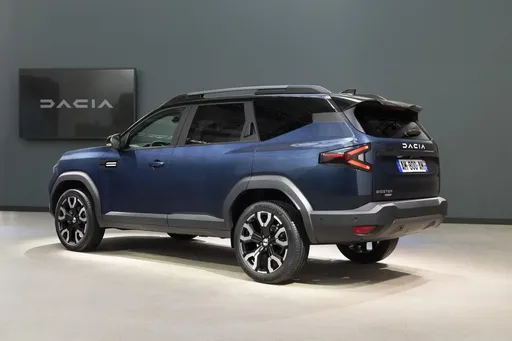
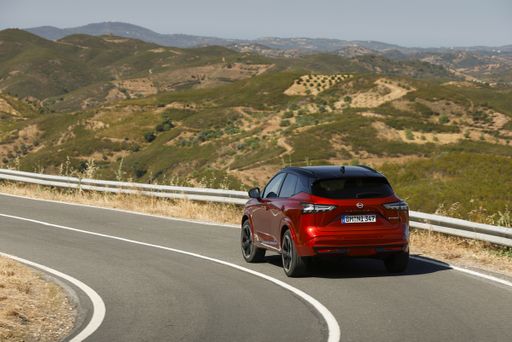
The Nissan Qashqai measures 4425 mm in length, 1835 mm in width, and stands tall at 1625 mm, striking a balance between compact size and spaciousness. Conversely, the Dacia Bigster is slightly larger, at 4570 mm long and 1813 mm wide, with a height of 1705 mm, providing a more robust presence on the road. Both vehicles offer five doors and can comfortably accommodate five passengers, making them ideal for families or adventure seekers.

Qashqai

Engine Options and Performance

Under the hood, the Nissan Qashqai offers a range of engine types, including petrol MHEV and full hybrid configurations, producing between 140 to 190 horsepower. With torque figures peaking at 330 Nm, it provides responsive handling and acceleration. The Qashqai can sprint from 0-100 km/h in as fast as 7.9 seconds, showcasing its capability in a competitive segment.

On the other hand, the Dacia Bigster features a choice of petrol MHEV, full hybrid, and LPG engines, delivering between 130 to 155 horsepower. Its peak torque is 230 Nm, resulting in a more moderate 0-100 km/h time of around 9.7 seconds. While the Bigster is designed with efficiency in mind, particularly with its lower fuel consumption figures, it may not match the Qashqai’s powerhouse performance on the open road.

Bigster

Transmission and Drive Options

The Qashqai is versatile in its transmission offerings, with options for manual, CVT, and reduction gearbox, along with both front-wheel and all-wheel drive capabilities. This flexibility is ideal for varying driving conditions, from urban commuting to off-road excursions.

The Dacia Bigster, while offering a more limited selection, includes manual and automated gear options and can be configured in both front-wheel and all-wheel-drive formats, satisfying the needs of drivers seeking reliability and control in varying terrains.

Qashqai

Fuel Economy and CO2 Emissions

Fuel efficiency remains a crucial consideration, particularly with rising fuel prices. The Nissan Qashqai boasts an impressive consumption range from 5.1 to 6.8 L/100km, alongside CO2 emissions ranging from 116 to 154 g/km. This positions it as a relatively eco-friendly option within the SUV category.

In comparison, the Dacia Bigster takes the lead in efficiency, with consumption figures as low as 4.7 L/100km and CO2 emissions dropping to an admirable 106 g/km. This makes the Bigster not only budget-friendly but also a more ecologically conscious choice for environmentally-aware consumers.

Bigster

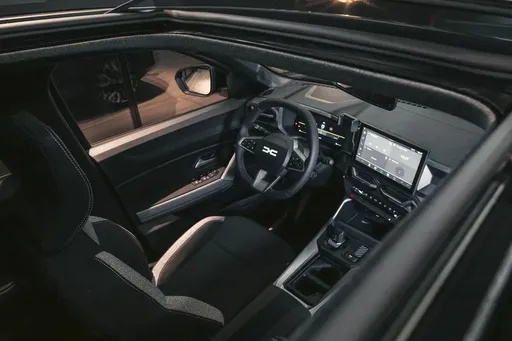
Interior Space and Technology

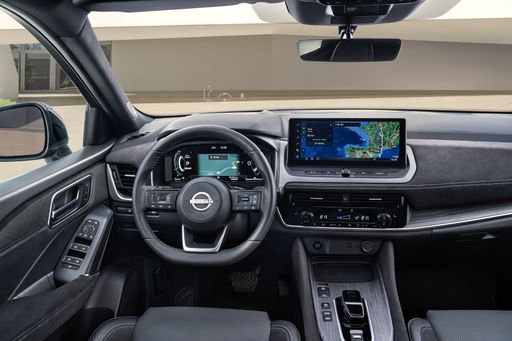
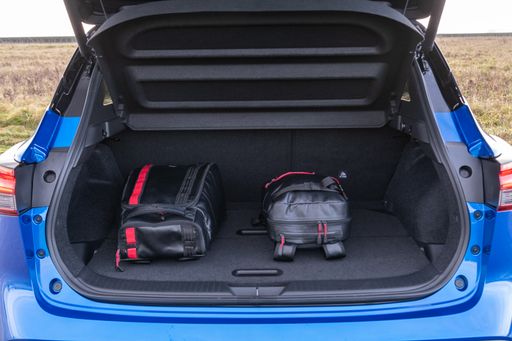
When it comes to interior space, the Qashqai features a trunk capacity ranging from 479 to 504 liters, offering adequate storage for day-to-day needs. Technologically, it is replete with modern infotainment systems and safety features designed to enhance the driving experience.

In contrast, the Bigster excels in cargo capacity, boasting trunk sizes between 546 to 667 liters, making it more suitable for those with bulky equipment or family travel. While it may not offer as sophisticated tech as the Qashqai, Dacia’s focus remains on practicality and value for money.

Qashqai

Conclusion: Choosing the Right SUV for You

The choice between the Nissan Qashqai and Dacia Bigster boils down to personal preferences and needs. The Qashqai resonates with those who prioritize performance, advanced technology, and a premium driving experience. Alternatively, the Bigster appeals to budget-conscious buyers who value efficiency and practicality, with added cargo space.

As the compact SUV segment continues to grow, both vehicles will undoubtedly play a significant role, catering to diverse consumer demands. Whichever you choose, rest assured that the Nissan Qashqai and Dacia Bigster represent solid options within a competitive marketplace.

Here’s where it gets real: The technical differences in detail

Qashqai

Costs and Efficiency:

Price and efficiency are often the first things buyers look at. Here it becomes clear which model has the long-term edge – whether at the pump, the plug, or in purchase price.

Dacia Bigster is considerably cheaper – starting at 20,600 £ , while the Nissan Qashqai costs 29,600 £ . That’s a price difference of around 9,043 £.

Fuel consumption also shows a difference: the Nissan Qashqai uses 4.5 L/100km and is very slightly more efficient than the Dacia Bigster with 4.7 L/100km. The difference is about 0.2 L/100km.

Bigster

Engine and Performance:

Power, torque and acceleration are the classic benchmarks for car enthusiasts – and here, some clear differences start to show.

When it comes to engine power, the Nissan Qashqai offers markedly more power – delivering 205 HP compared to 158 HP. That’s roughly 47 HP more horsepower.

When accelerating from 0 to 100 km/h, the Nissan Qashqai is noticeably quicker – completing the sprint in 7.6 s, while the Dacia Bigster takes 9.7 s. That’s about 2.1 s quicker.

There’s also a difference in torque: the Nissan Qashqai delivers markedly more torque with 330 Nm compared to 230 Nm. That’s about 100 Nm more.

Qashqai

Space and Everyday Use:

Cabin size, boot volume and payload all play a role in everyday practicality. Here, comfort and flexibility make the difference.

Both vehicles offer seating for 5 people.

In terms of curb weight, Nissan Qashqai is only slightly lighter – 1,420 kg compared to 1,425 kg. The difference is around 5 kg.

Looking at boot space, the Dacia Bigster offers noticeably more boot space – 667 L compared to 504 L. That’s a difference of about 163 L.

When it comes to payload, the Nissan Qashqai carries moderately more – 520 kg compared to 465 kg. That’s a difference of about 55 kg.

Who wins the race in the data check?

The Nissan Qashqai comes out modestly ahead in the objective data comparison.
This result only shows which model scores more points on paper – not which of the two cars feels right for you.

from £29,600
Qashqai

Nissan Qashqai

  • Engine Type : Petrol MHEV, Full Hybrid
  • Transmission : Manuel, Automatic
  • Drive Type : Front-Wheel Drive, All-Wheel Drive
  • Power HP : 140 - 205 HP
  • Consumption L/100km : 4.5 - 6.8 L/100km
Nissan Qashqai
Dacia Bigster

Costs and Consumption

View detailed analysis

Engine and Performance

View detailed analysis

Dimensions and Body

View detailed analysis

Nissan Qashqai

The Nissan Qashqai blends practical, family-friendly packaging with SUV styling that refuses to shout, making it a sensible and dependable choice for everyday life. It’s comfortable to live with, economical on the road, and neatly equipped enough to feel modern without ever feeling precious — perfect if you want crossover versatility without the drama.

details

Dacia Bigster

The Bigster is poised to redefine the SUV segment with its bold design and spacious interior, catering to the needs of both families and adventure seekers alike. Emphasizing sustainability and practicality, this model reflects a modern approach to automotive engineering, making it a compelling choice for environmentally conscious drivers. With its striking presence on the road, the Bigster not only captures attention but also embodies a new era of versatile mobility.

details
Nissan Qashqai
Dacia Bigster

Costs and Consumption

Price
29,600 - 39,900 £
Price
20,600 - 28,100 £
Consumption L/100km
4.5 - 6.8 L/100km
Consumption L/100km
4.7 - 7.2 L/100km
Consumption kWh/100km
-
Consumption kWh/100km
-
Electric Range
-
Electric Range
-
Battery Capacity
-
Battery Capacity
-
co2
102 - 154 g/km
co2
106 - 134 g/km
Fuel tank capacity
55 L
Fuel tank capacity
-

Dimensions and Body

Body Type
SUV
Body Type
SUV
Seats
5
Seats
5
Doors
5
Doors
-
Curb weight
1,420 - 1,665 kg
Curb weight
1,425 - 1,611 kg
Trunk capacity
479 - 504 L
Trunk capacity
546 - 667 L
Length
4,425 mm
Length
-
Width
1,835 mm
Width
1,813 mm
Height
1,625 mm
Height
-
Max trunk capacity
1,422 - 1,447 L
Max trunk capacity
-
Payload
466 - 520 kg
Payload
434 - 465 kg

Engine and Performance

Engine Type
Petrol MHEV, Full Hybrid
Engine Type
Petrol MHEV, Full Hybrid, LPG
Transmission
Manuel, Automatic
Transmission
Manuel, Automatic
Transmission Detail
Manual Gearbox, CVT, Reduction Gearbox
Transmission Detail
Manual Gearbox, Automated Manual, Dual-Clutch Automatic
Drive Type
Front-Wheel Drive, All-Wheel Drive
Drive Type
Front-Wheel Drive, All-Wheel Drive
Power HP
140 - 205 HP
Power HP
140 - 158 HP
Acceleration 0-100km/h
7.6 - 10.2 s
Acceleration 0-100km/h
9.7 - 10.5 s
Max Speed
170 - 206 km/h
Max Speed
-
Torque
240 - 330 Nm
Torque
230 Nm
Number of Cylinders
3 - 4
Number of Cylinders
3 - 4
Power kW
103 - 151 kW
Power kW
103 - 116 kW
Engine capacity
1,332 - 1,498 cm3
Engine capacity
1,199 - 1,799 cm3

General

Model Year
2,025 - 2,026
Model Year
2025
CO2 Efficiency Class
E, C
CO2 Efficiency Class
D, C
Brand
Nissan
Brand
Dacia
DriveDuel uses data analysis and artificial intelligence to evaluate vehicle data and create content. Content is regularly reviewed and improved. The displayed prices are estimates based on German list prices, adjusted to the respective country’s VAT. Country-specific registration taxes are not included. This information is not legally binding.