VS

Omoda 5 vs BYD Atto 3 comparison

Compare performance (204 HP vs 449 HP), boot space and price (31,600 £ vs 38,600 £ ) at a glance. Find out which car is the better choice for you – Omoda 5 or BYD Atto 3?

Omoda 5 vs BYD Atto 3: Key differences

Omoda 5

5 (4 Reviews)
rate
  • clearly cheaper
details

BYD Atto 3

4.7 (3 Reviews)
rate
  • considerably more power
  • a bit more electric range
  • significantly quicker 0–100 km/h
details

All details on performance, efficiency, range and trunk space can be found in the technical comparison below – including user reviews for both models.

By Achim Sedelmaier

5

Battle of the SUVs: BYD Atto 3 vs. Omoda 5

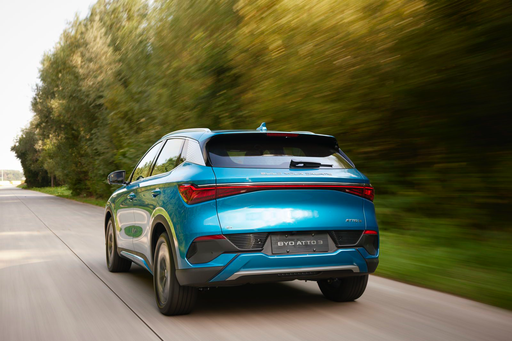
The automotive industry is witnessing a paradigm shift with electrification and advanced technology taking center stage. Within this dynamic landscape, two contenders have emerged, each representing distinct facets of innovation. The BYD Atto 3 and the Omoda 5 are making quite the stir, promising future-forward technology wrapped in the allure of sleek SUV designs. As we delve into the specifics, let's see how the eco-conscious electric BYD Atto 3 squares off against the power-driven and stylish Omoda 5.
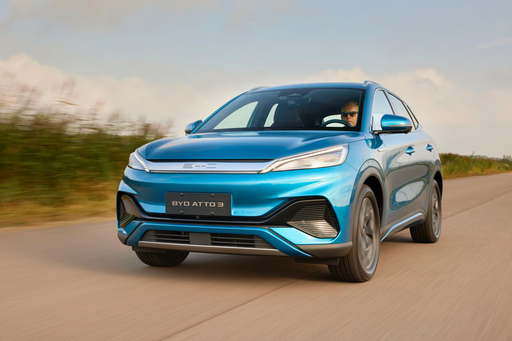
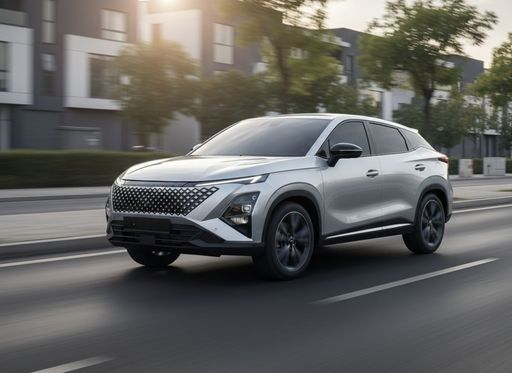
Atto 3

Powertrain and Performance

When it comes to power, both the BYD Atto 3 and Omoda 5 precisely match with 204 HP, derived from distinctly different sources. The Atto 3 boasts an electric motor providing a hefty 310 Nm of torque, which translates into a smooth, silent ride, accelerating from 0 to 100 km/h in 7.3 seconds. Its top speed is capped at 160 km/h, ideal for sustainable and efficient urban driving.

Conversely, the Omoda 5 is powered by a 1598 cm3 petrol engine. It showcases a competitive performance with 290 Nm of torque, reaching a top speed of 220 km/h and acceleration from 0 to 100 km/h in 7.8 seconds. While slightly slower in acceleration compared to its electric rival, the Omoda 5 compensates with a higher top speed, appealing to those who still relish the thrill of traditional driving dynamics.

Efficiency and Range

Efficiency is where the BYD Atto 3 truly shines, with an electricity consumption of 16 kWh/100km, earning it an impressive range of 420 km on a single charge. This positions the Atto 3 as an exemplary model in eco-friendliness, maintaining a CO2 emission rating of 0 g/km, thus showcasing its commitment to sustainability.

On the other hand, the Omoda 5 demonstrates decent efficiency for a petrol engine, consuming 7.5 liters/100km. This is paired with a fuel tank capacity of 51 liters. However, it lacks the zero-emission advantage that its electric counterpart provides, marking a notable distinction in environmental impact between the two.

Design and Dimensions

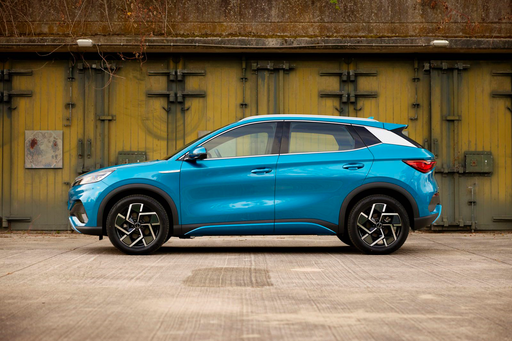
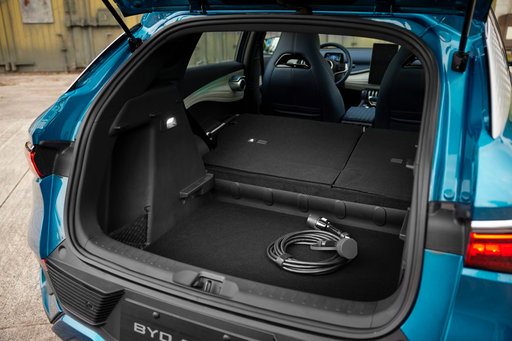
Both SUVs exude modernity and style in their design ethos. The BYD Atto 3 measures 4455 mm in length, 1875 mm in width, and 1615 mm in height, promising a spacious interior with a trunk capacity of 440 liters, catering to the practical needs of modern families.

The Omoda 5, slightly more compact, measures 4424 mm in length, 1830 mm in width, and 1588 mm in height. While detailed trunk space specifications aren't provided, the potential for stylish urban mobility appears prioritized, blended with sporty aesthetics.

Conclusion

As each model caters to a specific audience, the choice between the BYD Atto 3 and Omoda 5 largely hinges on performance priorities. The Atto 3 is tailored for the environmentally conscious consumer seeking efficiency and emission-free driving. Meanwhile, the Omoda 5 caters to driving enthusiasts interested in performance and speed, maintaining the classical charm of a petrol engine. Thus, each model stands out in its niche—where innovation meets individual preferences.

Here’s where it gets real: The technical differences in detail

5

Costs and Efficiency:

Looking at overall running costs, both models reveal some interesting differences in everyday economy.

Omoda 5 is clearly cheaper – starting at 31,600 £ , while the BYD Atto 3 costs 38,600 £ . That’s a price difference of around 6,934 £.

As for electric range, the BYD Atto 3 offers a bit more range – reaching up to 510 km, about 80 km more than the Omoda 5.

Atto 3

Engine and Performance:

Power, torque and acceleration say a lot about how a car feels on the road. This is where you see which model delivers more driving dynamics.

When it comes to engine power, the BYD Atto 3 offers considerably more power – delivering 449 HP compared to 204 HP. That’s roughly 245 HP more horsepower.

When accelerating from 0 to 100 km/h, the BYD Atto 3 is significantly quicker – completing the sprint in 3.9 s, while the Omoda 5 takes 7.6 s. That’s about 3.7 s quicker.

There’s also a difference in torque: the BYD Atto 3 delivers clearly more torque with 560 Nm compared to 340 Nm. That’s about 220 Nm more.

Space and Everyday Use:

Cabin size, boot volume and payload all play a role in everyday practicality. Here, comfort and flexibility make the difference.

Both vehicles offer seating for 5 people.

Who wins the race in the data check?

The BYD Atto 3 stands well ahead of its rival in the objective data comparison.
This result only shows which model scores more points on paper – not which of the two cars feels right for you.

from £38,600
Atto 3

BYD Atto 3

  • Engine Type : Electric
  • Transmission : Automatic
  • Drive Type : Rear-Wheel Drive, All-Wheel Drive
  • Power HP : 313 - 449 HP
  • Electric Range : 470 - 510 km
Omoda 5
BYD Atto 3

Costs and Consumption

View detailed analysis

Engine and Performance

View detailed analysis

Dimensions and Body

View detailed analysis

Omoda 5

The Omoda 5 arrives as a stylish, tech-forward compact crossover that punches above its class with bold design and a surprisingly premium cabin. It’s an attractive choice for buyers who want modern gadgets, confident road manners and value without the usual showroom drama.

details

BYD Atto 3

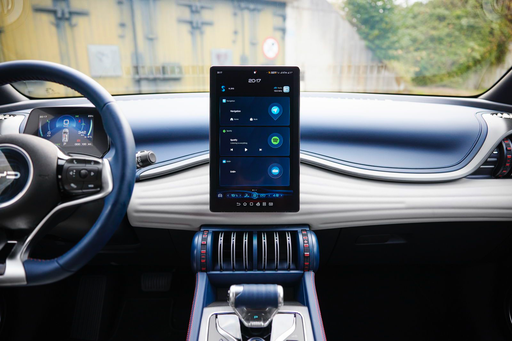
The BYD Atto 3 mixes quirky crossover styling with a cleverly packaged interior that feels more premium than its price suggests. Easy to drive, surprisingly practical and loaded with user-friendly tech, it's a strong choice for buyers who want an EV that's fun without being fussy.

details
Omoda 5
BYD Atto 3

Costs and Consumption

Price
31,600 £
Price
38,600 - 43,700 £
Consumption L/100km
-
Consumption L/100km
-
Consumption kWh/100km
15.9 kWh/100km
Consumption kWh/100km
-
Electric Range
430 km
Electric Range
470 - 510 km
Battery Capacity
-
Battery Capacity
-
co2
0 g/km
co2
0 g/km
Fuel tank capacity
-
Fuel tank capacity
-

Dimensions and Body

Body Type
SUV
Body Type
SUV
Seats
5
Seats
5
Doors
-
Doors
-
Curb weight
1,710 kg
Curb weight
-
Trunk capacity
350 L
Trunk capacity
-
Length
-
Length
-
Width
1,830 mm
Width
1,875 mm
Height
-
Height
-
Max trunk capacity
-
Max trunk capacity
-
Payload
536 kg
Payload
-

Engine and Performance

Engine Type
Electric
Engine Type
Electric
Transmission
Automatic
Transmission
Automatic
Transmission Detail
Reduction Gearbox
Transmission Detail
Reduction Gearbox
Drive Type
Front-Wheel Drive
Drive Type
Rear-Wheel Drive, All-Wheel Drive
Power HP
204 HP
Power HP
313 - 449 HP
Acceleration 0-100km/h
7.6 s
Acceleration 0-100km/h
3.9 - 5.5 s
Max Speed
-
Max Speed
-
Torque
340 Nm
Torque
380 - 560 Nm
Number of Cylinders
-
Number of Cylinders
-
Power kW
150 kW
Power kW
230 - 330 kW
Engine capacity
-
Engine capacity
-

General

Model Year
2026
Model Year
2026
CO2 Efficiency Class
A
CO2 Efficiency Class
A
Brand
Omoda
Brand
BYD
DriveDuel uses data analysis and artificial intelligence to evaluate vehicle data and create content. Content is regularly reviewed and improved. The displayed prices are estimates based on German list prices, adjusted to the respective country’s VAT. Country-specific registration taxes are not included. This information is not legally binding.