VS

Vauxhall Astra vs Ford Puma comparison

Compare performance (196 HP vs 168 HP), boot space and price (28,300 £ vs 23,900 £ ) at a glance. Find out which car is the better choice for you – Vauxhall Astra or Ford Puma?

Vauxhall Astra vs Ford Puma: Key differences

Vauxhall Astra

4.6 (2 Reviews)
rate
  • a bit more power
  • considerably more efficient
  • only slightly more electric range
details

Ford Puma

3 (11 Reviews)
rate
  • slightly cheaper
  • a bit more efficient
  • marginally quicker 0–100 km/h
  • very slightly lighter
  • slightly more trunk space
details

All details on performance, efficiency, range and trunk space can be found in the technical comparison below – including user reviews for both models.

By Achim Sedelmaier

Astra

Ford Puma VS Vauxhall Astra — a short guide for shoppers

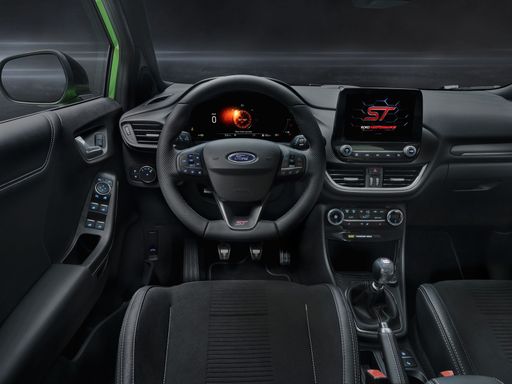
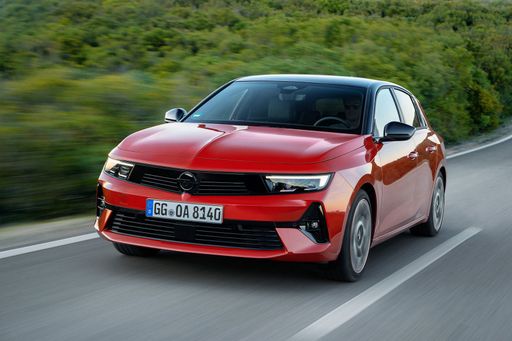
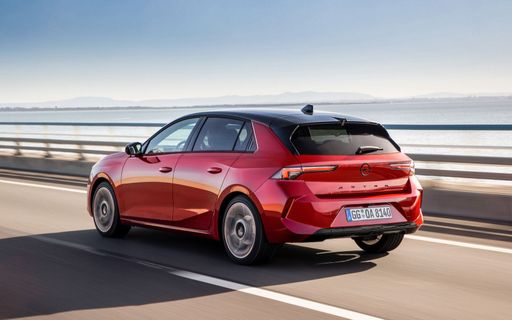
Ford Puma vs Vauxhall Astra sets up a clear contrast between a sporty compact crossover and a sober, long-distance-focused hatchback. The Puma pitches agility, clever rear storage and a tech-forward cabin while the Astra leans on quietness, supportive seats and straightforward ergonomics. Buyers who prioritise driving feel and versatile loadspace will read the Puma as the more entertaining choice, whereas those who value relaxed motorway miles and familiar controls will tilt toward the Astra. This page will walk through how those differences matter in daily life rather than in spec sheets.
Puma

Driving character and motorway behavior

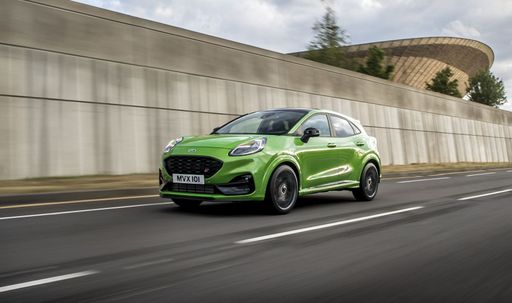
The Ford Puma drives like a small crossover with a lively chassis, giving sharper turn-in and more reward on B-roads, while the Vauxhall Astra prefers to be steady and composed. Puma’s handling makes city-to-country runs feel engaging but also exposes firmer suspension responses over sharp urban bumps; Astra soaks up long motorway distances with less fuss and lower perceived noise. If you enjoy steering feedback and corner confidence, the Puma will feel more satisfying, whereas the Astra reduces fatigue on long commutes with a calmer demeanor. Both are competent on the motorway, but the Puma’s personality is sporty and the Astra’s is comfortably neutral.

Astra

Cabin feel, controls and perceived quality

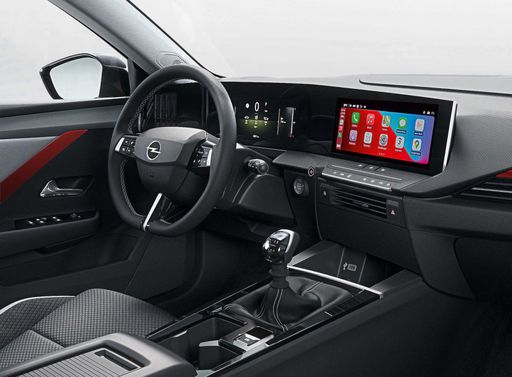
Inside, the Ford Puma presents a more modern, screen-led layout while the Vauxhall Astra favours physical controls and conventional ergonomics that many buyers find less distracting. Puma’s big displays and connectivity feel contemporary, yet the reliance on touchscreen climate controls can interrupt focus; Astra’s dedicated knobs and AGR-certified seats make everyday operation and long hours behind the wheel easier. Material choices in both cabins are mixed, but the Astra’s quieter, more cushioned environment reads as more grown-up on long journeys, while the Puma trades some perceived refinement for a sportier, tech-rich vibe. If tactile buttons and a tranquil cockpit matter most, the Astra wins on comfort of use; if interface and modern tech are higher on the checklist, the Puma answers that call.

Puma

Practicality and luggage usability

The Ford Puma stands out with a uniquely practical rear load arrangement and the washable, deep storage well that suits muddy boots and odd-shaped kit, whereas the Vauxhall Astra’s hatchback layout offers predictable, roomy luggage space and a flat load floor. Puma’s clever MegaBox makes everyday loading and wet-item storage easier without being a bulkier car, while the Astra’s standard boot and optional Sports Tourer variant give clearer volume advantages for families who need pure cargo capacity. Rear-seat room is tighter in the Puma, so the Astra will feel more accommodating when you regularly carry adults in the back. In short, choose Puma for clever flexible cargo and Astra for conventional, family-friendly boot space.

Astra

City friendliness, parking and visibility

In town the Ford Puma feels nimble and easy to place thanks to a compact footprint and quick steering, while the Vauxhall Astra trades a touch of agility for superior forward visibility and a more straightforward driving position. Both cars suffer from limited rearward sightlines because of thick C-pillars, but Puma’s cameras and parking aids are more crucial to compensate for the blind spots, whereas Astra’s cockpit and mirror setup give a clearer feel at low speeds. If you frequently thread through tight streets and value playful handling, the Puma will make city driving feel lighter; if you prefer confidence from your seating position and simpler controls when parking, the Astra is the more relaxed urban partner. Either way, parking sensors and cameras are recommended options on both models.

Puma

Who should consider the Puma and who should pick the Astra

Put simply: the Ford Puma suits buyers who want a compact SUV with engaging handling, modern connectivity and a uniquely practical boot for active lifestyles, while the Vauxhall Astra appeals to buyers who prioritise seat comfort, a quiet long‑distance experience and familiar, less-distracting controls. If your daily life includes sporty back roads, weekend kit and a taste for a tech-forward cabin, the Puma will fit better; if most miles are motorways, or you carry adults in the rear frequently and prefer plain‑spoken ergonomics, the Astra will be the more sensible companion. Both have trade-offs in rear-seat space and material feel, so your decision should hinge on whether you value driving excitement or long-haul composure. The technical comparison that follows will dive into engines, efficiency and running costs to help you balance those real-world priorities.

Here’s where it gets real: The technical differences in detail

Astra

Costs and Efficiency:

Price and efficiency are key factors when choosing a car – and this is often where the real differences emerge.

Ford Puma is slightly cheaper – starting at 23,900 £ , while the Vauxhall Astra costs 28,300 £ . That’s a price difference of around 4,363 £.

Fuel consumption also shows a difference: the Vauxhall Astra uses 2.2 L/100km and is considerably more efficient than the Ford Puma with 5.4 L/100km. The difference is about 3.2 L/100km.

In terms of energy consumption, the Ford Puma is a bit more efficient: consuming 13 kWh/100km compared to 15.3 kWh/100km for the Vauxhall Astra. That’s a difference of about 2.3 kWh/100km.

As for electric range, the Vauxhall Astra offers only slightly more range – reaching up to 454 km, about 37 km more than the Ford Puma.

Puma

Engine and Performance:

Power, torque and acceleration are the classic benchmarks for car enthusiasts – and here, some clear differences start to show.

When it comes to engine power, the Vauxhall Astra offers a bit more power – delivering 196 HP compared to 168 HP. That’s roughly 28 HP more horsepower.

When accelerating from 0 to 100 km/h, the Ford Puma is marginally quicker – completing the sprint in 7.4 s, while the Vauxhall Astra takes 7.6 s. That’s about 0.2 s quicker.

There’s also a difference in torque: the Vauxhall Astra delivers somewhat more torque with 360 Nm compared to 290 Nm. That’s about 70 Nm more.

Astra

Space and Everyday Use:

Beyond pure performance, interior space and usability matter most in daily life. This is where you see which car is more practical and versatile.

Both vehicles offer seating for 5 people.

In terms of curb weight, Ford Puma is very slightly lighter – 1,316 kg compared to 1,438 kg. The difference is around 122 kg.

Looking at boot space, the Ford Puma offers slightly more boot space – 523 L compared to 422 L. That’s a difference of about 101 L.

When it comes to payload, the Vauxhall Astra carries marginally more – 502 kg compared to 469 kg. That’s a difference of about 33 kg.

Who wins the race in the data check?

The Vauxhall Astra is decisively ahead in the objective data comparison.
This result only shows which model scores more points on paper – not which of the two cars feels right for you.

from £28,300
Astra

Vauxhall Astra

  • Engine Type Petrol MHEV, Plugin Hybrid, Diesel, Electric
  • Transmission Automatic
  • Drive Type Front-Wheel Drive
  • Power HP 130 - 196 HP
  • Consumption L/100km 2.2 - 4.9 L/100km
  • Consumption kWh/100km 15.3 kWh/100km
  • Electric Range 84 - 454 km
Vauxhall Astra
Ford Puma

Costs and Consumption

View detailed analysis

Engine and Performance

View detailed analysis

Dimensions and Body

View detailed analysis

Vauxhall Astra

The Opel Astra strikes a neat balance between everyday practicality and engaging handling, so the daily grind suddenly feels a bit less dull. Inside it's intelligently packaged with modern kit and comfortable seating, making it a very sensible pick for buyers who want a dependable hatchback that doesn't take itself too seriously.

details

Ford Puma

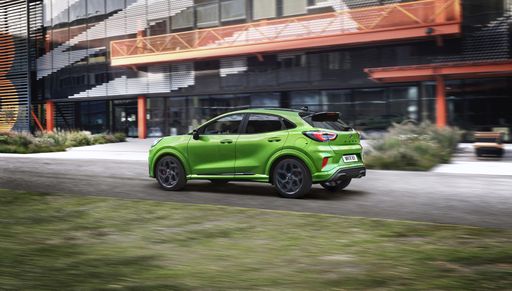
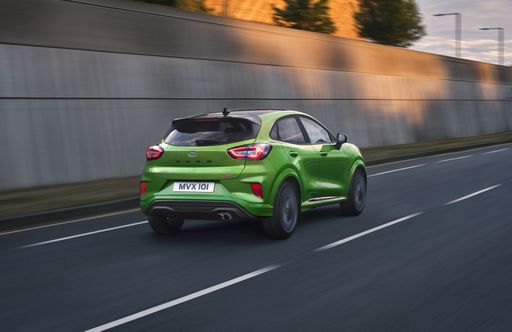
The Ford Puma blends sporty styling with practical everyday usability, making it a smart choice for drivers who want flair without sacrificing versatility. Its engaging driving character and clever interior packaging give it a more dynamic and useful feel than many rivals.

details
Vauxhall Astra
Ford Puma

Costs and Consumption

Price
28,300 - 37,900 £
Price
23,900 - 36,300 £
Consumption L/100km
2.2 - 4.9 L/100km
Consumption L/100km
5.4 - 5.9 L/100km
Consumption kWh/100km
15.3 kWh/100km
Consumption kWh/100km
13 - 13.9 kWh/100km
Electric Range
84 - 454 km
Electric Range
404 - 417 km
Battery Capacity
-
Battery Capacity
-
co2
0 - 130 g/km
co2
0 - 135 g/km
Fuel tank capacity
-
Fuel tank capacity
-

Dimensions and Body

Body Type
Hatchback
Body Type
SUV
Seats
5
Seats
5
Doors
-
Doors
-
Curb weight
1,438 - 1,733 kg
Curb weight
1,316 - 1,563 kg
Trunk capacity
310 - 422 L
Trunk capacity
456 - 523 L
Length
-
Length
-
Width
1,859 mm
Width
1,805 mm
Height
-
Height
-
Max trunk capacity
-
Max trunk capacity
-
Payload
438 - 502 kg
Payload
367 - 469 kg

Engine and Performance

Engine Type
Petrol MHEV, Plugin Hybrid, Diesel, Electric
Engine Type
Petrol MHEV, Electric
Transmission
Automatic
Transmission
Manuel, Automatic
Transmission Detail
Dual-Clutch Automatic, Automatic Gearbox, Reduction Gearbox
Transmission Detail
Manual Gearbox, Dual-Clutch Automatic, Reduction Gearbox
Drive Type
Front-Wheel Drive
Drive Type
Front-Wheel Drive
Power HP
130 - 196 HP
Power HP
125 - 168 HP
Acceleration 0-100km/h
7.6 - 10.6 s
Acceleration 0-100km/h
7.4 - 9.8 s
Max Speed
-
Max Speed
-
Torque
230 - 360 Nm
Torque
170 - 290 Nm
Number of Cylinders
3 - 4
Number of Cylinders
3
Power kW
96 - 144 kW
Power kW
92 - 124 kW
Engine capacity
1,199 - 1,598 cm3
Engine capacity
999 cm3

General

Model Year
2026
Model Year
2,025 - 2,026
CO2 Efficiency Class
C, B, D, A
CO2 Efficiency Class
D, A
Brand
Vauxhall
Brand
Ford
DriveDuel uses data analysis and artificial intelligence to evaluate vehicle data and create content. Content is regularly reviewed and improved. The displayed prices are estimates based on German list prices, adjusted to the respective country’s VAT. Country-specific registration taxes are not included. This information is not legally binding.