VS

Peugeot 208 vs Ford Puma comparison

Compare performance (156 HP vs 168 HP), boot space and price (21,000 £ vs 23,900 £ ) at a glance. Find out which car is the better choice for you – Peugeot 208 or Ford Puma?

Peugeot 208 vs Ford Puma: Key differences

Peugeot 208

4 (2 Reviews)
rate
  • somewhat cheaper
  • noticeably more efficient
  • very slightly more electric range
  • slightly lighter

Ford Puma

3 (11 Reviews)
rate
  • very slightly more power
  • marginally more efficient
  • slightly quicker 0–100 km/h

All details on performance, efficiency, range and trunk space can be found in the technical comparison below – including user reviews for both models.

208

Ford Puma vs Peugeot 208: A Battle of Innovation and Efficiency

When it comes to choosing a compact vehicle that offers a blend of performance, efficiency, and modern technology, the Ford Puma and Peugeot 208 make for a compelling comparison. Both vehicles offer unique advantages and distinct features to appeal to a wide range of drivers. Let's delve into the technical aspects and innovations of these two models to see which might align better with your automotive desires.

Puma

Body and Design

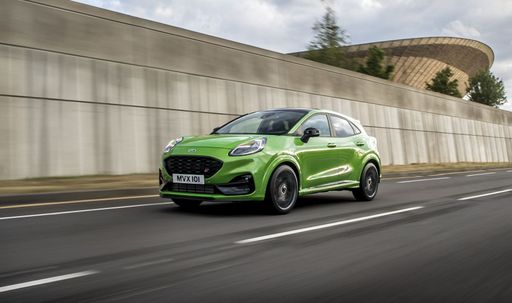
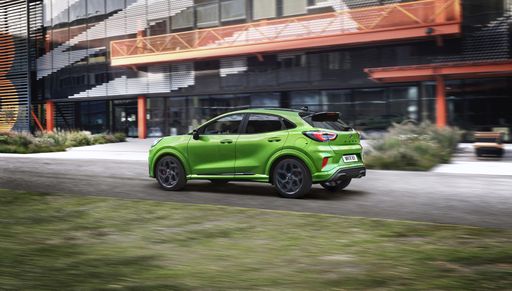
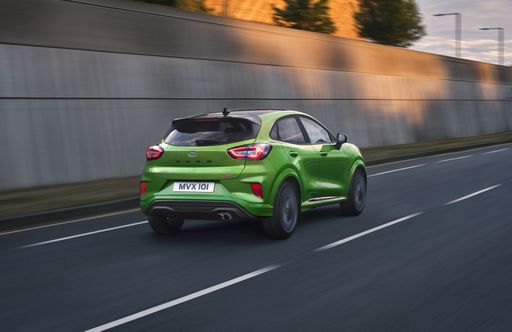
The Ford Puma, with its SUV body type, provides a slightly elevated stance compared to the hatchback design of the Peugeot 208. With dimensions stretching up to 4226 mm in length, the Puma combines sporty aesthetics with practicality. The body design is both aerodynamic and stylish, fitting well within urban settings and open highways.

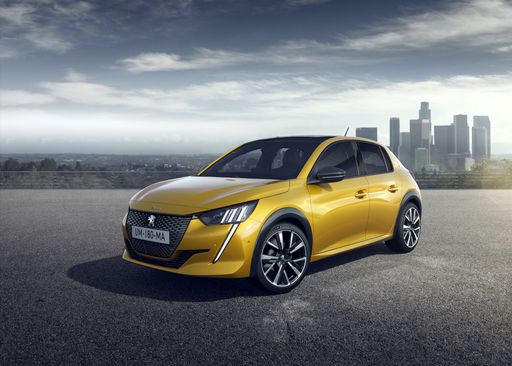
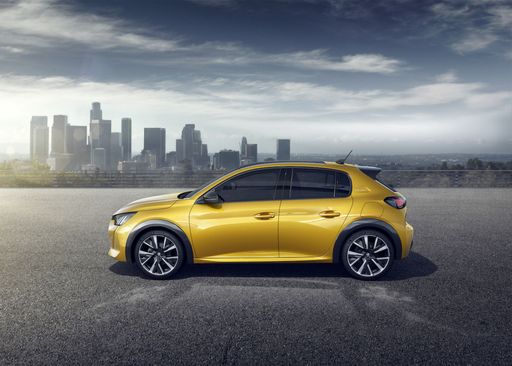
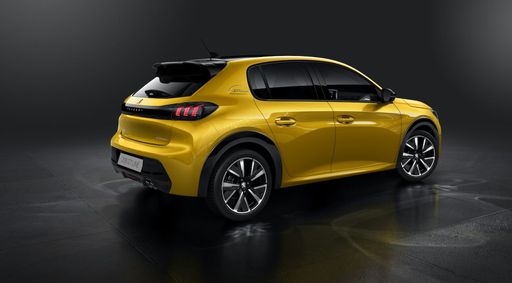
On the other hand, the Peugeot 208 adopts a more compact hatchback silhouette, measuring 4055 mm in length. This makes it highly maneuverable in tight urban environments. Its design is both chic and contemporary, catering to those who prefer a more traditional yet modern car structure.

208

Power and Performance

The Ford Puma offers a versatile range in its powertrain configurations, boasting petrol MHEV and electric options. With power outputs ranging from 125 to 168 HP, the Puma ensures dynamic performance with choices like a manual gearbox, dual-clutch automatic, or a reduction gearbox for the electric variant. Acceleration times from 0-100 km/h vary from 9.8 to an impressive 7.4 seconds, reflecting its sporty credentials.

In contrast, the Peugeot 208 is offered with petrol, petrol MHEV, and electric powertrains. Its power spectrum runs from 101 to 156 HP, paired with either an automatic or a manual gearbox. The 208 achieves 0-100 km/h in timings between 10.7 and 8.3 seconds, showcasing its reliable and efficient engineering.

Puma

Efficiency and Range

Efficiency is a strong suit for both models. The Ford Puma achieves fuel consumption figures of 5.4 to 6 L/100 km in its petrol variants and offers an electric consumption rate between 13.1 to 13.7 kWh/100 km. Its electric variant boasts a range of up to 376 km, providing excellent driving economy and reduced environmental impact.

The Peugeot 208 matches this strength with strong figures itself, presenting fuel consumption as low as 4.7 L/100 km. The electric versions of the 208 achieve 14 to 14.5 kWh/100 km with a range extending from 363 to an impressive 410 km, placing it as a significant contender in the electric vehicle space.

208

Technology and Innovation

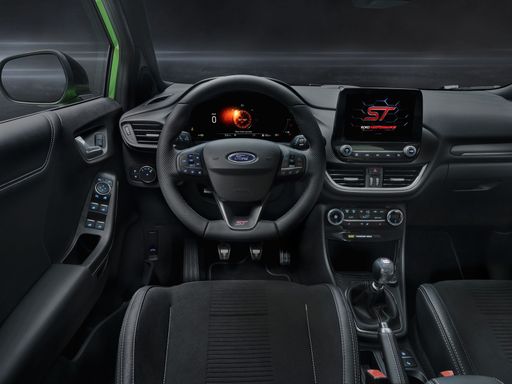
Technology is at the forefront of both vehicles. Ford's innovative mild-hybrid technology in the Puma enhances both performance and fuel efficiency, along with various modern conveniences and driver-assistance systems that ensure safety and ease of use.

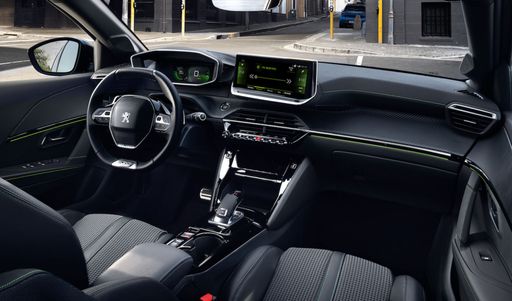
Peugeot 208, meanwhile, impresses with its i-Cockpit design, offering a futuristic and intuitive interior experience. The 208 is loaded with tech-savvy features, making connectivity and in-car technology a delight for tech enthusiasts.

Puma

Conclusion

Choosing between the Ford Puma and the Peugeot 208 comes down to personal preference and specific needs. The Puma offers a more elevated SUV experience, promising powerful performance and efficiency, while the 208 provides a more compact, traditional hatchback that doesn't skimp on innovation or economy.

Ultimately, both cars serve as excellent examples of modern automotive engineering with unique advantages, catering to a wide array of driving preferences and scenarios.

Here’s where it gets real: The technical differences in detail

208

Costs and Efficiency:

Price and efficiency are key factors when choosing a car – and this is often where the real differences emerge.

Peugeot 208 is somewhat cheaper – starting at 21,000 £ , while the Ford Puma costs 23,900 £ . That’s a price difference of around 2,932 £.

Fuel consumption also shows a difference: the Peugeot 208 uses 4.5 L/100km and is noticeably more efficient than the Ford Puma with 5.4 L/100km. The difference is about 0.9 L/100km.

In terms of energy consumption, the Ford Puma is marginally more efficient: consuming 13 kWh/100km compared to 14.1 kWh/100km for the Peugeot 208. That’s a difference of about 1.1 kWh/100km.

As for electric range, the Peugeot 208 offers very slightly more range – reaching up to 432 km, about 15 km more than the Ford Puma.

Puma

Engine and Performance:

Under the bonnet, it becomes clear which model is tuned for sportiness and which one takes the lead when you hit the accelerator.

When it comes to engine power, the Ford Puma offers very slightly more power – delivering 168 HP compared to 156 HP. That’s roughly 12 HP more horsepower.

When accelerating from 0 to 100 km/h, the Ford Puma is slightly quicker – completing the sprint in 7.4 s, while the Peugeot 208 takes 8.3 s. That’s about 0.9 s quicker.

There’s also a difference in torque: the Ford Puma delivers very slightly more torque with 290 Nm compared to 270 Nm. That’s about 20 Nm more.

208

Space and Everyday Use:

Whether family car or daily driver – which one offers more room, flexibility and comfort?

Both vehicles offer seating for 5 people.

In terms of curb weight, Peugeot 208 is slightly lighter – 1,165 kg compared to 1,316 kg. The difference is around 151 kg.

When it comes to payload, the Ford Puma carries only slightly more – 469 kg compared to 430 kg. That’s a difference of about 39 kg.

Who wins the race in the data check?

The Peugeot 208 is barely ahead in the objective data comparison.
This result only shows which model scores more points on paper – not which of the two cars feels right for you.

from £21,000
208

Peugeot 208

  • Engine Type : Electric, Petrol MHEV, Petrol
  • Transmission : Automatic, Manuel
  • Drive Type : Front-Wheel Drive
  • Power HP : 101 - 156 HP
  • Consumption L/100km : 4.5 - 5.1 L/100km
  • Consumption kWh/100km : 14.1 - 15.4 kWh/100km
  • Electric Range : 362 - 432 km
Peugeot 208
Ford Puma

Costs and Consumption

View detailed analysis

Engine and Performance

View detailed analysis

Dimensions and Body

View detailed analysis

Peugeot 208

The Peugeot 208 feels like a city-savvy fox: compact, stylish and surprisingly grown-up, with a cabin that punches above its weight and enough personality to make daily commutes a little less boring. It’s a smart pick for buyers who want chic practicality without the showroom bluster — easy to park, thrifty to run and oddly fun when the road tightens up.

details

Ford Puma

The Ford Puma is a cheeky compact crossover that blends sporty styling with city-friendly practicality, giving drivers a surprisingly fun and composed ride. With clever storage tricks and a lively personality, it’s a smart pick for buyers who want enjoyment without fuss.

details
Peugeot 208
Ford Puma

Costs and Consumption

Price
21,000 - 35,200 £
Price
23,900 - 36,300 £
Consumption L/100km
4.5 - 5.1 L/100km
Consumption L/100km
5.4 - 5.9 L/100km
Consumption kWh/100km
14.1 - 15.4 kWh/100km
Consumption kWh/100km
13 - 13.7 kWh/100km
Electric Range
362 - 432 km
Electric Range
404 - 417 km
Battery Capacity
46 - 51 kWh
Battery Capacity
-
co2
0 - 116 g/km
co2
0 - 135 g/km
Fuel tank capacity
44 L
Fuel tank capacity
-

Dimensions and Body

Body Type
Hatchback
Body Type
SUV
Seats
5
Seats
5
Doors
5
Doors
-
Curb weight
1,165 - 1,530 kg
Curb weight
1,316 - 1,563 kg
Trunk capacity
309 - 352 L
Trunk capacity
-
Length
4,055 mm
Length
-
Width
1,745 mm
Width
1,805 mm
Height
1,430 mm
Height
-
Max trunk capacity
1,118 - 1,163 L
Max trunk capacity
-
Payload
380 - 430 kg
Payload
367 - 469 kg

Engine and Performance

Engine Type
Electric, Petrol MHEV, Petrol
Engine Type
Petrol MHEV, Electric
Transmission
Automatic, Manuel
Transmission
Manuel, Automatic
Transmission Detail
Reduction Gearbox, Dual-Clutch Automatic, Manual Gearbox
Transmission Detail
Manual Gearbox, Dual-Clutch Automatic, Reduction Gearbox
Drive Type
Front-Wheel Drive
Drive Type
Front-Wheel Drive
Power HP
101 - 156 HP
Power HP
125 - 168 HP
Acceleration 0-100km/h
8.3 - 10.9 s
Acceleration 0-100km/h
7.4 - 9.8 s
Max Speed
150 - 200 km/h
Max Speed
-
Torque
205 - 270 Nm
Torque
170 - 290 Nm
Number of Cylinders
3
Number of Cylinders
3
Power kW
74 - 115 kW
Power kW
92 - 124 kW
Engine capacity
1,199 cm3
Engine capacity
999 cm3

General

Model Year
2,023 - 2,026
Model Year
2,025 - 2,026
CO2 Efficiency Class
A, C, D
CO2 Efficiency Class
D, A
Brand
Peugeot
Brand
Ford
DriveDuel uses data analysis and artificial intelligence to evaluate vehicle data and create content. Content is regularly reviewed and improved. The displayed prices are estimates based on German list prices, adjusted to the respective country’s VAT. Country-specific registration taxes are not included. This information is not legally binding.