VS

Peugeot 3008 vs BYD Seal U comparison

Compare performance (325 HP vs 324 HP), boot space and price (35,100 £ vs 34,300 £ ) at a glance. Find out which car is the better choice for you – Peugeot 3008 or BYD Seal U?

Peugeot 3008 vs BYD Seal U: Key differences

Peugeot 3008

3.4 (4 Reviews)
rate
  • very slightly more power
  • clearly more electric range
  • a bit lighter

BYD Seal U

4.1 (7 Reviews)
rate
  • barely cheaper
  • markedly more efficient
  • only slightly quicker 0–100 km/h
  • only slightly more trunk space

All details on performance, efficiency, range and trunk space can be found in the technical comparison below – including user reviews for both models.

3008

Head-to-Head: BYD Seal U VS Peugeot 3008

The SUV market continues to evolve with the introduction of innovative technologies and environmentally friendly options. Today, we compare two remarkable contenders in this category, the BYD Seal U and the Peugeot 3008. Both models showcase cutting-edge designs and appealing features that cater to a variety of preferences. Let’s delve into the details and see how these two stack up against each other.
Seal U

Engine Options and Performance

Both the BYD Seal U and the Peugeot 3008 offer a range of powertrain options. The Seal U is available as a plugin hybrid and an all-electric variant, with power outputs ranging from 218 to 324 HP. In contrast, the 3008 boasts a wider selection with petrol mild hybrid, plugin hybrid, and fully electric versions, delivering between 136 and 231 HP. The Seal U also provides multiple drive configurations, including front-wheel drive and all-wheel drive, whereas the 3008 is front-wheel drive only.

The acceleration of the BYD Seal U varies by model; it can sprint from 0-100 km/h in as quick as 5.9 seconds, while the 3008 achieves this benchmark in 8.4 seconds at its fastest. The 3008 reigns supreme in maximum speed, reaching up to 220 km/h compared to the Seal U's top speed of 180 km/h.

3008

Efficiency and Range

Efficiency is key in the modern automotive world, and both models deliver noteworthy performance in this area. The Seal U's plugin hybrid system offers a noteworthy consumption of between 0.9 and 1.2 L/100 km and a CO2 emissions range of 0 to 26 g/km. The 3008 is similarly efficient, with its plugin hybrid variant consuming as little as 0.9 L/100 km and emitting only 19 g/km of CO2.

When it comes to electric range, the 3008 takes the lead with a maximum range of 698 km, surpassing the Seal U's 500 km. This extended range is supported by the 3008’s larger battery capacity of up to 96.9 kWh, compared to the Seal U's capability.

Seal U

Design and Dimensions

Size and style are often significant factors when choosing an SUV. The BYD Seal U measures between 4775 and 4785 mm in length, offering a spacious cabin complemented by a trunk capacity of up to 552 L. It stands 1668 mm tall and 1890 mm wide. The Peugeot 3008 is slightly more compact, measuring 4542 mm in length, with a width of 1895 mm and a height of 1641 mm. It provides 520 L of trunk capacity, which is substantial for its class.

3008

Innovative Features

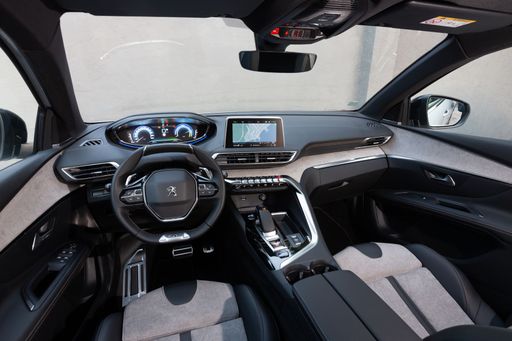
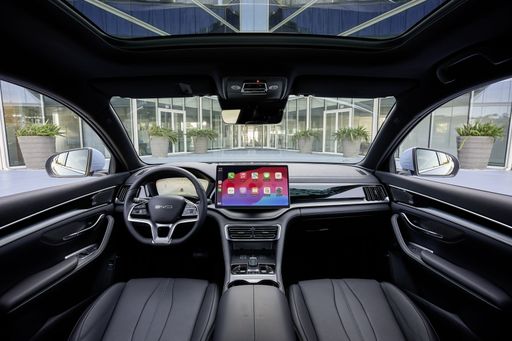
Both SUVs are equipped with state-of-the-art features designed to enhance driving experience and safety. The BYD Seal U includes intuitive infotainment systems and advanced driver assistance technologies. Peugeot’s 3008 impresses with a sleek, digital driver cockpit and optional features like night vision, providing superior visibility in low-light conditions.

Seal U

Conclusion

The BYD Seal U and Peugeot 3008 offer intriguing options in the competitive SUV market, each with its own strengths. The Seal U excels in versatility and driving dynamics, while the 3008 shines with its range and innovative technology. Prospective buyers will appreciate the unique advantages brought forth by each model, making them both worthy contenders in the realm of modern SUVs.

Here’s where it gets real: The technical differences in detail

3008

Costs and Efficiency:

Price and efficiency are key factors when choosing a car – and this is often where the real differences emerge.

BYD Seal U is barely cheaper – starting at 34,300 £ , while the Peugeot 3008 costs 35,100 £ . That’s a price difference of around 865 £.

In terms of energy consumption, the BYD Seal U is markedly more efficient: consuming 12.1 kWh/100km compared to 16.9 kWh/100km for the Peugeot 3008. That’s a difference of about 4.8 kWh/100km.

As for electric range, the Peugeot 3008 offers clearly more range – reaching up to 698 km, about 198 km more than the BYD Seal U.

Seal U

Engine and Performance:

Under the bonnet, it becomes clear which model is tuned for sportiness and which one takes the lead when you hit the accelerator.

When it comes to engine power, the Peugeot 3008 offers very slightly more power – delivering 325 HP compared to 324 HP. That’s roughly 1 HP more horsepower.

When accelerating from 0 to 100 km/h, the BYD Seal U is only slightly quicker – completing the sprint in 5.9 s, while the Peugeot 3008 takes 6 s. That’s about 0.1 s quicker.

Looking at top speed, the Peugeot 3008 is a bit faster – reaching 201 km/h, while the BYD Seal U tops out at 175 km/h. The difference is around 26 km/h.

There’s also a difference in torque: the BYD Seal U delivers very slightly more torque with 550 Nm compared to 511 Nm. That’s about 39 Nm more.

3008

Space and Everyday Use:

Cabin size, boot volume and payload all play a role in everyday practicality. Here, comfort and flexibility make the difference.

Both vehicles offer seating for 5 people.

In terms of curb weight, Peugeot 3008 is a bit lighter – 1,648 kg compared to 1,940 kg. The difference is around 292 kg.

Looking at boot space, the BYD Seal U offers only slightly more boot space – 552 L compared to 520 L. That’s a difference of about 32 L.

For maximum load capacity, the Peugeot 3008 offers marginally more capacity – up to 1,480 L, about 40 L more than the BYD Seal U.

When it comes to payload, the Peugeot 3008 carries a bit more – 467 kg compared to 410 kg. That’s a difference of about 57 kg.

Who wins the race in the data check?

The Peugeot 3008 comes out modestly ahead in the objective data comparison.
This result only shows which model scores more points on paper – not which of the two cars feels right for you.

from £35,100
3008

Peugeot 3008

  • Engine Type : Electric, Petrol MHEV, Plugin Hybrid
  • Transmission : Automatic
  • Drive Type : Front-Wheel Drive, All-Wheel Drive
  • Power HP : 145 - 325 HP
  • Consumption L/100km : 2.4 - 5.4 L/100km
  • Consumption kWh/100km : 16.9 - 17.6 kWh/100km
  • Electric Range : 81 - 698 km
Peugeot 3008
BYD Seal U

Costs and Consumption

View detailed analysis

Engine and Performance

View detailed analysis

Dimensions and Body

View detailed analysis

Peugeot 3008

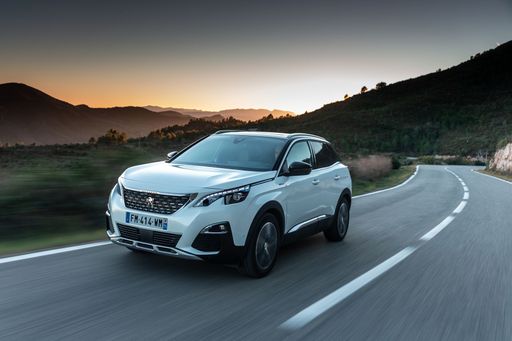
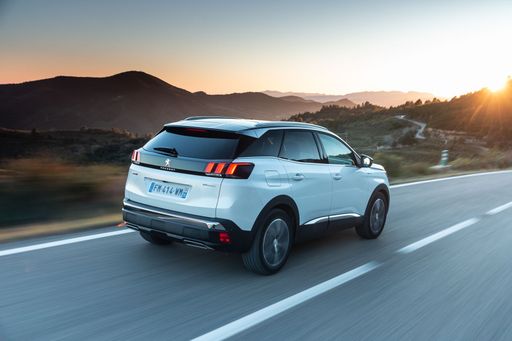
The Peugeot 3008 blends bold French styling with a surprisingly grown-up interior that makes even dull commutes feel a little bit special. Practical enough for family life yet lively to drive, it’s a clever all‑rounder that stands out from the crossover crowd without shouting for attention.

details

BYD Seal U

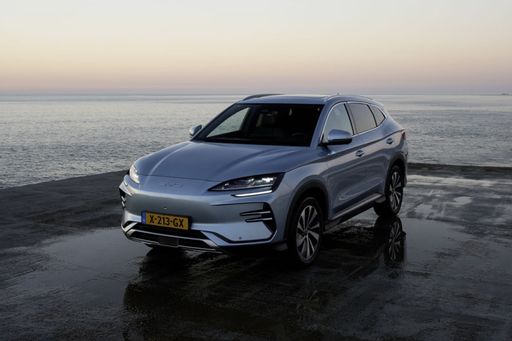
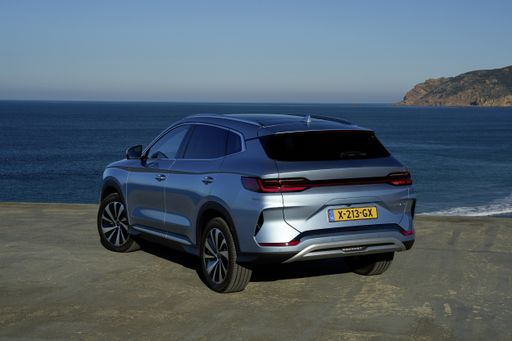
The BYD Seal U pairs a sleek fastback silhouette with a surprisingly roomy, tech-rich cabin, giving electric chic without the showroom pretension. It's a smart pick for buyers after confident handling, sensible practicality and standout value — all wrapped up with a cheeky grin when you put your foot down.

details
Peugeot 3008
BYD Seal U

Costs and Consumption

Price
35,100 - 52,000 £
Price
34,300 - 39,800 £
Consumption L/100km
2.4 - 5.4 L/100km
Consumption L/100km
-
Consumption kWh/100km
16.9 - 17.6 kWh/100km
Consumption kWh/100km
12.1 - 20.5 kWh/100km
Electric Range
81 - 698 km
Electric Range
70 - 500 km
Battery Capacity
0.4 - 96.9 kWh
Battery Capacity
-
co2
0 - 121 g/km
co2
0 - 71 g/km
Fuel tank capacity
55 L
Fuel tank capacity
-

Dimensions and Body

Body Type
SUV
Body Type
SUV
Seats
5
Seats
5
Doors
5
Doors
5
Curb weight
1,648 - 2,266 kg
Curb weight
1,940 - 2,147 kg
Trunk capacity
470 - 520 L
Trunk capacity
425 - 552 L
Length
4,542 mm
Length
4,785 mm
Width
1,895 mm
Width
1,890 mm
Height
1,641 mm
Height
1,668 mm
Max trunk capacity
1,430 - 1,480 L
Max trunk capacity
1,440 L
Payload
432 - 467 kg
Payload
410 kg

Engine and Performance

Engine Type
Electric, Petrol MHEV, Plugin Hybrid
Engine Type
Electric, Plugin Hybrid
Transmission
Automatic
Transmission
Automatic
Transmission Detail
Reduction Gearbox, Dual-Clutch Automatic
Transmission Detail
Reduction Gearbox, Automatic Gearbox
Drive Type
Front-Wheel Drive, All-Wheel Drive
Drive Type
Front-Wheel Drive, All-Wheel Drive
Power HP
145 - 325 HP
Power HP
218 - 324 HP
Acceleration 0-100km/h
6 - 10.2 s
Acceleration 0-100km/h
5.9 - 9.6 s
Max Speed
170 - 201 km/h
Max Speed
175 km/h
Torque
230 - 511 Nm
Torque
300 - 550 Nm
Number of Cylinders
3 - 4
Number of Cylinders
4
Power kW
107 - 239 kW
Power kW
160 - 238 kW
Engine capacity
1,199 - 1,598 cm3
Engine capacity
1,497 - 1,498 cm3

General

Model Year
2,024 - 2,026
Model Year
2,024 - 2,026
CO2 Efficiency Class
A, D, B
CO2 Efficiency Class
A, B
Brand
Peugeot
Brand
BYD
DriveDuel uses data analysis and artificial intelligence to evaluate vehicle data and create content. Content is regularly reviewed and improved. The displayed prices are estimates based on German list prices, adjusted to the respective country’s VAT. Country-specific registration taxes are not included. This information is not legally binding.