@ Peugeot / Stellantis Media
@ Volkswagen AG / VW Media
VS

Peugeot 3008 vs VW T-Roc – Which one offers the better deal?

Two cars, one duel: Peugeot 3008 meets VW T-Roc.
Which one wins in performance, efficiency and value for money? Find out now!

3008 @ Peugeot / Stellantis Media

Peugeot 3008 vs VW T-Roc: A Comprehensive Comparison

The compact SUV segment is always abuzz with competition, but two models stand out due to their performance, design, and innovative features: the Peugeot 3008 and the Volkswagen T-Roc. In this article, we will delve deep into the specifications, technology, and overall driving experience offered by both models, helping potential buyers make an informed decision.
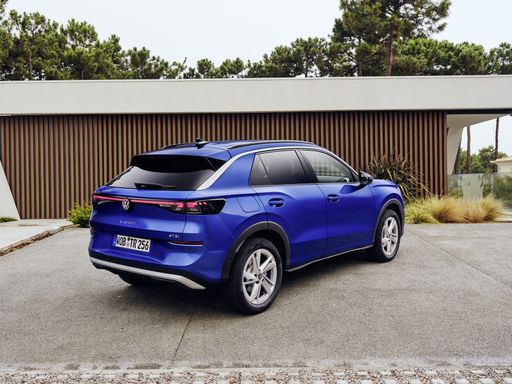
T-Roc @ Volkswagen AG / VW Media

Design and Dimensions

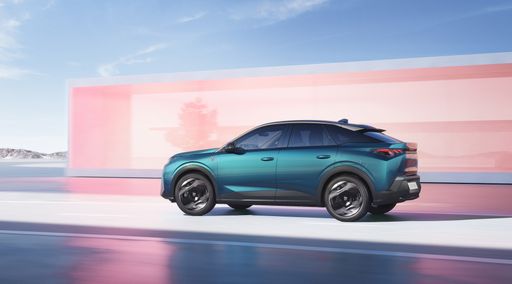
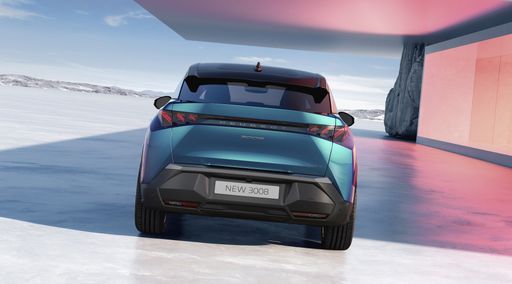
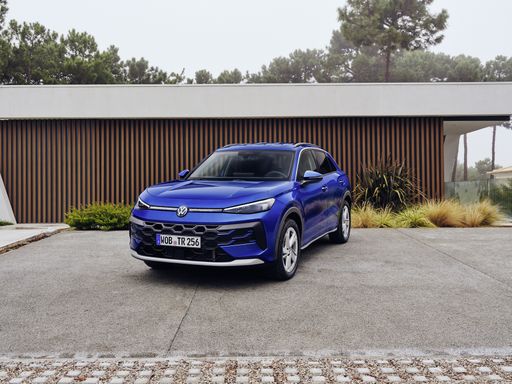
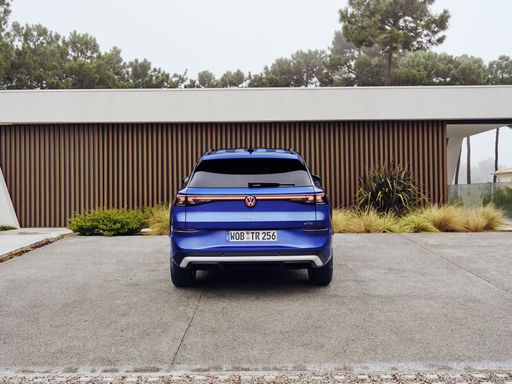
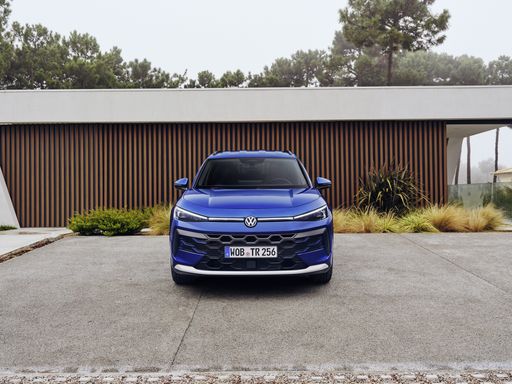
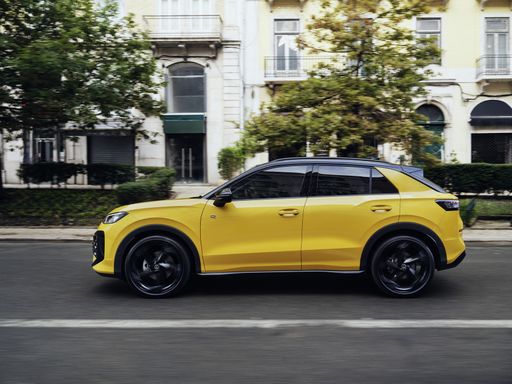
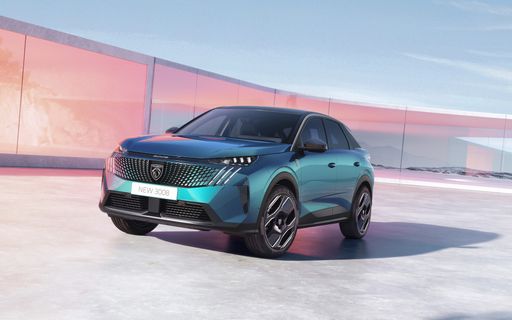
Both SUVs present unique design philosophies. The Peugeot 3008 boasts a sleek and modern aesthetic with sharp lines and a bold front grille. It measures 4542 mm in length, 1895 mm in width, and 1641 mm in height, offering a visually striking presence on the road. On the other hand, the VW T-Roc has a more muscular and compact look, with dimensions of 4236 mm in length and height options ranging from 1527 mm to 1584 mm, depending on the version. Its width stands at 1819 mm, making it a slightly more traditional SUV shape.

3008 @ Peugeot / Stellantis Media

Powertrain Options

When it comes to powertrain choices, the Peugeot 3008 offers a diverse array of options, including petrol, plug-in hybrid, and fully electric variants. Engine outputs range from 136 HP to a hefty 231 HP, with an acceleration time of 0-100 km/h varying from 8.4 to 10.2 seconds. Notably, its plug-in hybrid versions achieve impressive electric ranges up to 698 km and exhibit consumption figures as low as 0.9 L/100 km, making them eco-friendly choices.

The T-Roc provides a range of petrol and diesel engines with varying power outputs from 115 HP to an astonishing 300 HP in the R model. This breadth of options caters to different driving preferences, whether you seek efficiency or performance. Acceleration for the T-Roc can be as exhilarating as 4.9 seconds, particularly in the high-performance variants.

T-Roc @ Volkswagen AG / VW Media

Fuel Efficiency and Emissions

Both vehicles emphasize efficient consumption and environmental impact. The Peugeot 3008, with fuel consumption figures starting at 5.7 L/100 km for its petrol variants, also stands out with its hybrid models that can achieve an outstanding 0 g/km CO2 emissions when driven in electric mode. The T-Roc, while still efficient, has slightly higher consumption figures ranging from 4.7 to 8.5 L/100 km, with its CO2 emissions varying between 125 to 166 g/km depending on the engine choice.

3008 @ Peugeot / Stellantis Media

Interior Comfort and Technology

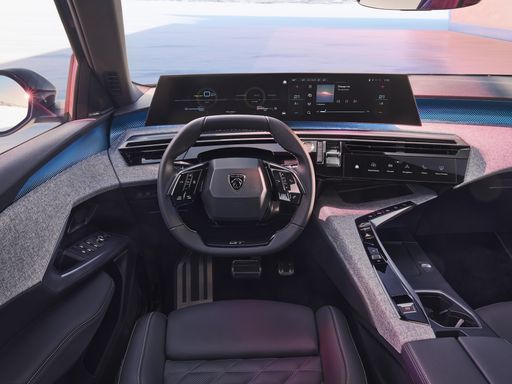
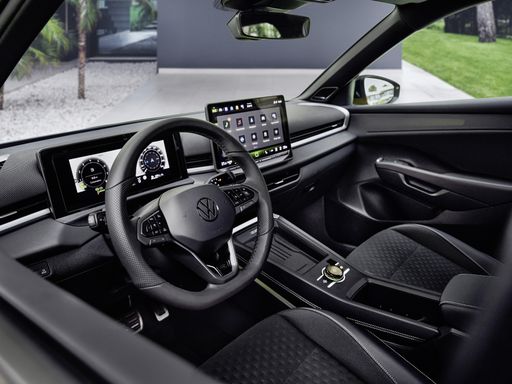
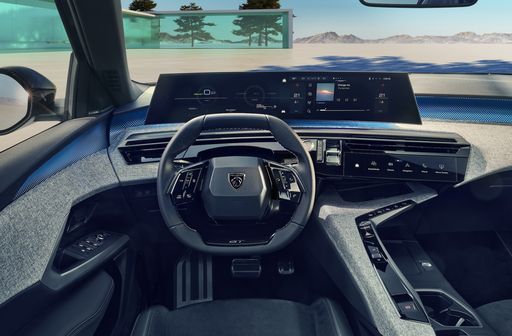
The interior of the Peugeot 3008 is known for its high-quality materials and stylish layout, featuring a modern touchscreen infotainment system and an immersive digital cockpit. It can comfortably seat five passengers with a trunk capacity of 520 liters, ensuring practicality for families and travelers alike.

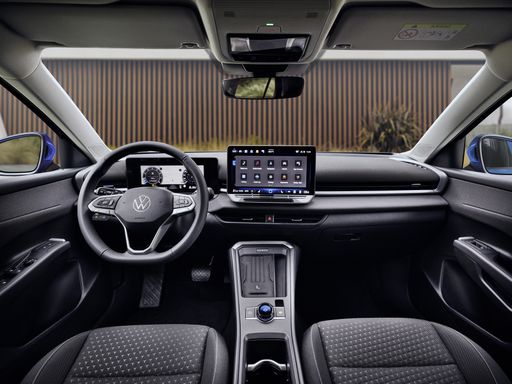
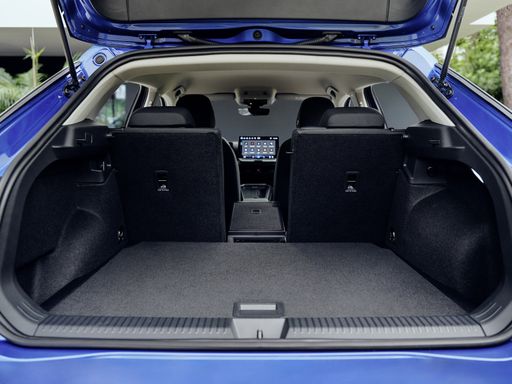
Meanwhile, the VW T-Roc offers a slightly more utilitarian approach while maintaining a high-tech edge. Its cabin is designed for functionality, with a trunk space that reaches up to 445 liters. The infotainment system is intuitive, and available digital features will meet the needs of tech-savvy users.

T-Roc @ Volkswagen AG / VW Media

Driving Experience and Safety Features

In terms of driving dynamics, the Peugeot 3008 leans towards a comfortable ride, prioritizing smooth handling and a serene experience even on bumpy roads. It features advanced driver-assistance systems, including lane-keeping assist and adaptive cruise control, enhancing safety and convenience.

The VW T-Roc, on the other hand, emphasizes a sportier driving feel. With its sharp steering and agile handling, it provides a more engaging experience, particularly in the performance-oriented models. The T-Roc also doesn’t skimp on safety, offering a robust suite of features similar to the 3008.

3008 @ Peugeot / Stellantis Media

Conclusion: Which One Should You Choose?

Both the Peugeot 3008 and VW T-Roc are compelling choices in the compact SUV segment, each catering to different driver preferences. If you prioritize efficiency, advanced hybrid technology, and a stylish interior, the Peugeot 3008 is the clear winner. Conversely, if sporty handling, diverse engine options, and a practical design are more your speed, the VW T-Roc could be the ideal pick for you. Ultimately, your choice will depend on your individual driving style and lifestyle needs.

Here’s where it gets real: The technical differences in detail

T-Roc @ Volkswagen AG / VW Media

Costs and Efficiency:

Price and efficiency are key factors when choosing a car – and this is often where the real differences emerge.

VW T-Roc has a noticeable advantage in terms of price – it starts at 26400 £, while the Peugeot 3008 costs 35100 £. That’s a price difference of around 8704 £.

Fuel consumption also shows a difference: Peugeot 3008 manages with 2.40 L and is therefore convincingly more efficient than the VW T-Roc with 5.50 L. The difference is about 3.10 L per 100 km.

Engine and Performance:

Power, torque and acceleration say a lot about how a car feels on the road. This is where you see which model delivers more driving dynamics.

When it comes to engine power, the Peugeot 3008 has a significantly edge – offering 325 HP compared to 150 HP. That’s roughly 175 HP more horsepower.

In acceleration from 0 to 100 km/h, the Peugeot 3008 is clearly quicker – completing the sprint in 6 s, while the VW T-Roc takes 8.90 s. That’s about 2.90 s faster.

In terms of top speed, the Peugeot 3008 performs slight better – reaching 220 km/h, while the VW T-Roc tops out at 212 km/h. The difference is around 8 km/h.

There’s also a difference in torque: Peugeot 3008 pulls convincingly stronger with 511 Nm compared to 250 Nm. That’s about 261 Nm difference.

Space and Everyday Use:

Beyond pure performance, interior space and usability matter most in daily life. This is where you see which car is more practical and versatile.

Both vehicles offer seating for 5 people.

In curb weight, VW T-Roc is somewhat lighter – 1465 kg compared to 1648 kg. The difference is around 183 kg.

In terms of boot space, the Peugeot 3008 offers barely noticeable more room – 520 L compared to 475 L. That’s a difference of about 45 L.

In maximum load capacity, the Peugeot 3008 performs barely noticeable better – up to 1480 L, which is about 130 L more than the VW T-Roc.

When it comes to payload, VW T-Roc slight takes the win – 515 kg compared to 467 kg. That’s a difference of about 48 kg.

Who comes out on top?

Overall, the Peugeot 3008 shows itself to be dominates this comparison and secures the title of DriveDuel Champion.
It convinces with the more balanced overall package and proves to be the more versatile choice for everyday use.

from about £35,100
3008 @ Peugeot / Stellantis Media

Peugeot 3008

  • Engine Type : Electric, Petrol MHEV, Plugin Hybrid
  • Transmission : Automatic
  • Drive Type : Front-Wheel Drive, All-Wheel Drive
  • Power HP : 145 - 325 HP
  • Consumption L/100km : 2.4 - 5.4 L
  • Consumption kWh/100km : 16.9 - 17.6 kWh
  • Electric Range : 81 - 698 km

Peugeot 3008

5 (1)
rate

The Peugeot 3008 blends bold French styling with a surprisingly grown-up interior that makes even dull commutes feel a little bit special. Practical enough for family life yet lively to drive, it’s a clever all‑rounder that stands out from the crossover crowd without shouting for attention.

details

VW T-Roc

5 (2)
rate

The VW T-Roc mixes cheeky, coupe-like styling with the everyday sense and space of an SUV, so it looks fun without sacrificing family sense. It’s a likeable all-rounder with tidy road manners and plenty of personality, ideal if you want a car that’s practical enough for chores but entertaining enough to enjoy.

details
Peugeot 3008
VW T-Roc
3008 @ Peugeot / Stellantis Media
T-Roc @ Volkswagen AG / VW Media

Costs and Consumption

Price
35100 - 52000 £
Price
26400 - 38000 £
Consumption L/100km
2.4 - 5.4 L
Consumption L/100km
5.5 - 6.3 L
Consumption kWh/100km
16.9 - 17.6 kWh
Consumption kWh/100km
-
Electric Range
81 - 698 km
Electric Range
-
Battery Capacity
0.4 - 96.9 kWh
Battery Capacity
-
co2
0 - 121 g/km
co2
126 - 143 g/km
Fuel tank capacity
55 L
Fuel tank capacity
50 L

Dimensions and Body

Body Type
SUV
Body Type
SUV
Seats
5
Seats
4 - 5
Doors
5
Doors
2 - 5
Curb weight
1648 - 2266 kg
Curb weight
1465 - 1539 kg
Trunk capacity
470 - 520 L
Trunk capacity
284 - 475 L
Length
4542 mm
Length
4271 - 4373 mm
Width
1895 mm
Width
1811 - 1828 mm
Height
1641 mm
Height
1527 - 1573 mm
Max trunk capacity
1430 - 1480 L
Max trunk capacity
1350 L
Payload
432 - 467 kg
Payload
368 - 515 kg

Engine and Performance

Engine Type
Electric, Petrol MHEV, Plugin Hybrid
Engine Type
Petrol, Petrol MHEV
Transmission
Automatic
Transmission
Manuel, Automatic
Transmission Detail
Reduction Gearbox, Dual-Clutch Automatic
Transmission Detail
Manual Gearbox, Dual-Clutch Automatic
Drive Type
Front-Wheel Drive, All-Wheel Drive
Drive Type
Front-Wheel Drive
Power HP
145 - 325 HP
Power HP
115 - 150 HP
Acceleration 0-100km/h
6 - 10.2 s
Acceleration 0-100km/h
8.9 - 12.3 s
Max Speed
170 - 220 km/h
Max Speed
187 - 212 km/h
Torque
230 - 511 Nm
Torque
200 - 250 Nm
Number of Cylinders
3 - 4
Number of Cylinders
3 - 4
Power kW
107 - 239 kW
Power kW
85 - 110 kW
Engine capacity
1199 - 1598 cm3
Engine capacity
999 - 1498 cm3

General

Model Year
2024 - 2025
Model Year
2024 - 2025
CO2 Efficiency Class
A, D, B
CO2 Efficiency Class
E, D
Brand
Peugeot
Brand
VW
What drive types are available for the Peugeot 3008?

The Peugeot 3008 is offered with Front-Wheel Drive or All-Wheel Drive.

The prices and data displayed are estimates based on German list prices and may vary by country. This information is not legally binding.