VS

Peugeot 308 vs Mazda CX-30 comparison

Compare performance (195 HP vs 186 HP), boot space and price (29,200 £ vs 25,200 £ ) at a glance. Find out which car is the better choice for you – Peugeot 308 or Mazda CX-30?

Peugeot 308 vs Mazda CX-30: Key differences

Peugeot 308

5 (2 Reviews)
rate
  • marginally more power
  • substantially more efficient
  • very slightly quicker 0–100 km/h
  • marginally lighter
details

Mazda CX-30

4.4 (7 Reviews)
rate
  • somewhat cheaper
  • barely more trunk space
details

All details on performance, efficiency, range and trunk space can be found in the technical comparison below – including user reviews for both models.

By Achim Sedelmaier

308

When it comes to the compact crossover segment, the Mazda CX-30 and Peugeot 308 are two strong contenders that appeal to diverse consumer needs. While both models promise a blend of style, performance, and innovative technology, they cater to slightly different audiences. This article explores the key aspects of both vehicles to help you decide which one deserves a spot in your garage.
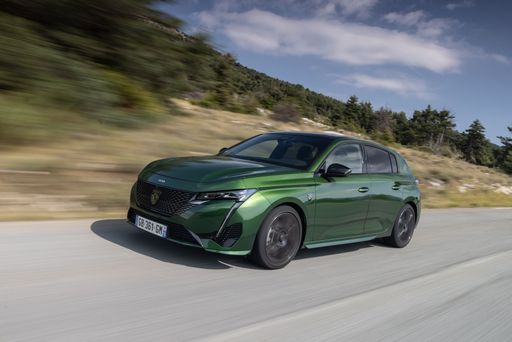
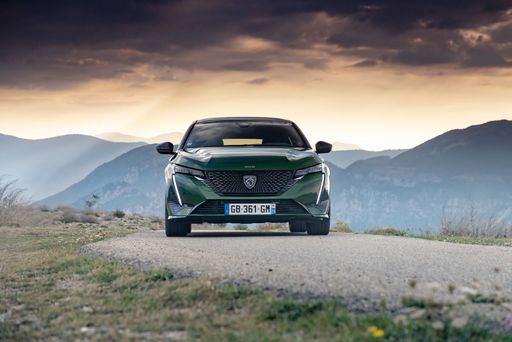
CX-30

Engine Performance and Variants

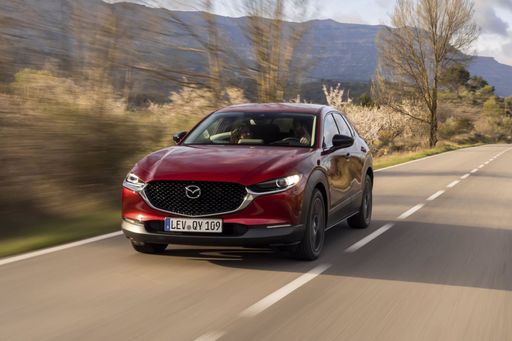
The Mazda CX-30 is powered by a range of efficient Petrol MHEV engines with options offering up to 186 HP. Available in manual and automatic transmissions, it provides a smooth and responsive driving experience. The engine's efficiency is commendable, with a fuel consumption range of 5.7 to 6.6 L/100km, ideal for both city driving and longer journeys.

On the other hand, the Peugeot 308 offers a broader array of powertrains, including Petrol, Diesel, Plug-in Hybrid, and Electric variants. The petrol engines can produce between 130 to 225 HP, depending on the configuration. Diesel options and hybrids contribute to varied consumption levels, as low as 1.3 L/100km for its electric configuration. This makes the 308 highly versatile for eco-conscious buyers seeking alternatives to traditional fuel engines.

308

Acceleration and Top Speed

When it comes to acceleration, the CX-30 delivers a satisfactory performance with a 0-100 km/h time ranging from 8.3 to 10.3 seconds depending on the engine choice. The maximum speed of 204 km/h ensures that you can confidently cruise on the highway.

Conversely, the Peugeot 308 shows competitive numbers, with its fastest variant reaching 0-100 km/h in just 7.5 seconds, showcasing its sporty edge. The top speed can reach up to 235 km/h, placing it in a slightly higher performance bracket, particularly for driving enthusiasts.

CX-30

Interior Space and Comfort

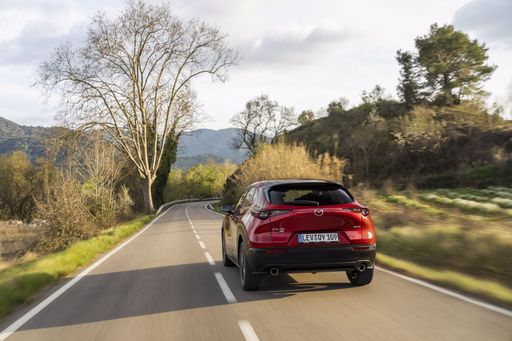
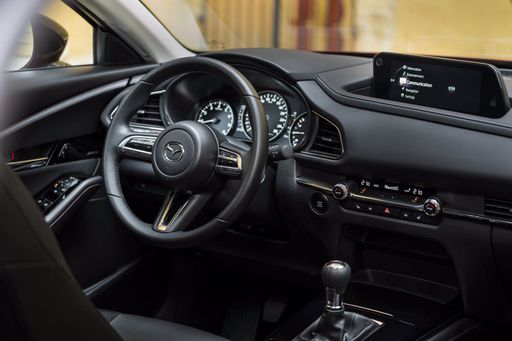
Both vehicles offer seating for five, but they differ in interior dimensions. The CX-30 boasts a trunk capacity of 430 liters, making it suitable for families or those needing extra cargo space. The spacious interior reflects Mazda's commitment to comfort, with high-quality materials and user-friendly technology.

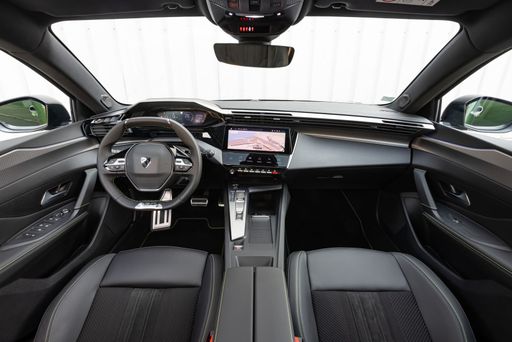
The Peugeot 308, while slightly smaller in trunk capacity at 412 liters, offers a practical layout and advanced multimedia features. The overall design emphasizes a more modern and tech-forward approach, with the i-Cockpit layout enhancing driver engagement.

308

Innovations and Tech Features

In terms of technology, the Mazda CX-30 comes equipped with the latest Mazda Connect system, featuring a responsive touchscreen and a comprehensive suite of safety features including adaptive cruise control and lane-keeping assist. These innovations ensure a secure and entertaining drive.

The Peugeot 308, however, pushes the boundaries even further with its innovative hybrid variants and electric options. Features like the 10-inch touchscreen, a digital cockpit, and adaptive driving aids create an immersive driving experience. Additionally, the hybrid variants not only benefit from low emissions but also allow for a short electric-only range, catering to urban commuters.

CX-30

Efficiency and Environmental Impact

In terms of environmental impact, the Mazda CX-30 holds a CO2 efficiency class of D to E, which is commendable for an SUV. Its emissions range from 129 to 148 g/km, aligning well with current emissions standards.

In contrast, the Peugeot 308 performs notably better with efficiencies ranging from CO2 class A to C, thanks to its electric and hybrid options that emit as low as 30 g/km. This flexibility makes it appealing for those keen on reducing their carbon footprint.

308

Conclusion

Ultimately, the choice between the Mazda CX-30 and Peugeot 308 depends on personal preferences and driving needs. If you prioritize a stylish crossover with solid performance and generous interior space, the CX-30 might be the perfect fit. However, for those looking for versatility, hybrid options, and cutting-edge technology, the Peugeot 308 certainly offers a compelling alternative.

Whichever model you choose, both vehicles embody innovation and performance, ensuring an engaging driving experience for a wide array of drivers.

Here’s where it gets real: The technical differences in detail

308

Costs and Efficiency:

Looking at overall running costs, both models reveal some interesting differences in everyday economy.

Mazda CX-30 is somewhat cheaper – starting at 25,200 £ , while the Peugeot 308 costs 29,200 £ . That’s a price difference of around 4,003 £.

Fuel consumption also shows a difference: the Peugeot 308 uses 2.3 L/100km and is substantially more efficient than the Mazda CX-30 with 5.7 L/100km. The difference is about 3.4 L/100km.

CX-30

Engine and Performance:

Power, torque and acceleration say a lot about how a car feels on the road. This is where you see which model delivers more driving dynamics.

When it comes to engine power, the Peugeot 308 offers marginally more power – delivering 195 HP compared to 186 HP. That’s roughly 9 HP more horsepower.

When accelerating from 0 to 100 km/h, the Peugeot 308 is very slightly quicker – completing the sprint in 7.6 s, while the Mazda CX-30 takes 8.3 s. That’s about 0.7 s quicker.

There’s also a difference in torque: the Peugeot 308 delivers moderately more torque with 300 Nm compared to 240 Nm. That’s about 60 Nm more.

308

Space and Everyday Use:

Whether family car or daily driver – which one offers more room, flexibility and comfort?

Both vehicles offer seating for 5 people.

In terms of curb weight, Peugeot 308 is marginally lighter – 1,453 kg compared to 1,455 kg. The difference is around 2 kg.

Looking at boot space, the Mazda CX-30 offers barely more boot space – 430 L compared to 412 L. That’s a difference of about 18 L.

When it comes to payload, the Peugeot 308 carries barely more – 503 kg compared to 496 kg. That’s a difference of about 7 kg.

Who wins the race in the data check?

The Peugeot 308 is far ahead overall in the objective data comparison.
This result only shows which model scores more points on paper – not which of the two cars feels right for you.

from £29,200
308

Peugeot 308

  • Engine Type : Petrol MHEV, Diesel, Plugin Hybrid, Electric
  • Transmission : Automatic
  • Drive Type : Front-Wheel Drive
  • Power HP : 131 - 195 HP
  • Consumption L/100km : 2.3 - 5.1 L/100km
  • Consumption kWh/100km : 15.6 kWh/100km
  • Electric Range : 81 - 450 km
Peugeot 308
Mazda CX-30

Costs and Consumption

View detailed analysis

Engine and Performance

View detailed analysis

Dimensions and Body

View detailed analysis

Peugeot 308

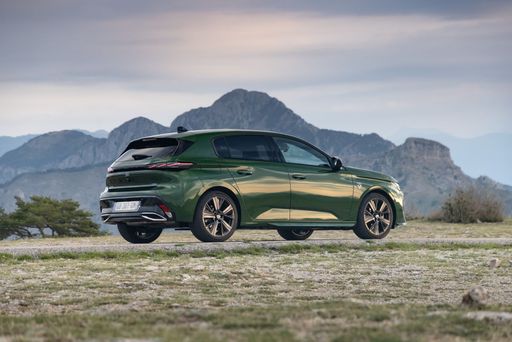
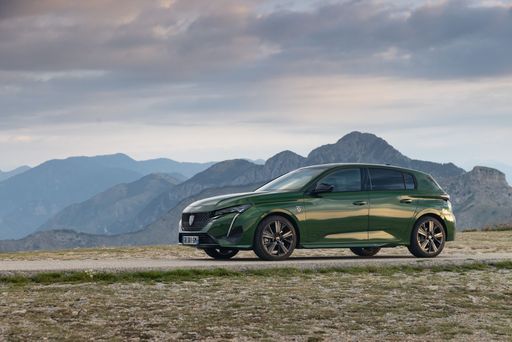
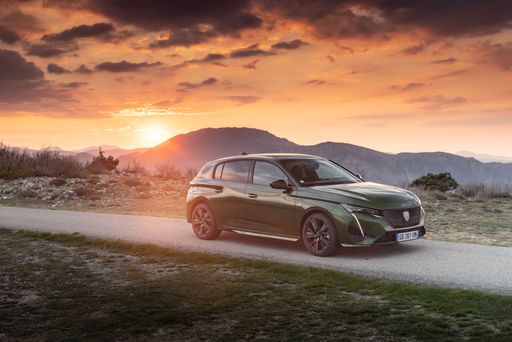
The Peugeot 308 brings a sleek, feline profile and an unexpectedly upscale cabin, with clever packaging and materials that feel a touch more premium than you might expect. It’s composed on the road, easy to live with for daily life, and a smart choice if you want a stylish hatch that still behaves when the road gets interesting.

details

Mazda CX-30

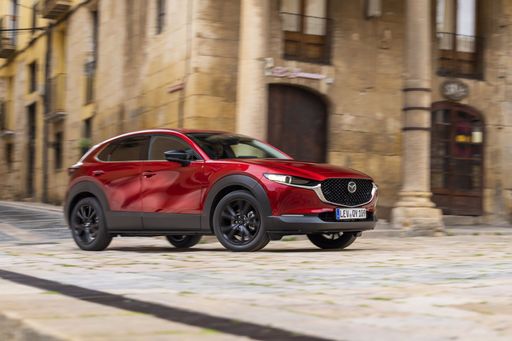
The Mazda CX-30 blends Mazda’s upscale styling with a compact crossover body, offering a refined interior and engaging driving dynamics. It’s a practical choice for buyers who want a premium feel and agile handling in a city-friendly package.

details
Peugeot 308
Mazda CX-30

Costs and Consumption

Price
29,200 - 42,600 £
Price
25,200 - 36,800 £
Consumption L/100km
2.3 - 5.1 L/100km
Consumption L/100km
5.7 - 6.6 L/100km
Consumption kWh/100km
15.6 kWh/100km
Consumption kWh/100km
-
Electric Range
81 - 450 km
Electric Range
-
Battery Capacity
-
Battery Capacity
-
co2
0 - 133 g/km
co2
129 - 148 g/km
Fuel tank capacity
-
Fuel tank capacity
-

Dimensions and Body

Body Type
Hatchback
Body Type
SUV
Seats
5
Seats
5
Doors
-
Doors
-
Curb weight
1,453 - 1,749 kg
Curb weight
1,455 - 1,587 kg
Trunk capacity
314 - 412 L
Trunk capacity
422 - 430 L
Length
-
Length
-
Width
1,852 mm
Width
1,795 mm
Height
-
Height
-
Max trunk capacity
-
Max trunk capacity
-
Payload
430 - 503 kg
Payload
458 - 496 kg

Engine and Performance

Engine Type
Petrol MHEV, Diesel, Plugin Hybrid, Electric
Engine Type
Petrol MHEV
Transmission
Automatic
Transmission
Manuel, Automatic
Transmission Detail
Dual-Clutch Automatic, Automatic Gearbox, Reduction Gearbox
Transmission Detail
Manual Gearbox, Automatic Gearbox
Drive Type
Front-Wheel Drive
Drive Type
Front-Wheel Drive, All-Wheel Drive
Power HP
131 - 195 HP
Power HP
140 - 186 HP
Acceleration 0-100km/h
7.6 - 10.6 s
Acceleration 0-100km/h
8.3 - 10.3 s
Max Speed
-
Max Speed
-
Torque
230 - 300 Nm
Torque
238 - 240 Nm
Number of Cylinders
3 - 4
Number of Cylinders
4
Power kW
96 - 144 kW
Power kW
103 - 137 kW
Engine capacity
1,199 - 1,598 cm3
Engine capacity
1,998 - 2,488 cm3

General

Model Year
2,025 - 2,026
Model Year
2025
CO2 Efficiency Class
C, D, B, A
CO2 Efficiency Class
D, E
Brand
Peugeot
Brand
Mazda
DriveDuel uses data analysis and artificial intelligence to evaluate vehicle data and create content. Content is regularly reviewed and improved. The displayed prices are estimates based on German list prices, adjusted to the respective country’s VAT. Country-specific registration taxes are not included. This information is not legally binding.