VS

Peugeot 408 vs Peugeot 3008 comparison

Compare performance (225 HP vs 325 HP), boot space and price (35,100 £ vs 35,100 £ ) at a glance. Find out which car is the better choice for you – Peugeot 408 or Peugeot 3008?

Peugeot 408 vs Peugeot 3008: Key differences

Peugeot 408

4.9 (1 Reviews)
rate
  • very slightly cheaper
  • slightly more efficient
  • very slightly lighter
  • marginally more trunk space

Peugeot 3008

3.4 (4 Reviews)
rate
  • noticeably more power
  • a bit more efficient
  • clearly more electric range
  • clearly quicker 0–100 km/h

All details on performance, efficiency, range and trunk space can be found in the technical comparison below – including user reviews for both models.

408

Two Peugeots, two moods

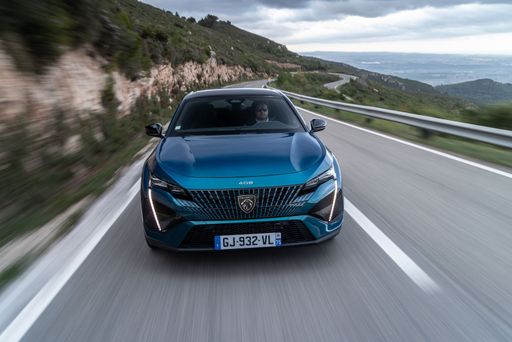
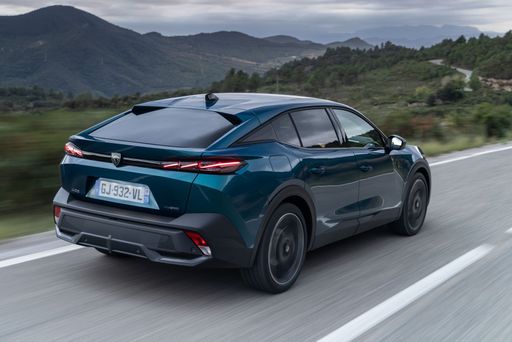
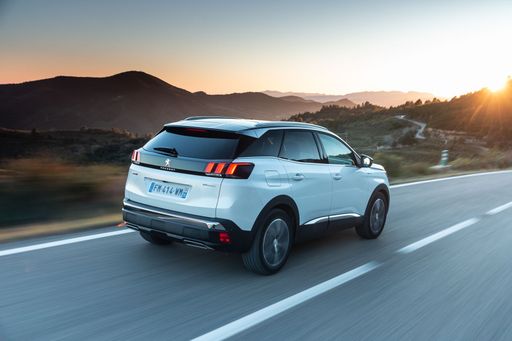
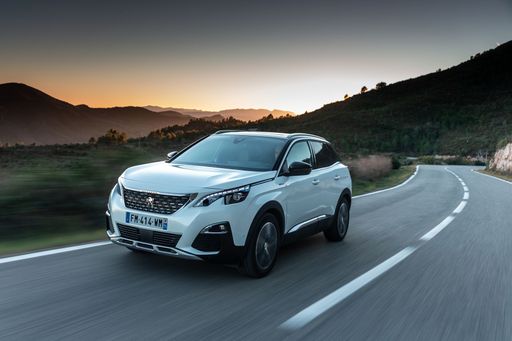
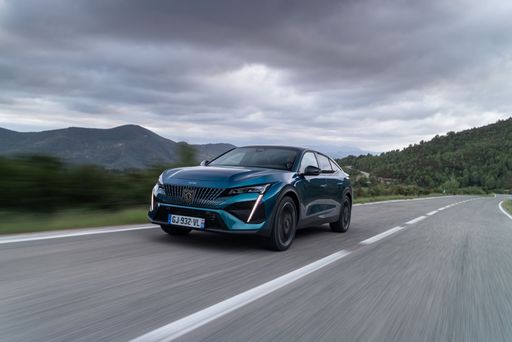
The Peugeot 3008 and Peugeot 408 share a badge and a family likeness, but they arrive with distinct attitudes — like two siblings who swapped outfits before the photoshoot. The 3008 feels like the confident, raised crossover that wants to be useful and noticed, while the 408 plays the low-slung, elegant challenger that courts attention with a coupé-like silhouette. This is a duel about personality as much as practicality, and both make persuasive cases depending on what kind of driver you are.
3008

Sculpted presence vs. sleek understatement

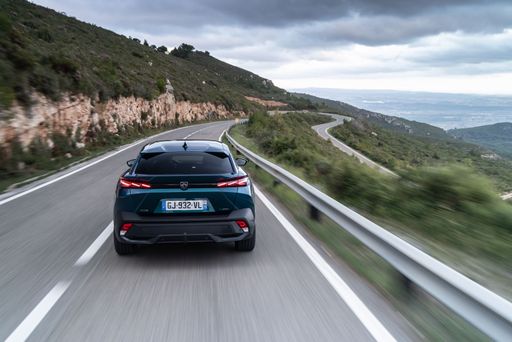
The 3008 broadcasts presence: upright stance, sculpted shoulders and a look that says “I can carry a weekend’s worth of life.” The 408 prefers cinematic calm, a stretched profile and sharper lines that reward people who care about first impressions. Visually they occupy different corners of style — one purposeful and bold, the other composed and deliberately stylish — so the choice is emotional as well as rational.

408

Daily life: commute, cargo and comfort

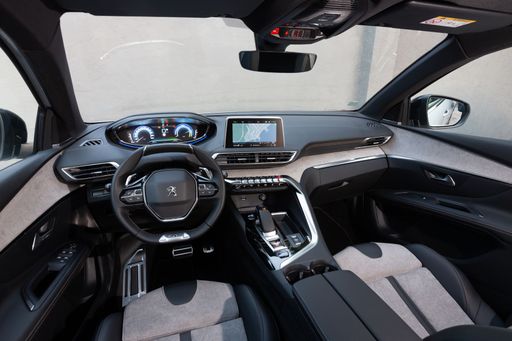
On everyday missions the 3008 feels like a competent companion for school runs, trips to the DIY store and motorway miles, with an interior that prioritises visibility and easy loading. The 408 leans more towards a composed, car-like ride and a cabin that favours mood and refinement, appealing when you want something that feels polished on city streets. Both cabins are user-friendly, but seating posture, door apertures and how they swallow luggage make a tangible difference once the family, pets or sports kit get involved.

3008

The story you’ll tell about your car

Choose the 3008 and you’ll be selling practicality with a dose of desirability — the kind of car that says you like comfort and confidence without shouting. Choose the 408 and your narrative skews towards considered style and plating up a more modern, individual look that turns heads on arrival. In short, one is the safe, capable companion for busy lives, the other is the statement you make when aesthetics matter as much as utility.

408

If what matters to you is everyday sense and sensible ownership

If what matters to you is straightforward usability, predictable running and packaging that copes with family life, the Peugeot 3008 leans into that brief with a reassuring demeanour. It rewards pragmatic choices with a roomy feel, intuitive controls and a confidence-inspiring driving position that makes city traffic and longer drives less of a chore. For buyers who count practicality and long-term comfort higher than flash, this is the option that reads as a considered, no-fuss pick.

3008

If what matters to you is image and a polished driving experience

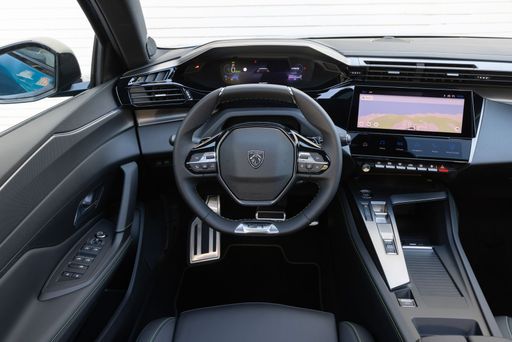
If what matters to you is making a style statement and enjoying a composed, modern cabin, the Peugeot 408 outfits those priorities with flair and a more coupé-like presence. It appeals to drivers who value perceived quality, the feel of a refined interior and a slightly sportier attitude behind the wheel. Fancy a closer look at how that character translates on paper? Flip to the detailed breakdown below and dig into the numbers.

Here’s where it gets real: The technical differences in detail

408

Costs and Efficiency:

When it comes to price and running costs, the biggest differences usually appear. This is often where you see which car fits your budget better in the long run.

Peugeot 408 is very slightly cheaper – starting at 35,100 £ , while the Peugeot 3008 costs 35,100 £ . That’s a price difference of around 25 £.

Fuel consumption also shows a difference: the Peugeot 3008 uses 2.4 L/100km and is a bit more efficient than the Peugeot 408 with 2.7 L/100km. The difference is about 0.3 L/100km.

In terms of energy consumption, the Peugeot 408 is slightly more efficient: consuming 14.8 kWh/100km compared to 16.9 kWh/100km for the Peugeot 3008. That’s a difference of about 2.1 kWh/100km.

As for electric range, the Peugeot 3008 offers clearly more range – reaching up to 698 km, about 243 km more than the Peugeot 408.

3008

Engine and Performance:

Under the bonnet, it becomes clear which model is tuned for sportiness and which one takes the lead when you hit the accelerator.

When it comes to engine power, the Peugeot 3008 offers noticeably more power – delivering 325 HP compared to 225 HP. That’s roughly 100 HP more horsepower.

When accelerating from 0 to 100 km/h, the Peugeot 3008 is clearly quicker – completing the sprint in 6 s, while the Peugeot 408 takes 7.2 s. That’s about 1.2 s quicker.

Looking at top speed, the Peugeot 408 is somewhat faster – reaching 233 km/h, while the Peugeot 3008 tops out at 201 km/h. The difference is around 32 km/h.

There’s also a difference in torque: the Peugeot 3008 delivers markedly more torque with 511 Nm compared to 360 Nm. That’s about 151 Nm more.

408

Space and Everyday Use:

Whether family car or daily driver – which one offers more room, flexibility and comfort?

Both vehicles offer seating for 5 people.

In terms of curb weight, Peugeot 408 is very slightly lighter – 1,544 kg compared to 1,648 kg. The difference is around 104 kg.

Looking at boot space, the Peugeot 408 offers marginally more boot space – 536 L compared to 520 L. That’s a difference of about 16 L.

For maximum load capacity, the Peugeot 408 offers very slightly more capacity – up to 1,583 L, about 103 L more than the Peugeot 3008.

When it comes to payload, the Peugeot 3008 carries barely more – 467 kg compared to 456 kg. That’s a difference of about 11 kg.

Who wins the race in the data check?

The Peugeot 3008 is decisively ahead in the objective data comparison.
This result only shows which model scores more points on paper – not which of the two cars feels right for you.

from £35,100
3008

Peugeot 3008

  • Engine Type : Electric, Petrol MHEV, Plugin Hybrid
  • Transmission : Automatic
  • Drive Type : Front-Wheel Drive, All-Wheel Drive
  • Power HP : 145 - 325 HP
  • Consumption L/100km : 2.4 - 5.4 L/100km
  • Consumption kWh/100km : 16.9 - 17.6 kWh/100km
  • Electric Range : 81 - 698 km
Peugeot 408
Peugeot 3008

Costs and Consumption

View detailed analysis

Engine and Performance

View detailed analysis

Dimensions and Body

View detailed analysis

Peugeot 408

The Peugeot 408 blends a coupe-like roofline with practical sensibility, delivering striking looks and a surprisingly airy, premium-feeling cabin. On the road it prefers comfort and poise over manic thrills, making it a smart, stylish choice for buyers who want something a bit different from the usual family hatchback.

details

Peugeot 3008

The Peugeot 3008 blends bold French styling with a surprisingly grown-up interior that makes even dull commutes feel a little bit special. Practical enough for family life yet lively to drive, it’s a clever all‑rounder that stands out from the crossover crowd without shouting for attention.

details
Peugeot 408
Peugeot 3008

Costs and Consumption

Price
35,100 - 48,000 £
Price
35,100 - 52,000 £
Consumption L/100km
2.7 - 5.1 L/100km
Consumption L/100km
2.4 - 5.4 L/100km
Consumption kWh/100km
14.8 kWh/100km
Consumption kWh/100km
16.9 - 17.6 kWh/100km
Electric Range
79 - 455 km
Electric Range
81 - 698 km
Battery Capacity
58.2 kWh
Battery Capacity
0.4 - 96.9 kWh
co2
0 - 114 g/km
co2
0 - 121 g/km
Fuel tank capacity
42 - 52 L
Fuel tank capacity
55 L

Dimensions and Body

Body Type
SUV
Body Type
SUV
Seats
5
Seats
5
Doors
5
Doors
5
Curb weight
1,544 - 1,879 kg
Curb weight
1,648 - 2,266 kg
Trunk capacity
471 - 536 L
Trunk capacity
470 - 520 L
Length
4,687 mm
Length
4,542 mm
Width
1,848 mm
Width
1,895 mm
Height
1,478 mm
Height
1,641 mm
Max trunk capacity
1,528 - 1,583 L
Max trunk capacity
1,430 - 1,480 L
Payload
371 - 456 kg
Payload
432 - 467 kg

Engine and Performance

Engine Type
Electric, Petrol MHEV, Plugin Hybrid
Engine Type
Electric, Petrol MHEV, Plugin Hybrid
Transmission
Automatic
Transmission
Automatic
Transmission Detail
Reduction Gearbox, Dual-Clutch Automatic
Transmission Detail
Reduction Gearbox, Dual-Clutch Automatic
Drive Type
Front-Wheel Drive
Drive Type
Front-Wheel Drive, All-Wheel Drive
Power HP
145 - 225 HP
Power HP
145 - 325 HP
Acceleration 0-100km/h
7.2 - 9.4 s
Acceleration 0-100km/h
6 - 10.2 s
Max Speed
160 - 233 km/h
Max Speed
170 - 201 km/h
Torque
230 - 360 Nm
Torque
230 - 511 Nm
Number of Cylinders
4
Number of Cylinders
3 - 4
Power kW
107 - 165 kW
Power kW
107 - 239 kW
Engine capacity
1,199 - 1,598 cm3
Engine capacity
1,199 - 1,598 cm3

General

Model Year
2,024 - 2,025
Model Year
2,024 - 2,026
CO2 Efficiency Class
A, C, B
CO2 Efficiency Class
A, D, B
Brand
Peugeot
Brand
Peugeot
DriveDuel uses data analysis and artificial intelligence to evaluate vehicle data and create content. Content is regularly reviewed and improved. The displayed prices are estimates based on German list prices, adjusted to the respective country’s VAT. Country-specific registration taxes are not included. This information is not legally binding.