VS

Polestar 4 vs Hyundai IONIQ 6 comparison

Compare performance (544 HP vs 650 HP), boot space and price (53,100 £ vs 39,000 £ ) at a glance. Find out which car is the better choice for you – Polestar 4 or Hyundai IONIQ 6?

Polestar 4 vs Hyundai IONIQ 6: Key differences

Polestar 4

4.8 (10 Reviews)
rate
  • noticeably more trunk space
details

Hyundai IONIQ 6

4.6 (1 Reviews)
rate
  • noticeably cheaper
  • slightly more power
  • clearly more efficient
  • only slightly more electric range
  • a bit quicker 0–100 km/h
  • somewhat lighter
details

All details on performance, efficiency, range and trunk space can be found in the technical comparison below – including user reviews for both models.

By Achim Sedelmaier

4

The Electric Showdown: Hyundai IONIQ 6 vs. Polestar 4

In the ever-evolving world of electrification, two contenders have emerged with distinct approaches to capturing the hearts of eco-conscious yet performance-minded drivers: the Hyundai IONIQ 6 and the Polestar 4. While both promise impressive tech and zero emissions, each has its unique strengths. Let’s dive into what sets these electric vehicles (EVs) apart.
IONIQ 6

Design and Exterior

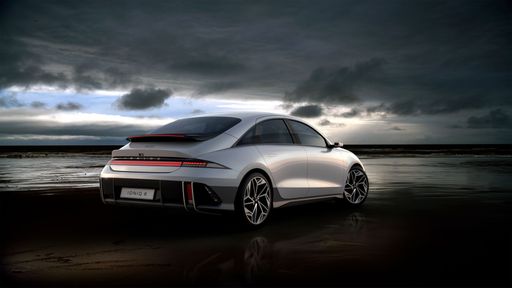
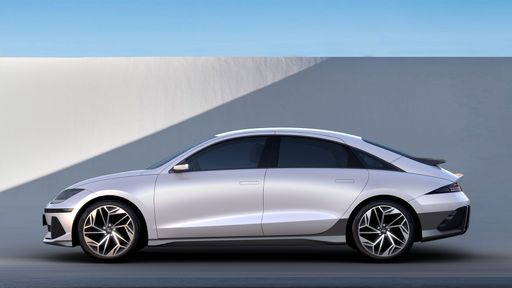
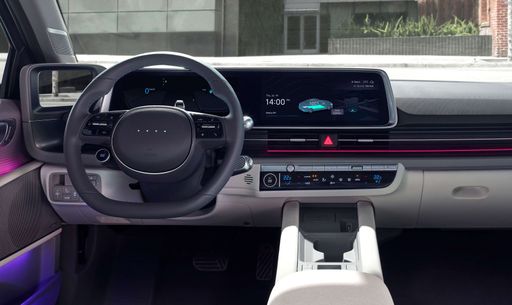
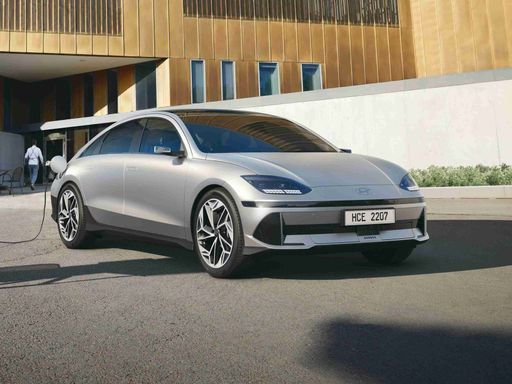
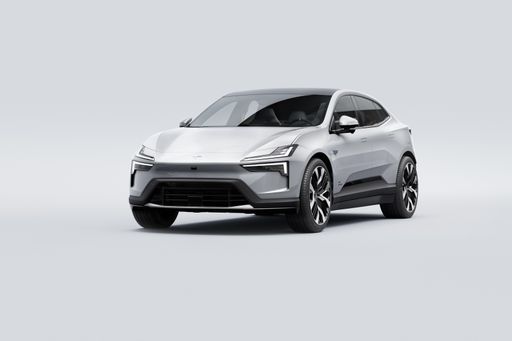
The Hyundai IONIQ 6 is a sleek hatchback that draws you in with its aerodynamic lines and futuristic appeal. Measuring 4855 mm in length, 1880 mm in width, and 1495 mm in height, it is a marvel of compact design and elegance. Conversely, the Polestar 4 takes on the SUV form, with dimensions slightly more substantial at 4840 mm in length, 2008 mm in width, and 1534 mm in height. This makes the Polestar the larger companion, capable of providing more interior space and commanding presence.

4

Power and Performance

Under the hood, or rather, beneath the chassis – as these are fully electric vehicles – lies the soul of these machines. Hyundai offers multiple powertrain options for the IONIQ 6, with power outputs ranging from 151 to 325 HP and 0-100 km/h acceleration times stretching from 8.8 to 5.1 seconds. Polestar 4, meanwhile, delivers a muscular performance with two primary outputs; the larger variant offers a commanding 544 HP and achieves a 0-100 km/h sprint in just 3.8 seconds, showcasing its prowess in the performance domain.

IONIQ 6

Battery and Range

Range anxiety is all but minimized with both models. The IONIQ 6 provides a range between 429 to 614 km depending on configuration, with battery capacities available in 53 kWh and 77.4 kWh options. Polestar 4 surpasses slightly with a consistent 590 to 620 km range, supported by a robust 94 kWh battery pack, ensuring longer trips without frequent stopovers.

4

Efficiency and Sustainability

Both models boast the CO2 Efficiency Class A, underscoring their commitment to sustainability. The IONIQ 6 offers low consumption rates between 13.9 to 15.1 kWh/100km, cementing its place as an efficiency champion. Polestar 4’s consumption ranges from 17.8 to 18.7 kWh/100km, which, while slightly higher, is compensated by its performance-oriented engineering.

IONIQ 6

Interior and Cargo Space

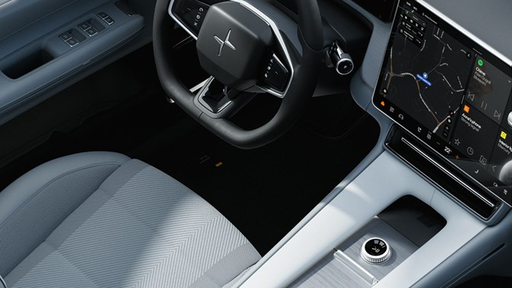
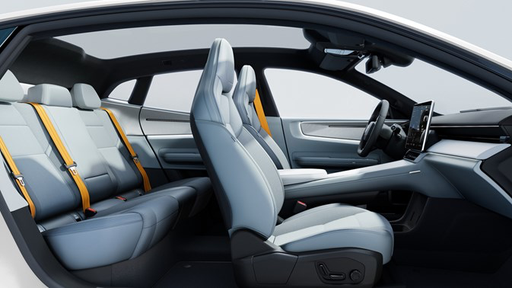
Inside, both vehicles provide ample room for five occupants. The IONIQ 6, with a trunk capacity of 401 liters, might feel a bit limited for cargo-heavy trips. In contrast, the Polestar 4 offers an expanded carrying capacity with a 526-liter trunk, better suiting those in need of additional space.

Conclusion: Tailoring for Taste

Ultimately, choosing between the Hyundai IONIQ 6 and Polestar 4 boils down to individual needs and preferences. If sleek design, top-notch efficiency, and multiple power options sway your verdict, the IONIQ 6 could be your ideal partner. On the other hand, if you seek more cabin space, aggressive performance, and a striking SUV design, the Polestar 4 might just be the EV that resonates.

Whether you’re captivated by Hyundai’s aerodynamic artistry or Polestar’s powerful elegance, the future of automotive technology is undeniably thrilling, as depicted by these two electric marvels.

Here’s where it gets real: The technical differences in detail

4

Costs and Efficiency:

Price and efficiency are often the first things buyers look at. Here it becomes clear which model has the long-term edge – whether at the pump, the plug, or in purchase price.

Hyundai IONIQ 6 is noticeably cheaper – starting at 39,000 £ , while the Polestar 4 costs 53,100 £ . That’s a price difference of around 14,015 £.

In terms of energy consumption, the Hyundai IONIQ 6 is clearly more efficient: consuming 13.4 kWh/100km compared to 17.8 kWh/100km for the Polestar 4. That’s a difference of about 4.4 kWh/100km.

As for electric range, the Hyundai IONIQ 6 offers only slightly more range – reaching up to 680 km, about 60 km more than the Polestar 4.

IONIQ 6

Engine and Performance:

Under the bonnet, it becomes clear which model is tuned for sportiness and which one takes the lead when you hit the accelerator.

When it comes to engine power, the Hyundai IONIQ 6 offers slightly more power – delivering 650 HP compared to 544 HP. That’s roughly 106 HP more horsepower.

When accelerating from 0 to 100 km/h, the Hyundai IONIQ 6 is a bit quicker – completing the sprint in 3.2 s, while the Polestar 4 takes 3.8 s. That’s about 0.6 s quicker.

There’s also a difference in torque: the Hyundai IONIQ 6 delivers somewhat more torque with 770 Nm compared to 686 Nm. That’s about 84 Nm more.

4

Space and Everyday Use:

Cabin size, boot volume and payload all play a role in everyday practicality. Here, comfort and flexibility make the difference.

Both vehicles offer seating for 5 people.

In terms of curb weight, Hyundai IONIQ 6 is somewhat lighter – 1,892 kg compared to 2,230 kg. The difference is around 338 kg.

Looking at boot space, the Polestar 4 offers noticeably more boot space – 526 L compared to 401 L. That’s a difference of about 125 L.

When it comes to payload, the Polestar 4 carries only slightly more – 455 kg compared to 438 kg. That’s a difference of about 17 kg.

Who wins the race in the data check?

The Hyundai IONIQ 6 holds a decisive overall lead in the objective data comparison.
This result only shows which model scores more points on paper – not which of the two cars feels right for you.

from £39,000
IONIQ 6

Hyundai IONIQ 6

  • Engine Type : Electric
  • Transmission : Automatic
  • Drive Type : All-Wheel Drive, Rear-Wheel Drive
  • Power HP : 170 - 650 HP
  • Consumption kWh/100km : 13.4 - 15.9 kWh/100km
  • Electric Range : 469 - 680 km
Polestar 4
Hyundai IONIQ 6

Costs and Consumption

View detailed analysis

Engine and Performance

View detailed analysis

Dimensions and Body

View detailed analysis

Polestar 4

The Polestar 4 wears a coupe-like profile and a Scandinavian-minimal interior that feels premium and unexpectedly roomy, with composed handling that makes urban driving and country roads a pleasure. For buyers who want an electric car that turns heads without shouting, the Polestar 4 is a stylish, clever choice that balances practicality with personality.

details

Hyundai IONIQ 6

The Hyundai IONIQ 6 glides down the road with a poise that feels more runway model than commuter car, its sleek silhouette promising efficiency without trying too hard. Inside, a calm, minimalist cabin packed with clever, usable tech makes it a compelling choice for buyers who want electric motoring that's smart, stylish and quietly practical.

details
Polestar 4
Hyundai IONIQ 6

Costs and Consumption

Price
53,100 - 59,900 £
Price
39,000 - 64,300 £
Consumption L/100km
-
Consumption L/100km
-
Consumption kWh/100km
17.8 - 18.7 kWh/100km
Consumption kWh/100km
13.4 - 15.9 kWh/100km
Electric Range
590 - 620 km
Electric Range
469 - 680 km
Battery Capacity
94 kWh
Battery Capacity
-
co2
0 g/km
co2
0 g/km
Fuel tank capacity
-
Fuel tank capacity
-

Dimensions and Body

Body Type
SUV
Body Type
Hatchback
Seats
5
Seats
5
Doors
5
Doors
-
Curb weight
2,230 - 2,355 kg
Curb weight
1,892 - 2,134 kg
Trunk capacity
526 L
Trunk capacity
401 L
Length
4,840 mm
Length
-
Width
2,008 mm
Width
1,880 - 1,940 mm
Height
1,534 mm
Height
-
Max trunk capacity
1,536 L
Max trunk capacity
-
Payload
455 kg
Payload
386 - 438 kg

Engine and Performance

Engine Type
Electric
Engine Type
Electric
Transmission
Automatic
Transmission
Automatic
Transmission Detail
Reduction Gearbox
Transmission Detail
Reduction Gearbox
Drive Type
All-Wheel Drive, Rear-Wheel Drive
Drive Type
All-Wheel Drive, Rear-Wheel Drive
Power HP
272 - 544 HP
Power HP
170 - 650 HP
Acceleration 0-100km/h
3.8 - 7.1 s
Acceleration 0-100km/h
3.2 - 8.3 s
Max Speed
200 km/h
Max Speed
-
Torque
343 - 686 Nm
Torque
350 - 770 Nm
Number of Cylinders
-
Number of Cylinders
-
Power kW
200 - 400 kW
Power kW
125 - 478 kW
Engine capacity
-
Engine capacity
-

General

Model Year
2024
Model Year
2026
CO2 Efficiency Class
A
CO2 Efficiency Class
A
Brand
Polestar
Brand
Hyundai
DriveDuel uses data analysis and artificial intelligence to evaluate vehicle data and create content. Content is regularly reviewed and improved. The displayed prices are estimates based on German list prices, adjusted to the respective country’s VAT. Country-specific registration taxes are not included. This information is not legally binding.