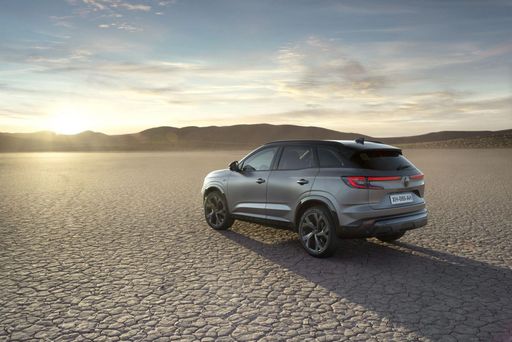
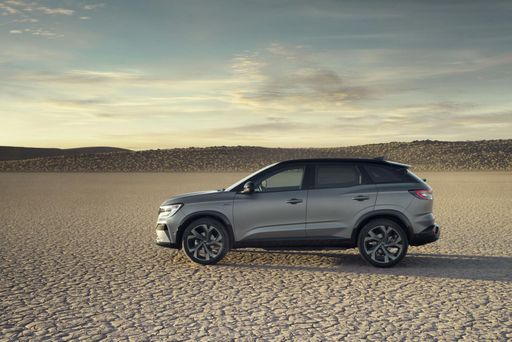
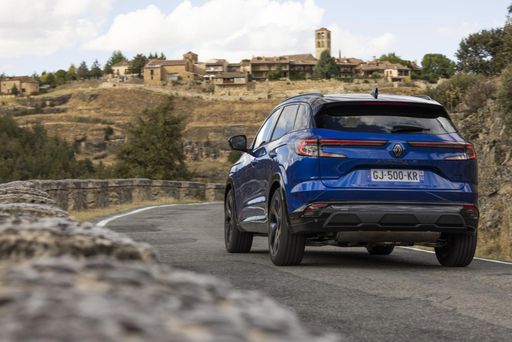
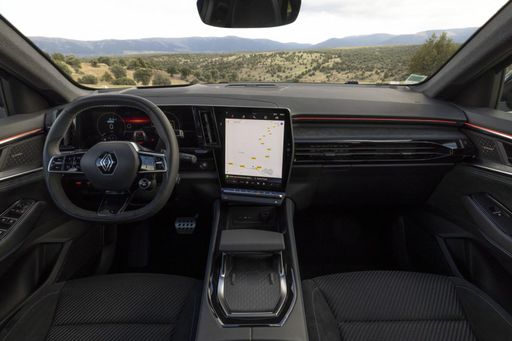
@ Renault Group Media
@ Volkswagen AG / VW Media
VS

Renault Austral vs VW Taigo – Which car suits you better?

Compare performance, boot capacity, efficiency and price at a glance.
Find out which car is the better choice for you – Renault Austral or VW Taigo?

Renault Austral

5 (2 Reviews)
rate

VW Taigo

5 (2 Reviews)
rate
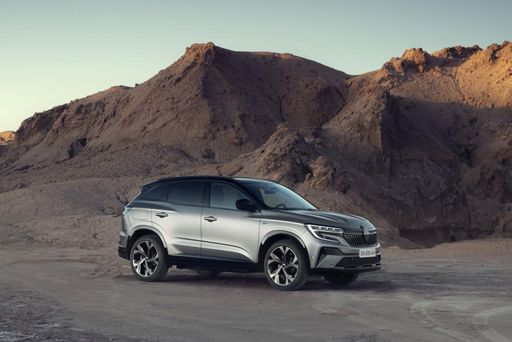
Austral @ Renault Group Media

Compact SUV Clash: Renault Austral vs. VW Taigo

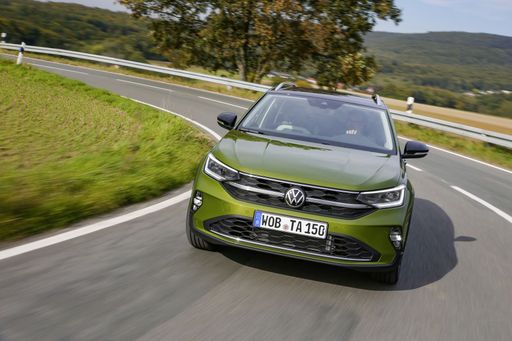
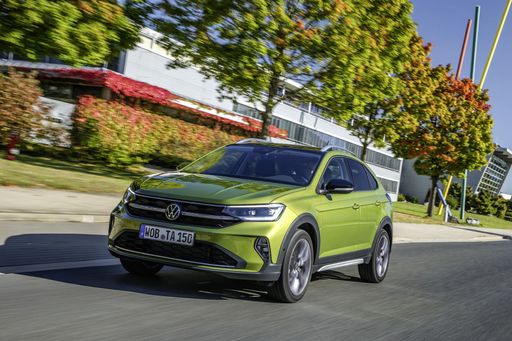
In the fiercely competitive world of compact SUVs, the 2024 models of the Renault Austral and the VW Taigo stand as prime contenders. Both vehicles promise innovation, performance, and practicality, but which one truly excels? Let’s dive into the technical intricacies and novel features of these two models to help you make an informed choice.
Taigo @ Volkswagen AG / VW Media

Engine and Performance

The Renault Austral offers a choice between two distinctive engine types: a petrol mild hybrid (MHEV) and a full hybrid. This makes it an appealing option for the eco-conscious driver looking for versatility. The Austral boasts power outputs of either 158 HP or a more robust 200 HP, with corresponding torque figures reaching up to 270 Nm. Acceleration from 0-100 km/h is achieved in 9.7 seconds for the MHEV and an impressive 8.4 seconds for the full hybrid. This, combined with a top speed of 174 km/h, caters to drivers who prioritize both performance and efficiency.

On the other side, the VW Taigo comes with a petrol-only option, offering multiple variants ranging from 95 to 150 HP, and maximum torque of 250 Nm. The Taigo accelerates from 0-100 km/h in as little as 8.2 seconds, with a top speed reaching 212 km/h. These figures highlight the VW’s focus on dynamic performance combined with a relatively efficient fuel consumption rate.

Austral @ Renault Group Media

Transmission and Drivetrain

The Renault Austral delivers power to the front wheels through either a CVT or an automatic gearbox, depending on the engine choice. This setup ensures smooth power delivery and enhances the driving experience during urban commutes or on long highway drives.

The VW Taigo provides the flexibility of a manual gearbox or a dual-clutch automatic, appealing to both driving purists and those seeking convenience. Like the Austral, it features a front-wheel-drive configuration, which balances performance and economy effectively.

Taigo @ Volkswagen AG / VW Media

Fuel Efficiency and Environmental Impact

Fuel efficiency is a critical factor for many buyers, and here, both models perform commendably. The Renault Austral’s fuel consumption ranges from 4.7 to 6.1 L/100 km, placing it in the favorable CO2 efficiency classes of C and E, corresponding to CO2 emissions between 105 and 139 g/km.

The VW Taigo displays slightly varied figures, consuming between 5.4 and 5.8 L/100 km with CO2 emissions spanning 123 to 132 g/km. Rated with a D class efficiency, the Taigo offers decent eco-conscious credentials while maintaining performance.

Austral @ Renault Group Media

Dimensions and Practicality

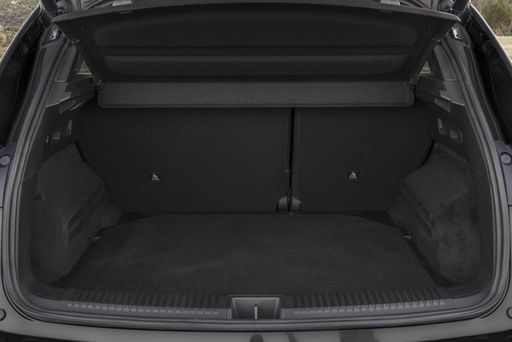
For families and adventure enthusiasts, interior space is crucial. The Renault Austral is slightly longer and wider, measuring 4510 mm in length and 1825 mm in width, providing a trunk capacity of up to 500 liters. This makes it a perfect companion for those with ample cargo needs.

The VW Taigo, at 4266 mm in length and 1757 mm in width, prioritizes a compact footprint that excels in city maneuverability. Despite its size, it offers a generous 440 liters of trunk capacity, demonstrating excellent space utility.

Taigo @ Volkswagen AG / VW Media

Innovative Features

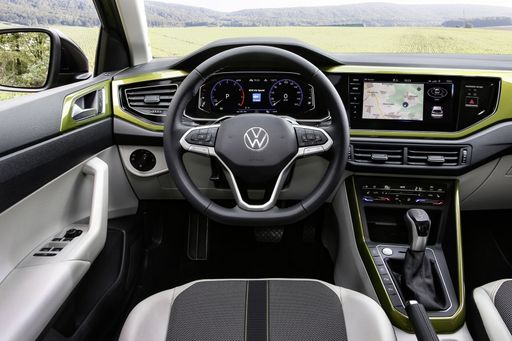
Renault has integrated a range of tech features into the Austral, enhancing driver assistance and infotainment systems. While specific features aren’t detailed here, Renault’s reputation for innovation ensures a suite of modern conveniences.

Similarly, the VW Taigo is expected to include the latest from Volkswagen's digital and connectivity solutions, which could potentially rival those of Renault. These features, combined with a sleek design, position it as a stylish choice in the compact SUV market.

Austral @ Renault Group Media

Conclusion

Both the Renault Austral and VW Taigo present compelling options in the compact SUV segment for 2024. Renault’s approach highlights eco-friendly versatility and cargo space, while the VW Taigo brings in a blend of performance enthusiasm with urban practicality. Your choice will ultimately depend on your specific needs—whether you value flexibility and roominess or desire a balance between power and city-friendly dynamics.

Here’s where it gets real: The technical differences in detail

Taigo @ Volkswagen AG / VW Media

Costs and Efficiency:

Looking at overall running costs, both models reveal some interesting differences in everyday economy.

VW Taigo has a convincingly advantage in terms of price – it starts at 19600 £, while the Renault Austral costs 29700 £. That’s a price difference of around 10118 £.

Fuel consumption also shows a difference: Renault Austral manages with 4.80 L and is therefore slightly more efficient than the VW Taigo with 5.30 L. The difference is about 0.50 L per 100 km.

Austral @ Renault Group Media

Engine and Performance:

Under the bonnet, it becomes clear which model is tuned for sportiness and which one takes the lead when you hit the accelerator.

When it comes to engine power, the Renault Austral has a clearly perceptible edge – offering 200 HP compared to 150 HP. That’s roughly 50 HP more horsepower.

In acceleration from 0 to 100 km/h, the VW Taigo is hardly perceptible quicker – completing the sprint in 8.20 s, while the Renault Austral takes 8.40 s. That’s about 0.20 s faster.

In terms of top speed, the VW Taigo performs somewhat better – reaching 212 km/h, while the Renault Austral tops out at 180 km/h. The difference is around 32 km/h.

There’s also a difference in torque: Renault Austral pulls slight stronger with 270 Nm compared to 250 Nm. That’s about 20 Nm difference.

Taigo @ Volkswagen AG / VW Media

Space and Everyday Use:

Whether family car or daily driver – which one offers more room, flexibility and comfort?

Both vehicles offer seating for 5 people.

In curb weight, VW Taigo is noticeable lighter – 1229 kg compared to 1539 kg. The difference is around 310 kg.

In terms of boot space, the Renault Austral offers noticeable more room – 555 L compared to 440 L. That’s a difference of about 115 L.

In maximum load capacity, the Renault Austral performs noticeable better – up to 1761 L, which is about 539 L more than the VW Taigo.

When it comes to payload, Renault Austral barely noticeable takes the win – 477 kg compared to 457 kg. That’s a difference of about 20 kg.

Who wins the race?

The Renault Austral proves to be performs better in key areas and therefore becomes our DriveDuel Champion!
Renault Austral is the better all-rounder in this comparison.

Renault Austral
VW Taigo

Costs and Consumption

View detailed analysis

Engine and Performance

View detailed analysis

Dimensions and Body

View detailed analysis
from about £29,700
Austral @ Renault Group Media

Renault Austral

  • Engine Type : Petrol MHEV, Full Hybrid
  • Transmission : Automatic
  • Drive Type : Front-Wheel Drive
  • Power HP : 158 - 200 HP
  • Consumption L/100km : 4.8 - 6.5 L

Renault Austral

5 (2 Reviews)
rate

The Renault Austral dresses the family SUV in elegant modern looks and a surprisingly grown-up cabin that feels thoughtful and livable. It balances comfort and clever technology with a relaxed road presence—an appealing choice for buyers who want style and everyday sense without fuss.

details

VW Taigo

5 (2 Reviews)
rate

The VW Taigo brings coupe-like flair to the compact crossover scene with sharp styling and an interior that punches above its price, feeling smarter than you’d expect. It’s an easygoing daily companion that balances comfort and practicality with a playful wink, perfect for city drivers who want something livelier than a regular hatchback.

details
Renault Austral
VW Taigo
Austral @ Renault Group Media
Taigo @ Volkswagen AG / VW Media

Costs and Consumption

Price
29700 - 37800 £
Price
19600 - 31300 £
Consumption L/100km
4.8 - 6.5 L
Consumption L/100km
5.3 - 5.8 L
Consumption kWh/100km
-
Consumption kWh/100km
-
Electric Range
-
Electric Range
-
Battery Capacity
-
Battery Capacity
-
co2
109 - 148 g/km
co2
120 - 132 g/km
Fuel tank capacity
55 L
Fuel tank capacity
40 L

Dimensions and Body

Body Type
SUV
Body Type
SUV
Seats
5
Seats
5
Doors
5
Doors
5
Curb weight
1539 - 1613 kg
Curb weight
1229 - 1302 kg
Trunk capacity
527 - 555 L
Trunk capacity
440 L
Length
4533 mm
Length
4266 mm
Width
1825 mm
Width
1757 mm
Height
1645 mm
Height
1518 mm
Max trunk capacity
1736 - 1761 L
Max trunk capacity
1222 L
Payload
464 - 477 kg
Payload
448 - 457 kg

Engine and Performance

Engine Type
Petrol MHEV, Full Hybrid
Engine Type
Petrol
Transmission
Automatic
Transmission
Manuel, Automatic
Transmission Detail
CVT, Automatic Gearbox
Transmission Detail
Manual Gearbox, Dual-Clutch Automatic
Drive Type
Front-Wheel Drive
Drive Type
Front-Wheel Drive
Power HP
158 - 200 HP
Power HP
95 - 150 HP
Acceleration 0-100km/h
8.4 - 9.7 s
Acceleration 0-100km/h
8.2 - 11.1 s
Max Speed
180 km/h
Max Speed
184 - 212 km/h
Torque
270 Nm
Torque
175 - 250 Nm
Number of Cylinders
3 - 4
Number of Cylinders
3 - 4
Power kW
116 - 147 kW
Power kW
70 - 110 kW
Engine capacity
1199 - 1332 cm3
Engine capacity
999 - 1498 cm3

General

Model Year
2025
Model Year
2024 - 2025
CO2 Efficiency Class
E, C
CO2 Efficiency Class
D
Brand
Renault
Brand
VW
What drivetrain options does the Renault Austral have?

Available configurations include Front-Wheel Drive.

The prices and data displayed are estimates based on German list prices and may vary by country. This information is not legally binding.

do not click