VS

Renault Captur vs Honda Jazz comparison

Compare performance (158 HP vs 122 HP), boot space and price (21,100 £ vs 23,100 £ ) at a glance. Find out which car is the better choice for you – Renault Captur or Honda Jazz?

Renault Captur vs Honda Jazz: Key differences

Renault Captur

4.8 (5 Reviews)
rate
  • marginally cheaper
  • noticeably more power
  • only slightly more efficient
  • marginally quicker 0–100 km/h
  • markedly more trunk space

Honda Jazz

4.8 (3 Reviews)
rate
  • only slightly lighter

All details on performance, efficiency, range and trunk space can be found in the technical comparison below – including user reviews for both models.

Captur

Compact Choices: Honda Jazz vs. Renault Captur

In the crowded world of compact cars, the Honda Jazz and Renault Captur shine as two distinct yet appealing options. These vehicles cater to modern drivers seeking efficiency, style, and innovative features. Let’s explore what each model brings to the table in terms of technical aspects and innovations.

Jazz

Design and Dimensions

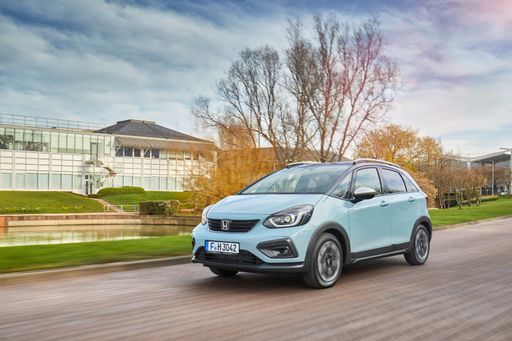
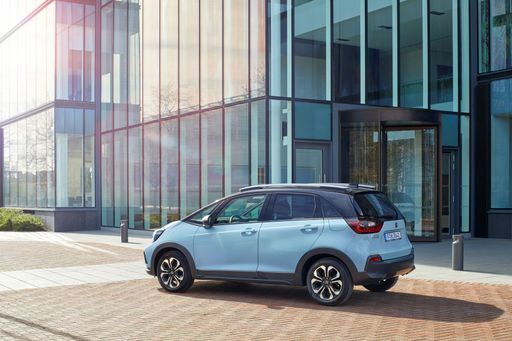
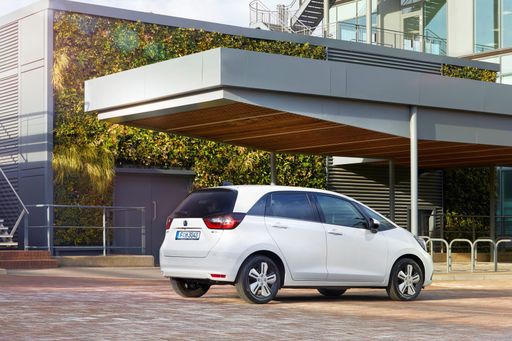
The Honda Jazz takes the shape of a modern hatchback, embodying compact functionality with its sleek dimensions. Measuring up to 4105 mm in length and 1556 mm in height, it is designed to maneuver urban environments seamlessly. The versatility is also displayed with its practical door configuration which ensures easy access and exit.

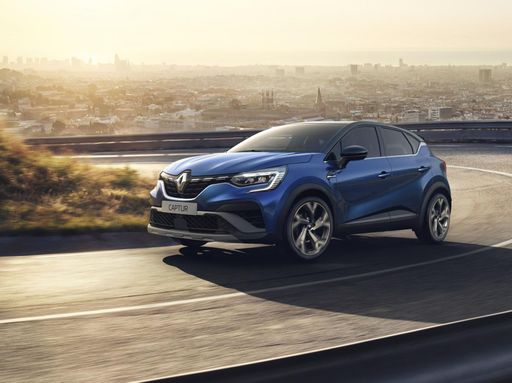
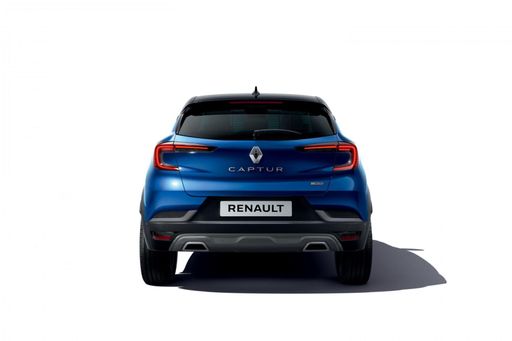
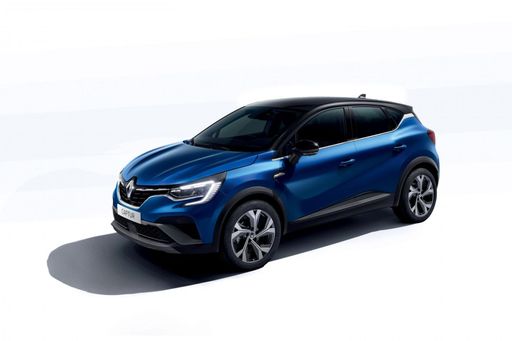
On the other hand, Renault presents the Captur as a stylish SUV, boasting a more robust stance with a length of 4239 mm and a height of 1575 mm. Its wider build, combined with a smidge more height, offers a commanding view of the road, aligning with its SUV pride, yet it maintains a nimble characteristic suited for city driving.

Captur

Power and Performance

Under the hood, the Honda Jazz is powered by a full hybrid engine delivering 122 horsepower and 90 kW, accompanied by a continuous variable transmission (CVT). Its efficient design is evident in the 4.6 - 4.8 L/100km fuel consumption. This efficiency, combined with a commendable torque of 253 Nm, allows the Jazz to accelerate from 0-100 km/h in around 9.4 to 9.7 seconds, making it a zippy companion through city streets.

Renault Captur offers a diverse engine lineup, with the 2024 model year incorporating full hybrid, petrol mild-hybrid electric vehicle (MHEV), LPG, and petrol options. The most powerful variant can produce up to 158 horsepower. The full hybrid model matches Jazz’s efficiency, with a consumption of 4.7 L/100km, and accelerates from 0-100 km/h in a competitive 9.9 seconds. The Captur's maximum torque reaches up to 270 Nm, complemented by either an automatic or manual gearbox, providing varied driving experiences.


Jazz

Interior Comfort and Capacity

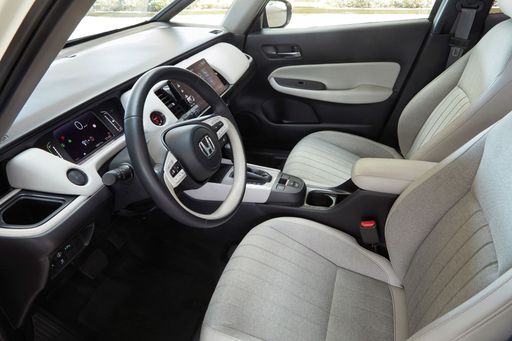
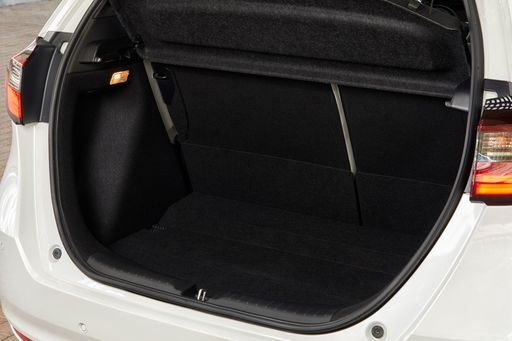
Both vehicles offer seating for five, yet their approach to interior space differs. The Honda Jazz provides a trunk capacity of 304 liters, while prioritizing interior versatility for passengers and cargo alike. Its magic seat system is particularly notable, allowing for effortless configurations to accommodate varying cargo sizes.

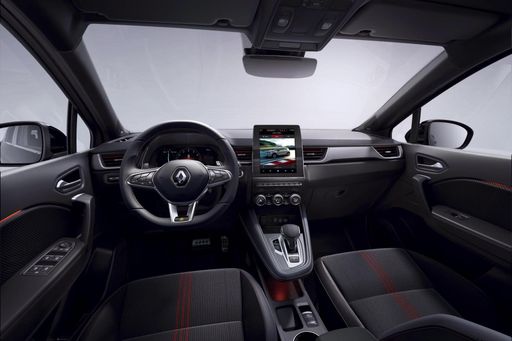
Renault Captur steps up in cargo capacity with up to 422 liters available, acknowledging its SUV form factor. The interior reflects French flair, providing ample room and comfort without compromising on chic design elements, making it ideal for small family outings or adventures with friends.

Captur

Technology and Innovations

The Honda Jazz stands out with its intelligent suite of technology features. Its CVT transmission aids in providing a smoother and quieter driving experience. Honda's advanced driver-assist systems ensure safety and ease during journeys, enhancing the overall driving pleasure.

The Captur, by Renault, pushes boundaries with its full-spectrum engine offerings, tailor-made to meet different driver needs, from economical full hybrids to powerful petrol engines. It emphasizes intelligent technology, including cutting-edge infotainment systems, and provides customers with a smart driving interface and navigation system, making every drive modern and connected.

Jazz

Environmental Impact and Efficiency

Both vehicles are conscious of their environmental footprint. The Honda Jazz maintains a CO2 emission range of 102 to 108 g/km, aligning with the CO2 efficiency class C. Its hybrid engine ensures low emissions while delivering reliable power.

The Renault Captur offers a slightly broader emission range, from 106 to 139 g/km across its variants, yet it caters to eco-conscious buyers with its hybrid options, which also achieve a CO2 efficiency class of C. This consideration underpins Renault's commitment to sustainability in automobile manufacturing.

Captur

Conclusion

In closing, the Honda Jazz and Renault Captur each bring unique strengths to the compact car segment. Whether one favours the Jazz’s agile hatchback form and impressive hybrid efficiency, or the Captur’s versatile engine options and SUV allure, both options represent the modern quest for smarter, cleaner, and stylish vehicle selections.

Here’s where it gets real: The technical differences in detail

Captur

Costs and Efficiency:

Price and efficiency are often the first things buyers look at. Here it becomes clear which model has the long-term edge – whether at the pump, the plug, or in purchase price.

Renault Captur is marginally cheaper – starting at 21,100 £ , while the Honda Jazz costs 23,100 £ . That’s a price difference of around 1,972 £.

Fuel consumption also shows a difference: the Renault Captur uses 4.4 L/100km and is only slightly more efficient than the Honda Jazz with 4.5 L/100km. The difference is about 0.1 L/100km.

Jazz

Engine and Performance:

Under the bonnet, it becomes clear which model is tuned for sportiness and which one takes the lead when you hit the accelerator.

When it comes to engine power, the Renault Captur offers noticeably more power – delivering 158 HP compared to 122 HP. That’s roughly 36 HP more horsepower.

When accelerating from 0 to 100 km/h, the Renault Captur is marginally quicker – completing the sprint in 8.9 s, while the Honda Jazz takes 9.4 s. That’s about 0.5 s quicker.

There’s also a difference in torque: the Renault Captur delivers very slightly more torque with 265 Nm compared to 253 Nm. That’s about 12 Nm more.

Captur

Space and Everyday Use:

Beyond pure performance, interior space and usability matter most in daily life. This is where you see which car is more practical and versatile.

Both vehicles offer seating for 5 people.

In terms of curb weight, Honda Jazz is only slightly lighter – 1,302 kg compared to 1,323 kg. The difference is around 21 kg.

Looking at boot space, the Renault Captur offers markedly more boot space – 422 L compared to 304 L. That’s a difference of about 118 L.

When it comes to payload, the Renault Captur carries somewhat more – 453 kg compared to 388 kg. That’s a difference of about 65 kg.

Who wins the race in the data check?

The Renault Captur is far ahead overall in the objective data comparison.
This result only shows which model scores more points on paper – not which of the two cars feels right for you.

from £21,100
Captur

Renault Captur

  • Engine Type : Full Hybrid, Petrol, Petrol MHEV
  • Transmission : Automatic, Manuel
  • Drive Type : Front-Wheel Drive
  • Power HP : 115 - 158 HP
  • Consumption L/100km : 4.4 - 6 L/100km
Renault Captur
Honda Jazz

Costs and Consumption

View detailed analysis

Engine and Performance

View detailed analysis

Dimensions and Body

View detailed analysis

Renault Captur

The Renault Captur is a cheeky little crossover that pairs city-friendly agility with a roomy, well-thought-out cabin and enough style to turn heads at the lights. It’s a sensible choice for buyers who want practical versatility and a dash of personality on their daily drives, without taking itself too seriously.

details

Honda Jazz

The Honda Jazz is a supremely practical small hatch that hides clever packaging and more usable space than it lets on, with friendly styling and an unfussy charm. It’s economical to run, easy to park and perfect for buyers who want reliable, versatile daily motoring without the hassle.

details
Renault Captur
Honda Jazz

Costs and Consumption

Price
21,100 - 28,400 £
Price
23,100 - 26,700 £
Consumption L/100km
4.4 - 6 L/100km
Consumption L/100km
4.5 - 4.8 L/100km
Consumption kWh/100km
-
Consumption kWh/100km
-
Electric Range
-
Electric Range
-
Battery Capacity
-
Battery Capacity
-
co2
100 - 137 g/km
co2
102 - 108 g/km
Fuel tank capacity
48 L
Fuel tank capacity
-

Dimensions and Body

Body Type
SUV
Body Type
Hatchback
Seats
5
Seats
5
Doors
5
Doors
-
Curb weight
1,323 - 1,441 kg
Curb weight
1,302 - 1,321 kg
Trunk capacity
326 - 422 L
Trunk capacity
304 L
Length
4,239 mm
Length
-
Width
1,797 mm
Width
-
Height
1,575 mm
Height
-
Max trunk capacity
1,363 L
Max trunk capacity
-
Payload
447 - 453 kg
Payload
369 - 388 kg

Engine and Performance

Engine Type
Full Hybrid, Petrol, Petrol MHEV
Engine Type
Full Hybrid
Transmission
Automatic, Manuel
Transmission
Automatic
Transmission Detail
Automatic Gearbox, Manual Gearbox, Dual-Clutch Automatic
Transmission Detail
CVT
Drive Type
Front-Wheel Drive
Drive Type
Front-Wheel Drive
Power HP
115 - 158 HP
Power HP
122 HP
Acceleration 0-100km/h
8.9 - 12.3 s
Acceleration 0-100km/h
9.4 - 9.7 s
Max Speed
180 km/h
Max Speed
-
Torque
160 - 265 Nm
Torque
253 Nm
Number of Cylinders
3 - 4
Number of Cylinders
4
Power kW
84 - 116 kW
Power kW
90 kW
Engine capacity
1,199 - 1,789 cm3
Engine capacity
1,498 cm3

General

Model Year
2,025
Model Year
2,025
CO2 Efficiency Class
C, D, E
CO2 Efficiency Class
C
Brand
Renault
Brand
Honda
DriveDuel uses data analysis and artificial intelligence to evaluate vehicle data and create content. Content is regularly reviewed and improved. The displayed prices are estimates based on German list prices, adjusted to the respective country’s VAT. Country-specific registration taxes are not included. This information is not legally binding.